

Nocturnal wildlife in the Masai Mara is a whole separate ecosystem most day-only visitors never see — bushbabies leaping between branches, genets prowling camp perimeters, aardvarks digging for termites under cover of dark. None of it is on a standard Big Five checklist, and almost none of it is visible from a normal daytime game drive.
Ask About a Conservancy Night Drive
Message us on WhatsApp — we’ll book you into a conservancy where night drives are actually allowed.
Why You Need a Conservancy for This
Night driving is not permitted inside the Masai Mara National Reserve itself — it’s only allowed in the private conservancies bordering it, run under different rules than the main reserve. That single fact shapes this entire topic: if a nocturnal wildlife encounter is on your list, your camp choice has to be a conservancy property, not one inside the reserve boundary. On a conservancy night drive, spotlights — used respectfully, briefly, and never directly in an animal’s eyes — reveal a set of species that essentially don’t appear on daytime drives at all.
We’d already had an incredible week of daytime game drives and thought we’d seen it all. One night drive in the conservancy and there was a whole different Mara — a genet frozen in the spotlight for two seconds before vanishing, an aardvark just going about its business like we weren’t there.
— Sense of Adventure guest, Masai Mara conservancy stay
What You’ll Actually See After Dark
Bushbabies (Galagos) — huge eyes, explosive jumps
Small, tree-dwelling primates with oversized eyes built for night vision and back legs strong enough to launch them 5-6 feet between branches — among the most commonly spotted nocturnal animals on a conservancy night drive.
Genets — part cat, part mongoose, all nocturnal
Solitary and superbly agile climbers, genets have a long ringed tail and a spotted coat that makes them look like a cross between the two more familiar animals — a frequent, fleeting night-drive sighting.
Aardvarks — the reason there are so many termite mounds to see by day
A powerful-clawed, long-snouted burrower that feeds almost entirely on ants and termites at night, rarely seen but genuinely possible on a well-timed conservancy drive.
Crested Porcupines — unmistakable once spotted
A large, spiny, black-and-white nocturnal rodent with a distinctive crest of quills — one of the more visually striking, if less common, night sightings.
Hyenas and Leopards, By a Different Light — familiar species, entirely different behaviour
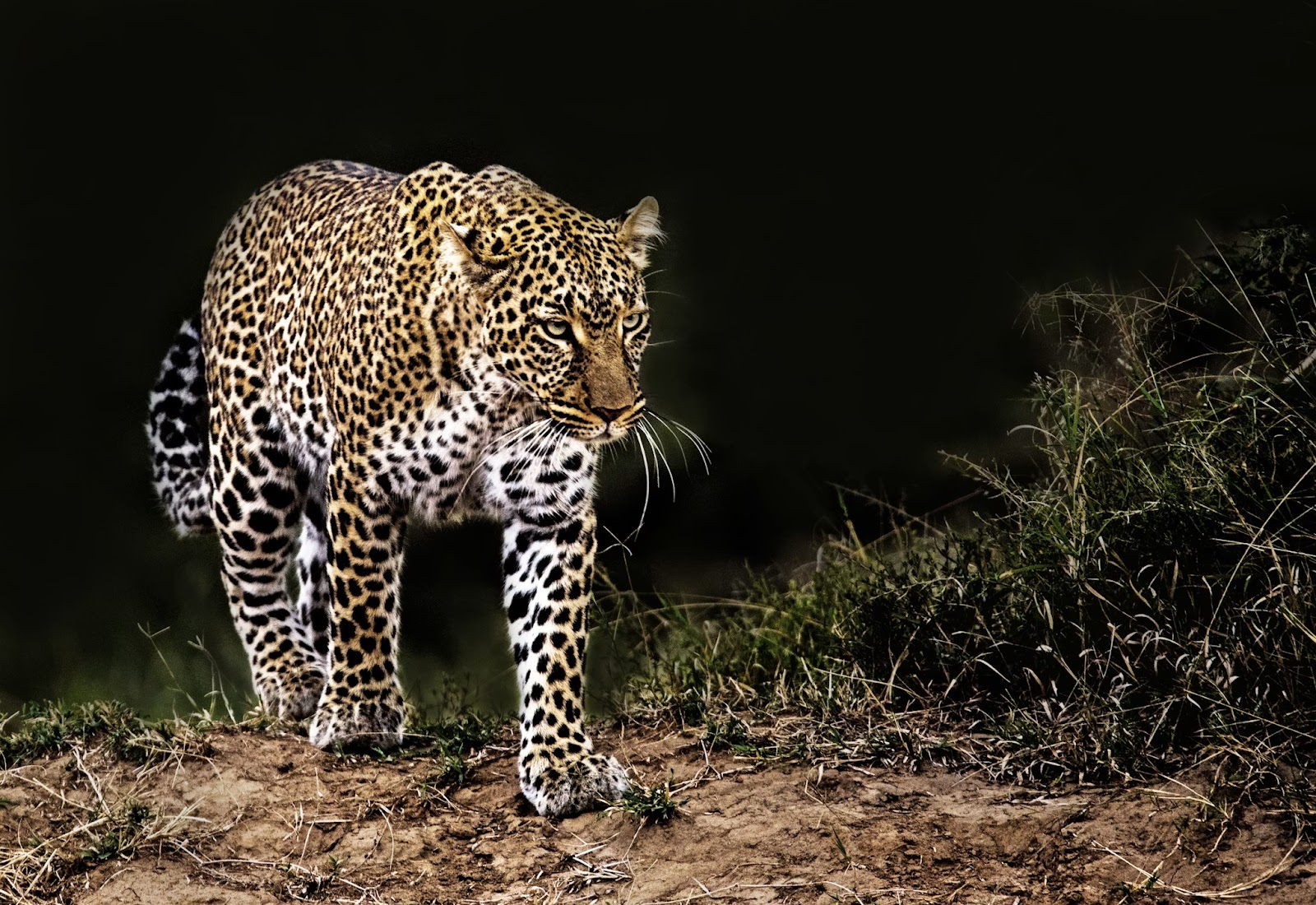
Species you may already know from daytime drives behave very differently after dark — hyenas are more active hunters at night, and leopards, largely nocturnal by nature, are often easier to find on a spotlighted night drive than during the day.
Add a Night Drive to Your Itinerary
Message us and we’ll make sure your Mara stay includes conservancy access for this.
Masai Mara Nocturnal Wildlife at a Glance
- Where: night drives are conservancy-only — not permitted inside the main national reserve.
- Bushbabies: tree-dwelling primates with strong back legs capable of 5-6 foot vertical leaps between branches.
- Genets: solitary, cat-like, excellent climbers, easily identified by a long ringed tail and spotted coat.
- Aardvarks: nocturnal burrowers feeding almost exclusively on ants and termites, rarely seen but a genuine possibility.
- Familiar species after dark: hyenas hunt more actively and leopards — largely nocturnal — are often easier to find on a night drive than a day one.
Plan Your Conservancy Stay
Our Masai Mara conservancies guide covers which properties allow night drives, and our existing guides to the spotted hyenas and leopards of the Mara pair well with a night-drive add-on.
See the Mara After Dark
Message us on WhatsApp and we’ll build a conservancy night drive into your safari.
Frequently Asked Questions
Can you go on a night game drive in the Masai Mara?
Not inside the national reserve itself — night drives are only permitted in the private conservancies bordering the reserve.
What nocturnal animals can you see in the Masai Mara?
Bushbabies, genets, aardvarks and crested porcupines are the classic conservancy night-drive sightings, alongside more active hyena and leopard behaviour after dark.
Is a leopard nocturnal?
Largely, yes — leopards are most active at night, which is part of why they can be easier to spot on a conservancy night drive than during a standard daytime game drive.
What does a genet look like?
A genet resembles a cross between a cat and a mongoose, with a long ringed tail, spotted coat, and excellent climbing ability.
Do I need to stay in a specific type of camp for a night drive?
Yes — you need to be staying at a camp within one of the private conservancies bordering the Masai Mara National Reserve, since night drives aren’t permitted inside the reserve itself.