The best month for Masai Mara depends on who is travelling. A photographer chasing soft light wants a different month from a family who need easy travel days, and a honeymoon couple has other priorities again from a traveller watching every dollar. This guide matches the calendar to your kind of trip, so you can book the right weeks with confidence.
Picture two travellers on the same plain in the same week: one is thrilled by the river crossings, the other wishes there were fewer vehicles. Neither is wrong. They simply wanted different things, and that is why the best month for Masai Mara is a personal answer. Our Nairobi team plans Mara timing for every kind of traveller, and the advice below is the same advice we give our own guests.
✅ Best Month for Masai Mara: Quick Answer
- Photographers: February for clear light and quiet sightings; July to September for migration action.
- Honeymooners: July to October for peak wildlife, or the green season for privacy and lower rates.
- Families: June to September (and school holidays) for dry roads and predictable days.
- Budget travellers: April, May and November, when park fees and many camp rates are lower.
- Big-cat lovers: January to March, with short grass, resident predators and fewer vehicles.
- Park fees: non-resident adults pay USD 100 per day from January to June and USD 200 from July to December.
Tell us who is travelling and when you are free, and we will name your best Mara month.
Find My Best MonthWhy There Is No Single Best Month for Masai Mara
Every Masai Mara timing guide eventually meets the same follow-up question: best for what? July to October usually brings the Great Migration and dry conditions, but also the highest prices and the most vehicles at popular sightings. April, May and November bring rain, lush green scenery and lower rates, which suits travellers who value quiet and price over migration drama.
So the best month for Masai Mara is really three decisions in one. First, what do you most want to see? Second, how much do crowds bother you? Third, what is your budget, including park fees? Answer those three, and the right month usually becomes obvious. The sections below walk through each traveller type in turn.
It also helps to know that the Mara has resident wildlife all year. Lions, leopards, cheetahs, elephants, giraffes and buffalo live here in every season. The migration adds hundreds of thousands of wildebeest and zebras on top, but a “quiet” month is never an empty one.

The Masai Mara Year at a Glance
Before choosing by traveller type, here is how the Mara year usually unfolds. Seasons shift a little each year, so treat this as a guide rather than a timetable. Our Kenya weather by month guide adds rainfall and temperature detail.
| Months | Season | What to expect | Best month for Masai Mara if you are… |
|---|---|---|---|
| January–March | Short dry season | Warm, clear days, short grass, resident predators, few vehicles | A photographer or big-cat lover |
| April–May | Long rains (green season) | Afternoon storms, lush grass, lowest rates, some camps close | On a tight budget and flexible |
| June | Start of the long dry season | Drying plains, still fairly quiet, lower park fee until 30 June | A family or value seeker wanting dry weather |
| July–October | Peak dry season | Migration herds usually present, river crossings possible, busiest and dearest | A first-timer, honeymooner or migration chaser |
| November–December | Short rains | Brief showers, green landscapes, herds moving south, festive peak late December | A value seeker (November) or festive traveller |
Best Month for Masai Mara by Traveller Type
Here are our honest picks. Each one names the best month for Masai Mara for that traveller, plus a strong alternative in case your dates are fixed.
Photographers — February — clear light, fewer vehicles, active predators
February combines clear light, thinner crowds at sightings and active predator behaviour. January and early March are similar, while July to September add migration drama for a different kind of shot.
Honeymooners — July to October, or the green season for privacy
July to October brings the migration and abundant wildlife at premium prices. Couples who prefer quiet camps and lower rates often do better in the green season or in June.
Families — June to September — dry, predictable, easy on everyone
Dry weather makes logistics simplest for families: firmer roads, predictable days and easier travel with children, and the window lines up with northern-hemisphere school holidays.
Budget travellers — April, May and November — the lowest prices of the year
April and May usually bring the year’s lowest camp rates and the lower park fee, alongside rain, lush grass and dramatic skies. November is a good second choice, with the higher July–December fee.
Big-cat and predator focus — January to March — a value alternative to July–October
Clear skies, short grass and strong predator activity make this window a real alternative for travellers who want big-cat sightings without peak-season prices and crowds.
Best month for Masai Mara photography
For most photographers, February is the best month for Masai Mara images. The grass is short after the short rains, so cats and cheetahs stand out clearly. The air is usually clear, dust is low, and fewer vehicles means you can wait at a sighting without jostling for position.
If your goal is action rather than portraits, choose August or September instead. Those months give you dust-lit herds, river crossings and predators working the edges of the migration. Our Masai Mara photography guide covers camera settings, lenses and hotspots for both styles.
Best month for Masai Mara honeymoons
Couples usually want two things: memorable wildlife and privacy. If wildlife comes first, the best month for Masai Mara honeymoons is August or September, when the plains are at their busiest with animals. If privacy comes first, June, late October or the January to March window give quieter camps and better rates.
Staying in a private conservancy changes the picture, because vehicle numbers are limited there in every season. That is why many of our honeymoon couples visit in peak season but sleep in a conservancy. Our Masai Mara honeymoon safari guide explains the most romantic options.
Best month for Masai Mara family safaris
For families, the best month for Masai Mara trips usually falls between late June and September. Roads are dry, game drives run to plan, and the timing fits most school holidays. The trade-off is price, so book early, as the best family tents and connecting rooms go first.
December holidays also work well for families, with green scenery and fewer migration crowds, though rain showers are possible. Our Masai Mara family safari guide covers age rules, private vehicles and family-friendly camps.
Best month for Masai Mara on a budget
If cost matters most, the best month for Masai Mara savings is April, May or early June. Park fees are lower until the end of June, and many camps lower their rates during the long rains. You trade some comfort for value: afternoon storms are common, some tracks get muddy and a few camps close for maintenance.
November is the other value window. Rates often drop after the migration leaves, though the park fee stays at the July–December level. Our green season guide and cheapest time for a Kenya safari guide go deeper on saving money.
Best month for Masai Mara first-timers
If this is your first safari and you want the “classic” Mara, choose August. Herds are usually present, crossings are possible, and the weather is dry. September is a near-equal choice and is often a little quieter than August. If those months are out of reach, February is the best month for Masai Mara first-timers who care more about big cats than big herds.
Torn Between Migration Season and Green Season?
Tell us what matters most to you, wildlife drama, privacy or price, and we will compare two months side by side for your group.
Migration Timing: What It Means for Your Month
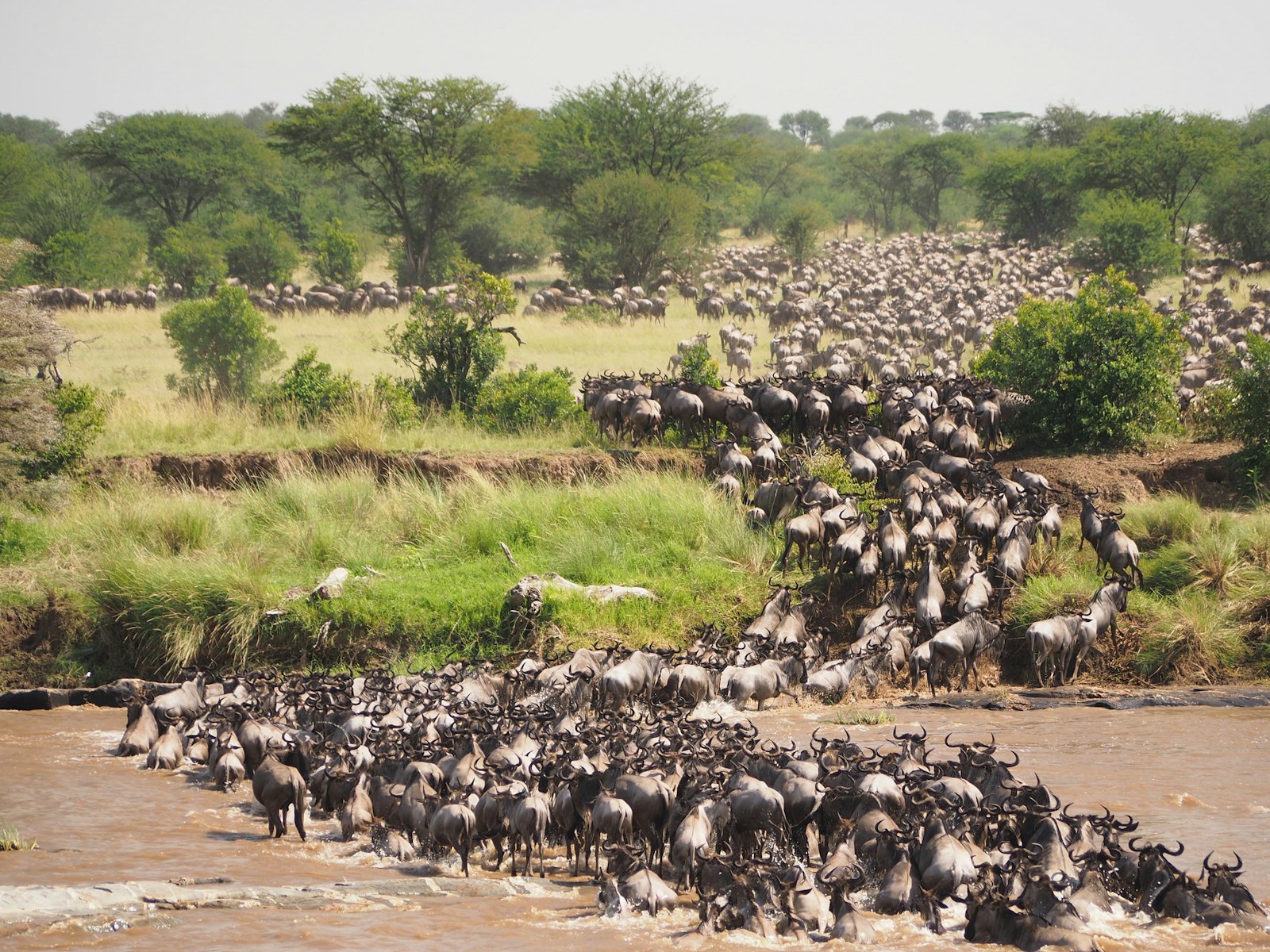
The Great Migration is a loop between Tanzania’s Serengeti and Kenya’s Masai Mara, driven by rain and fresh grass. The herds usually start arriving in the Mara in July, stay through August and September, and drift back south in October or November. Calving happens far to the south in the Serengeti, around January and February, not in the Mara.
That means the best month for Masai Mara migration viewing is usually August or September. But the herds follow the rain, not the calendar. In some years they arrive early in late June; in others they linger into November. River crossings can happen on any day in season, or not at all on a given day, so a stay of three or four nights gives you the best chance.
For an honest view of what to expect, read is the Great Migration guaranteed? and, if you are weighing Kenya against Tanzania, our Masai Mara or Serengeti by month guide.
Crowds, Vehicles and the Best Month for Masai Mara Quiet
Crowding is the hidden factor in choosing the best month for Masai Mara travel. In peak season, popular river crossing points can draw many vehicles, especially in the main reserve. In February or June, the same plains feel far more private.
- Busiest: late July to early October, and the Christmas and New Year week.
- Moderate: June, late October and early December.
- Quietest: April, May and November, then January to March outside holiday weeks.
A private conservancy is the best way to avoid crowds in any month. Conservancies limit the number of vehicles at a sighting and allow activities that the main reserve does not, such as walking safaris and night drives.
Costs: Park Fees and Prices by Month
Price changes through the year, and it can shape your best month for Masai Mara as much as wildlife does. Two things move: the reserve fee and the camp rate.
The Masai Mara National Reserve, run by Narok County, charges non-resident adults USD 100 per person per day from January to June and USD 200 from July to December. On a three-night stay for two people, that difference alone adds up quickly. Camp rates follow a similar pattern, highest in peak migration months and over Christmas, lowest in April and May.
| Trip style | Example package on our site | Starting price |
|---|---|---|
| Budget camping | Masai Mara camping safari | From USD 590 |
| Family | Kenya family safari package | From USD 1,290 |
| Migration | Great Migration safari, Masai Mara | From USD 1,450 |
| Honeymoon | Kenya and Zanzibar honeymoon | From USD 3,650 |
Starting prices depend on the season, the camp and group size, so a written quote for your exact dates is the only reliable figure. Our Masai Mara safari packages page lists more options with park fees included.
Know Your Month? Get It Priced in Writing
The best camps for peak months book early. Send your preferred month and we will send a written quote with park fees included, plus a cheaper alternative week if one exists.
Price My Mara MonthHow Far Ahead to Book Each Month
Once you know your best month for Masai Mara, the next question is when to book. As a rough guide:
- July to October and Christmas: book 9 to 12 months ahead for popular camps, especially conservancy camps with few tents.
- June and January to March: 4 to 6 months ahead is usually enough.
- April, May and November: often bookable at shorter notice, but check that your chosen camp is open.
Families needing connecting rooms or several tents together should book earliest of all. If you need flights from Nairobi to a Mara airstrip, the small aircraft also fill up in peak months.
Weather and Packing by Season
The Mara sits at around 1,500 to 2,000 metres, so mornings are cool in every month. Whatever your best month for Masai Mara turns out to be, pack layers: a fleece or light jacket for early drives, and breathable clothes for warm afternoons.
- Dry months (June to October, January to March): dust is common, so bring a scarf or buff, sunglasses and a cover for your camera.
- Green season (April, May, November): add a light waterproof jacket and quick-drying trousers; storms usually come in the afternoon.
- All year: neutral colours, a sun hat, sunscreen and insect repellent.
Check your health and entry needs before you go, including the eTA and any vaccine advice. The GOV.UK travel advice for Kenya is a clear starting point, alongside your own government’s advice. For background on the reserve and other Kenyan parks, see Magical Kenya, the Kenya Tourism Board’s official site.
How Many Nights to Stay
Whichever is your best month for Masai Mara, three nights is the sweet spot for most travellers. It gives you at least two full days of game drives and time to wait at a river or a den without rushing. In migration season, four nights improves your chance of seeing a crossing. In the green season, three nights allows for a stormy afternoon or two.
Two nights can work if time is short, especially if you fly in during the best month for Masai Mara wildlife. Our guide to whether 2 days in the Masai Mara is enough explains the trade-offs.
Our Month-by-Month Shortlist
If you only read one section, read this. Here is the best month for Masai Mara trips by priority, in one list.
- Best for migration: August, then September.
- Best for big cats and photography: February.
- Best for families: July or August, then December.
- Best for honeymoons: September in a conservancy, or June for value.
- Best for budget: May, then April or November.
- Best month for Masai Mara all-rounders: late June to early July, with dry weather, the lower fee until 30 June and the first herds in some years.
For a full month-by-month breakdown, read our month-by-month Masai Mara guide. If you would like to combine the Mara with other parks, our private Kenya safari, luxury Kenya safari and Kenya safari from Nairobi pages show how the timing fits a wider trip.
Masai Mara Timing by Traveller Type at a Glance
- Photographers: February for light and low crowds; July to September for migration action.
- Honeymooners: July to October for wildlife and premium camps, or the green season for privacy and value.
- Families: June to September for dry, predictable conditions that simplify logistics.
- Budget travellers: April, May and November, with April and May usually offering the year’s lowest prices.
- Overall best safari months: July to October remains the benchmark for wildlife numbers; January to March is a strong, better-value alternative.
Go Deeper on Timing
Pair this with our full month-by-month Masai Mara guide for weather and migration detail, and our green season guide if lower prices and fewer crowds are your priority.
Let Us Choose Your Best Month for Masai Mara
Share who is travelling, what you most want to see and your rough dates. Our Nairobi team will recommend the right weeks, the right camp area and a realistic budget.
Frequently Asked Questions
What is the best month for Masai Mara photography?
February is often the standout month for photography, with clear light, short grass and fewer vehicles at sightings. January and early March are similar. If you want migration action, choose August or September instead, when dust-lit herds and river crossings give you a very different, more dramatic style of shot.
When should families visit the Masai Mara?
Late June to September usually suits families best. Dry weather keeps roads and game drives predictable, and the timing matches most school holidays. December holidays are a good alternative, with green scenery and fewer crowds. Book early for family tents and connecting rooms, as they are limited in every camp.
What is the cheapest time to visit the Masai Mara?
April and May are usually the cheapest months. Park fees for non-resident adults are USD 100 per day until 30 June, against USD 200 from July, and many camps lower their rates during the long rains. November is the second value window, though the higher park fee applies then.
Is the green season a good time for a honeymoon in the Masai Mara?
Yes, if privacy, quiet camps and lower prices matter more to you than migration crossings. Showers usually come in the afternoon, leaving mornings clear for game drives. Couples who want the fullest wildlife experience should choose July to October instead, ideally staying in a private conservancy.
When is the Masai Mara least crowded?
April, May and November see the fewest visitors, followed by January to March outside holiday weeks. Late July to early October, and the Christmas week, are the busiest. In any month, staying in a private conservancy keeps sightings quieter, because vehicle numbers are limited there.
Which is the best month for Masai Mara river crossings?
August and September usually give the best chance of seeing a river crossing, with July and October also possible. The herds follow the rain, so timing changes from year to year, and crossings happen without warning. Staying three or four nights near the Mara River improves your chances.
Is the best month for Masai Mara the same every year?
The pattern is broadly the same, but the details shift. Rains can arrive early or late, which changes when the migration arrives and how green the plains are. Park fees and camp rates also change. Ask us before booking, as we track conditions on the ground through the year.