The Tsavo wilderness is defined by one fact before any other: scale. Tsavo East and Tsavo West together cover about 22,000 km², roughly 4% of Kenya’s land area and more than ten times the size of the Masai Mara National Reserve. Red volcanic earth, semi-arid scrubland and green riverine forest stretch further than a single trip can cover, and wildlife is spread thinly enough that every sighting feels like a discovery rather than a queue.
This guide explains what the Tsavo wilderness actually feels like on the ground: the long empty drives, the silence, the red elephants, and the trade-offs you accept in exchange for space. It also covers when to go, how long to stay, what it costs and how to plan a trip that gives the landscape the time it deserves.
✅ Tsavo Wilderness: Quick Answer
- Size: Tsavo East and West together cover about 22,000 km², Kenya’s largest protected wilderness.
- Feel: vast, quiet and remote, with long drives between sightings and few other vehicles.
- Wildlife: resident year-round, famous for red-dusted elephants, plus lions, buffalo, giraffe and lesser kudu.
- Best months: the dry seasons, roughly June to October and January to February.
- Time needed: at least 3 days; 4 to 5 days to see both parks without rushing.
- Park fees: USD 80 per non-resident adult per 24 hours per park, included in our packages.
Wondering if a quieter, wilder safari suits you better than the Mara? Tell us how you like to travel.
Match Me to TsavoWhat Vastness Actually Changes in the Tsavo Wilderness
The Masai Mara compresses drama into a small, busy stage. The Tsavo wilderness does the opposite. The Great Migration does not pass through here, so Tsavo’s wildlife is resident all year rather than seasonal, and every month is broadly comparable rather than built around one peak.
That same scale means animals are more spread out and harder to find than in a compact reserve. The trade-off is a wilder, quieter and more solitary kind of safari. Semi-arid scrubland and red volcanic soil replace the classic green savannah most people picture when they imagine Africa, and you may drive for half an hour without seeing another vehicle.
For many travellers that emptiness is the point. In the Tsavo wilderness you notice the wind in the commiphora bushes, the call of a hornbill, and the sudden thrill of a herd of red elephants walking out of the scrub. Sightings are earned, and they feel personal.
What Makes Tsavo Feel Different
Scale You Can Feel: about 22,000 km²
More than ten times the area of the Masai Mara reserve, the Tsavo wilderness shows its size as long, empty drives between sightings and a sense of remoteness few Kenyan parks still offer.
Resident Wildlife, No Single Peak Season
Without a migration passing through, Tsavo’s animals stay put all year. There is no single must-visit month, although the dry seasons make game easier to find around water.
Red Earth Everywhere
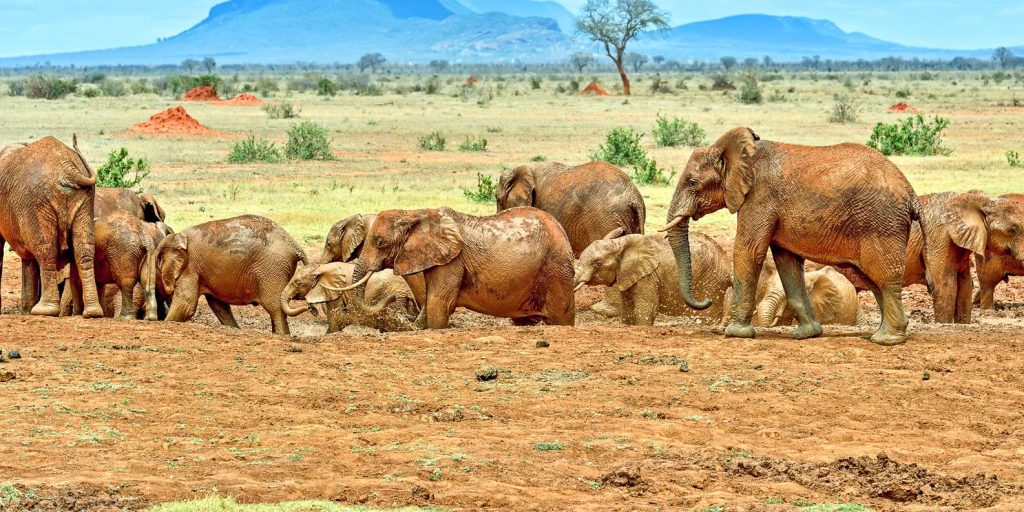
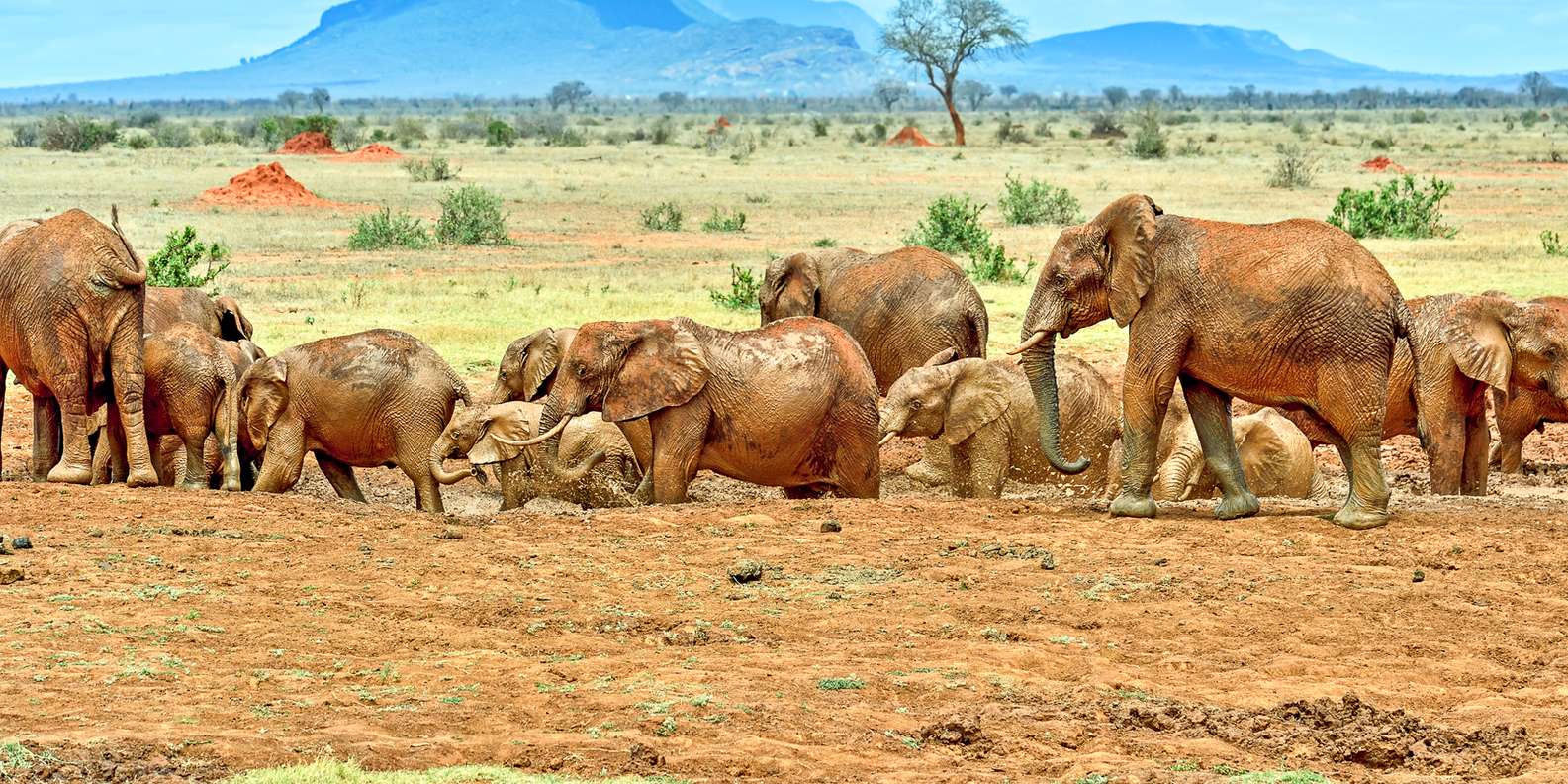
Volcanic soil rich in iron oxide colours the roads, the dust on your camera and the elephants that throw it over their backs to keep cool and protect their skin.
Fewer Vehicles, More Patience Required
Sightings take longer to find but are shared with far fewer vehicles. It is an honest trade against the Mara’s higher predator density, and one many repeat visitors choose on purpose.
A Landscape, Not Just a Wildlife List
Commiphora scrub, ancient lava flows, spring-fed pools and Galana River forest all sit inside the Tsavo wilderness, so it rewards travellers who value scenery as much as animals.
Tsavo East vs Tsavo West: Two Sides of One Wilderness
The Nairobi to Mombasa highway and railway split the Tsavo wilderness into two separately managed parks. Each has a distinct character, and knowing the difference helps you decide where to spend your nights. Our full Tsavo East vs West comparison goes into more detail.
Tsavo East: flat, dry and endless
Tsavo East is the larger and flatter half. Open plains of red earth and dry bush run to the horizon, broken by the Galana River, Lugard Falls, Mudanda Rock and the long ridge of the Yatta Plateau, one of the longest lava flows in the world. Big herds of red elephants gather at the river and at waterholes such as Aruba Dam in the dry months.
Much of the north of Tsavo East is closed to general tourism, which adds to the feeling of wilderness. Game viewing is concentrated in the southern section, within reach of the Voi and Manyani gates.
Tsavo West: hills, lava and springs
Tsavo West is hillier, greener and more varied. Here the Tsavo wilderness includes the Shetani lava flow, the Chaimu crater, the Ngulia hills and the crystal-clear pools of Mzima Springs, where hippos and crocodiles can be watched from an underwater hide. The Ngulia Rhino Sanctuary protects black rhino behind a fenced area.
Thicker bush means animals can be harder to spot than in the east, but the scenery is more dramatic, and on clear mornings Kilimanjaro can appear on the western horizon.
The Tsavo Wilderness at a Glance
| Feature | Tsavo East | Tsavo West |
|---|---|---|
| Landscape | Flat red plains, dry bush, Galana River | Hills, lava flows, springs, thicker bush |
| Highlights | Red elephant herds, Lugard Falls, Yatta Plateau | Mzima Springs, Shetani lava, Ngulia rhinos |
| Game viewing | Easier to spot animals in open country | More scenic, animals harder to find |
| Feel of the Tsavo wilderness | Big skies and horizon-wide emptiness | Volcanic drama and hidden valleys |
| Easiest access | From Mombasa and the coast via Voi | From Nairobi via Mtito Andei |
Wildlife You Can Expect in the Tsavo Wilderness
The Tsavo wilderness is best known for its elephants. Kenya’s largest single elephant population lives in the wider Tsavo ecosystem, and seeing a family herd coated in red dust is the image most visitors carry home. Our guide to the red elephants of Tsavo explains where and when to find them.
Lions are present in both parks and are famous for the history of the Tsavo man-eaters of 1898. Many Tsavo males have short or sparse manes, which surprises visitors used to photographs from the Mara. Buffalo, giraffe, zebra, impala, Grant’s gazelle and waterbuck are common, while leopard and cheetah are seen less often.
The dry country also holds species you will not find in the Mara. Look for lesser kudu, gerenuk, fringe-eared oryx and the tiny dik-dik in the bush. Birdlife is rich too, with hornbills, weavers, starlings and birds of prey, especially after the rains.
Wildlife tips for the Tsavo wilderness
- Head for water: in the dry months, rivers, springs and dams concentrate animals.
- Start early: the first two hours after sunrise are cooler and more active.
- Look small as well as big: dik-dik, hornbills and agama lizards make slow drives rewarding.
- Trust your guide: in a landscape this large, local knowledge of where herds are moving matters.

Where to Stay to Feel the Wilderness
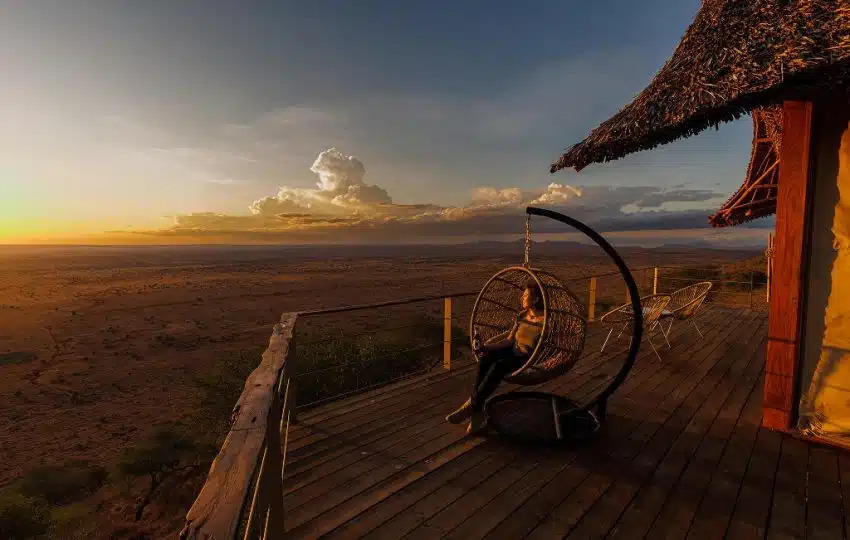
Where you sleep shapes how you experience the Tsavo wilderness. Lodges in Tsavo West often look over floodlit waterholes, so you can watch elephants and buffalo arrive after dark. Tented camps along the Galana River in Tsavo East put you closer to the sounds of the bush, with only canvas between you and the night.
For the strongest sense of space, choose a camp away from the main roads and gates, and plan at least two nights there. Moving every day means more time packing and less time sitting still, which is when this landscape really works on you. Our Tsavo lodges and camps guide compares the main options, and adventurous travellers can read about camping in Tsavo National Park.
River Camp or Waterhole Lodge?
Tell us how remote you want to feel and your budget, and we will suggest the Tsavo stays that suit you best.
A Day in the Tsavo Wilderness
A typical day starts before sunrise with coffee and a short drive to a river or waterhole. The light is soft, the air is cool, and animals are moving. By mid-morning you might return to camp for a late breakfast, or carry a packed breakfast and stay out longer.
Midday is hot, so most travellers rest, read or watch the camp waterhole. In Tsavo West, a stop at Mzima Springs or a walk on the Shetani lava trail fits well in the late morning. The afternoon drive begins around four o’clock and ends at sunset, when the red earth glows and elephants walk to drink.
Evenings are quiet. Away from city light, the night sky over the Tsavo wilderness is full of stars, and the sounds of hyena and lion carry a long way. Many guests say this is the moment the size of the place really sinks in.
Best Time to Visit the Tsavo Wilderness
Because wildlife is resident, you can visit at any time of year. The dry seasons, roughly June to October and January to February, are the easiest for game viewing, as vegetation thins and animals gather at water. These months also bring dusty roads and strong heat in the middle of the day.
The long rains, usually March to May, turn the Tsavo wilderness green and bring good birding and lower lodge rates, though some tracks become muddy and animals disperse. The short rains in November and December are usually lighter. Our best time to visit Tsavo guide breaks this down month by month.
How Many Days Do You Need?
Three days is the minimum to feel the Tsavo wilderness rather than just pass through it. That gives you two full days of game drives and time to settle into one area. With four or five days you can see both Tsavo East and Tsavo West without rushing, including Mzima Springs and the Galana River.
Tsavo also pairs well with Amboseli for Kilimanjaro views, or with a beach stay at Diani or Watamu. Our Tsavo 3-day vs 5-day itinerary guide sets out sample routes day by day.
Tsavo Wilderness Costs and Park Fees
Kenya Wildlife Service charges non-resident adults USD 80 per 24 hours to enter either Tsavo East or Tsavo West, and non-resident children USD 40. Because the two parks are ticketed separately, a trip that visits both pays the fee in each park. Vehicle fees are charged on top. Our Tsavo National Park entrance fees guide lists every rate.
On Sense of Adventure packages, park and vehicle fees are already included in the price, so there is nothing to pay at the gate. Our Tsavo safari trips start from USD 230, and longer options include the Tsavo East and West safari and the Tsavo and Amboseli safari.
Ready to Lock In Your Tsavo Dates?
The best-placed camps book early in the dry season. Send your dates and group size, and we will send a written quote with park fees included.
Hold My Tsavo DatesGetting to the Tsavo Wilderness
Tsavo sits between Nairobi and Mombasa, which makes it one of Kenya’s most accessible big parks. From Nairobi, the drive to Tsavo West’s Mtito Andei gate takes roughly four to five hours by road. From Mombasa and the south coast, Tsavo East’s Voi area is about two and a half to three hours away, which is why Tsavo is a popular safari from the beach.
The Madaraka Express train also stops at Voi and Mtito Andei, and some lodges can be reached by light aircraft. If you are flying into Nairobi, our Kenya safari from Nairobi page shows how Tsavo fits into a wider trip, and coast-based travellers can look at the 2-day Tsavo safari from Mombasa.
Tsavo Wilderness vs the Masai Mara
Choose the Mara if your priority is big cats in high numbers and the Great Migration between roughly July and October. Choose the Tsavo wilderness if you want space, solitude, red elephants and landscape variety, and you are happy to work a little harder for predator sightings.
Many travellers combine both: the Mara for the drama and Tsavo for the quiet. If you are weighing them up, read our Tsavo vs Masai Mara comparison or browse our Masai Mara safari packages.
Conservation and the Tsavo Elephants
Tsavo is central to Kenya’s elephant story. The Sheldrick Wildlife Trust raises orphaned elephants in Nairobi and later moves them to reintegration units in Tsavo, where they gradually return to wild herds. Our guide to the Sheldrick elephant orphans in Tsavo explains how visits work.
The parks are managed by the Kenya Wildlife Service, and your park fees help fund rangers, anti-poaching work and water management. Respecting park rules, staying on tracks and keeping a calm distance from elephants all help keep the Tsavo wilderness wild.
7 Tips for Enjoying the Tsavo Wilderness
- Slow down: plan two or more nights in each area rather than moving daily.
- Pack for dust and heat: bring a scarf or buff, sunglasses, a hat and a camera cover.
- Wear neutral colours: khaki and olive suit the bush; red dust shows on white.
- Bring binoculars: in open country, animals are often spotted far away.
- Carry water: midday temperatures can be high, especially in Tsavo East.
- Book a private vehicle: it lets you wait at a waterhole as long as you like. See our private Kenya safari options.
- Read up first: the Magical Kenya tourism site and our Tsavo safari guide help with logistics.
Give Yourself Time to Feel Tsavo’s Scale
We pace every Tsavo wilderness itinerary so the long drives, quiet evenings and red elephant herds become the heart of your safari, not a blur between stops.
Frequently Asked Questions
How big is the Tsavo wilderness compared to the Masai Mara?
Tsavo East and Tsavo West together cover about 22,000 km², roughly 4% of Kenya’s land area. The Masai Mara National Reserve covers about 1,510 km², so Tsavo is more than ten times larger. That size is why the Tsavo wilderness feels so empty, with long drives between sightings and few other vehicles.
Does the Great Migration pass through Tsavo?
No. The Great Migration moves between the Serengeti and the Masai Mara and does not reach Tsavo. Tsavo’s wildlife is resident all year, so there is no single must-visit month. Game viewing is easiest in the dry seasons, roughly June to October and January to February, when animals gather at water.
Is Tsavo less crowded than the Masai Mara?
Yes, generally. Tsavo’s much larger area spreads both wildlife and visitors thinly, so you share sightings with far fewer vehicles. On many drives in the Tsavo wilderness you may see only a handful of other cars all day, which suits travellers who want quiet and space over busy predator sightings.
Why is the soil in Tsavo red?
Tsavo’s volcanic soil is rich in iron oxide, which gives it a deep red colour. Elephants dust and wallow in it to cool down and protect their skin from sun and insects, so they turn rust-red too. The colour becomes the signature of the whole Tsavo wilderness, from the roads to your camera bag.
Is it harder to see wildlife in Tsavo than in other Kenyan parks?
Sightings usually take more patience, because animals are spread across a far larger area and the bush is thicker in places, especially in Tsavo West. Elephants are easy to find, while big cats are less predictable than in the Mara. A good guide and early starts make a real difference.
How many days should I spend in the Tsavo wilderness?
Plan at least three days to settle in and enjoy two full days of game drives. With four or five days you can explore both Tsavo East and Tsavo West, including Mzima Springs, the Galana River and Lugard Falls, without long daily transfers or feeling rushed.
Is the Tsavo wilderness safe for visitors?
Yes, on a guided safari. You stay in the vehicle on game drives except at designated sites such as Mzima Springs, and camps brief you on walking at night. Follow your guide’s advice, keep a respectful distance from elephants and check your government’s travel advice before you go.