Tsavo big cats do not reveal themselves the way the Masai Mara’s do. Tsavo East and Tsavo West together form Kenya’s largest protected area, more than 22,000 km² of bush, lava and river forest, and its lions, leopards and cheetahs spread themselves across that space. Patience pays off here in a way it does nowhere else in Kenya.
Picture a leopard slipping off a fig branch above the Galana River at first light, with no other vehicle in sight. That is the reward. This guide explains where the Tsavo big cats live, how to give yourself the best odds, which months and drives work best, and how Sense of Adventure plans predator-focused trips in both parks.
✅ Tsavo Big Cats: Quick Answer
- Which cats: lions, leopards and cheetahs, plus smaller caracal, serval and African wildcat.
- Lions: the most likely of the Tsavo big cats to be seen; many males are maneless or short-maned.
- Leopards: present in both parks but shy and mostly nocturnal; look along rivers and rocky hills.
- Cheetahs: scarce; the open plains of Tsavo East give the best chance.
- Best time: the dry months, late June to October and January to February, on dawn and late-afternoon drives.
- How long: plan at least 3 days across both parks; predator sightings are never guaranteed.
Want to know where our guides have been finding Tsavo’s cats lately?
Ask About Recent SightingsWhy Tsavo Big Cats Are Harder to Find, and Worth It
Tsavo East and West together cover more than 22,000 km², many times the size of the Masai Mara National Reserve. That space is exactly why the Tsavo big cats feel so much more elusive than their Mara cousins. Prey is spread out, the bush is thick in places, and a pride can move many kilometres between drives.
Leopards favour moister, densely vegetated pockets where they can ambush prey, and they hunt mainly at night. Daytime sightings need luck or a guide who knows which riverine strips to check. Cheetahs are rarer still, occurring at low and patchy densities in the more open country.
None of this makes Tsavo a poor park for predators. The Tsavo ecosystem, which links across the border to Mkomazi in Tanzania, is recognised as one of East Africa’s important lion strongholds. What you lose in numbers you gain in solitude: a big cat found on its own terms, rather than one surrounded by a queue of vehicles.
Meet the Tsavo Big Cats
Three large cats live in Tsavo, and each one asks for a slightly different search. Here is how the Tsavo big cats compare.
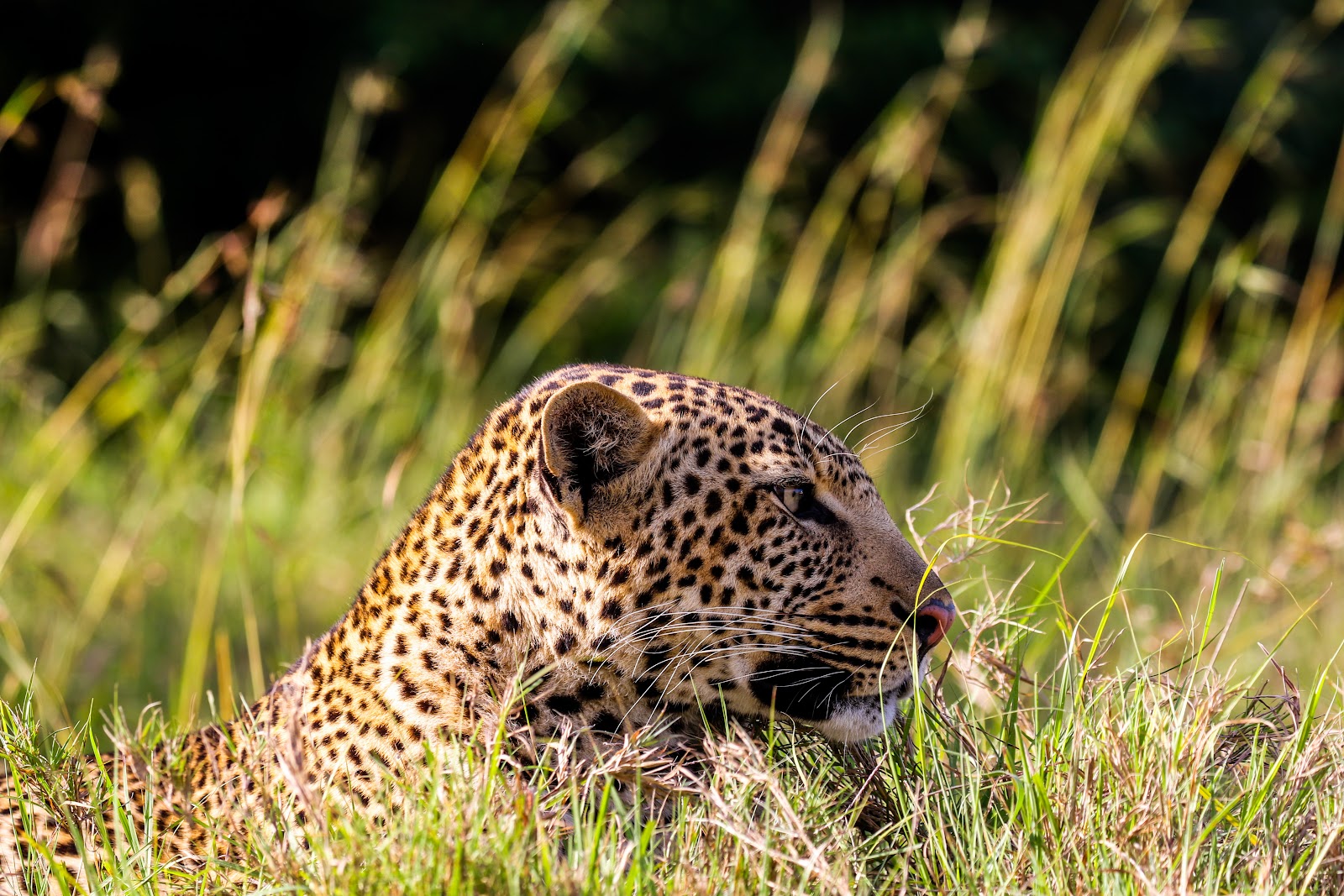
Leopards: elusive, nocturnal, riverine specialists
Leopards are most often found in Tsavo’s moister, densely vegetated pockets: riverine forest along the Galana and Tsavo Rivers and rocky hills with good cover. Early morning and dusk drives near these zones give the best realistic odds.
Cheetahs: rare, open-country specialists
Cheetahs are a scarce sighting in Tsavo, but the open plains of Tsavo East are where they are most likely to appear during a daytime game drive.
Lions: Tsavo’s best-known predator
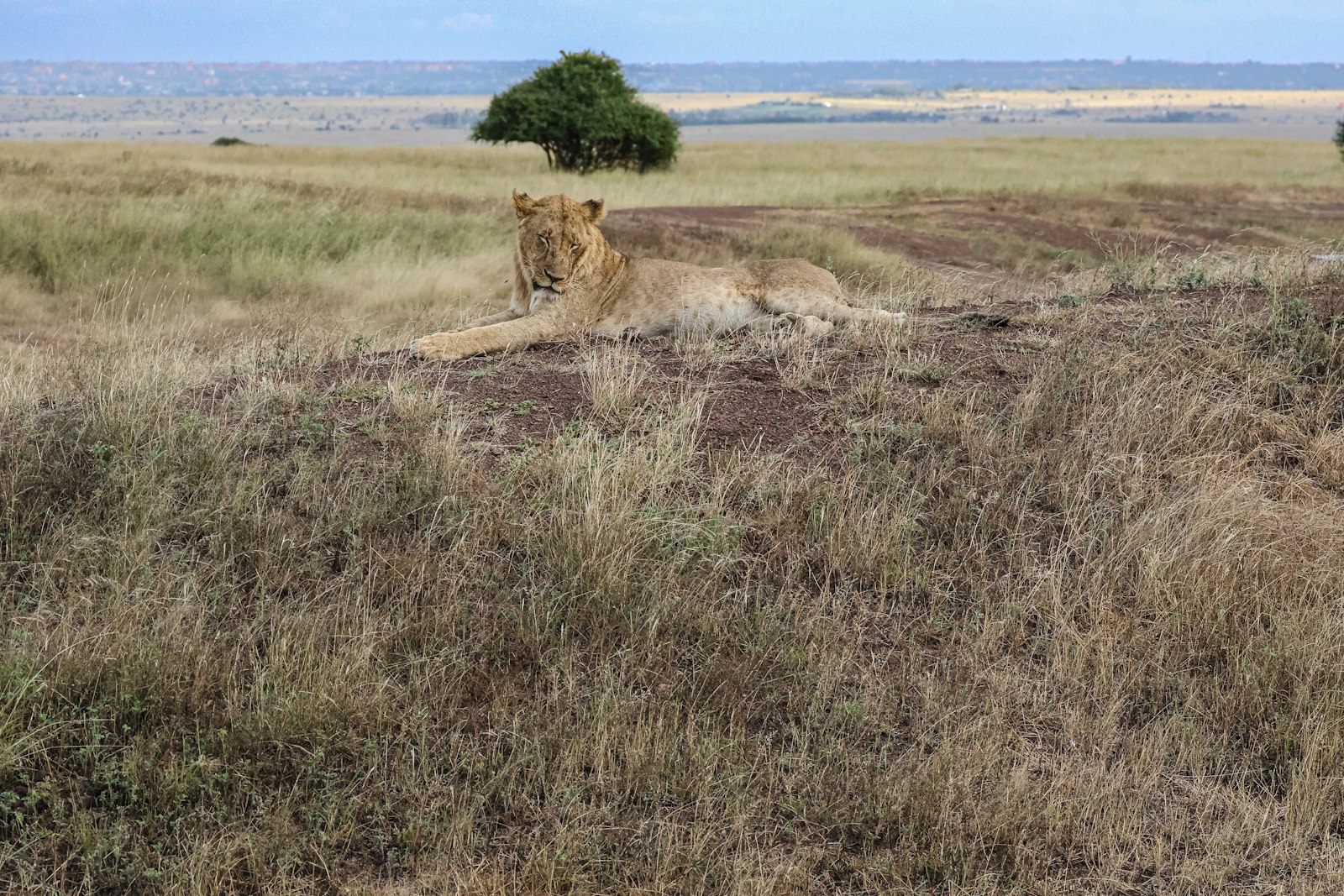
Tsavo’s lions, famous for the 1898 man-eaters, are spread across a far larger territory than Mara prides, so sightings take more searching but feel very rewarding.
Predator activity at dawn and dusk
Leopards, cheetahs, lions and spotted hyenas are all more active in the cooler hours than through the heat of midday, so the first and last drives of the day matter most.
Space, not density, is Tsavo’s advantage
You will not get Mara-style predator density here. You get the feeling of finding a big cat in true wilderness instead.
Tsavo big cats: the maneless lions
Many male lions in Tsavo have short, sparse manes or almost none at all. Researchers have linked this to the region’s heat and thorny scrub, where a heavy mane would be a burden, though the exact causes are still debated. The famous man-eaters of 1898 were maneless males too. Our guide to Tsavo lions and the man-eaters legend tells that story in full, and The Ghost and the Darkness true story separates film from fact.
Tsavo prides also tend to be smaller and spread over larger ranges than prides in the Mara. For visitors, that means a lion sighting is likely over a few days, but you may need to cover ground to find one.
The smaller cats of Tsavo
Beyond the three famous Tsavo big cats, the parks hold caracal, serval and African wildcat. Caracals, with their tufted ears, are seen now and then on the drier plains, often in the early morning. Servals prefer long grass near water, and wildcats are most often glimpsed at dusk. All three are a bonus rather than something to plan around.

Tsavo East vs Tsavo West for Big Cats
The two parks sit side by side but feel very different, and that shapes where the Tsavo big cats are easiest to see. This table sums up the difference.
| Cat | Tsavo East | Tsavo West |
|---|---|---|
| Lion | Open plains and the Galana River make prides easier to spot | Present, but thicker bush hides them |
| Leopard | Riverine forest along the Galana and around Lugard Falls | Rocky hills, lava country and the Mzima and Tsavo River areas |
| Cheetah | Best chance, on the flat open plains | Rare; open patches only |
| Caracal and serval | Occasional on drier plains | Occasional in grassland near water |
If big cats are your main goal, give Tsavo East at least one full day. If scenery matters as much as predators, Tsavo West’s springs and volcanic hills are worth the extra bush. Our Tsavo East vs Tsavo West guide compares both parks in detail.
Where Tsavo big cats are most often found
- Galana River (Tsavo East): riverine trees offer shade and cover for leopards, and prey comes to drink.
- Aruba Dam area (Tsavo East): a dry-season magnet for plains game and the lions that follow.
- Open plains south of the Galana: the best cheetah country in the park.
- Tsavo River and rocky hills (Tsavo West): leopard habitat with plenty of ambush cover.
East, West or Both for Your Cat Search?
Tell us which cats matter most to you and how many days you have, and we will suggest the right split between Tsavo East and Tsavo West.
Best Time to See Tsavo Big Cats
Season matters as much as time of day. In the dry months, from late June to October and from January to February, the bush thins out and animals gather at rivers, dams and waterholes. Prey concentrates, and the Tsavo big cats follow it, which makes them easier to find.
The long rains, from March to May, and the short rains in November and December turn Tsavo green. Water is everywhere, prey spreads out and tall grass hides resting cats. The parks are quieter and beautiful for birds, but predator sightings usually drop. Our best time to visit Tsavo guide covers each month.
- Late June to October: the best overall window for Tsavo big cats.
- January to February: hot and dry, with good sightings and fewer visitors.
- March to May: green and quiet; cats are harder to find.
- November to December: short rains; mixed, but often rewarding between showers.
Best time of day for Tsavo big cats
Leave camp at first light. The first two hours after sunrise are when lions are still active after a night’s hunting and leopards may be heading for a daytime resting tree. The last two hours before sunset are the second-best window. Midday is usually quiet, so use it for lunch, a rest or a stop at Mzima Springs.
How to Spot Tsavo Big Cats: 7 Proven Tips
- Drive the rivers. The Galana and Tsavo Rivers concentrate prey and cover; most leopard sightings happen near them.
- Watch the prey. Alarm calls from baboons, vervet monkeys or impala, and antelope all staring one way, often point to a hidden cat.
- Scan trees and rocks. Look for a hanging tail in a fig or acacia, or a shape on a kopje at dusk.
- Follow the vultures. Circling or settled vultures can lead to a kill, sometimes with lions still on it.
- Check fresh tracks. Good guides read paw prints in the red dust on the morning tracks.
- Stay patient. Sitting quietly at a likely spot for twenty minutes often beats racing around.
- Bring binoculars. In big country, a good pair of binoculars finds cats the naked eye misses.
A private vehicle helps a great deal, because you can stay at a sighting as long as you like and set off before dawn. See our private Kenya safari options for trips built around your pace.
How Many Days for Tsavo Big Cats?
Because the parks are so large, short visits rarely do the Tsavo big cats justice. One day gives you a taste, usually of Tsavo East from the coast. Two days improve your odds noticeably, and three days across both parks give a balanced trip with several dawn and dusk drives.
For keen wildlife watchers, four or five days let you split your time between the Galana River area and Tsavo West, and add Amboseli or Chyulu if you wish. Our how many days in Tsavo guide sets out sample itineraries.
- Day trip: possible from Mombasa or Diani; lions are a realistic hope, leopards a lucky bonus.
- 2 days: an evening and a morning drive, our 2 day Tsavo safari from Mombasa.
- 3 days: both parks, as on our Tsavo East and West safari, from USD 600 per person.
Costs, Fees and Where to Stay
Park entry is the main fixed cost of any Tsavo trip, and fees are paid electronically rather than in cash at the gate. Our Tsavo National Park entrance fees guide lists the current rates, and on our packages park fees are already included.
Where you sleep matters for Tsavo big cats too. A camp close to a river or waterhole puts you near the action for those early drives. Options on our site include Satao Camp and Ashnil Aruba Lodge in Tsavo East, and Kilaguni Serena and Finch Hattons in Tsavo West. Our Tsavo lodges and camps guide compares more choices.
Get a Written Quote for a Predator-Focused Tsavo Trip
Send your dates and group size, and we will price a Tsavo itinerary built around dawn and dusk drives, with park fees included. The best riverside camps book early in the dry season.
Request My Tsavo QuoteTsavo Big Cats vs the Masai Mara
The Masai Mara is Kenya’s best-known park for predators, and if seeing many cats in a short time is the priority, it is hard to beat. Tsavo offers something different: fewer vehicles, wilder scenery and the sense that every sighting has been earned.
Many travellers combine the two, or pair Tsavo with the coast. Our Tsavo vs Masai Mara guide explains the trade-offs, and our Masai Mara safari packages suit anyone who wants a high-density predator trip as well. For a wider view of the three species, read Kenya’s big cats compared.
Responsible Viewing of Tsavo Big Cats
Tsavo’s predators live in a working wilderness, and good behaviour keeps it that way. Stay on the tracks, keep noise down and never ask your guide to drive off-road towards a cat in a national park. Give hunting animals space, as a disturbed hunt can cost a cheetah its meal.
Do not use flash photography on cats at dusk, and never feed or call to animals. Lions and leopards in Tsavo are wild and potentially dangerous, so stay inside the vehicle unless your guide says otherwise. Conservation groups such as the Sheldrick Wildlife Trust work with the Kenya Wildlife Service to protect Tsavo’s wildlife, and your park fees help fund that work.
Photographing Tsavo Big Cats
A zoom lens of 200 to 400 mm suits most predator photography in Tsavo, because cats are often some distance from the track. A beanbag on the vehicle window keeps long lenses steady. The low light of dawn and dusk gives the warmest colour, and Tsavo’s red dust adds a glow to backlit shots.
Dust gets everywhere, so keep your camera in a bag between sightings and carry a lens cloth. For more on the wider park, see the Magical Kenya tourism site and our story on the red elephants of Tsavo.
Tsavo Big Cats at a Glance
- Park size: more than 22,000 km² across Tsavo East and Tsavo West.
- Cheetahs: scarce and patchily spread across open areas, mainly in Tsavo East.
- Leopards: riverine and rocky zones; largely nocturnal, so daytime sightings need patience.
- Lions: part of an important cross-border lion stronghold; many males are maneless.
- Best viewing windows: early morning and dusk, in the dry season.
Go Deeper on Tsavo’s Wildlife
Pair this with our guides to the Tsavo lions and man-eaters legend and red elephants of Tsavo for the full wildlife picture. If you are starting in the capital, see our Kenya safari from Nairobi page, and for leopards elsewhere, our best parks for leopards in Kenya.
Search for Tsavo’s Big Cats With a Guide Who Knows the Rivers
From the Galana’s leopard trees to the cheetah plains of Tsavo East, we plan your drives around the hours and places that give you the best chance.
Frequently Asked Questions
Are there leopards in Tsavo National Park?
Yes. Leopards live in both Tsavo East and Tsavo West, but they are shy and largely nocturnal. They favour riverine forest along the Galana and Tsavo Rivers and rocky hills with good cover. Early morning and dusk drives near these areas give you the best chance of a daytime sighting.
How common are cheetahs in Tsavo?
Cheetahs are scarce in Tsavo and spread patchily across the more open country. The flat plains of Tsavo East give the best odds, especially in the dry season when the grass is short. Treat a cheetah as a lucky bonus, and visit the Masai Mara if cheetahs are a must.
Why do Tsavo lions have no manes?
Many male Tsavo lions have short or almost no manes. Researchers link this to Tsavo’s heat and thorny scrub, where a heavy mane would be costly, though the exact reasons are still debated. The famous man-eaters of 1898 were maneless males, and the trait is still common today.
When is the best time to see Tsavo big cats?
The dry seasons, from late June to October and from January to February, are best for Tsavo big cats, because prey gathers near water and the bush thins. Within each day, the first two hours after sunrise and the last two before sunset are when lions, leopards and cheetahs are most active.
Is it harder to see predators in Tsavo than the Masai Mara?
Generally yes. Tsavo is many times larger than the Masai Mara National Reserve, so its predators are spread across far more ground. Lions are a realistic hope over a few days, while leopards and cheetahs need luck. The reward is that sightings are usually private and feel truly wild.
How many days do I need to see Tsavo big cats?
Plan at least two days, and ideally three across both parks. That gives you several dawn and dusk drives, which is when Tsavo big cats are most active. A day trip from the coast can produce lions, but leopards and cheetahs are much more likely on a longer visit.