Tsavo vs Masai Mara is not a contest with one winner: it is a choice between two very different Kenya safaris. The Masai Mara gives you the Great Migration, dense big cat sightings and the classic open savannah. Tsavo gives you enormous space, red elephants, volcanic landscapes and far fewer vehicles at each sighting.
Picture two mornings. In the first, you watch a lioness stalk wildebeest on golden grass while the herds stretch to the horizon. In the second, a family of dust-red elephants walks out of the scrub, and yours is the only vehicle for miles. This guide to Tsavo vs Masai Mara helps you decide which morning, or both, belongs in your trip.
✅ Tsavo vs Masai Mara: Quick Answer
- Choose the Masai Mara for the Great Migration (July to October), high predator density and the best odds on a short trip.
- Choose Tsavo for space, solitude, red elephants and dramatic volcanic scenery, with good viewing all year.
- Combining with the beach: Tsavo sits between Nairobi and Mombasa, so it pairs naturally with Diani or Watamu.
- Park fees: Tsavo is USD 80 per non-resident adult per park per 24 hours; the Mara reserve is USD 100 a day (January to June) or USD 200 (July to December).
- First safari, 3 to 4 days: the Mara usually wins. Second safari or longer trip: Tsavo, or both.
Still torn on Tsavo vs Masai Mara? Tell us your month and what matters most, and we will suggest the right park.
Match Me to a ParkTwo Very Different Kenyas
The Masai Mara National Reserve covers roughly 1,510 km² of open, rolling grassland in south-west Kenya, bordered by private conservancies and, to the south, Tanzania’s Serengeti. It is famous for the Great Migration and for some of the highest densities of lions, cheetahs and leopards in Africa. Because the ecosystem is compact and rich, even a short visit tends to deliver a lot.
Tsavo is a different scale altogether. Tsavo East alone covers roughly 13,747 km², and Tsavo West adds roughly 9,065 km² more. Together they are around fifteen times the size of the Mara reserve. Here, semi-arid bush and red volcanic soil replace green grass, wildlife is resident rather than migratory, and animals are spread thinly enough that each sighting feels earned. In the Tsavo vs Masai Mara debate, neither park is better; they suit different priorities.

Tsavo vs Masai Mara at a Glance
This table sums up the main Tsavo vs Masai Mara differences for a typical international traveller.
| Factor | Masai Mara | Tsavo (East and West) |
|---|---|---|
| Size | About 1,510 km² reserve, plus conservancies | About 22,800 km² across two parks |
| Landscape | Open grassland, rivers, acacia | Red earth, dry bush, lava flows, springs |
| Signature sight | Great Migration and river crossings | Red elephants and wide, empty views |
| Predator density | Very high | Lower, more spread out |
| Crowds | Busy at peak sightings, July to October | Quiet in most areas, all year |
| Best time | July to October for the migration | Dry months, June to October and January to February |
| Park fee (non-resident adult) | USD 100 a day Jan–Jun, USD 200 Jul–Dec | USD 80 per park per 24 hours |
| Pairs well with | Lake Naivasha, Amboseli, Serengeti | Amboseli, Diani, Watamu, Mombasa |
7 Key Tsavo vs Masai Mara Differences
Each of these seven differences can tip the decision one way or the other. Read them with your own trip in mind.
Size and Landscape: compact savannah vs vast scrubland
The Mara is the classic East African grassland most people picture for a safari. Tsavo is far larger, with semi-arid bush, red volcanic soil, lava flows and rocky hills that give it a starker, wilder character.
Wildlife Density: the Mara wins on numbers, Tsavo on discovery
The Mara’s compact ecosystem concentrates sightings, especially of big cats. Tsavo’s elephants, lions and buffalo are real and plentiful, but spread across far more territory, so sightings take longer to find.
The Great Migration: Mara only, within Kenya
The wildebeest migration and its river crossings happen in the Mara, not Tsavo. If that spectacle is your priority, the Mara is the only choice of the two.
Crowds: Tsavo wins clearly
The Mara can feel busy at peak-season sightings and migration crossing points. Tsavo’s scale keeps vehicle numbers per sighting much lower, so choose it for space and solitude.
Timing: a defined peak vs year-round consistency
Mara peak season runs from July to October, with higher fees and more vehicles. Tsavo rewards visitors all year, with slightly better viewing in the dry months (June to October and January to February) but no single must-visit window.
Logistics and the Beach: Tsavo’s practical advantage
Tsavo sits on the Nairobi to Mombasa corridor, so it fits neatly before or after a beach stay in Diani or Mombasa. The Mara, in Kenya’s south-west, needs a flight to reach the coast.
Cost: different fee structures
Tsavo’s per-park fee is lower, and it does not double in high season as the Mara’s does. Visiting both Tsavo East and Tsavo West means paying each park separately, though.
Wildlife: What You Will See in Each Park
Both parks hold the classic big game, but the experience of finding it is very different. In any Tsavo vs Masai Mara comparison, this is the point most travellers care about most.
Masai Mara wildlife
The Mara is big cat country. Lions are seen on most game drives, cheetahs hunt on the open plains, and leopards use the riverine forest along the Talek and Mara rivers. Elephants, buffalo, giraffes, topi, zebras, hippos and crocodiles are common. From roughly July to October, the migration herds of wildebeest and zebra arrive from the Serengeti, bringing river crossings and intense predator action. Black rhinos live in the reserve, but in small numbers, so a sighting is a bonus rather than a promise.
Tsavo wildlife
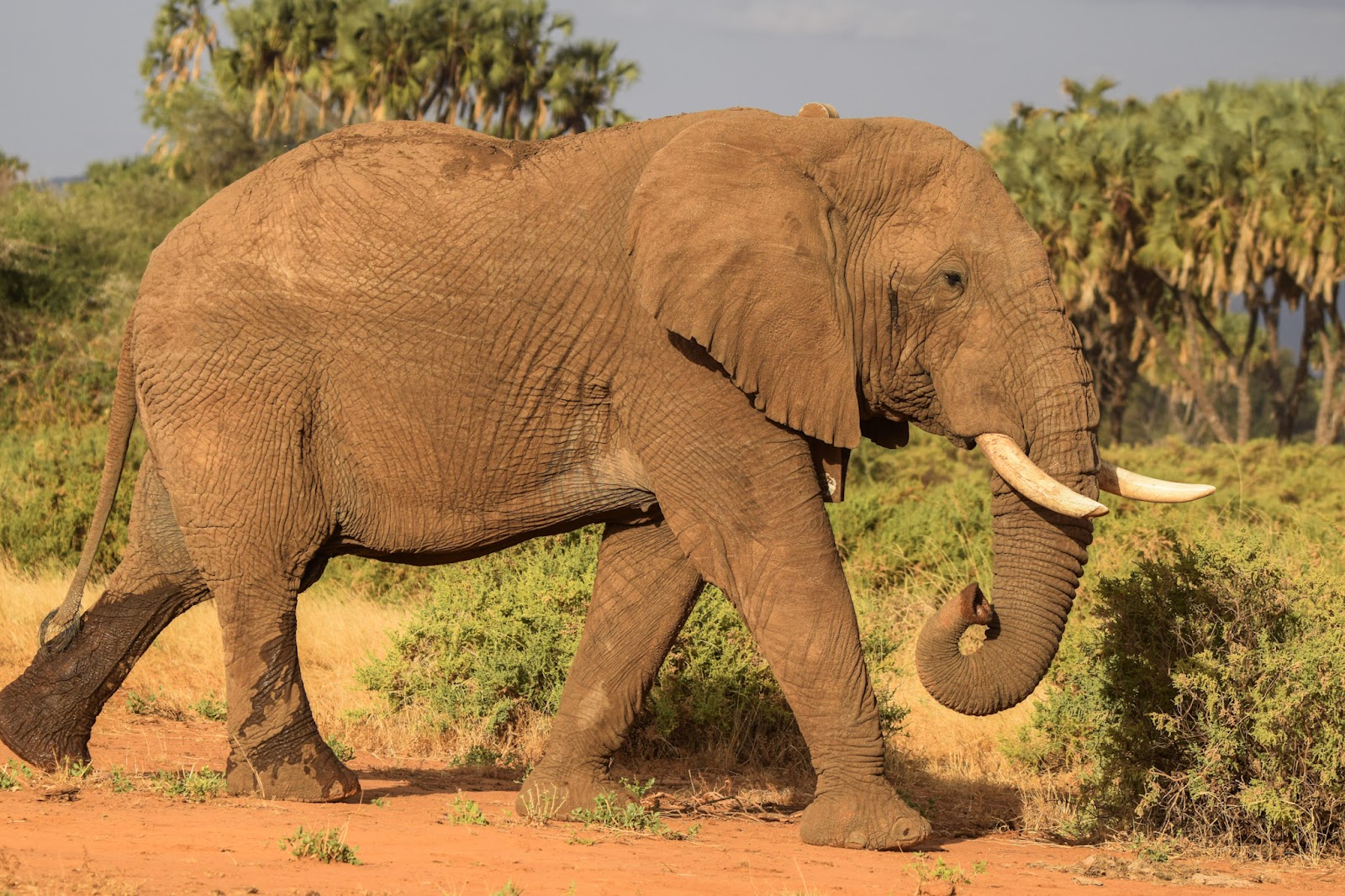
Tsavo is best known for its elephants, which turn red as they dust-bathe in the iron-rich soil. Lions are present, including the maneless males linked to the famous man-eaters of 1898. Tsavo also offers species you are less likely to see in the Mara, such as gerenuk, fringe-eared oryx, lesser kudu and, in Tsavo East, hirola in a small introduced population. In Tsavo West, the fenced Ngulia Rhino Sanctuary protects black rhinos, though sightings there take patience.
Tsavo vs Masai Mara for big cats
If your top goal is to watch lions, cheetahs and leopards, the Mara gives better odds in fewer days. Tsavo’s cats are wilder and more elusive, and finding one feels like a real achievement. Our big cats of Tsavo guide explains where and when they are most often seen.
Tsavo vs Masai Mara Scenery and Atmosphere
The Mara looks like the safari films: wide golden plains, flat-topped acacias, the Oloololo Escarpment on the western edge and herds that seem to go on forever. Balloon flights at dawn show the plains at their most beautiful. Its beauty is open, soft and generous.
Tsavo is rougher and more varied. In Tsavo West, you can walk at Mzima Springs, where clear water bubbles up from beneath lava fields, and climb the Shetani lava flow and Chaimu Crater. In Tsavo East, the Galana River and Lugard Falls cut through dry bush below the long Yatta Plateau. Our Tsavo West attractions guide covers these sights in detail, and the Tsavo wilderness experience guide describes how the space feels.
Which Should You Choose? Tsavo vs Masai Mara by Traveller Type
The right answer depends on who you are, how long you have and what you have already seen.
Tsavo vs Masai Mara for first-time visitors
For most first safaris of three or four days, the Mara is the safer choice. Density of wildlife means more sightings per hour, and the classic scenery matches what most people hope for. See our Masai Mara safari packages for road and fly-in options.
Returning travellers and photographers
If you have done the Mara before, the Tsavo vs Masai Mara question usually tips towards Tsavo, which feels fresh. Photographers love its red elephants, dramatic skies and the chance to work a sighting without other vehicles in the frame. The Mara remains outstanding for action shots of predators and river crossings.
Tsavo vs Masai Mara for families
Families often like Tsavo for its easy pairing with a beach stay, and the Mara for the near-guaranteed animal sightings that keep children engaged. Shorter drives from the coast make Tsavo practical with young children; a short flight makes the Mara easy too.
Travellers seeking solitude
If crowds are your biggest worry, Tsavo vs Masai Mara is an easy call: choose Tsavo. In the Mara, staying in a private conservancy is the best way to avoid busy sightings, as vehicle numbers there are limited.
Why Choose? Pair the Mara’s Cats With Tsavo’s Space
Many of our guests do both: the Mara for the big cat action, then Tsavo and the coast for wilderness and a beach finish. Tell us your total days and we will sketch the route.
Tsavo vs Masai Mara: Best Time to Visit
Timing is one of the clearest Tsavo vs Masai Mara differences. The Mara’s calendar revolves around the migration, while Tsavo is more even through the year.
- Masai Mara, July to October: migration herds, river crossings and busy predator action. This is also high season, with the higher park fee and more vehicles.
- Masai Mara, January to March: green, quieter and good value, with strong resident wildlife and young animals.
- Tsavo, June to October and January to February: dry seasons, when animals gather near water and the bush is thinner.
- Both parks, April to May: the long rains can make tracks muddy, and some camps close; it is also the quietest time.
November and December bring the short rains to both parks, usually as afternoon showers rather than full days of rain.
Getting There: Road, Rail and Air
The Mara is around five to six hours by road from Nairobi, or a short scheduled flight from Wilson Airport to one of its airstrips. Our Nairobi to Masai Mara distance guide compares the road and flight options.
Tsavo sits along the Nairobi to Mombasa highway. Tsavo East is closest to the coast, and day trips from Mombasa and Diani are possible. The Madaraka Express train between Nairobi and Mombasa also stops at Voi, near Tsavo East’s main gate. Tsavo West lies off the same corridor, closer to Amboseli. For Tsavo vs Masai Mara logistics, the simple rule is this: Tsavo is easy by road, the Mara is easiest by air.
Tsavo vs Masai Mara Costs and Park Fees
Park fees are a meaningful part of any Tsavo vs Masai Mara budget. In Tsavo, Kenya Wildlife Service charges non-resident adults USD 80 per park for each 24-hour visit, and Tsavo East and Tsavo West are ticketed separately. In the Mara reserve, non-resident adults pay USD 100 a day from January to June and USD 200 a day from July to December. Private conservancies charge their own fees, usually included in the camp rate. Our Tsavo entrance fees guide sets out every rate.
Package prices on our site give a feel for the difference. The Tsavo East day safari from Mombasa is listed from USD 230, the 2-day Tsavo and Taita Hills safari from USD 420, and the 3-day Masai Mara fly-in from Diani from USD 1,450. Final prices depend on dates, group size and lodge choice, and our packages include park fees.
Know Your Park? Get a Price With Fees Built In
Whether you picked Tsavo, the Mara or both, send your dates and group size and we will reply with a written quote that already includes park fees. The best Mara camps for July to October book early.
Price My Park ChoiceWhere to Stay in Tsavo and the Masai Mara
Both parks have a wide range of camps and lodges, from simple tented camps to luxury stays. The choice of base matters as much as the Tsavo vs Masai Mara decision itself.
- Tsavo East: Satao Camp overlooks a busy waterhole, and Ashnil Aruba Lodge sits near the Aruba Dam.
- Tsavo West: Kilaguni Serena Safari Lodge faces a floodlit waterhole, and Finch Hattons offers a luxury tented stay.
- Masai Mara: Governors’ Camp sits on the Mara River, Mara Serena is in the Mara Triangle, and Angama Mara looks down from the escarpment.
For more ideas, see our guides to Tsavo East luxury camps and luxury lodges in the Masai Mara.

Combining Tsavo and the Masai Mara in One Trip
You do not have to choose. Many travellers settle the Tsavo vs Masai Mara question by doing both on a trip of eight days or more. The two parks lie on opposite sides of Nairobi, so the most comfortable link is a short domestic flight, or a road day through Nairobi.
A popular shape is two or three nights in the Mara, a flight to the coast or Nairobi, two nights in Tsavo and then a few nights on the beach. Our 14-day Kenya Grand Slam safari runs from Samburu to Tsavo, and our safari combinations page shows more bush and beach routes. If Tsavo and Amboseli appeal, the 4-day Tsavo and Amboseli safari from Mombasa is listed from USD 1,050.
Conservation in Tsavo and the Mara
Whichever side of the Tsavo vs Masai Mara choice you land on, your park fees help fund rangers, anti-poaching work and community programmes in both ecosystems. Tsavo is managed by the Kenya Wildlife Service, while the Mara reserve is run by Narok County and the conservancies by landowners and partners.
In Tsavo East, the Sheldrick Wildlife Trust runs its Voi unit, where orphaned elephants are prepared for life back in the wild. Our guide to Sheldrick elephant orphans in Tsavo explains how a visit works.
More Comparisons to Help You Decide
If the Tsavo vs Masai Mara choice has opened up other questions, these guides compare the parks you are most likely to consider next:
- Tsavo vs Amboseli, for elephants and Kilimanjaro views.
- Masai Mara vs Amboseli, for big cats against elephant herds.
- Tsavo vs Meru, two underrated Big Five wildernesses.
- Tsavo East vs West, if Tsavo is your pick.
- The Masai Mara experience, to get a feel for the Mara before deciding.
For general destination ideas, the official Magical Kenya tourism site is also useful.
Tsavo vs Masai Mara: Final Verdict
Choose the Masai Mara if you want the migration, the highest chance of big cats in a short stay, or a first safari that matches the classic image. Choose Tsavo if you want space, quiet, red elephants, volcanic scenery or an easy pairing with the Kenyan coast. If you have eight days or more, combine both and enjoy the contrast. Browse our Tsavo safari options or a tailor-made private Kenya safari to get started.
Tsavo, the Mara or Both? Let Us Plan It Properly
Our Nairobi team knows both parks well. Share your dates, budget and what you most want to see, and we will recommend the right park, camps and route for your Kenya safari.
Frequently Asked Questions
Tsavo vs Masai Mara: which is better for a first Kenya safari?
For most first safaris, the Masai Mara is the better choice. Its compact size and high predator density give more sightings in fewer days, and from July to October the Great Migration adds river crossings. Tsavo suits travellers who value space, solitude and wilder scenery, or who are combining a safari with the beach.
Does the Great Migration happen in Tsavo?
No. Within Kenya, the wildebeest migration and its river crossings happen only in the Masai Mara ecosystem, usually from about July to October. Tsavo’s wildlife is resident year-round, so there is no single migration season. That steady pattern is one reason Tsavo offers good game viewing in almost any month.
Tsavo vs Masai Mara: which is less crowded?
Tsavo, by a wide margin. Its two parks together cover roughly fifteen times the area of the Mara reserve, which spreads visitors very thinly. The Mara can be busy at peak-season sightings, though staying in a private conservancy, where vehicle numbers are limited, makes a big difference to how crowded it feels.
Can you combine Tsavo and the Masai Mara in one trip?
Yes, and many travellers do. The parks lie on opposite sides of Nairobi, so the easiest link is a short domestic flight or a road day through the city. Allow at least eight days to enjoy both without rushing, and consider ending with a few nights on the coast near Tsavo.
Is Tsavo good for combining with a beach holiday?
Yes. Tsavo lies on the Nairobi to Mombasa corridor, so it fits naturally before or after a stay in Diani, Watamu or Mombasa. Day trips to Tsavo East from the coast are possible, and the Madaraka Express train stops at Voi, close to Tsavo East’s main gate.
Tsavo vs Masai Mara: which is cheaper?
Tsavo is usually cheaper on park fees. Non-resident adults pay USD 80 per park per 24 hours, compared with USD 100 a day in the Mara reserve from January to June and USD 200 from July to December. Lodge prices vary widely in both parks, so your choice of camp matters too.
How many days do you need in Tsavo and the Masai Mara?
Plan two to three nights in the Mara to see it well, and three nights to visit both Tsavo East and Tsavo West. Day trips to Tsavo East from the coast work if time is short. Our guide to how many days to spend in Tsavo explains three-day and five-day options.