
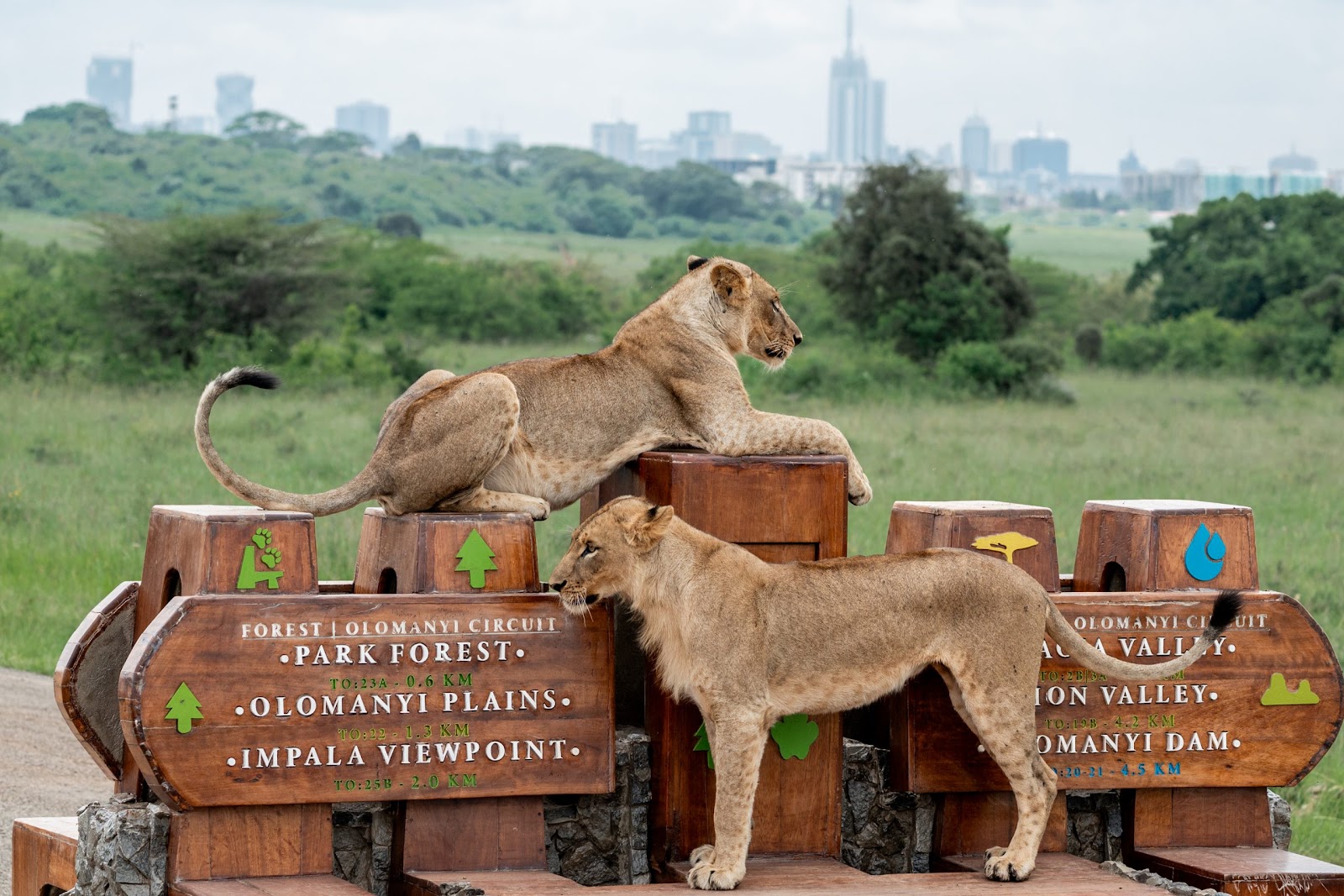
Nairobi National Park game drive mornings deliver a genuinely strange thrill: lions crossing open grassland with glass office towers stacked on the horizon behind them, a scene that photographs like two different cities superimposed on each other. Gates open at 6 am and close at 6 pm, and within that window the park’s 117 km² of grassland, forest and river valley — fenced on the city side, open to the wider Kitengela plains to the south — deliver genuine Big Four viewing (only rhino requires more patience than the rest) inside a drive that starts and ends at a Nairobi hotel. Whether you go self-drive in a rented 4×4 or with a professional guide, knowing how the circuits, timing and wildlife actually work makes the difference between an average outing and the sighting everyone in the vehicle still talks about at dinner. Sense of Adventure runs this drive routinely, and this guide reflects what actually happens on the ground.
Know Exactly What the Drive Involves
Circuits, timing and realistic sighting odds — let us plan your Nairobi National Park game drive properly.
How a Nairobi National Park Game Drive Actually Unfolds
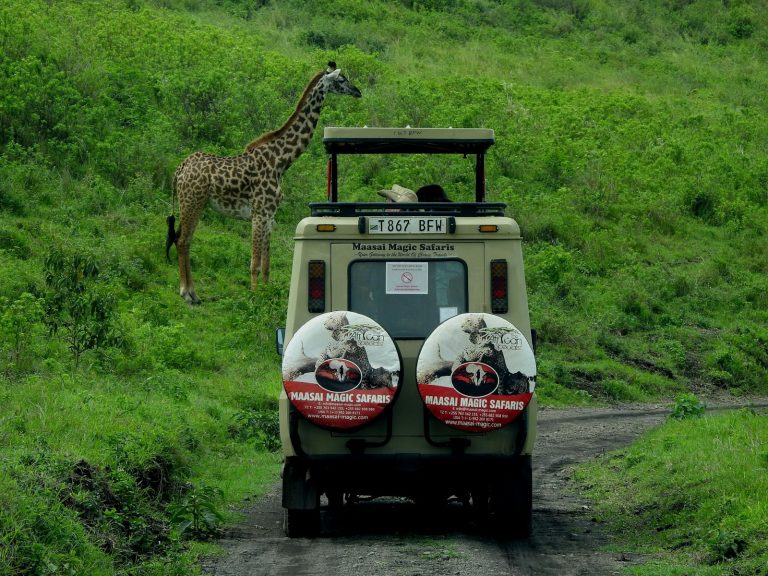
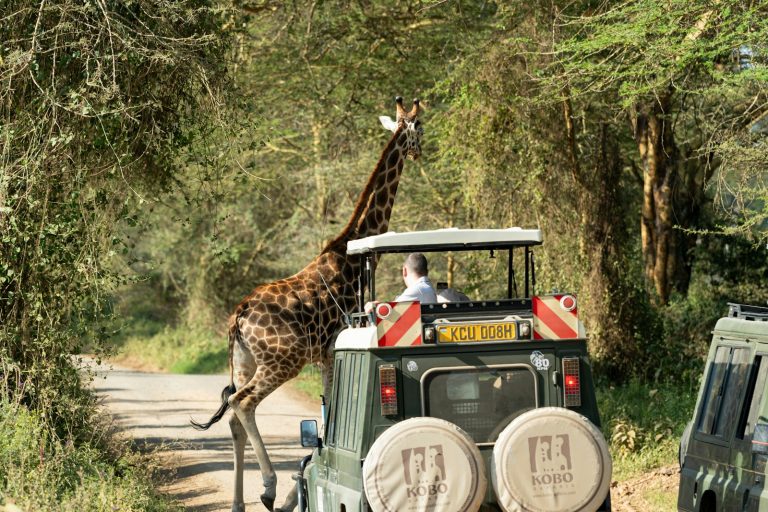
The park’s compact size relative to Kenya’s bigger reserves is precisely its advantage: circuits cluster around a handful of proven zones rather than requiring hours of driving between sightings. Dawn entries head first for the dam and river-valley circuits, where lion prides finish night hunting and rhinos — both black and white — browse the forest edge before retreating into thicket as the day warms; the open southern plains toward the Kitengela boundary hold buffalo, giraffe, zebra and eland in reliable numbers throughout the morning. Visitors choose between self-drive (a rented 4×4 with a park map, straightforward for confident drivers) and a guided vehicle with a professional driver-guide who already knows which circuit produced sightings that morning — the guided route consistently outperforms self-drive for finding predators specifically, since fresh sighting information travels between guides by radio in a way independent self-drivers simply do not have access to.
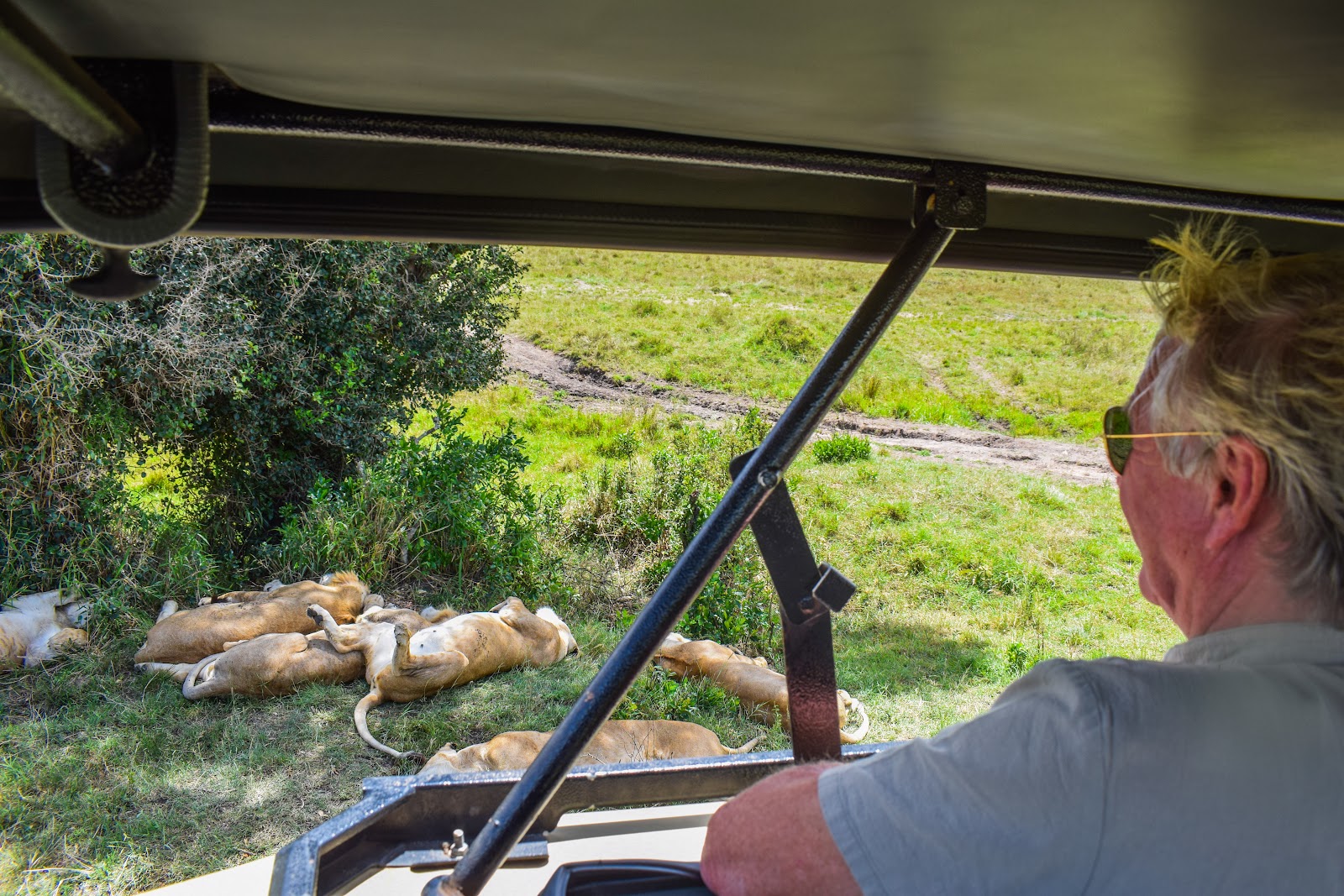
We nearly self-drove to save money, then our guide’s radio lit up about a lion sighting two circuits over and we reached it in ten minutes flat — no way we’d have found that alone. He also knew exactly which dam had rhino that week. The guide fee paid for itself in the first hour.
— Sense of Adventure guest, Nairobi National Park safari
The 7 Things to Know Before Your Nairobi National Park Game Drive
Guided vs Self-Drive — why local knowledge wins on predators
Self-driving is entirely permitted and straightforward with a rented 4×4 and the park’s official map, suiting confident, independent travellers on a budget. A guided drive, however, taps into a live network of driver-guide radio communication that shares fresh sightings across the whole park in real time — the single biggest factor in finding lions, leopards or rhino on any given morning. Neither approach is wrong — a self-drive morning still reliably delivers giraffe, zebra, buffalo and strong birdlife even without a single predator sighting, and plenty of independent travellers prefer the unhurried, self-paced freedom of driving their own route without a guide’s itinerary shaping the day.
The Dawn Predator Window — the first ninety minutes matter most
Lions and leopards are most active and visible in the hour or two after the 6 am gate opening, finishing night hunts and moving toward daytime resting cover — entering right at gate-open time, rather than mid-morning, meaningfully improves predator odds over a later start.
The Dam and River Circuits — where water concentrates everything
The park’s dams and the Mbagathi river valley draw wildlife reliably throughout the day, since permanent water is scarcer elsewhere in the park’s drier stretches — these circuits are the default starting point for any drive prioritising volume of sightings over any single specific species.
The Southern Plains for Big Herds — buffalo, zebra, giraffe and eland
Toward the open Kitengela boundary in the park’s south, herds of buffalo, zebra, eland and giraffe graze the grassland in numbers, with the classic elephant-free skyline backdrop that makes this stretch the park’s most photographed general-wildlife zone.
What You Won’t See Here — no elephants, but everything else is real Big Five country
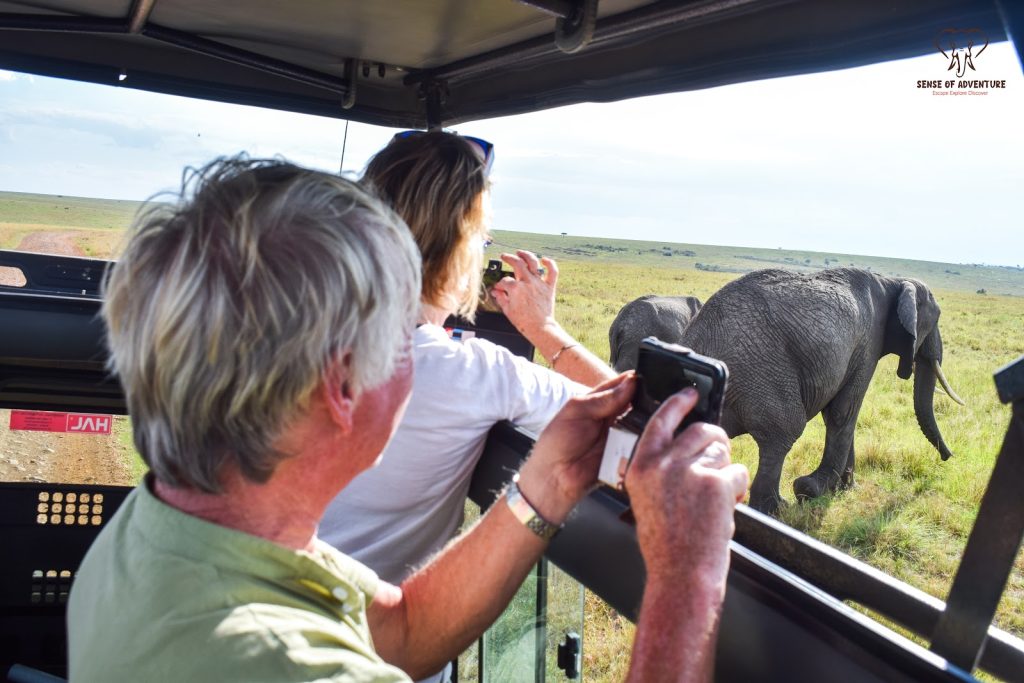
Nairobi National Park’s fenced boundary and limited space mean it does not support resident elephants — the one gap in an otherwise strong Big Five lineup, since lion, leopard, buffalo and both rhino species are all realistically achievable across a well-planned visit.
Realistic Timing for a Full Drive — budget half a day, not an hour
A worthwhile Nairobi National Park game drive runs two to four hours to properly cover multiple circuits rather than rushing one loop — pairing it with the Safari Walk, Animal Orphanage or Giraffe Centre on the same day makes efficient use of a single Nairobi outing.
Vehicle and Road Conditions — what a rented or guided vehicle actually handles
Most circuits are manageable in a standard safari 4×4 in dry conditions, though some inner tracks near the river valleys can get genuinely muddy after rain — a detail guided drivers navigate routinely and self-drivers should confirm at the gate before committing to a particular circuit.
Guided or Self-Drive — We’ll Set You Up Right
Radio-networked guides find predators faster than any self-drive circuit. Ask us to book your Nairobi game drive.
Nairobi National Park Game Drive Facts
- Park size: 117 km², compact enough that circuits cluster rather than requiring long inter-sighting drives.
- Gate hours: the park operates strictly 6:00 am to 6:00 pm for vehicle entry and exit.
- Big Five reality: lion, leopard, buffalo and both black and white rhino are realistic; elephants are absent from the park.
- Best window: the first 1-2 hours after 6 am gate opening are prime time for predator activity.
- Key circuits: the dam and Mbagathi river valley for concentrated wildlife; the southern Kitengela-facing plains for big herds.
- Guided advantage: driver-guide radio networks share fresh sightings park-wide, significantly improving predator odds over self-drive.
- Typical duration: 2-4 hours for a drive that properly covers more than one circuit.
Planning the Rest of Your Nairobi Wildlife Day
Pair your game drive with the Nairobi Safari Walk, the Animal Orphanage or the Giraffe Centre — see our full Nairobi National Park guide and Nairobi rhinos guide for species-specific detail. Ready to book: the Nairobi City & Wildlife day tour or our Nairobi National Park tours & packages guide. Whichever route you take, arriving right at gate-opening rather than mid-morning is the single change most likely to improve what you actually see.
Twenty Minutes From Your Hotel to Lion Country
A properly planned game drive is the difference between an average morning and the story you tell for years. Message us to book yours.
Frequently Asked Questions
What time does Nairobi National Park open for game drives?
Nairobi National Park operates for vehicle entry and exit strictly between 6:00 am and 6:00 pm. Entering right at gate-opening gives the best chance of catching lions and leopards still active from their night hunting before they retreat into cover as the day warms.
Can you self-drive in Nairobi National Park?
Yes — self-driving is fully permitted with a rented 4×4 and the park’s official map, and suits confident, budget-conscious travellers. A guided drive typically finds predators faster, however, since driver-guides share fresh sightings across the park by radio in real time.
What animals will I see on a Nairobi National Park game drive?
A well-planned Nairobi National Park game drive realistically delivers lion, leopard, buffalo and both black and white rhino, plus giraffe, zebra, eland and strong birdlife — the one Big Five gap is elephant, which the park’s fenced, compact boundary does not support.
How long should a Nairobi National Park game drive be?
Budget 2-4 hours for a worthwhile Nairobi National Park game drive covering more than one circuit — the dam and river valley for concentrated wildlife, and the southern plains for big herds — rather than rushing a single short loop.
Are there elephants in Nairobi National Park?
No — Nairobi National Park does not support resident elephants due to its compact, fenced boundary, unlike its strong lion, leopard, buffalo and rhino populations. Visitors wanting elephants alongside a Nairobi visit typically add Amboseli or Tsavo to their itinerary.
What is the best circuit for a first Nairobi National Park game drive?
First-time visitors are usually best served starting at the dam and river-valley circuits right after the 6 am gate opening, then moving toward the southern Kitengela-facing plains for herd viewing once the morning predator window has passed.