
Nairobi National Park rhinos deliver the most surreal conservation picture in Africa: a critically endangered black rhino browsing thornbush while glass towers glitter on the horizon behind it. Often described as the world’s only national park inside a capital city, the park doubles as one of Kenya’s most important rhino sanctuaries — its 117 km², fenced on three sides, proved so secure through the poaching crises that it became a breeding bank, exporting rhinos to restock parks across the country.
Both black and white rhinos live here, and the neighbouring Sheldrick nursery raises orphaned elephant calves you can meet at mud-bath hour. Sense of Adventure’s Nairobi days are built around this improbable, hopeful spectacle. This guide explains where and when to find Nairobi National Park rhinos, how the sanctuary works, costs, tours and how to plan your visit.
✅ Nairobi National Park Rhinos Quick Answer
- Which rhinos: critically endangered black rhinos in the thickets and forest edge, and white rhinos on the open southern plains.
- Best time: enter at the 6 am gate opening; the first two hours are best for black rhinos.
- How long: a half-day game drive gives realistic chances of both species.
- Park fee: USD 80 per day for non-resident adults in 2026, paid to Kenya Wildlife Service.
- From: our Nairobi City & Wildlife Day Tour starts at USD 120 and our Nairobi National Park Day Safari at USD 150 per person.
Rhinos Before Your Flight Even Boards
Half-day park safaris with rhino-country routing — the world’s only skyline-backed sanctuary is minutes from your hotel.
How a Capital City Became a Home for Nairobi National Park Rhinos
Nairobi National Park’s odd geography — fenced along the city edges, open only across the southern Kitengela plains — made it accidentally perfect for rhino security: patrollable, compact and under the nation’s nose. During the 1970s-80s poaching catastrophe, survivors were concentrated here, and the park’s black rhino population bred so successfully it became a source herd, translocating founders to Tsavo, Meru and the Laikipia sanctuaries.
Today a healthy population of black rhinos browsing the acacia thickets, and a smaller group of white rhinos cropping the open grasslands, share the park with lions, buffalo and giraffes, all within sight of downtown. Morning game drives along the forest edges and southern valleys find them with gratifying reliability.
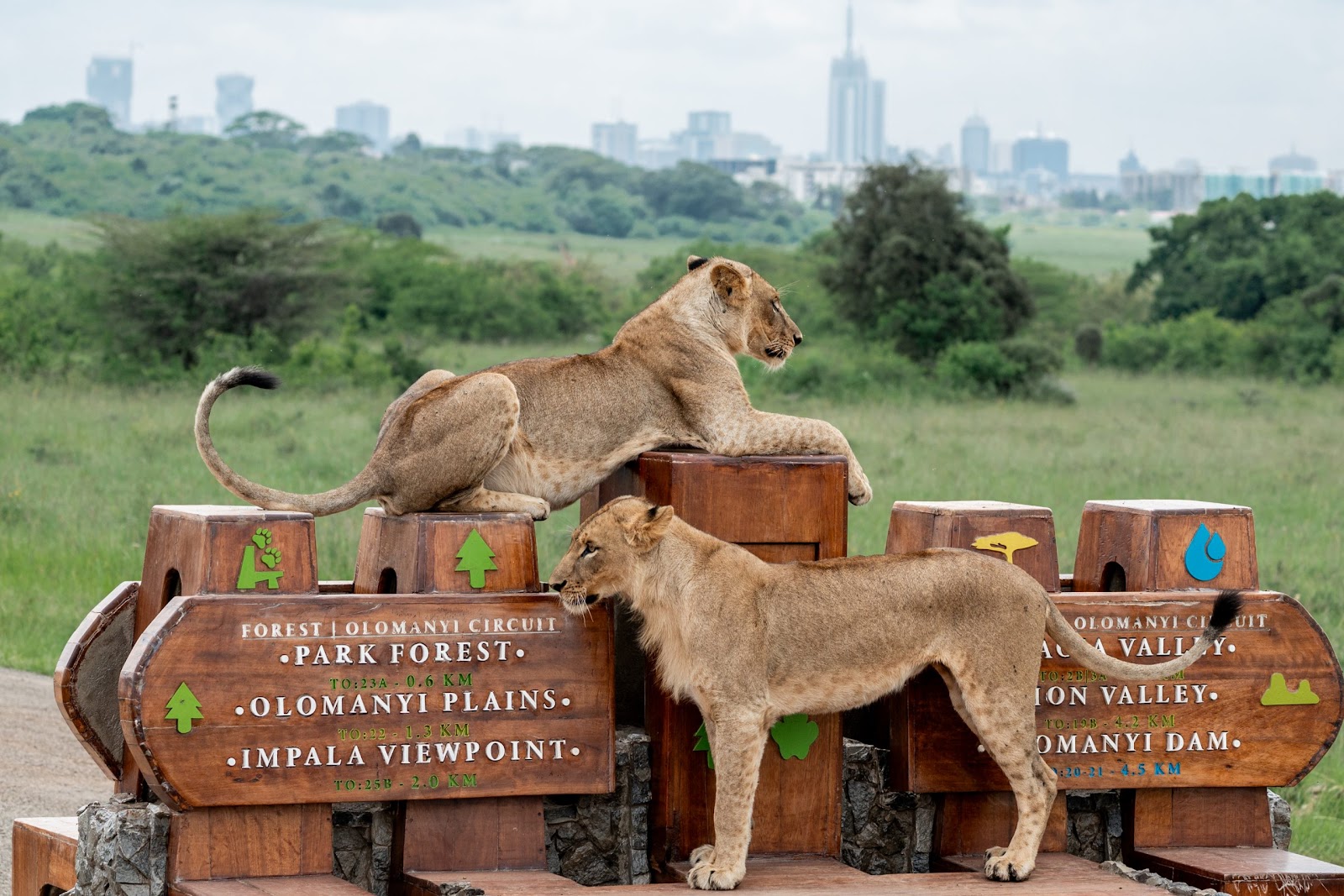
5 Essential Ways to Experience Nairobi National Park Rhinos
Black Rhino Against the Skyline — the photograph only Nairobi offers
The park’s signature frame — a browsing black rhino with the CBD towers stacked behind — happens along the northern forest edges and open leleshwa country in the first two morning hours. It is conservation’s strangest juxtaposition and its most hopeful: the city grew, and the rhinos stayed anyway.
White Rhinos on the Athi Plains — grazers in the open south
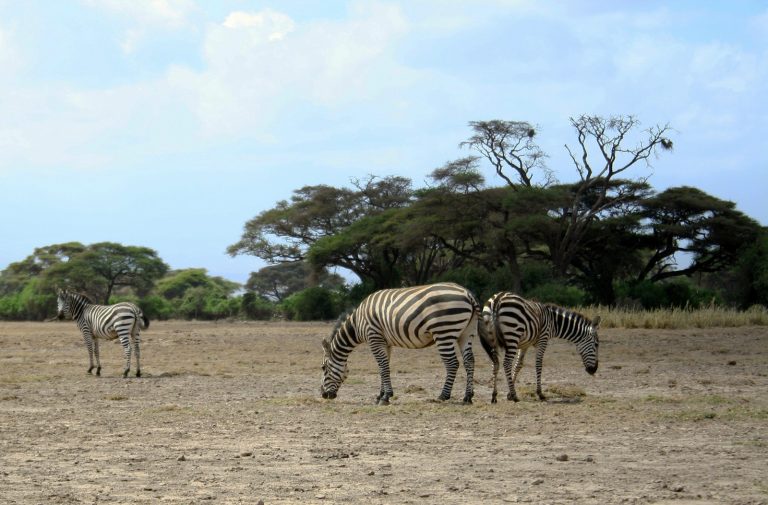
The park’s white rhinos favour the southern grasslands toward the Athi basin, grazing in relaxed family groups that let vehicles settle close. Against yellow grass with kongoni and zebra scattered behind, the viewing feels like a full-sized park — until a jet from Wilson banks overhead to remind you.
The Sheldrick Nursery Mud Bath — orphans growing up in public
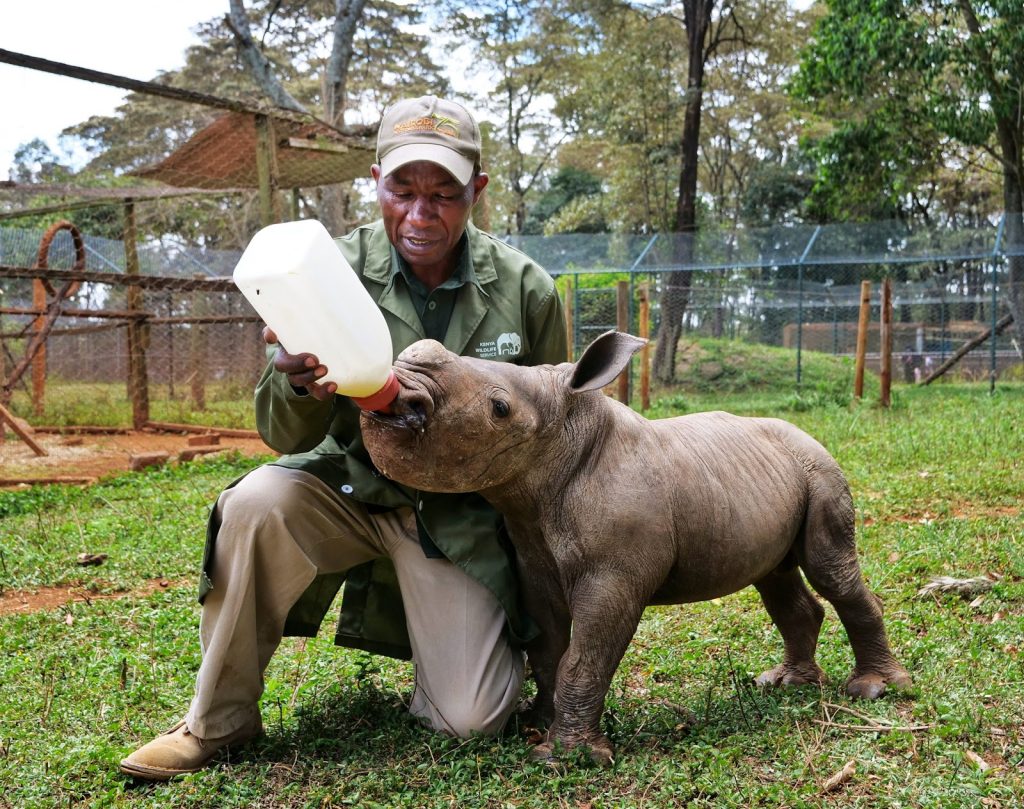
At the park’s edge, the Sheldrick Wildlife Trust nursery raises orphaned elephants — and over the years has also cared for rhino calves, including the blind black rhino Maxwell — with a daily public hour of milk bottles and mud wallowing. It is the emotional counterpoint to the wild sightings: the pipeline that returns orphans to protected wilds. Book ahead; it sells out.
The Ivory Burning Site — where Kenya drew the line
Inside the park stands the monument where, in 1989, Kenya burned 12 tonnes of confiscated ivory — the fire that changed global wildlife politics. Later burns followed, the largest in 2016. Standing at the ash memorials between rhino sightings gives the park’s security story its full weight.
Dawn at the Forest Edge — the connoisseur’s rhino hour
Gates open at six, and the first hour belongs to the browsers: black rhinos finishing their night rounds along the highland forest margin, bushbuck slipping between glades, lions walking the tracks home. By eight the city hum rises and the rhinos melt into thicket — the early alarm is the whole trick.
Half-Day Safari, Full-Size Wildlife
Hotel pickup, dawn gates, rhino circuits and the Sheldrick hour — Nairobi’s perfect morning, arranged in one message.
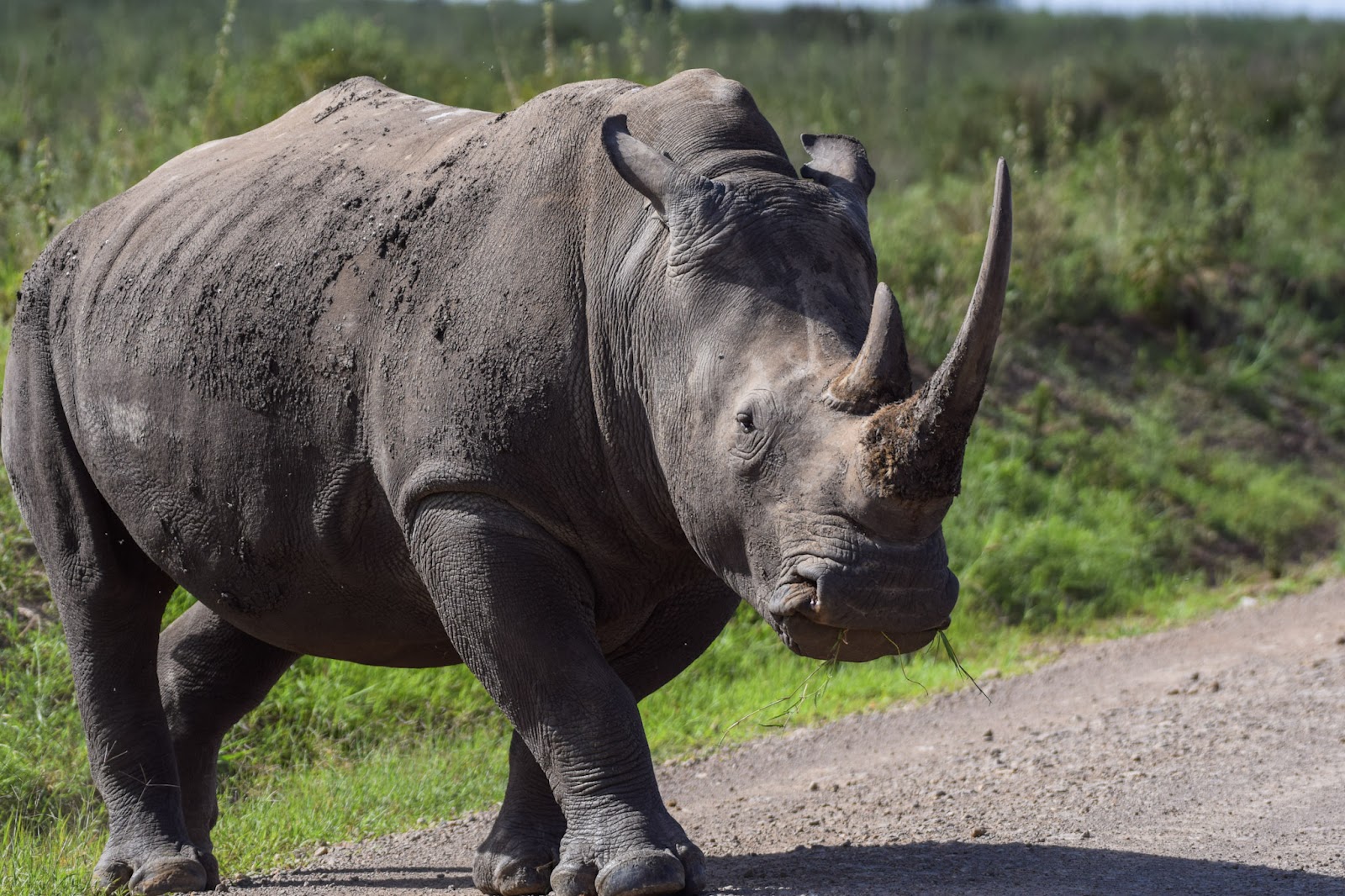
Nairobi National Park Rhinos: Key Facts
- Density: a strong rhino population in only 117 km² makes this one of the densest rhino sanctuaries in Kenya.
- Both species: black rhinos browse the thickets and forest edge; white rhinos graze the open southern plains.
- Source herd: Nairobi-bred black rhinos have restocked Tsavo, Meru and multiple Laikipia sanctuaries.
- History: gazetted 1946 as Kenya’s first national park; the ivory-burning monument commemorates the 1989 fire.
- Neighbours: the Sheldrick nursery sits on the park’s edge and the Giraffe Centre is close by — the classic Nairobi wildlife morning.
- Timing: dawn entry is decisive for black rhino; white rhinos show well all morning.
Black and White Rhinos: How to Tell Them Apart
Both species of Nairobi National Park rhinos are grey, so the colour names do not help. Look at the mouth, the head and the habitat instead. Your guide will help, but these simple clues make sightings far more rewarding.
Black rhinos in Nairobi National Park
The black rhino is smaller, with a pointed, hooked upper lip for grasping leaves and twigs. It carries its head high, prefers thick bush and forest edges, and is shyer and more nervous. The black rhino is listed as Critically Endangered on the IUCN Red List, which makes every sighting special.
White rhinos on the open plains
The white rhino is larger, with a broad, square mouth for grazing. It holds its head low to the ground, lives in open grassland and is usually calmer around vehicles. Mothers walk with their calves in front of them, while black rhino calves tend to follow behind.
What Else You Will See Alongside Nairobi National Park Rhinos
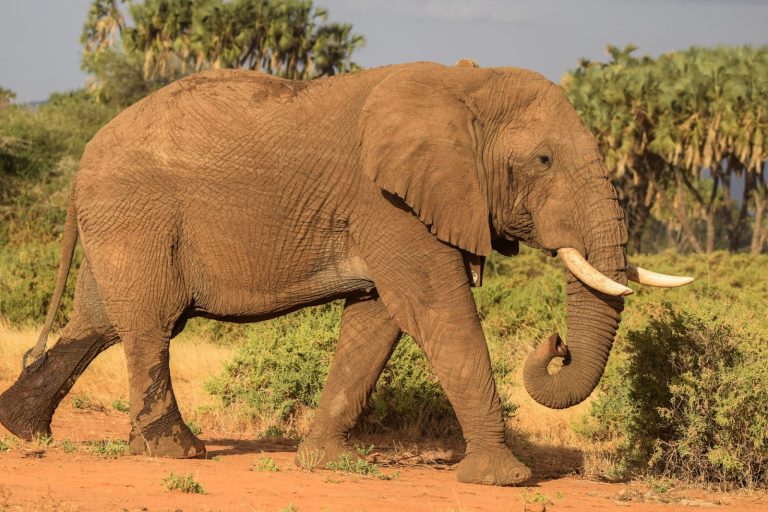
A rhino drive is never only about rhinos. The park holds lions, buffalo, Maasai giraffes, zebras, elands, kongoni, impalas and Grant’s and Thomson’s gazelles, as well as hippos and crocodiles in the river pools. Leopards and cheetahs live here too, though they are seen less often. There are no wild elephants, which is why the Sheldrick nursery makes such a good add-on.
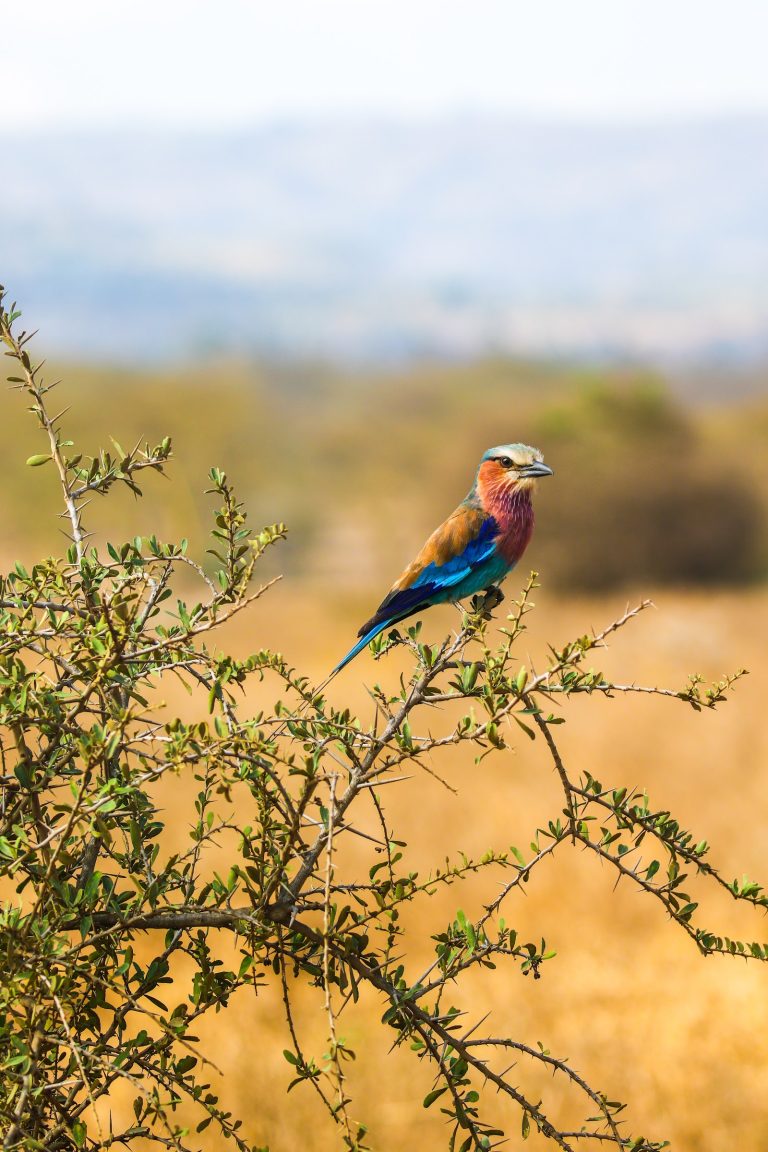
Birders can expect a long list, from ostriches and secretary birds on the plains to raptors over the forest edge. On a good morning you may tick off four of the Big Five, with Nairobi National Park rhinos the highlight, before most of the city has finished breakfast.
Where to Find Nairobi National Park Rhinos
Nairobi National Park rhinos move around the park, and guides share sightings each morning, but some areas are reliably good.
- The forest edge in the north and west: black rhinos browse here at dawn, close to the main gate.
- Leleshwa and acacia thickets: good cover for black rhinos during the day.
- The southern plains: open grassland where white rhinos graze in small groups.
- Dams and water points: rhinos drink and wallow here, especially in the dry months.
Our guides know the park well and keep in touch with other drivers, which raises your chances. Read more about a typical drive in our Nairobi National Park game drive guide.
Best Time to See Nairobi National Park Rhinos
The park is open all year, and its rhinos do not migrate. Time of day matters most: the first two hours after the 6 am opening are best, when black rhinos are still feeding in the open and the light is soft.
| Months | Conditions | Rhino viewing |
|---|---|---|
| January–February | Warm and dry | Very good; short grass and rhinos near water |
| March–May | Long rains | Fair; tall grass and some muddy tracks |
| June–October | Cool and dry | Excellent; the most reliable months |
| November–December | Short rains | Good between showers; green and quiet |
Weekends and Kenyan public holidays bring more local visitors, especially near the main gate in the afternoon. For the quietest rhino viewing, choose a weekday and go early. If you can only visit in the afternoon, stay until the gates close at 6 pm, when the light turns golden and animals become active again.
Nairobi National Park Rhinos: Costs and Tours
Kenya Wildlife Service sets the park fees. In 2026 a non-resident adult pays USD 80 per day to enter Nairobi National Park; see our full Nairobi National Park entrance fees guide for every category. The Sheldrick nursery charges its own visiting fee and must be booked in advance.
Our tours that include a game drive to look for Nairobi National Park rhinos:
- Nairobi City & Wildlife Day Tour — from USD 120 per person, with the elephant nursery and Giraffe Centre.
- Nairobi National Park Day Safari — from USD 150 per person, a private game drive with hotel pick-up.
- Nairobi Layover Tour — from USD 190 per person, with the park, baby elephants and giraffes, back at JKIA in time for your flight.
Compare more options on our Nairobi day tours page, or see every trip that starts in the capital on our Kenya safari from Nairobi page.
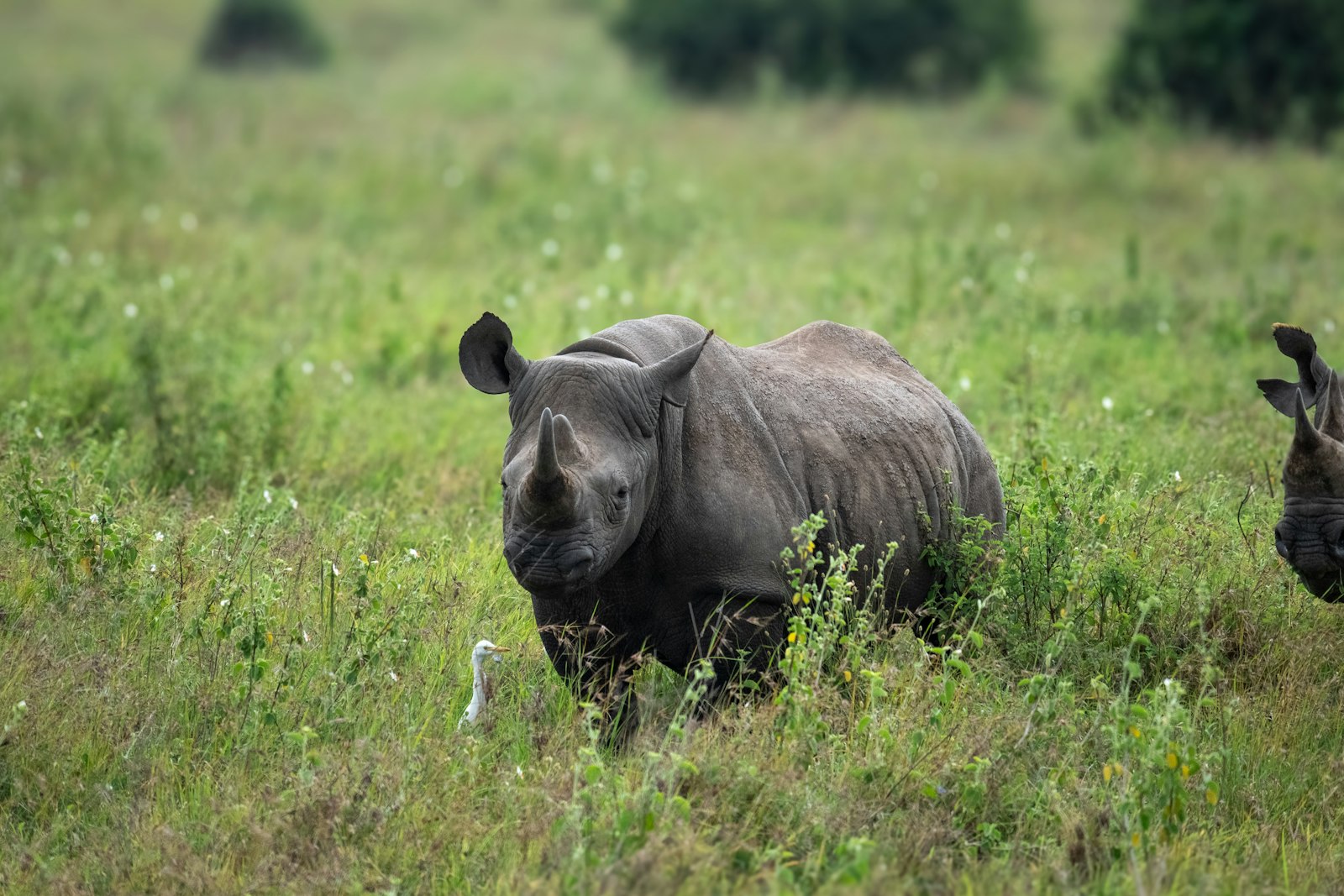
Etiquette for Viewing Nairobi National Park Rhinos
Rhinos have poor eyesight but excellent hearing and smell. To keep them relaxed, your driver will switch off the engine, keep a respectful distance and never block a rhino’s path. Talk quietly, stay seated and keep arms inside the vehicle.
If a rhino turns to face the vehicle, snorts or lifts its tail, it is uneasy. A good guide will back away slowly and give it space, even if that means losing the photograph.
Never share the exact location of rhinos on social media in real time. Poaching remains a threat across Africa, and many conservationists ask visitors to turn off geotagging on rhino photos. Following Kenya Wildlife Service rules helps protect these animals.
Photographing Nairobi National Park Rhinos
- Use the skyline: a 70–200 mm lens frames a rhino with the city behind; longer lenses blur the towers out.
- Go early: dawn light is soft and warm, and black rhinos are most active.
- Shoot low: lean on the window frame rather than standing up through the roof for a more natural angle.
- Be patient: rhinos often lift their heads after a few minutes of quiet.
- Turn off geotagging: protect the animals by removing location data before you post.
Supporting Rhino Conservation in Kenya
Your park fee goes to Kenya Wildlife Service and helps fund ranger patrols, fencing and monitoring. Visiting the nursery supports the Sheldrick Wildlife Trust, which rescues orphaned elephants and has also cared for orphaned rhinos. Choosing a responsible, licensed operator and following the park rules all help protect Nairobi National Park rhinos for the future.
If you want to see more rhinos on your trip, Lake Nakuru National Park is another important sanctuary; see our Lake Nakuru safari page.
Building the Perfect Nairobi Wildlife Day
Our Nairobi City & Wildlife day tour strings the park, Sheldrick nursery and Giraffe Centre into one seamless morning; see also our guide to choosing between the Giraffe Centre and the elephant orphanage. The wider park story lives in our Nairobi National Park safari page, and layover travellers should read the Nairobi layover guide.
Want more time and your own vehicle? Ask about a private Kenya safari that starts with a dawn rhino drive and continues to the Masai Mara.
Plan Your Trip to Kenya
Most visitors need a Kenya eTA from the official eTA Kenya portal. UK travellers should check the latest GOV.UK travel advice for Kenya, and you can find more ideas for your trip on Magical Kenya.
The Only Skyline With Rhinos In It
Seven kilometres from your Nairobi hotel, a sanctuary is quietly saving a species. Come see it at dawn.
Frequently Asked Questions
Are there rhinos in Nairobi National Park?
Yes — Nairobi National Park protects both black and white rhinos in just 117 km², making it one of the densest rhino sanctuaries in Kenya. Black rhinos browse its forest edges and thickets while white rhinos graze the open southern plains, all against the city skyline.
Why is Nairobi National Park important for rhinos?
Nairobi National Park served as a secure breeding bank through Kenya’s poaching crises — its black rhinos bred so well that the park became a source herd, supplying founder rhinos to restock Tsavo, Meru and the Laikipia sanctuaries. It remains a cornerstone of Kenya’s rhino recovery.
Where can I see baby rhinos in Nairobi?
Wild rhino calves are seen regularly inside Nairobi National Park, usually close to their mothers. The Sheldrick Wildlife Trust nursery on the park’s edge mainly raises orphaned elephants, but it has also cared for orphaned rhinos over the years, including Maxwell, a blind black rhino who became a visitor favourite.
What time is best to see rhinos in Nairobi National Park?
Enter Nairobi National Park at the 6 am gate opening for black rhinos — they finish night feeding along the forest edges in the first cool hour. White rhinos graze the southern grasslands visibly throughout the morning. Afternoons are slower but the skyline light improves.
How much of a day do I need for Nairobi National Park’s rhinos?
A half-day is enough: four hours in Nairobi National Park delivers realistic sightings of both rhino species plus lions, buffalo and giraffes, and pairs neatly with the Sheldrick nursery’s late-morning public hour. It slots before an afternoon flight with time to spare.
Are Nairobi National Park rhinos guaranteed?
No sighting is ever guaranteed, but Nairobi National Park rhinos are seen on most morning drives with an experienced guide. Your chances are best if you enter at 6 am, spend at least three to four hours in the park and visit in the dry months, when the grass is short.
How much does it cost to see Nairobi National Park rhinos?
The KWS park fee for non-resident adults is USD 80 per day in 2026. Our Nairobi City & Wildlife Day Tour starts at USD 120 per person, our Nairobi National Park Day Safari at USD 150 and our Nairobi Layover Tour at USD 190, with transport and guiding included.
Can I see Nairobi National Park rhinos on a layover?
Yes, if you have enough time. With an approved Kenya eTA and around eight hours or more between flights, a private half-day game drive is realistic, as the park is close to JKIA. Our Nairobi Layover Tour is planned around your flight times so you are back at the airport with time to spare.