

Why safari clothes are khaki comes down to three practical reasons that have little to do with fashion: neutral tones blend into dry grass and keep you less visible to wildlife, they hide dust far better than bright colors, and certain colors actively attract biting insects or are outright illegal to wear. Khaki, olive, sand and stone are not a style choice invented by outfitting catalogs; they solve real problems that show up the moment you step off the vehicle. You spot a lion resting in tall gold grass, and realize your own beige shirt is doing exactly the same trick. You brush a full day of red Mara dust off your trousers and it barely shows. Sense of Adventure guides pack accordingly, because the wrong colors genuinely change what you see and how comfortable you are.
Not Sure What to Pack for Your Safari?
Message us your itinerary and we will send a packing list tailored to your parks and season.
The Real Reasons Behind Khaki Safari Clothing
Neutral tones like khaki, olive and sand evolved as the safari standard because they mirror the color of dry savanna grass and dust, making you less visually jarring to wildlife and less obvious to other guests trying to photograph the same animal. Dark blue and black carry a separate, more specific warning: both colors are documented to attract tsetse flies, an aggressive biting insect found in pockets of Kenya and Tanzania’s bush country, well beyond simple sun-comfort logic.
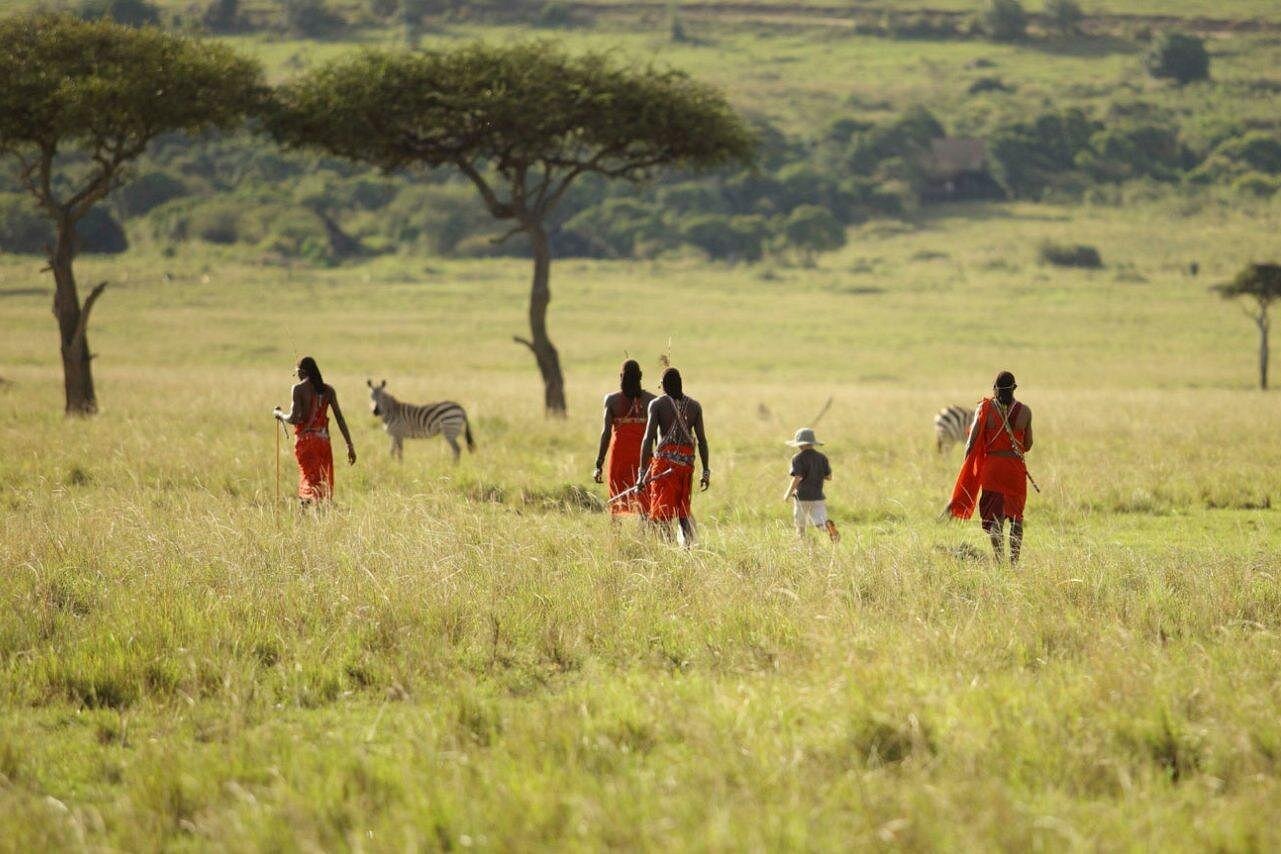
I packed a navy hoodie for cool mornings because it was what I already owned. By day two our guide gently pointed out I was collecting tsetse flies like a magnet compared to everyone else in beige. I bought a khaki fleece at the lodge shop and the difference was immediate.
— Sense of Adventure guest, Laikipia walking safari
5 Color Rules Worth Actually Following
Camouflage print — illegal for civilians, not just discouraged
Kenya, Tanzania, Uganda and several other African countries reserve camouflage-pattern clothing for military and police use, and civilians wearing it can be stopped, questioned or have it confiscated at customs. This is the one rule with real legal weight, not just a style preference.
Dark blue & black — the tsetse fly magnets
Dark blue and black clothing is specifically linked to attracting tsetse flies, which deliver a painful bite and, in some areas, can transmit disease. This matters most in wooded and riverine sections of Tsavo, South Luangwa-style bush and parts of the Mara, less so on open plains where tsetse are rarer.
Bright white & neon — visible, glaring, and quick to stain
Bright white and neon colors stand out sharply against tan grass, alerting wildlife earlier than muted tones and drawing camera-lens glare on sunny days. They also show red laterite dust within an hour, which is a bigger practical downside on a multi-day trip with limited laundry access.
Khaki, olive, sand & stone — the reliable four
These four neutrals blend into dry-season grass and dust, hide stains well, reflect heat better than dark colors, and are universally accepted at every lodge and border crossing. Packing two or three interchangeable tops and bottoms in these tones covers a full week’s safari with easy rewearing.
Exceptions where color rules relax
Once you are back at the lodge pool or heading to a beach extension, color rules disappear entirely, since the concern only applies to game drives and walking safaris. Gorilla trekking in dense Uganda/Rwanda forest is more forgiving on exact shade too, since gorillas are far less flighty than plains game.
Book Your Safari, We’ll Send the Exact Packing List
Get a color and gear checklist matched to your specific parks and travel month.
Quick Facts: Safari Clothing Colors
- Best colors: khaki, olive, sand and stone, all 4 blend into dry grass and hide dust.
- Camouflage: illegal for civilians in Kenya, Tanzania, Uganda; can be confiscated at customs.
- Worst for insects: dark blue and black, both documented to attract tsetse flies.
- Worst for visibility: bright white and neon, both alert wildlife earlier and glare in photos.
- Where rules relax: lodge pool areas, beach extensions and gorilla trekking in dense forest.
- Practical count: 3 interchangeable neutral outfits cover a full week-long safari comfortably.
Getting Your Full Packing List Right
Clothing color is one piece of a bigger packing puzzle; our Kenya safari packing list covers footwear, layering and gear alongside color guidance, while our Kenya safari checklist rolls clothing into the wider pre-departure list of documents and bookings. Travelers heading specifically to gorilla forest terrain should also check our Uganda gorilla trekking packages for terrain-specific footwear advice.
Ready to Plan Your Safari Wardrobe and Trip Together?
Message us your dates and destinations and we will send tailored packing guidance alongside your itinerary.
Frequently Asked Questions
Why do safari clothes have to be khaki?
Safari clothes are traditionally khaki because neutral tones blend into dry savanna grass and dust, making you less visually startling to wildlife, and because khaki hides stains and reflects heat better than dark or bright colors over long days in an open vehicle.
Can I wear camouflage clothing on safari?
No, camouflage-pattern clothing is illegal for civilians in Kenya, Tanzania, Uganda and several other African countries, reserved for military and police use, and travelers wearing it risk it being confiscated or questioned at customs, so it is best left at home entirely.
What colors should I avoid on safari?
Avoid dark blue and black, which are documented to attract tsetse flies in bush and woodland areas, along with bright white and neon colors, which stand out to wildlife, glare in photographs, and show dust and stains faster than neutral tones.
Do I really need special safari clothing, or will regular clothes work?
Regular clothing works fine on safari as long as it sticks to neutral colors like khaki, olive, sand or stone and avoids camouflage, dark blue, black and bright white; you do not need to buy an entirely new dedicated safari wardrobe.
Does clothing color matter for gorilla trekking too?
Clothing color matters less for gorilla trekking since gorillas are far less easily startled than open-plains wildlife, but neutral tones are still recommended for comfort and blending into dense forest, alongside sturdy waterproof layers for Bwindi and Volcanoes National Park’s wetter terrain.