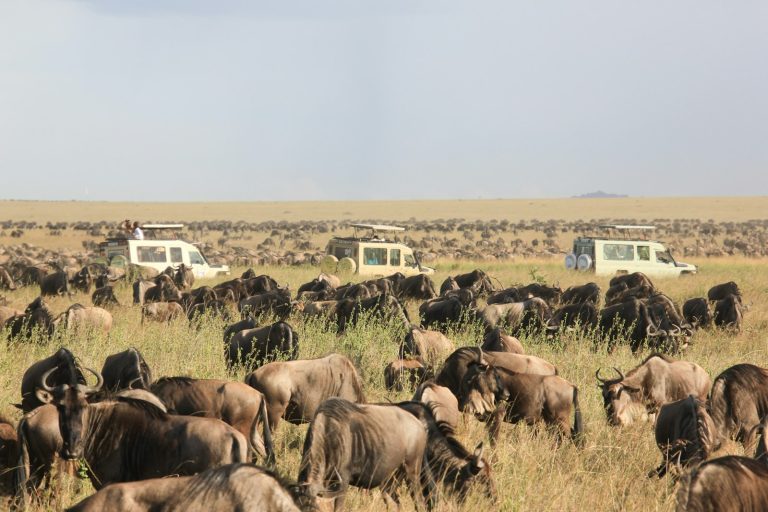

Camera gear for a Kenya safari matters more than most first-time photographers expect, since a lion 80 meters away through a kit lens looks nothing like the tight, detailed shots filling every safari brochure. The single biggest gear decision is lens reach, not camera body, and most disappointing safari photos trace back to a lens simply too short for the distances involved. You mount a 100-400mm lens and finally fill the frame with a resting leopard instead of a distant smudge in the grass. You bring a beanbag instead of a tripod, since vehicle windows and roof hatches, not open ground, are where nearly every shot actually gets taken. Sense of Adventure’s guides know exactly which gear choices matter and which ones are safely skippable.
Planning a Photography-Focused Safari?
Message us and we will match you with a photography-experienced guide and vehicle setup.
What Actually Matters: Lens Reach Over Camera Body
A mid-range camera body paired with a genuinely long lens outperforms a top-tier body with a short one every time on safari, since distance, not resolution, is the limiting factor for most sightings. A 100-400mm or 150-600mm zoom covers the vast majority of situations, from a distant elephant herd to a close leopard in a tree, and matters more to your final photos than almost any other single gear decision.
I brought my everyday 24-70mm lens thinking it would be enough and spent the first day frustrated with distant, unusable shots. Our guide let me borrow a beanbag and I rented a 100-400mm at the second lodge, and the difference in every photo after that was honestly night and day.
— Sense of Adventure guest, Masai Mara photographic safari
5 Gear Priorities for a Kenya Safari
A telephoto zoom, 100-400mm or longer
This is the single most important piece of gear on the list. A zoom in the 100-400mm range (or a 150-600mm for even tighter reach) covers nearly every realistic safari distance, from a close leopard to a herd far across the plain, without needing to physically approach wildlife.
A beanbag, not a tripod, for stabilization
Tripods are genuinely impractical from inside a vehicle; a beanbag draped over the window ledge or roof hatch gives real stabilization for long lenses without the setup time a tripod demands during a fast-moving sighting.
A second camera body, if photography is a real priority
Wildlife action moves fast, and a fumbled mid-sighting lens swap costs shots that never come back. A second body with a wider lens mounted lets you switch instantly between a tight telephoto shot and a scene-setting wide one.
Plenty of memory cards and battery backups
Pack at least 128GB total across multiple cards (never one large card holding everything) and 2-3 charged batteries per body, since charging opportunities can be limited at remote camps running solar or generator power on a schedule.
A dust-proof bag and lens cloths, genuinely essential
Kenyan safari roads produce fine, persistent dust that finds its way into every gap, so a padded, closeable camera bag and frequent lens cleaning cloths matter more here than on almost any other type of trip.
Book a Photography-Focused Itinerary
We route photography guests toward the best light and least crowded sightings.
Quick Facts: Camera Gear for Safari
- Most important gear: a 200mm+ telephoto zoom, more impactful than camera body choice.
- Stabilization: a beanbag, not a tripod, since shots come from inside the vehicle.
- Storage: 128GB+ across multiple smaller cards, not one large card.
- Power: 2-3 charged batteries per body, given limited camp charging windows.
- Dust protection: a closeable padded bag and cleaning cloths, used daily.
- Second body: worth it if photography is a real priority, avoids mid-sighting lens swaps.
Putting the Gear to Use
Great gear still needs the right light and location to pay off; our Masai Mara photography guide covers golden-hour timing and camera settings, and our general packing list covers everything beyond just the camera bag. Browse our photographic safari packages for itineraries built specifically around light and access.
Bring the Right Gear, We’ll Handle the Rest
Message us your camera setup and we will tailor the itinerary around the best photography opportunities.
Frequently Asked Questions
What camera lens do I need for a Kenya safari?
A telephoto zoom lens in the 100-400mm range, or longer at 150-600mm, is the most important gear decision for a Kenya safari, since lens reach matters far more than camera body choice for filling the frame with distant wildlife.
Do I need a tripod for safari photography?
No, a tripod is generally impractical on safari since nearly all shots are taken from inside a moving vehicle; a beanbag draped over a window ledge or roof hatch gives real stabilization for long lenses without a tripod’s slow setup time.
How many memory cards should I bring on safari?
Bring at least 128GB total storage split across multiple smaller memory cards rather than one large card, since a failed or lost single card would otherwise risk losing every photo from the trip.
Should I bring a second camera body on safari?
A second camera body is worth bringing if photography is a real priority, since it lets you switch instantly between a telephoto lens for tight wildlife shots and a wider lens for scene-setting shots without a mid-sighting lens swap that can cost you the moment.
How do I protect my camera gear from dust on safari?
Protect your camera gear from Kenyan safari dust with a closeable, padded camera bag and frequent lens cleaning cloths, since safari roads produce fine, persistent dust that finds its way into gear more than on most other types of trips.