
Tarangire elephants gather in numbers that surprise even seasoned safari-goers — herds of two hundred or more are not unusual in the dry season, converging on the Tarangire River when it becomes northern Tanzania’s only reliable water for miles. The park’s skyline is equally distinctive: ancient baobab trees, some genuinely over a thousand years old, standing swollen and improbable against the grass like something from a fantasy illustration. Often overlooked in favour of the Serengeti and Ngorongoro on standard itineraries, Tarangire rewards the travellers who make time for it with elephant density that rivals anywhere in East Africa and a landscape found nowhere else on the northern circuit. Sense of Adventure treats it as an essential stop, not an afterthought.
Meet Tanzania’s Biggest Elephant Herds
Dry-season river concentrations and ancient baobabs — add Tarangire properly to your northern circuit.
Why Tarangire Concentrates So Many Elephants
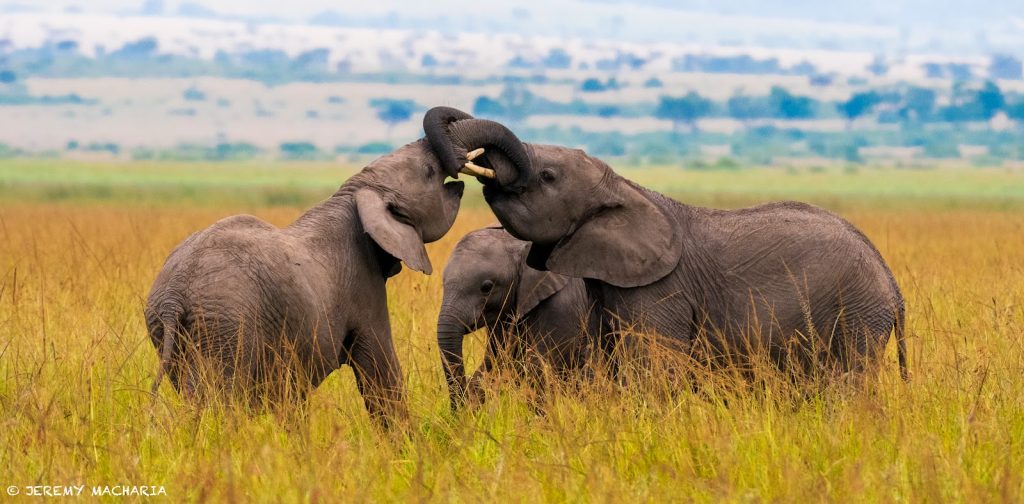
The Tarangire River is the ecosystem’s dry-season lifeline, and from roughly June through October it becomes the only substantial water source for a vast surrounding area, pulling elephants, buffalo, zebra and wildebeest into some of the highest dry-season wildlife densities in Tanzania. Family herds that dispersed widely across the wet season’s green country converge here, sometimes forming aggregations of 200-300 elephants working the riverbanks and floodplain together — a scale that rivals or exceeds single-herd sightings anywhere on the continent. The park’s baobab-studded savannah, meanwhile, is a distinct visual signature: these swollen, water-storing giants — some estimated over a thousand years old — punctuate the grassland like ancient sentinels, giving Tarangire a look no other northern-circuit park shares.

We counted past 150 elephants at one riverbend and stopped counting — calves nursing, teenagers mock-charging each other, matriarchs supervising it all. Our guide said it was a modest day by Tarangire’s September standards. I still don’t fully believe him, and I saw it myself.
— Sense of Adventure guest, Tarangire dry-season safari
The 5 Essential Tarangire Experiences
The Dry-Season River Gathering — elephant numbers that redefine “herd”
June through October, the Tarangire River pulls elephant families into aggregations that can number in the hundreds — matriarchs, calves and bulls all working the same stretch of water and riverine grass. It is one of Africa’s most reliable large-mammal spectacles, and unlike the migration, it happens on a predictable annual clock.
Ancient Baobab Country — living monuments a thousand years old
Tarangire’s rolling grassland is punctuated by enormous baobabs, some estimated over a millennium old, their swollen water-storing trunks and stubby, root-like branches giving the landscape an almost otherworldly character. Elephants strip bark from them for moisture in the driest months — a visible, sometimes controversial interaction between two of the park’s icons.
Tree-Climbing Pythons and Termite Cities — the details worth stopping for
Tarangire’s riverine woodland hides rock pythons draped in acacia branches and some of Tanzania’s most impressively tall termite mounds, several metres high and centuries in the building. Guides who slow down for these details add texture to a day that could otherwise be all about the headline mammals.
Cheetah and Leopard on the Ridgelines — predators beyond the elephant story
Away from the river, Tarangire’s drier ridges and kopjes hold healthy cheetah and leopard populations, plus over 550 recorded bird species including numerous raptors. It is a fuller predator-and-birding destination than its elephant fame suggests, especially for guests willing to explore beyond the main river circuit.
The Quieter Northern Circuit Stop — space the Serengeti can’t offer
Compared to the Serengeti and Ngorongoro’s vehicle density in peak season, Tarangire runs noticeably quieter — a genuine relief for travellers wanting elbow room at sightings. Building in a Tarangire day, rather than skipping straight to the marquee parks, consistently produces some of our guests’ favourite unscripted moments.
Don’t Skip Tarangire for the Serengeti
Elephant numbers and ancient baobabs most itineraries miss entirely. Ask us to build a proper Tarangire day into your route.

Tarangire Facts
- Scale: 2,850 km², Tanzania’s sixth-largest national park.
- Elephant density: among the highest in East Africa during the June-October dry season, with herds regularly exceeding 100-200 individuals.
- Baobabs: some specimens are estimated at over 1,000 years old, a signature visual across the park.
- Bird list: over 550 species recorded, one of Tanzania’s richest.
- Best months: June-October for elephant concentrations; November-May scatters herds but greens the landscape.
- Crowd factor: noticeably quieter than the Serengeti or Ngorongoro, even in peak season.
Placing Tarangire in Your Tanzania Itinerary
Tarangire fits naturally at the start or end of our Tanzania Northern Circuit, alongside Lake Manyara before heading to the Serengeti. Compare it with Kenya’s elephant parks in our Amboseli elephants guide, or see the combined 10-day Kenya-Tanzania Classic.
The Herds Most Itineraries Miss
Two hundred elephants at one riverbend, baobabs a thousand years old — message us to add Tarangire to your safari.
Frequently Asked Questions
Why does Tarangire have so many elephants?
Tarangire holds huge elephant numbers because the Tarangire River becomes the only major water source for a wide area during the dry season (roughly June-October), drawing dispersed family herds into concentrations that can reach 200-300 individuals along the riverbanks and floodplain.
Are Tarangire’s baobab trees really that old?
Yes — some of Tarangire’s baobab trees are estimated to be over 1,000 years old, their swollen, water-storing trunks a signature feature of the park’s landscape. Elephants strip bark from baobabs for moisture in the driest months, a visible interaction between the park’s two most famous icons.
Is Tarangire worth visiting compared to the Serengeti?
Tarangire offers something the Serengeti doesn’t: exceptional dry-season elephant density in a much quieter, less-visited park. It’s not a substitute for the Serengeti’s scale or migration, but as a complementary stop on a northern Tanzania circuit, it consistently rewards travellers who include it.
When is the best time to see elephants at Tarangire?
June to October is the best time for Tarangire’s famous elephant concentrations, when the dry season pushes herds to the river for water. The wetter months (November-May) see elephants disperse more widely across greener country, with fewer large-herd gatherings.
What other wildlife lives in Tarangire besides elephants?
Beyond its famous elephants, Tarangire supports cheetah and leopard populations, tree-climbing pythons, giant termite mounds, buffalo and wildebeest herds, and over 550 recorded bird species — making it a fuller safari destination than its elephant reputation alone suggests.