

A private Amboseli safari puts you among some of Africa’s best-known elephants, with the snow-capped peak of Mount Kilimanjaro rising behind them. Amboseli is flat, open and easy to photograph, which makes it a favourite for first-time visitors, families and photographers. Sense of Adventure, a licensed safari company in Nairobi, runs every Amboseli trip in your own 4×4 Land Cruiser with a pop-up roof and a dedicated driver-guide.
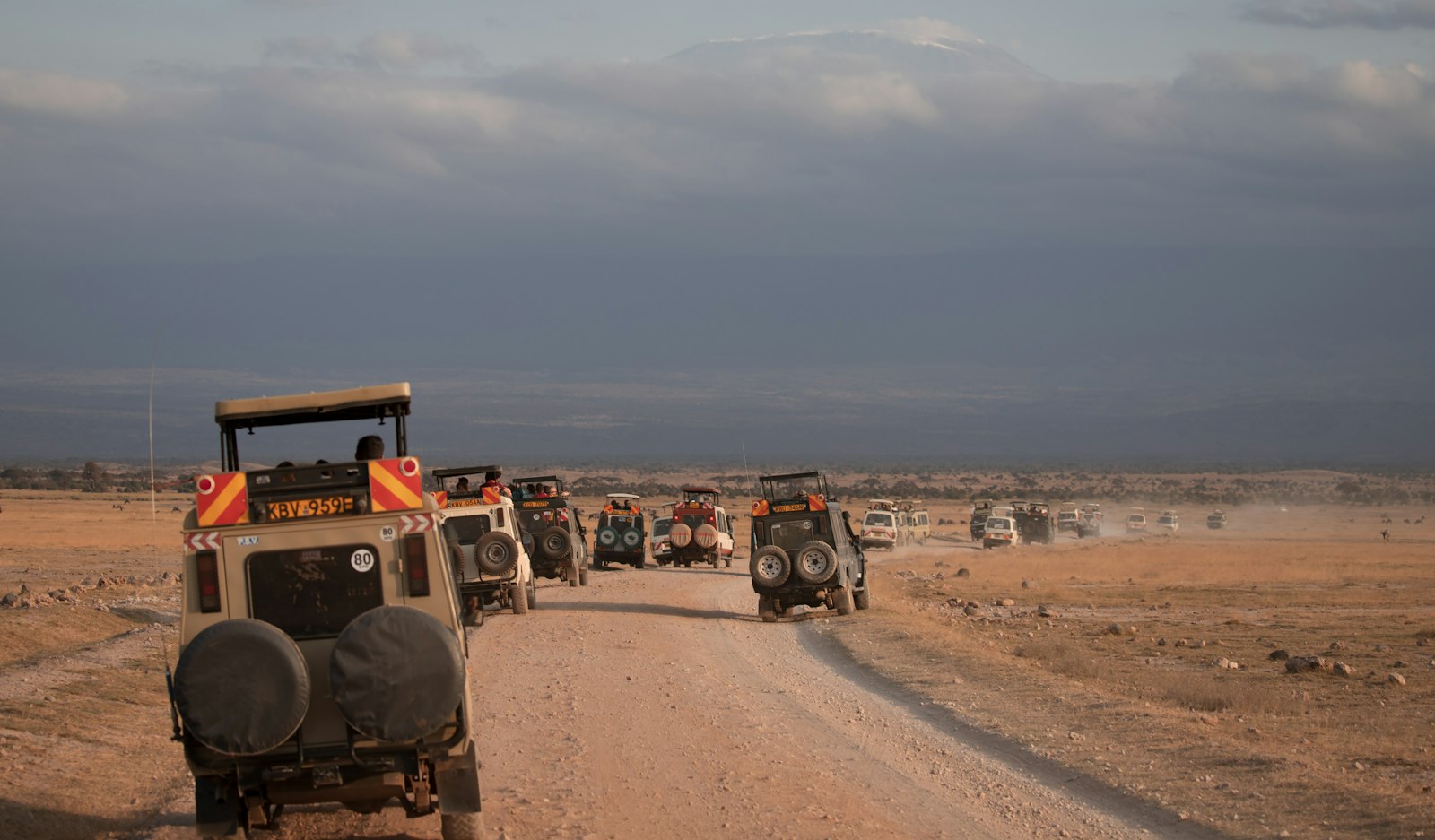
Why Take a Private Amboseli Safari?
Amboseli National Park covers about 390 square kilometres at the foot of Kilimanjaro, which sits across the border in Tanzania. Underground water from the mountain feeds swamps that draw elephants, buffalo, hippos and hundreds of birds, even in the dry season. Elephants have been studied here since 1972, and the herds are relaxed around vehicles, so you can watch behaviour up close.
- Elephants: large family herds, including big tuskers, walking through the swamps.
- Kilimanjaro views: clearest at sunrise and sunset, often hidden by cloud at midday.
- Birds: over 400 species, from pelicans to crowned cranes.
- Other wildlife: lions, cheetahs, hyenas, giraffes, zebras and wildebeest.
- Culture: Maasai communities live around the park, and village visits can be arranged.
Our Amboseli Safari Itineraries From Nairobi
| Trip | Length | From |
|---|---|---|
| 2-Day Amboseli Safari from Nairobi | 2 days | USD 520 |
| Tsavo & Amboseli Safari from Mombasa | 4 days | USD 1,050 |
| Kenya Classic Safari: Amboseli, Naivasha & Mara | 7 days | USD 1,650 |
| Amboseli Elephant Photographic Safari | 4 days | USD 1,800 |
Prices are per person sharing. For every option, including a day trip, compare our Amboseli safari packages.
Amboseli Safari From Nairobi: How to Get There
An Amboseli safari from Nairobi is about four to five hours by road, so most guests stay at least one night. Light-aircraft flights from Wilson Airport are faster but add cost. Because the drive is long, we recommend two nights so you can have a full morning drive when Kilimanjaro is clearest. See Kenya safari from Nairobi for all driving times.
What Wildlife Will You See on an Amboseli Safari?
Elephants are the stars of any private Amboseli safari. The park is home to more than a thousand of them, living in tight family groups led by older matriarchs, and some bulls still carry the very long tusks that have become rare elsewhere in Africa. Because the animals have been protected and studied for decades, they are calm around vehicles, which lets your guide park beside a herd and let you watch calves play, feed and bathe in the swamps.
Amboseli is also good for plains game and birds. Large herds of zebra, wildebeest, impala and Maasai giraffes graze on the open grassland, while buffalo and hippos wallow in the swamps. Lions, spotted hyenas and cheetahs are all present, and cheetahs often use the park’s open ground to hunt. The permanent water draws huge numbers of birds, including pelicans, crowned cranes, kori bustards, African fish eagles, and migratory waders in the wetter months.
How to See Mount Kilimanjaro From Amboseli
Kilimanjaro is the tallest free-standing mountain in the world, and Amboseli offers one of its most famous views. The summit is often wrapped in cloud, though, so planning matters. The mountain is clearest at dawn and for an hour or two after sunrise, and again around sunset. By mid-morning, cloud usually builds and hides the peak until the next day.
- Stay at least two nights so that you have two chances at a clear morning.
- Leave camp before sunrise for the best photographs with elephants in front of the mountain.
- Visit in the dry months, June to October and January to February, when skies are clearest.
- Climb Observation Hill with your guide for a wide view over the swamps and the peak.
Amboseli Landscapes: Swamps and the Dry Lake Bed
Amboseli is much more varied than its flat appearance suggests. Meltwater from Kilimanjaro filters underground through volcanic rock and rises in springs that feed green, papyrus-fringed swamps, creating an oasis in otherwise dry country. Around them are acacia woodland, open savanna and the pale, dusty bed of Lake Amboseli, which is dry for most of the year and often produces mirages and dust devils. Each habitat attracts different animals, which is why a full day of game drives is so rewarding.
Elephant Research and Conservation in Amboseli
Amboseli has one of the longest-running studies of wild elephants anywhere in the world, begun in 1972, and researchers can recognise individual animals and track their families over generations. The findings have shaped what we know about elephant memory, social bonds and the effects of drought and poaching. The park is also part of a wider ecosystem shared with neighbouring Maasai land, so your visit supports conservation and local people. Read more in our Amboseli elephants guide and the Amboseli Kilimanjaro elephant corridor article.
A Sample 3-Day Private Amboseli Safari Itinerary
- Day 1, Nairobi to Amboseli: pick-up after breakfast, a scenic drive south through Maasai country, and arrival for lunch. An afternoon game drive follows, with elephants coming to drink in the swamps.
- Day 2, a full day in the park: a sunrise drive for Kilimanjaro views, breakfast back at the lodge or in the bush, then a long midday and afternoon drive through the swamps, woodland and Observation Hill. Optional Maasai village visit.
- Day 3, return to Nairobi: a final early game drive, breakfast and the drive back, reaching Nairobi in the early afternoon for onward flights.
How Much Does a Private Amboseli Safari Cost?
A private Amboseli safari costs more per person than a shared group tour, because you pay for your own vehicle and driver-guide, but the cost falls the more people you travel with. Our two-day safari from Nairobi starts from USD 520 per person sharing, and a four-day elephant photography trip starts from USD 1,800 per person. Longer routes that add the Masai Mara or Tsavo cost more, and prices rise in the peak months of July to October and over Christmas.
What drives the price is your choice of lodge, the length of stay, the season and whether you drive or fly. Ask for a quote with two or three lodge options so you can compare. The park fees, vehicle, driver-guide and meals are included in every quote, while flights, insurance, tips and drinks are extra. For help setting a budget, see our guide to how much an African safari costs.
Amboseli or the Masai Mara: Which Should You Choose?
The two parks offer very different experiences. Amboseli is smaller and easier, with spectacular elephants, mountain views and a short drive from Nairobi. The Masai Mara is bigger, with more predators, more variety and the Great Migration, but it is further and generally more expensive. If you only have a few days and love elephants and photography, choose Amboseli. If you want big cats and the widest range of wildlife, choose the Masai Mara safari, or combine both on one route.
Photography Tips for an Amboseli Safari
Amboseli is one of Africa’s best parks for wildlife photography. Shoot at sunrise and sunset to get soft light and a clear mountain, and ask your guide to position the vehicle so the elephants walk towards you with Kilimanjaro behind. A telephoto lens of 200 to 400 mm captures close portraits, while a wide lens is ideal for herds crossing the plains. Dust is a constant, so bring a lens cloth and keep gear in a bag between drives. If photography is your priority, ask about our four-day Amboseli elephant photographic safari.
What to Pack for an Amboseli Safari
- Light, neutral clothing in earth tones, plus a warm layer for early mornings.
- A hat, sunglasses, sunscreen and a scarf or buff for the dust.
- Binoculars and a camera with a zoom lens, with spare batteries and memory cards.
- Comfortable closed shoes and any prescription medicines.
- An insect repellent and, if advised by your doctor, malaria prevention.
Is an Amboseli Safari Good for Families?
Yes. Amboseli’s open landscape makes animals easy for children to spot, and the drive from Nairobi is shorter than to the Mara. Many lodges have family rooms, pools and relaxed meal times. Check minimum ages for any activities, and read our safari minimum age guide and Kenya family safari packages for ideas.
How to Book Your Private Amboseli Safari
- Send us your dates, number of travellers and budget by WhatsApp or email.
- We reply with a written, itemised quote and two or three lodge options.
- A deposit secures your lodge and vehicle, and we send final documents before you travel.
- Your driver-guide meets you in Nairobi and looks after you for the whole trip.
Whether you stay two nights or five, we plan every detail so that you can focus on the elephants and the mountain.
The Best Month for an Amboseli Safari
- January and February: hot, dry and clear, with excellent mountain views and elephants close to the swamps.
- March to May: the long rains bring green grass, fewer visitors and lower prices, but cloud often hides Kilimanjaro and some tracks become muddy.
- June to October: the main dry season and the best overall time for wildlife and photography, with cool mornings and dusty afternoons.
- November and December: short rains and fresh green landscapes, with good birdlife and moderate crowds, then busy festive weeks around Christmas.
Meeting the Maasai Near Amboseli
Amboseli lies on traditional Maasai land, and the park exists because local communities agreed to share it with wildlife. A visit to a Maasai homestead lets you hear about daily life, see beadwork and traditional dances and understand how herders and elephants live side by side. We arrange visits with families who benefit directly from tourism, and your guide can explain customs and etiquette beforehand. It is a good activity for the middle of the day, when the animals rest in the heat.
Flying to Amboseli From Nairobi or the Coast
If time is short, scheduled flights connect Nairobi’s Wilson Airport with Amboseli’s airstrips in under an hour. Flying costs more than driving but saves roughly half a day each way, which makes it attractive for a one-night visit or for guests who suffer on rough roads. You can also reach Amboseli by road from Mombasa and Diani in about six hours, usually through Tsavo, which is how our Tsavo and Amboseli safari from Mombasa works.
Practical Tips for an Amboseli Safari
- Book your lodge early for July to October and for Christmas, when the best rooms with Kilimanjaro views fill first.
- Carry small notes in Kenyan shillings or US dollars for tips and crafts.
- Expect dust on the roads and wear a scarf or buff, and keep a lens cloth handy.
- Listen to your guide on distance from animals, especially elephants with young calves.
- Do not feed or call animals, and never leave the vehicle except at designated spots.
- Ask your guide about birds, because Amboseli’s swamps are among the best bird habitats in Kenya.
With a little planning, a private Amboseli safari can be the most relaxed and rewarding wildlife experience of your Kenya holiday.
Best Time to Visit Amboseli
June to October and January to February are the driest months, with the clearest skies for Kilimanjaro and elephants concentrated around the swamps. March to May is the long rains, with fewer visitors and hazy views. November is short rains and green landscapes. Early morning is almost always the best time for the mountain.
Where to Stay in Amboseli
Lodges and camps in and around the park range from budget to luxury, many with Kilimanjaro views from the room or pool. Read our guides to Amboseli lodges and camps, the Amboseli elephants guide and the full Amboseli National Park guide.
Combine Amboseli With the Masai Mara and Beyond
Amboseli has no rhinos and leopards are rare, so many guests add the Masai Mara safari for big cats and the Big Five. It also links easily with Tsavo and a Diani Beach finish.
What Our Amboseli Safari Includes
- Private 4×4 Land Cruiser with pop-up roof and unlimited drinking water
- Professional English-speaking driver-guide
- Accommodation and meals as listed on each trip
- Amboseli National Park entry fees as listed
- Hotel or airport pick-up in Nairobi
- Complimentary AMREF Flying Doctors evacuation cover
Plan Your Private Amboseli Safari
Send your dates and we reply with a written quote.
WhatsApp +254 799 160 081 Email UsHow many days do you need for an Amboseli safari?
Two days and one night is the minimum worth doing, and two nights is better. That gives you a full morning drive when Kilimanjaro is usually clear.
How far is Amboseli from Nairobi?
About four to five hours by road. Light-aircraft flights from Wilson Airport are faster.
Will I see Kilimanjaro from Amboseli?
Often, especially at sunrise and sunset, but cloud can cover the summit at midday. Views are never guaranteed.
Can I see the Big Five in Amboseli?
Amboseli has elephants, lions and buffalo, but no rhinos and few leopards. Combine it with the Masai Mara or Lake Nakuru to complete the Big Five.
Is a private Amboseli safari better than a group tour?
A private safari gives you your own vehicle, timing and photography stops, and flexible pace. It costs more per person than a shared tour but suits families and photographers.
Explore More Kenya Safari Destinations
- Masai Mara safari
- Lake Nakuru safari
- Samburu safari
- Nairobi National Park safari
- All Kenya safari packages
Official resources: Kenya Wildlife Service and Magical Kenya.