

A Masai Mara safari is the one trip most visitors to Kenya dream about: open golden plains, lions hunting at dawn, and from July to October more than a million wildebeest crossing the Mara River. Sense of Adventure is a licensed Nairobi safari company, and the Mara is where we run most of our private safaris, in your own 4×4 Land Cruiser with a pop-up roof and a dedicated driver-guide.
Why Go on a Masai Mara Safari?
The Masai Mara National Reserve covers about 1,500 square kilometres of savanna in south-western Kenya and joins the Serengeti in Tanzania. It has some of the best big cat viewing in Africa, with lions, leopards and cheetahs all regularly seen, plus elephants, buffalo, giraffes, hippos and crocodiles. Wide, open grassland makes animals easy to spot, so even a short trip delivers a lot.
- Big cats: lions, leopards and cheetahs, often seen on early-morning and late-afternoon drives.
- The Great Migration: herds arrive from the Serengeti around July and stay until October, with Mara River crossings.
- The Big Five: lion, leopard, elephant, buffalo and black rhino all live in the Mara.
- Maasai culture: community-owned conservancies and village visits give the trip a human side.
- Extras: sunrise hot-air balloon flights, bush breakfasts and sundowners.
Our Private Masai Mara Safari Packages
Every trip below uses a private vehicle and guide, with park fees, meals and Nairobi transfers included. Prices are per person sharing, and we tailor any of them to your dates and budget.
| Trip | Length | From |
|---|---|---|
| Masai Mara & Lake Nakuru Camping Safari | 4 days | USD 590 |
| Masai Mara Fly-in Safari from Diani | 3 days | USD 1,450 |
| Kenya Group Safari: Mara, Nakuru & Naivasha | 6 days | USD 1,390 |
| Kenya Classic Safari: Amboseli, Naivasha & Mara | 7 days | USD 1,650 |
| Big Cats Photographic Safari | 6 days | USD 2,600 |
Want to compare every option? See our full Masai Mara safari packages or the 3-day Masai Mara safari.
Best Time for a Masai Mara Safari
The Mara is a year-round destination, but the season changes what you see. July to October is the dry season and the Great Migration, with the best game viewing and the busiest camps. January to March is hot, quiet and good for big cats and newborn animals. April to May is the long rains: fewer visitors and lower rates but muddy roads. November and early December bring short rains and green landscapes. See our Great Migration safari page for river-crossing dates.
How Many Days Do You Need in the Masai Mara?
Three nights is the sweet spot for most guests, giving you at least four game drives plus time for a full day on the plains. Two nights works if you fly in, as we explain in Is 2 days in the Masai Mara enough? If you want to combine the Mara with other parks, add Lake Nakuru, Amboseli or Samburu.
Where to Stay on a Masai Mara Safari
Your choice of camp location shapes the trip. Camps inside the reserve put you closest to the river crossings; conservancy camps on Maasai-owned land offer fewer vehicles, night drives and walking safaris. Read our guides to inside or outside the Masai Mara, luxury lodges in the Masai Mara and Mara North Conservancy camps. We also offer mid-range and budget camps, and hold a full list of Kenya lodges and camps.
How to Get to the Masai Mara
By road, the Mara is about five to six hours from Nairobi, and the final stretch is a rough track. By air, scheduled light-aircraft flights from Wilson Airport take about 45 to 60 minutes and land at airstrips close to the camps. Flying saves a day of driving and suits short trips, while driving lets you stop at the Rift Valley viewpoint and combine other parks. Learn more on our Kenya safari from Nairobi page.
What Wildlife Will You See on a Masai Mara Safari?
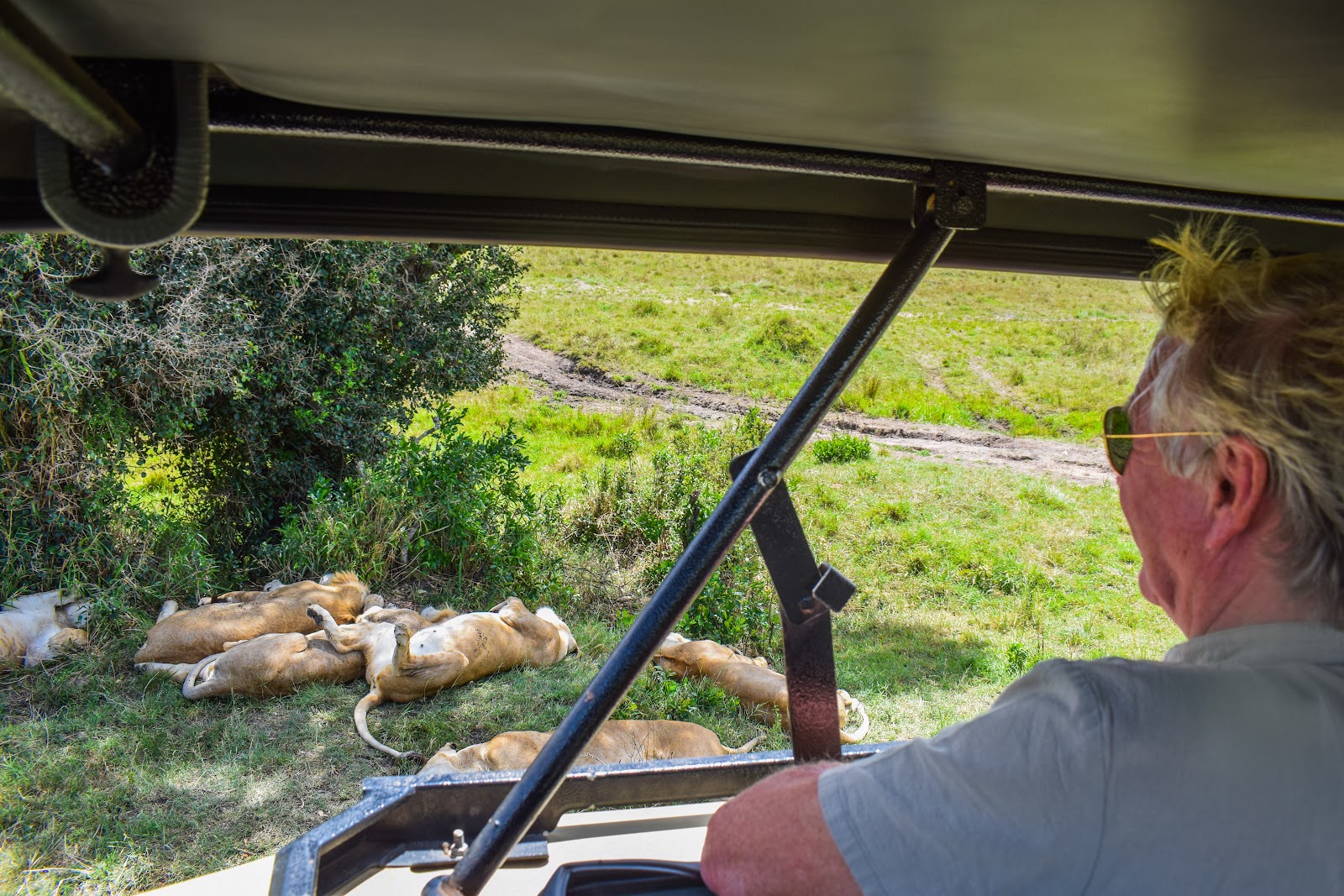
The Mara is best known for predators, and on a well-run Masai Mara safari most guests see all three big cats. Lions live in prides of a dozen or more and are often found resting in the shade of a croton thicket by day, becoming active around dusk. Cheetahs use termite mounds and the open plains as lookouts, which makes them easier to spot here than in most other parks. Leopards are the hardest to find: they hide in riverine forest and rocky outcrops, and a good guide reads alarm calls from baboons and impala to locate them.
Beyond the cats, the reserve holds large herds of elephants and buffalo, tall Masai giraffes, topi, hartebeest, Thomson’s and Grant’s gazelles, warthogs and spotted hyenas. Hippos and Nile crocodiles live in the Mara and Talek rivers, and the black rhino, though rare and shy, survives in small numbers. Birders can add secretary birds, ostriches, kori bustards, lilac-breasted rollers and more than 450 other species to their lists.
The Great Migration Month by Month
The Great Migration is the movement of around two million wildebeest, zebra and gazelle between Tanzania’s Serengeti and Kenya’s Masai Mara, following the rains and fresh grass. It is a circular, year-round journey, but the Mara chapter is the one most visitors want to see. Exact timing changes every year, so treat the following as a guide rather than a promise.
- June and early July: the herds gather in the northern Serengeti and begin to push towards the Mara River.
- Late July to September: the main river crossings take place on the Mara and Talek rivers, with the greatest drama usually in August and September.
- October: the herds spread across the Mara plains and start drifting back south as the short rains approach.
- November to May: the herds are back in Tanzania, but resident wildlife and big cats remain superb and camps are quieter and cheaper.
For a closer look at dates, crossing points and how to improve your chances, read our Great Migration safari guide, or compare the two countries in Masai Mara or Serengeti by month. Even outside the migration, the Mara has excellent wildlife every month of the year.
Masai Mara Reserve or Conservancy: Which Is Better?
The Masai Mara National Reserve is government-managed and sits at the heart of the ecosystem, where the river crossings happen. Around it lie private conservancies, such as Mara North, Olare Motorogi, Naboisho and Ol Kinyei, which are leased from Maasai landowners and limit the number of beds and vehicles per acre. Each option suits a different traveller.
- Inside the reserve: the best position for river crossings and a lower overall cost, but more vehicles at popular sightings.
- In a conservancy: quieter game drives, night drives, walking safaris and off-road driving where rules allow, but higher nightly rates and conservancy fees.
- Gate-side camps: good value and quick access to the reserve, with a mix of both experiences.
Many guests split their stay, spending a night or two inside the reserve for the river and the rest in a conservancy for peace. See our guides to the Olare Motorogi conservancy camps and Mara North conservancy camps for detail.
A Sample 4-Day Masai Mara Safari Itinerary
This is how a typical private four-day Masai Mara safari by road runs. We adjust every detail to your dates, camp and interests.
- Day 1, Nairobi to the Mara: an early pick-up at your hotel, a stop at the Rift Valley viewpoint, then the drive to the reserve. You arrive for lunch at camp and set out on your first afternoon game drive.
- Day 2, full day on the plains: a dawn drive when the cats are most active, a cooked breakfast or a picnic lunch in the bush, and an afternoon drive to look for cheetahs and elephants.
- Day 3, river and culture: a morning game drive to the Mara River, an optional Maasai village visit, and sundowners as the light turns gold.
- Day 4, return to Nairobi: a last short drive after breakfast, then the road back, arriving in the late afternoon for onward flights.
How Much Does a Masai Mara Safari Cost?
The cost of a Masai Mara safari depends on four things: where you sleep, how long you stay, how you travel and when you go. Our budget camping trips start from USD 590 per person for four days, mid-range tented camps and lodges typically sit between about USD 1,300 and USD 1,700 per person for five to seven days, and luxury conservancy trips are priced higher, especially in the July to October peak season. Prices fall in the quieter months of April, May and November.
Your quote includes the vehicle, driver-guide, meals, accommodation and park or conservancy fees as listed. Typical extras are international flights, the Kenya eTA, travel insurance, drinks, tips and optional activities such as a balloon flight. To see how safari costs compare across Africa, read how much does an African safari cost.
Hot-Air Balloon Safaris Over the Masai Mara
A sunrise balloon flight is the signature add-on to a Masai Mara safari. You rise before dawn, drift above the plains for about an hour as the sun comes up, and land for a bush breakfast with sparkling wine. It is not cheap, and it must be booked in advance, but many guests call it the highlight of their trip. Flights are weather dependent, and there are minimum age and height limits, so tell us early if you are travelling with children.
Visiting a Maasai Village Responsibly
The land around the Mara belongs to the Maasai, and many families now earn income from tourism through conservancy leases, craft sales and cultural visits. We work with community-run visits where a fair share of the fee goes to the village. Ask questions, buy crafts directly and always ask before taking a photograph of a person. For a longer, more immersive experience, see our cultural tours.
What to Pack for a Masai Mara Safari
- Neutral clothing in khaki, olive or tan, with long sleeves and trousers for evenings against insects.
- A warm fleece or jacket, because dawn drives in an open vehicle can be cold, especially from June to August.
- A wide-brimmed hat, sunglasses and high-factor sunscreen.
- Binoculars, ideally 8×42, and a camera with a 200 to 400 mm lens if you shoot wildlife.
- Comfortable closed shoes, a soft duffel bag for light aircraft and any regular medication.
- A power bank and a universal plug adaptor for the UK-style three-pin sockets used in Kenya.
Safety, Health and Visas
Safaris in the Mara are carefully managed. You stay in the vehicle on game drives, camps escort guests after dark and every Sense of Adventure trip includes AMREF Flying Doctors evacuation cover. Ask your doctor about malaria prevention and routine vaccinations well before you travel, and take out comprehensive travel insurance. Most visitors need a Kenya eTA before arrival, which is applied for online; check the official rules close to your travel date because requirements can change.
Photography Tips for Your Masai Mara Safari
The best light on the Mara is in the first and last two hours of the day, when predators are active and shadows are soft. Ask your guide to position the vehicle with the sun behind you, switch off the engine before you shoot to avoid vibration, and use a bean bag on the window ledge to steady a long lens. Keep the camera ready on a fast shutter speed, at least 1/1000 second, for running animals. If photography is your main goal, ask about our big cats photographic safari.
How to Book Your Masai Mara Safari
- Step 1: send us your dates, group size and budget by WhatsApp or email.
- Step 2: we reply with a written, itemised quote and a suggested route.
- Step 3: once you are happy, a deposit secures your camps and vehicle.
- Step 4: we send final documents, packing advice and your driver-guide’s details, and look after you from the moment you land.
Whichever way you travel, we collect you from your Nairobi hotel or the airport and handle every transfer.
What Is Included in Our Masai Mara Safari?
- Private 4×4 Land Cruiser with pop-up roof and a window seat for every guest
- Professional English-speaking driver-guide
- Accommodation and meals as listed on each trip
- Masai Mara National Reserve or conservancy fees as listed
- Hotel or airport pick-up in Nairobi and bottled water
- Complimentary AMREF Flying Doctors evacuation cover
Tips for Your Masai Mara Safari
- Book 6 to 9 months ahead for July to October, when camps fill first.
- Choose a conservancy camp if crowds worry you; see is the Masai Mara crowded?
- Pack neutral clothing, a warm layer for dawn drives, binoculars and a camera with a zoom lens.
- Plan the balloon flight early; it must be booked ahead.
- Check ages for activities: see our safari minimum age guide.