
Nairobi National Park exists today because one frustrated accountant tricked the colonial government into creating it. In 1932, Mervyn Cowie returned to Kenya after nine years away and was alarmed to find the wildlife-rich Athi Plains he remembered as a boy already being swallowed by farms and livestock. When years of campaigning went nowhere, he anonymously wrote to the East African Standard under the name “Old Settler,” proposing that Kenya simply slaughter all its remaining wildlife to clear land for agriculture — a deliberate provocation. It worked: the public outcry forced the government to act, and on 16 December 1946, Governor Philip Mitchell signed the proclamation making Nairobi National Park Kenya’s first national park. More than forty years later, the same park would host an event that changed global conservation policy — and both stories are still visible on the ground today.
Walk the Same Ground This History Was Made On
Message us to add the ivory burning site to your Nairobi National Park game drive.
From “Old Settler” to Kenya’s First National Park
Mervyn Cowie was born in Nairobi in 1909, educated in England, and returned home in 1932 as an honorary game warden — only to find the game-rich plains of his childhood disappearing under expanding farmland. Direct campaigning achieved nothing, so Cowie tried a different tactic: an anonymous, deliberately inflammatory newspaper letter arguing Kenya should simply destroy all its wildlife rather than half-protect it. The backlash was immediate and exactly what he’d hoped for — the colonial government convened a committee, and years of negotiation eventually produced Nairobi National Park, opened in 1946 on land just south of the young city. Cowie went on to found and direct the Royal National Parks of Kenya from 1946 to 1966, deliberately designing the parks system around human visitors as well as wildlife — a decision that helped make tourism one of Kenya’s largest industries. It is a strange irony that a park protecting Africa’s wildlife began with a letter arguing for its destruction.
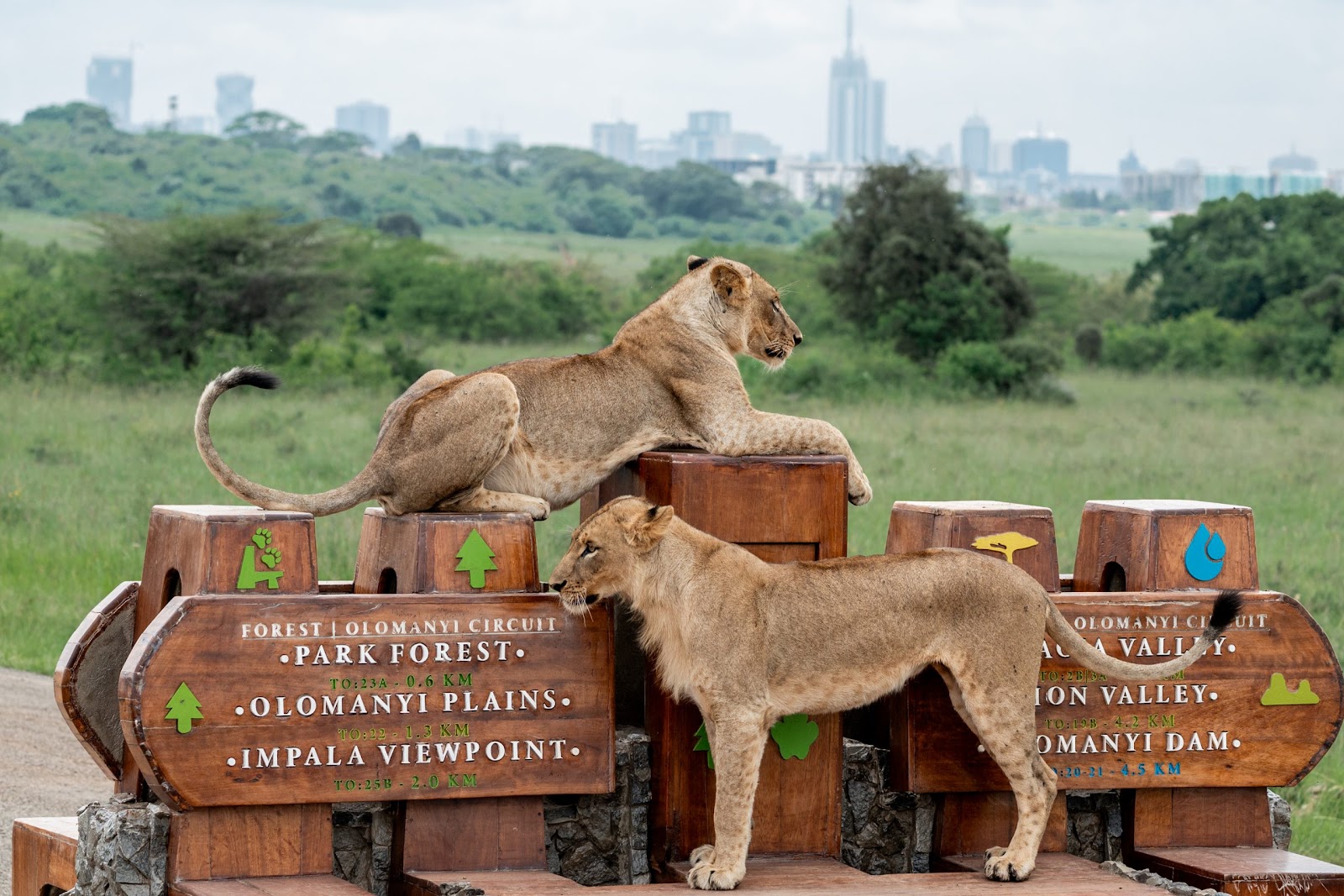
Our guide stopped the vehicle at what just looked like a quiet picnic clearing with a stone monument, and then explained that this exact spot is where a president burned a fortune in ivory on live television — it completely changed how I saw the rest of the game drive, knowing the park itself had a political history like that.
— Sense of Adventure guest, Nairobi National Park safari
The Ivory Burns That Changed Global Policy
18 July 1989 — The First Burn — 12 tons, organized by Richard Leakey, lit by President Moi
With Kenya’s elephant population having collapsed from roughly 65,000 in 1979 to around 17,000 by 1989 under industrial-scale poaching, conservationist Dr. Richard Leakey organized the world’s first public destruction of confiscated ivory. President Daniel arap Moi set fire to 12 tons of tusks — about 2,000 elephants’ worth, valued at over $1 million — inside Nairobi National Park, in front of international media. The image of a head of state burning a fortune rather than selling it was deliberately built to pressure the upcoming CITES conference.
1990 — The Global Ivory Trade Ban — CITES lists the African elephant on Appendix I
The Nairobi burn achieved its purpose: later that year, the Convention on International Trade in Endangered Species (CITES) moved the African elephant to its most protected category, effectively banning international commercial ivory trade — a policy shift historians directly trace back to the image of that Nairobi bonfire.
30 April 2016 — The Largest Burn in History — 105 tons of ivory, 1.35 tons of rhino horn
President Uhuru Kenyatta lit a pyre of 105 tonnes of elephant ivory — roughly 8,000 elephants’ worth — plus 1.35 tons of rhino horn from 343 rhinos, on the same grounds. KWS personnel took ten days to build the towering stacks; the black-market value destroyed was estimated at $150-220 million. Kenyatta’s message was blunt: “For us, ivory is worthless unless it is on our elephants.”
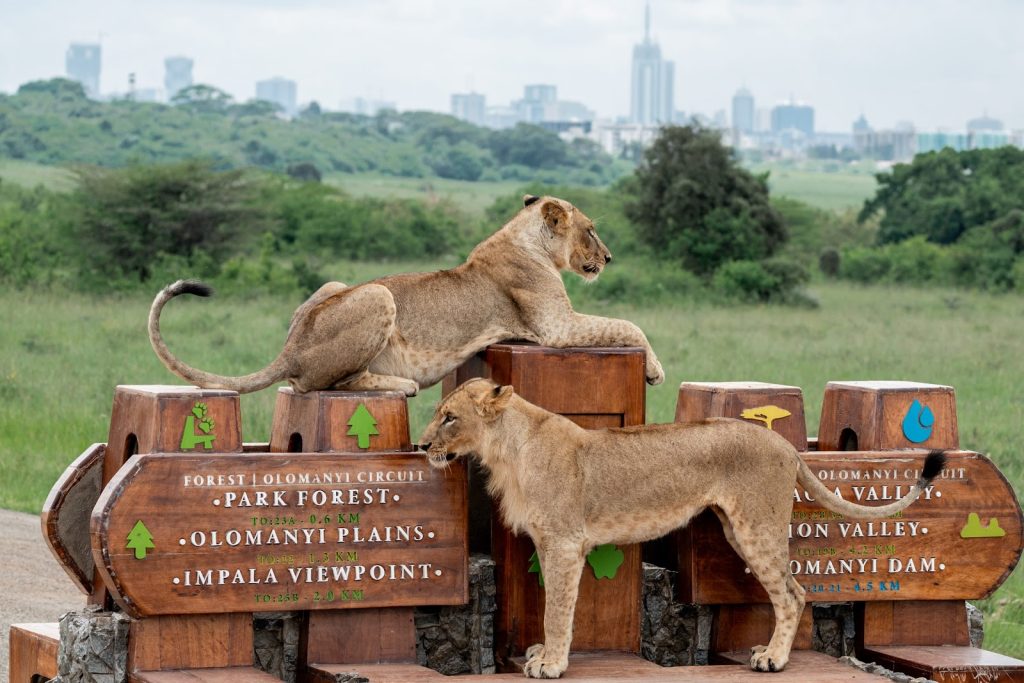
See the Monument, Then See the Living Animals It Protects
Message us to plan a Nairobi National Park safari that includes the ivory burning site.
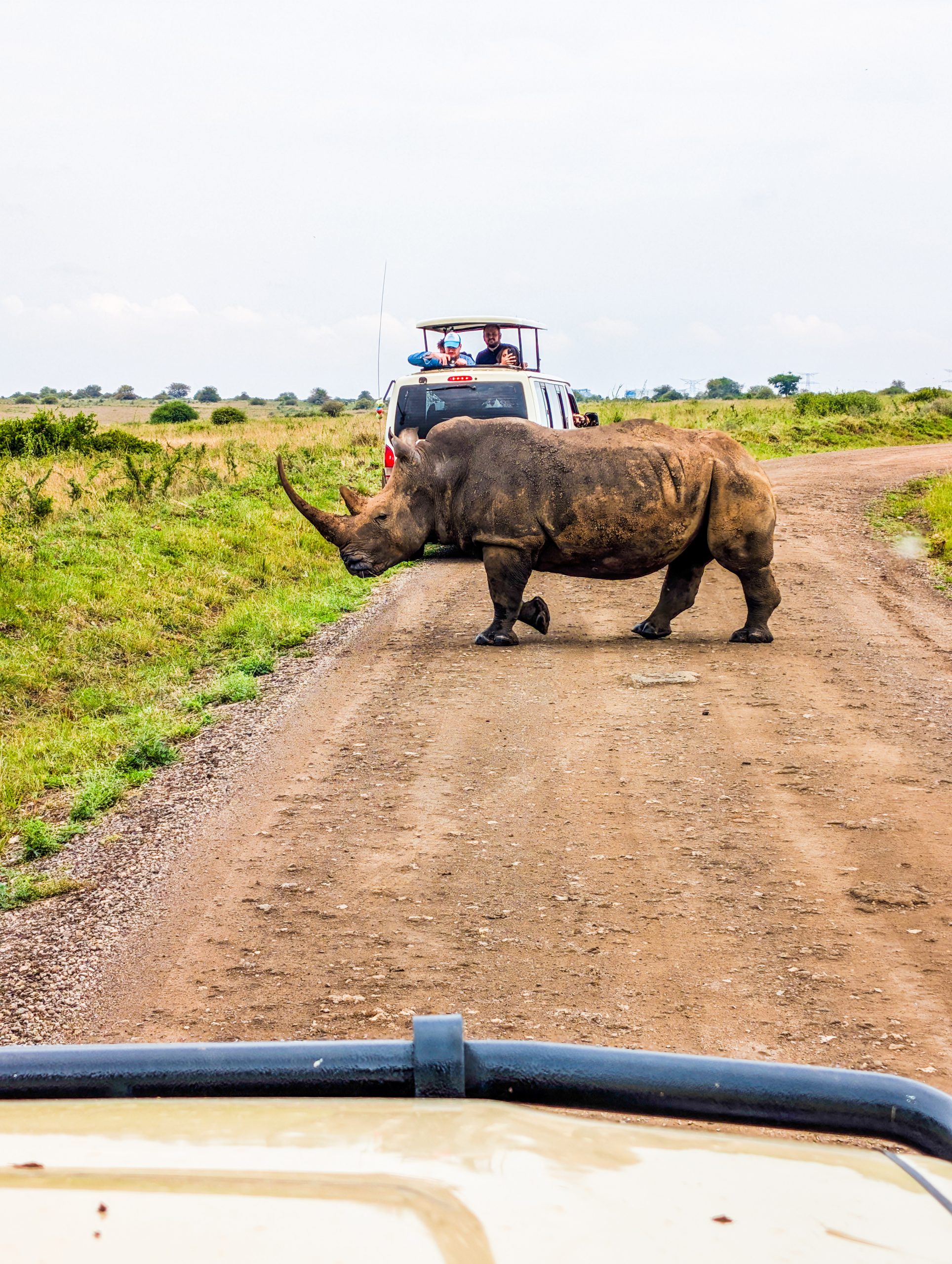
Nairobi National Park History Facts
- Proclamation date: 16 December 1946 — Governor Philip Mitchell made Nairobi National Park Kenya’s first national park.
- Founder: Mervyn Cowie, honorary game warden, later founding director of the Royal National Parks of Kenya (1946-1966).
- First ivory burn: 18 July 1989, 12 tons (roughly 2,000 elephants), lit by President Daniel arap Moi, organized by Dr. Richard Leakey.
- Policy outcome: CITES banned international commercial ivory trade in 1990, directly influenced by the Nairobi burn.
- Largest-ever burn: 30 April 2016, 105 tons of ivory plus 1.35 tons of rhino horn, lit by President Uhuru Kenyatta — the biggest ivory destruction event in history.
- Visiting today: the Ivory Burning Site sits near the Main Gate on Langata Road, now a quiet picnic area with interpretive signage and benches.
Visiting the Ivory Burning Site
The monument is an easy add-on to a standard game drive — pair it with our game drive guide for what else to expect, or read about the park’s rhino sanctuary success story, one of the direct beneficiaries of the policy this site helped create. Ready to see it in person? Book our Nairobi National Park Day Safari.
History and Wildlife, in the Same Half-Day Safari
Message us to add the ivory burning site to your Nairobi National Park game drive.
Frequently Asked Questions
When was Nairobi National Park established?
Nairobi National Park was proclaimed on 16 December 1946 by Governor Philip Mitchell, making it Kenya’s first national park.
Who founded Nairobi National Park?
Mervyn Cowie, an honorary game warden, campaigned for its creation after seeing wildlife on the Athi Plains disappearing to farmland — his provocative anonymous newspaper letter forced the government to act. He went on to lead the Royal National Parks of Kenya from 1946 to 1966.
What was the Nairobi ivory burning?
On 18 July 1989, President Daniel arap Moi burned 12 tons of confiscated ivory inside Nairobi National Park, an event organized by Dr. Richard Leakey that helped secure the 1990 global ban on international commercial ivory trade.
Was there a bigger ivory burn after 1989?
Yes — on 30 April 2016, President Uhuru Kenyatta burned 105 tons of ivory and 1.35 tons of rhino horn at the same site, the largest ivory destruction event ever held, with an estimated black-market value of $150-220 million.
Can you visit the ivory burning site today?
Yes — it’s located near the Main Gate on Langata Road inside Nairobi National Park, now a quiet picnic area with interpretive signs and benches, and it’s easy to combine with a standard game drive.