
A safari with limited mobility is very possible in Kenya, because most wildlife viewing happens from a vehicle seat. With bad knees, hips or back, or a walking aid, the keys are a private vehicle with an extra step, short flights instead of long drives, camps with level paths and few steps, and an operator who plans around you.
Sense of Adventure is a licensed safari operator based in Nairobi (TRA licence TRA1/47/C01/77087). We plan trips for travellers with arthritis, joint replacements, back pain and other mobility challenges, as well as their families. This guide explains how a safari with limited mobility works in practice: vehicles, flights, camps, parks, daily pace and the questions to ask before you book.
✅ Safari With Limited Mobility: The Quick Answer
- Yes, it works: game drives involve sitting, not walking, and staff carry all bags.
- Vehicles: ask for a private 4×4 with a portable step, a seat near the door and time for breaks.
- Flights: light aircraft have a few steps; request assistance in advance, and note that some airlines require passengers to be able to move around unaided on board.
- Camps: choose rooms close to the main area, with few steps, a walk-in shower and grab rails if possible.
- Routes: fewer parks, more nights in each, and short transfers between them.
- Wheelchair users: need more specialised planning; see our wheelchair-accessible safari guide.
🌎 Have a Mobility Question?
Tell us exactly what you can and cannot do comfortably, and we will suggest vehicles, camps and routes that fit. 💬 WhatsApp Us Now or call +254 799 160 081
Can You Go on a Safari With Limited Mobility?
Yes, most people can enjoy a safari with limited mobility, because the main activity is sitting in a vehicle while a guide drives you to the wildlife.
Unlike city breaks or hiking holidays, a safari with limited mobility involves very little walking. You are collected from your camp, driven on game drives and brought back for meals and rest. Luggage is carried for you. In many camps you can watch animals from your veranda or the dining area, especially where a camp overlooks a river or waterhole.
The challenges are specific and easy to plan for: climbing into high vehicles and small planes, bumpy roads that can jar backs and joints, paths and steps at camps, and long days. A safari with limited mobility simply needs those points dealt with in advance. If you use a wheelchair full-time, your needs are different again, and our wheelchair and mobility-accessible safari guide covers adapted vehicles and accessible lodges in detail.
Know Your Needs: A Simple Self-Assessment
The best way to plan a safari with limited mobility is to be clear and honest about what you can do comfortably, then match the trip to it.
| Your situation | What usually works | What to avoid or check |
|---|---|---|
| Stiff knees or hips, walk unaided slowly | Private vehicle with a step, rooms near the main area | Long camp paths, many steps, long road days |
| Joint replacement in the last year | Fly-in safari, short drives, cushioned seats | Very bumpy roads; ask your surgeon about timing |
| Back pain or disc problems | Short flights, a cushion or lumbar support, shorter drives | Long transfers on rough roads, balloon landings |
| Use a stick or folding walker | Lodges or camps with level paths, a walker on board | Sandy or rocky paths, raised tents with steep steps |
| Use a wheelchair for longer distances | Camps with ramps or boardwalks, help with transfers | Unadapted vehicles if you cannot climb at all |
Expert tip from our Nairobi team: tell us how many steps you can climb, how far you can walk on uneven ground and how long you can sit comfortably. Those three numbers help us plan a safari with limited mobility far better than a diagnosis alone.
Choosing a Vehicle for a Safari With Limited Mobility
The vehicle is the heart of your safari, so choosing the right one, and setting it up well, makes the biggest difference to comfort.
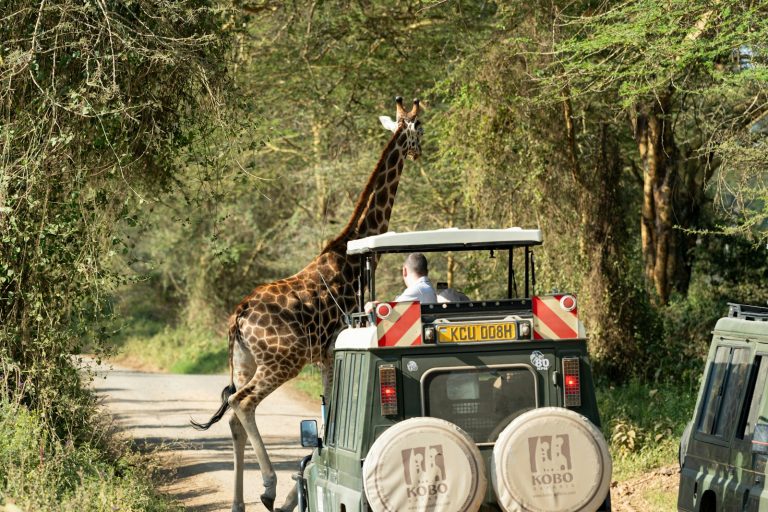
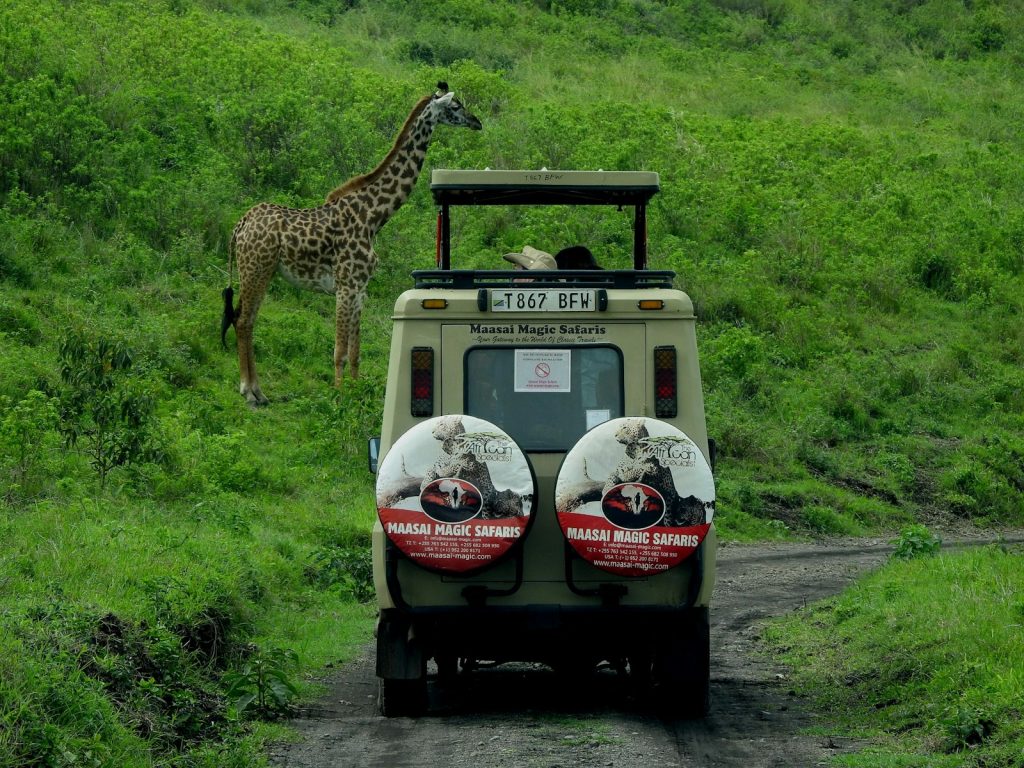
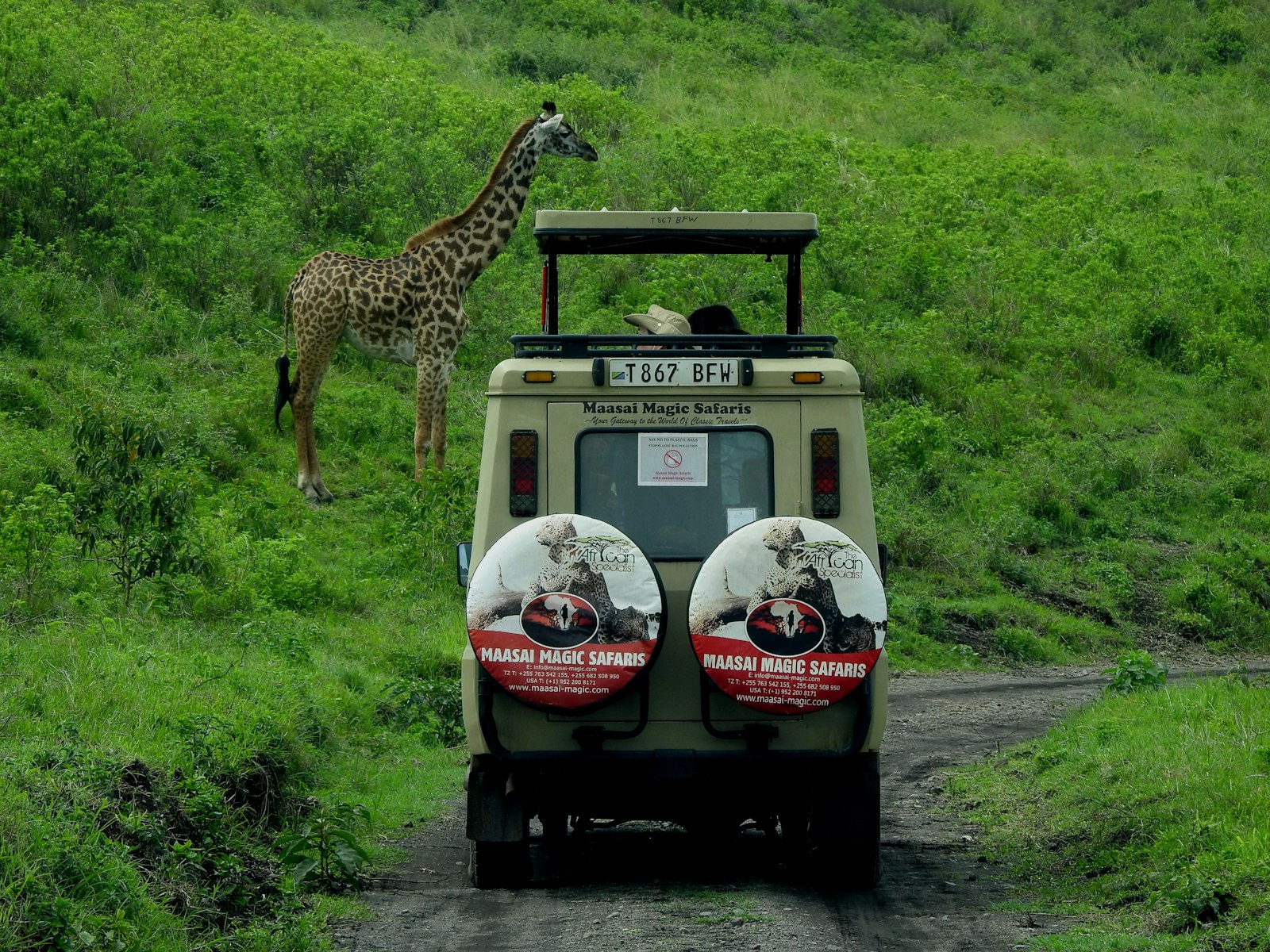
Most Kenyan safaris use 4×4 Land Cruisers or safari minivans with pop-up roofs. Land Cruisers sit high off the ground, with a step of roughly knee height, so many travellers with limited mobility find a portable step or footstool essential. Minivans are lower but less comfortable on rough roads. Our guide to safari vehicles in Kenya compares the types.
How to set up your vehicle for a safari with limited mobility
- Book a private vehicle: you control the pace, breaks and timing; see private vs group safaris.
- Ask for a step: a sturdy portable step and a hand from your guide make climbing in much easier.
- Choose your seat: a seat near the door means less moving around inside the vehicle.
- Bring a cushion: a seat cushion or lumbar support helps on bumpy tracks.
- Sit, do not stand: you do not need to stand at the roof hatch; you can see a great deal from your seat with binoculars.
- Plan breaks: agree in advance where and when you can stretch or use a toilet.
Flights: International and Bush Flights
Flying is often the easiest part of a safari with limited mobility, as long as you request assistance early and understand how small safari planes work.
International flights and Nairobi airport
Request special assistance from your airline when you book, and confirm it at least 48 hours before travel. Most airlines can arrange wheelchair help through Jomo Kenyatta International Airport, which is useful for long walks between gates and immigration. If you travel with a mobility scooter or powered wheelchair, check your airline’s battery rules, which are based on IATA dangerous goods guidance.
Light aircraft to safari airstrips
Small planes from Nairobi’s Wilson Airport fly to the Masai Mara, Samburu, Laikipia and Amboseli in about one hour, and save many hours on rough roads. They have a few steps up to the door, and ground staff usually help passengers board. Airkenya, for example, asks passengers with reduced mobility to book assistance in advance and to be able to manage on board on their own; passengers who cannot must travel with companions who can help.
Luggage is limited to about 15 kg per person in a soft bag, and some airlines allow extra medical luggage with a doctor’s certificate. Our guide to safari luggage weight limits on small aircraft explains the rules. Packing light makes a safari with limited mobility easier too, because there is less to manage at airstrips and camps.
Choosing Camps and Lodges for a Safari With Limited Mobility
The best camps for a safari with limited mobility have short, level paths, few or no steps, and bathrooms you can use safely.
Kenyan camps vary widely. Some luxury camps spread tents along a river, with long sandy paths and raised decks. Many lodges have solid buildings with level corridors, ground-floor rooms and sometimes lifts. Neither is better in general; on a safari with limited mobility, the details of the specific room matter most.
- Location of the room: ask for one close to the dining area and the vehicle drop-off point.
- Steps: ask exactly how many steps there are to the room and the main area, and whether there are handrails.
- Paths: check whether paths are paved, boardwalk, gravel or sand.
- Bathroom: a walk-in shower with a grab rail and a shower seat is safer than a bath or a step-up shower.
- Bed height: ask whether beds are standard height if getting up is hard.
- Night-time help: staff escort guests after dark in unfenced camps, so ask for help on paths at night.
Our guides to tented camps vs lodges and what a safari tent is like inside explain the layouts you will find.
The Best Parks and Routes for Limited Mobility
The best routes for a safari with limited mobility use short transfers, flat terrain and good roads, with three or more nights in each place.
| Destination | Why it suits limited mobility | Things to know |
|---|---|---|
| Masai Mara (by air) | Superb wildlife close to camps; flights avoid a 5 to 6 hour road trip | Roads inside the reserve can be bumpy |
| Amboseli | Flat terrain, elephants often close to vehicles, short drives from lodges | Dusty in dry months; about 4 to 5 hours by road from Nairobi |
| Ol Pejeta and Laikipia | Good tracks, cooler climate, rhinos and Big Five; flights to Nanyuki | Some camps are on rocky ground; ask about paths |
| Lake Naivasha | Short drive from Nairobi, boat trips and relaxed lodges | Getting in and out of boats needs help |
| Nairobi National Park | Game drives within minutes of the city | A good warm-up before a longer trip |
Many travellers on a safari with limited mobility combine one or two of these. For example, fly to the Masai Mara for three nights, then fly to Laikipia for three more, with a night in Nairobi at each end. Check current park information with the Kenya Wildlife Service.
📅 Get a Free, No-Obligation Safari Quote
Send us your dates and your mobility needs, and we will design a safari with limited mobility in mind, from vehicle to room. ✉ Send Us Your Dates on WhatsApp
Daily Pace and Activities
A relaxed daily pace keeps a safari with limited mobility comfortable, and it often means better wildlife sightings, because you spend longer at each one.
- Morning drive: two to three hours, returning for a late breakfast if you prefer.
- Midday rest: rest, read or watch animals from camp during the hottest hours.
- Afternoon drive: a short drive to a nearby area, ending with a sundowner close to camp.
- Early nights: safari days start early, so plan quiet evenings.
Activities that suit most travellers include game drives, sundowners, boat trips with help to board, bird watching from camp and short cultural visits on level ground. Walking safaris and gorilla trekking are usually too demanding for a safari with limited mobility, and balloon flights involve climbing into a basket and a possibly bumpy landing, so check health conditions with the operator first. Our article on how fit you need to be for a safari rates the effort of each activity.
Expert tip from our Nairobi team: ask your guide to position the vehicle with your side facing the sighting. It saves you twisting and lets you rest your arms on the window for steady binoculars and photos.
Mobility Aids, Health and Insurance
Bringing the right aids and preparing your health and insurance makes a safari with limited mobility safer and more relaxed.
Mobility aids
- A folding walking stick or trekking pole is useful on camp paths and getting in and out of vehicles.
- A lightweight folding walker or rollator can travel in the vehicle, but sandy paths may limit its use.
- If you use a wheelchair for longer distances, tell us the model and width so camps can check door widths and paths.
- Pack spare tips, batteries and any small tools, as replacements are hard to find outside Nairobi.
Health and insurance
See your doctor six to eight weeks before a safari with limited mobility to discuss malaria tablets, vaccinations and any risks from long flights, such as blood clots. The NHS fitfortravel Kenya page gives current advice. Buy travel insurance that covers your pre-existing conditions and medical evacuation; our Kenya travel insurance guide explains what to look for, and check the UK government’s Kenya travel advice before you go.
Questions to Ask Before You Book
These questions help you check that an operator can really deliver a safari with limited mobility, rather than just saying yes.
- Will I have a private vehicle, and can you provide a portable step?
- How many steps are there to my room and the dining area in each camp?
- Are paths level and firm, and is the shower walk-in with a grab rail?
- How long is each road transfer, and can we fly instead?
- Can the airline help me board, and do I need a medical certificate?
- Can game drives be shortened or timed around my needs?
- Who can I call if I need help during the trip?
A good operator answers with specific details, not general reassurance. Our list of questions to ask before booking a safari covers the wider booking checks.
Sample Itineraries
These itineraries can be adapted for a safari with limited mobility; message us for a quote for your dates and needs.
- Gentle fly-in safari: the Gentle Fly-in Safari uses short flights, easy-access vehicles and relaxed timings in Ol Pejeta and the Masai Mara.
- Short Amboseli stay: the 2-Day Amboseli Safari offers flat terrain and elephants close to the vehicle.
- From the coast: the Masai Mara fly-in safari from Diani avoids long road journeys.
- Fully tailored: our private Kenya safari options can be built entirely around your pace.
Safari With Limited Mobility FAQs
Can you go on safari if you cannot walk far?
Yes. Most safari time is spent sitting in a vehicle, and staff carry your luggage, so you rarely need to walk far. Choose a private vehicle with a portable step, rooms close to the main area and short flights between parks. Tell your operator exactly how far you can walk so camps can be chosen to match.
Are safari vehicles hard to get into?
Land Cruisers sit high, with a step of roughly knee height, so many people find them tricky at first. A sturdy portable step, a helping hand from your guide and a seat near the door make a big difference. Minivans are lower but less comfortable on rough roads. Some operators also offer adapted vehicles.
Is a safari good for someone with a bad back?
It can be, with care. Bumpy roads are the main problem, so fly between parks where possible, keep drives shorter and bring a cushion or lumbar support. Sitting rather than standing in the vehicle helps. Check with your doctor first, and avoid activities with hard landings, such as balloon flights, if they worry you.
Can I take a walking frame or rollator on safari?
Yes. A folding walker or rollator can travel in the safari vehicle and on most flights, though light aircraft have tight weight limits, so tell the airline in advance. Sandy or gravel paths at some camps can make wheels hard to use, so ask about path surfaces when choosing camps.
Which Kenya park is best for limited mobility?
Amboseli is a good choice because the terrain is flat and elephants often come close to vehicles. The Masai Mara is excellent if you fly in to avoid the long road journey. Ol Pejeta in Laikipia has good tracks and a cooler climate. Combining two parks with three nights each keeps the pace gentle.
Do I need a medical certificate for bush flights?
Usually not for limited mobility alone, but you must request assistance in advance. Some airlines need a certificate for medical equipment, extra medical luggage or oxygen. Airlines also expect passengers to manage on board on their own, or to travel with someone who can help. Check the rules with your operator before booking.
Is a safari with limited mobility more expensive?
It can cost a little more, mainly because private vehicles and flights instead of road transfers add to the price. However, longer stays in fewer places can balance the cost. Many travellers find the extra comfort is what makes the trip enjoyable. Ask for a quote that compares road and fly-in options.
🏕 Plan Your Safari With Sense of Adventure
Kenya-based experts. Real local knowledge. Transparent pricing. We will plan a safari with limited mobility around your exact needs, with the right vehicle, camps and pace. 💬 WhatsApp Us — Start Planning Today
Call or WhatsApp: +254 799 160 081
Related Safari Guides
- ›Wheelchair and Mobility-Accessible Safaris in Kenya
- ›Safari in Your 70s and 80s
- ›How Fit Do You Need to Be for a Safari?
- ›Safari Vehicles in Kenya
- ›Private vs Group Safari in Kenya
Official travel & park resource: Kenya Wildlife Service ↗ · Magical Kenya ↗