
A safari tent in Kenya is nothing like a camping tent. Most are tall canvas rooms on a raised wooden platform, with proper beds, furniture, electric lights and an en-suite bathroom with a flush toilet and hot shower. The canvas walls are the real difference: you sleep close to the sounds of the bush, in real comfort.
Sense of Adventure is a licensed safari operator based in Nairobi (TRA licence TRA1/47/C01/77087), and we book guests into tented camps across Kenya every week. This guide explains what a safari tent is really like inside, how budget, mid-range, luxury and mobile tents differ, what the bathroom, power and temperature are like, and how to choose the right camp for you.
✅ Safari Tent: The Quick Answer
- Size: a typical permanent safari tent is roughly the size of a hotel room, and you can stand up and walk around freely.
- Bed: real beds with mattresses, linen and mosquito nets, not sleeping bags on the ground.
- Bathroom: most permanent camps have an en-suite flush toilet and hot shower; mobile and fly camps may use a bucket shower.
- Power: usually solar or generator power, with lights and charging points in the tent or in the main area.
- Comfort: nights can be cool in the Masai Mara, so camps provide blankets and often hot water bottles.
- Safety: camps are often unfenced, so staff walk you to and from your tent after dark.
🌎 Not Sure Which Camp Suits You?
Tell us your budget and dates, and we will suggest tented camps that match the comfort level you want. 💬 WhatsApp Us Now or call +254 799 160 081
What Is a Safari Tent?
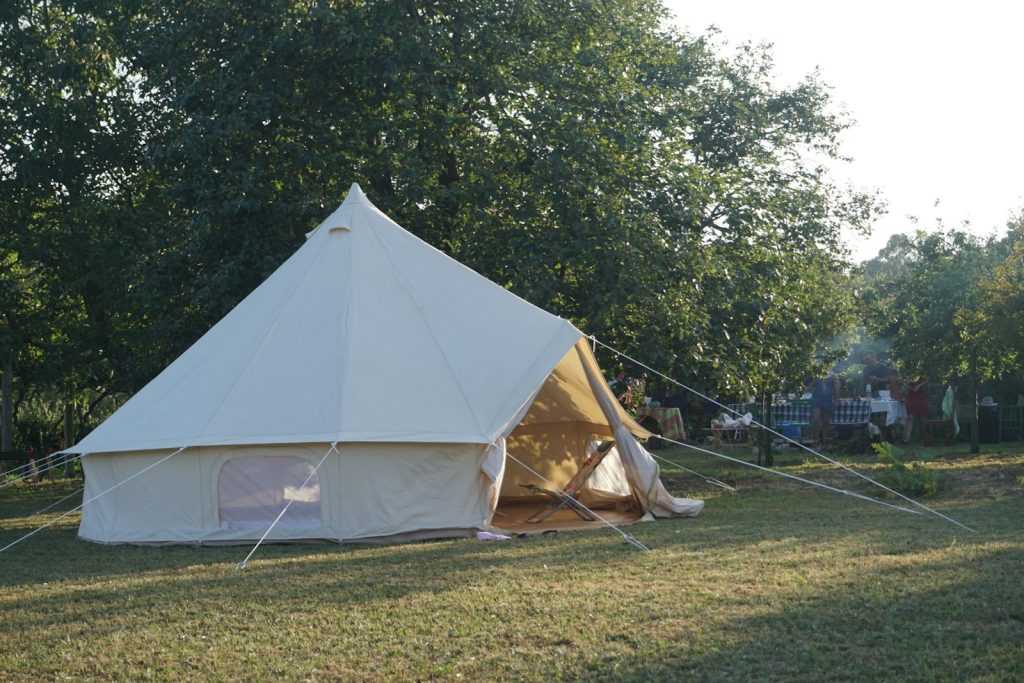
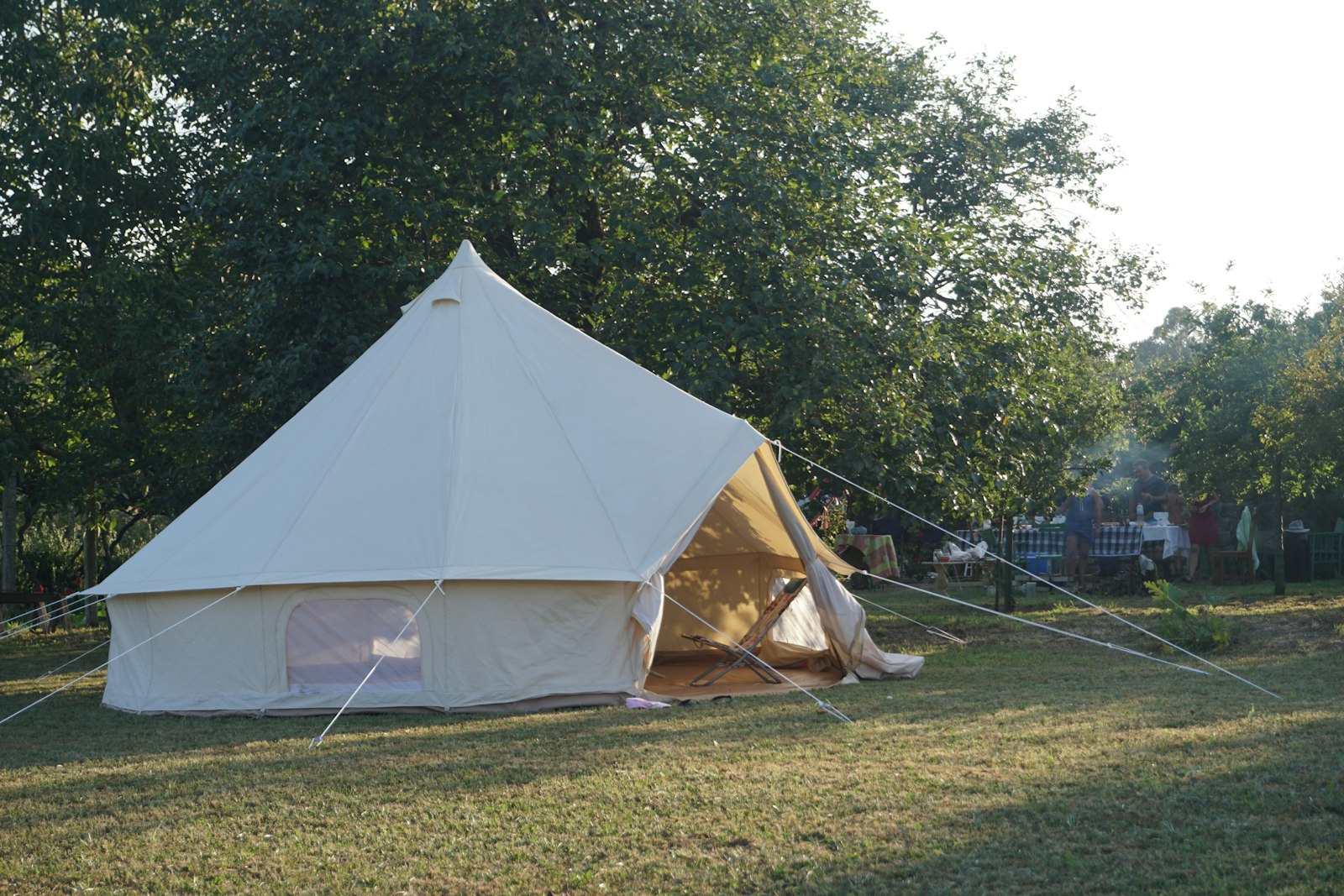
A safari tent is a large, permanent or semi-permanent canvas room designed for comfortable sleeping in the bush, usually with a bathroom attached.
The name causes a lot of confusion. Many first-time travellers picture a nylon dome tent and a thin mat. In reality, a modern safari tent is closer to a hotel room with fabric walls. The canvas is heavy and stretched over a steel or timber frame, and the whole structure usually sits on a wooden or concrete platform to keep it dry, level and away from insects.
Most tents have a front veranda with chairs, a zip door with a mesh screen, mesh windows with canvas flaps you can roll up or down, and a solid roof or a second fly sheet above the canvas for shade and rain protection. Some luxury tents add a private deck, a plunge pool or an outdoor shower.
The point of a safari tent is not to save money. It is to keep you close to nature. You hear lions calling, hippos grunting and birds at dawn in a way you never would through brick walls, and that is why many travellers say their nights in a tent were a highlight of the trip.
Types of Safari Tent in Kenya
There are four main types of safari tent in Kenya, and the comfort level depends far more on the camp’s style than on the word “tent”.
| Type | Typical setting | Bathroom | Power | Best for |
|---|---|---|---|---|
| Budget camping tent | Public campsites and simple camps near park gates | Shared or basic en-suite | Limited, often in the main area | Travellers on a tight budget who want the bush experience |
| Mid-range permanent tent | Camps near the Masai Mara reserve, Amboseli, Samburu and Naivasha | En-suite flush toilet and hot shower | Solar or generator, lights in tent | Most first-time safari travellers |
| Luxury tent | Private conservancies and top reserve camps | Large en-suite, sometimes a bathtub or outdoor shower | Reliable power, sockets in tent | Honeymooners and travellers who want space and privacy |
| Mobile or fly camp tent | Seasonal camps that move with the migration or set up for walking safaris | Flush or chemical toilet, bucket shower | Solar lanterns, charging in the mess tent | Adventurous travellers who want a wilder feel |
The jump in comfort from budget to mid-range is the biggest one. Once you reach a permanent mid-range tented camp, you can expect a proper bed, an en-suite bathroom and lighting. Above that level, you are paying mainly for space, privacy, location, food, guiding and smaller guest numbers. If you want to compare these styles in more depth, read our guide to tented camps vs lodges in Kenya.
Is a budget safari tent worth it?
Yes, if you are comfortable with simple facilities. Budget camping safaris use smaller dome or walk-in tents with camp beds and shared or basic bathrooms, and they are the most affordable way to see the Masai Mara. Our Masai Mara and Lake Nakuru camping safari is built around this style; message us for a quote for your dates.
Inside a Typical Safari Tent: Beds, Furniture and Layout
A typical mid-range safari tent has a sleeping area at the front and a bathroom at the back, separated by a canvas wall or a zip door.
Here is what you will usually find inside a permanent tent in Kenya:
- Beds: a double or twin beds with mattresses, cotton sheets, duvets or blankets and pillows. Triple or family tents are common in larger camps.
- Mosquito net: often a large net over the bed, though some well-sealed tents do not need one.
- Furniture: bedside tables, a luggage rack, a small desk or dressing table, and chairs on the veranda.
- Storage: open shelves or a canvas wardrobe, plus a safe in many mid-range and luxury camps.
- Extras: a torch, an emergency whistle, horn or radio, drinking water in flasks or refillable bottles, and sometimes a tea and coffee tray.
Floors are usually wooden decking, polished concrete or coir matting, often with rugs. You can stand upright everywhere, and most tents are tall enough for a ceiling fan in warmer areas such as Samburu and Tsavo.
Expert tip from our Nairobi team: unpack into the shelves on your first afternoon and keep your bags zipped. A tidy safari tent is easier to find things in by torchlight, and closed bags keep out dust and the odd curious insect.
The Bathroom: Flush Toilets, Bucket Showers and Hot Water
In most permanent tented camps the bathroom is en-suite, with a flush toilet, a washbasin and a hot shower, so you do not need to leave your tent at night.
Hot water usually comes from solar heaters or a wood-fired boiler, so it is often hottest in the late afternoon and early evening. If you shower straight after the morning game drive, it may only be warm. Many camps tell you the best times for hot water when you check in.
Mobile camps, fly camps and some eco-camps use a bucket shower. Staff heat about 10 to 15 litres of water and fill a canvas bag or bucket that is raised above the shower, and you control the flow with a tap or chain. You ask for it at a set time, and it is enough for a good shower if you turn the water off while you soap. It saves water in dry areas, and many guests end up liking it.
For a detailed look at toilets, eco-loos and showers, see our guide to toilets and bathroom facilities on safari.
Power, Charging and Wi-Fi in a Safari Tent
Most safari tents have electric lights, and many have charging points, but power is often solar or generator-based and may be limited at certain hours.
In mid-range and luxury camps you will usually find at least one socket or USB point in your tent. Kenya uses the UK-style three-pin plug (type G) at 240 volts, so bring the right adaptor. In budget and mobile camps, charging may only be available in the main mess tent, and some camps switch the generator off overnight.
- Hairdryers: often not allowed in solar-powered tents because they draw too much power. Check before you pack one.
- CPAP and medical devices: tell your operator in advance, as the camp may need to arrange overnight power or a battery pack.
- Wi-Fi: many camps have Wi-Fi in the main area, but it can be slow, and some deliberately keep tents offline.
Our article on electricity, charging and Wi-Fi at safari camps explains what to expect at different levels, and how to keep cameras and phones charged.
Temperature: Is a Safari Tent Cold at Night or Hot by Day?
A safari tent follows the outside temperature more closely than a room with solid walls, so it can feel cool at night and warm in the middle of the day.
Safari tent nights in the Masai Mara and highlands
The Masai Mara sits at roughly 1,500 to 2,200 metres above sea level, and nights can feel surprisingly cold, especially from June to August when temperatures can drop to around 10°C. Good camps give you thick duvets or extra blankets, and many slip a hot water bottle into your bed while you are at dinner. Laikipia and the Aberdares can be colder still.
Warmer areas: Samburu, Tsavo and the coast
In lower, drier areas such as Samburu and Tsavo, afternoons can be hot. Tents in these areas are usually designed with high roofs, shade and mesh windows for airflow, and some have fans. Midday is often spent resting in the shade, which suits the heat; our article on a typical day on safari in Kenya shows how the day is planned around temperature.
Check average temperatures and seasonal forecasts on the Kenya Meteorological Department website, and see our guide to Kenya weather by month before you pack.
Noise, Privacy and the Sounds of the Bush
You will hear more in a safari tent than in a hotel, which is part of the magic, but you also need to be aware that sound travels both ways.
At night you may hear lions roaring in the distance, hyenas whooping, hippos grazing close by and the alarm calls of baboons. These sounds can be exciting, and occasionally a little unnerving, on your first night. They are completely normal, and camp staff are used to them.
Canvas walls also mean that neighbours can hear loud conversations, so most guests speak quietly after dark. Tents are usually spaced well apart for privacy, and luxury camps often have only a handful of tents spread along a river or ridge.
- Light sleepers: pack earplugs and ask for a tent away from the main area and the kitchen.
- Early risers: birds start well before dawn, so you may wake naturally before your game drive.
- Privacy: close the canvas window flaps at night if you want to keep lights from showing.
Safety in a Safari Tent After Dark
A safari tent in a well-run camp is a safe place to sleep, as long as you follow the camp rules, especially after dark.
Many Kenyan camps are unfenced, which allows wildlife to move freely past the tents. To keep guests safe, staff (often called askaris) walk you to and from your tent after dark, and you should never wander around camp alone at night. Most tents have a whistle, horn or radio to call for help if you need it.
- Keep the tent zipped closed at all times, day and night, to keep out monkeys and insects.
- Never keep food, fruit or sweets in your safari tent; baboons and monkeys can smell them.
- Stay inside if you hear animals close by, and wait for staff before stepping out.
- Follow the briefing your camp gives on arrival, as rules vary by location.
The canvas itself is not a barrier that animals test. Wild animals generally treat a closed tent as a solid object and walk around it. We will cover camp safety in more detail in a separate guide, and our guide to Kenya safari etiquette covers good behaviour in camp.
📅 Get a Free, No-Obligation Safari Quote
Send us your travel dates and we will suggest tented camps with the facilities you want, from simple to luxury. ✉ Send Us Your Dates on WhatsApp
Insects, Dust and Rain: What Gets Into a Tent?
A good safari tent keeps out most insects, dust and rain, as long as you keep the zips closed and use the mesh screens properly.
Mesh windows let air in while keeping mosquitoes out, and many tents have a raised floor and sealed groundsheet. You may still find the odd beetle, moth or gecko, and that is normal in the bush. Camp staff usually spray tents and lower the nets while you are at dinner.
Mosquitoes are the main health concern, because much of Kenya below 2,500 metres has malaria risk. Use repellent in the evening, sleep under the net if one is provided and take the antimalarial advice of your doctor. The NHS fitfortravel Kenya page gives up-to-date guidance, and our Kenya safari malaria guide explains the risk by area.
In the rainy seasons, from about April to May and in November, heavy showers can hit in the afternoon. A well-built safari tent has a double roof and drains away water, so you stay dry inside, although paths can get muddy.
Tented Camp or Lodge: Who Does a Safari Tent Suit?
A safari tent suits travellers who want to feel close to nature without giving up comfort, while a lodge with solid walls suits those who prefer more insulation and a hotel feel.
| You will probably love a safari tent if… | You might prefer a lodge if… |
|---|---|
| You want to hear wildlife at night | You are a very light sleeper |
| You like small, intimate camps | You prefer a pool, gym or larger facilities |
| You want a location deep in a reserve or conservancy | You feel nervous about canvas walls |
| You are happy with solar power and some limits | You need constant mains power for devices |
| You enjoy a sense of adventure | You are travelling with very young children who wake easily |
Some of Kenya’s best locations, especially in the private conservancies around the Masai Mara, only have tented camps. If you want a quiet, low-density experience, our guide to the Masai Mara reserve vs conservancies explains why camps there are often smaller and more exclusive.
Expert tip from our Nairobi team: if you are unsure, split your nights. Stay in a lodge for the first night or two, then move to a tented camp once you are used to bush sounds. Most guests who try a safari tent end up wishing they had booked more nights in one.
How to Choose the Right Safari Tent for You
The best way to choose a safari tent is to ask a few specific questions about the camp before you book, rather than relying on photos alone.
- Is the bathroom en-suite? Confirm a flush toilet and whether the shower is plumbed or a bucket shower.
- What is the power source? Ask about charging points in the tent and the hours power is available.
- How far is the tent from the main area? Closer tents suit those with limited mobility; further tents give more privacy.
- Are there steps or a raised deck? Important if you have bad knees or use a walking aid.
- Is it a family or triple tent? Families should ask about interconnecting or family tents.
- Is the camp inside a reserve or conservancy? This affects game viewing, fees and traffic; see our guide to choosing your Masai Mara camp location.
- What is the season? Ask about night temperatures and rain so you can pack the right layers.
If you want space, privacy and a top location, a luxury tented camp is worth considering; our luxury Kenya safari page and the luxury fly-in safari show what this looks like. For a mid-range option, most of our classic itineraries use comfortable permanent tented camps; message us for a quote.
What to Pack for Life in a Safari Tent
Packing for a safari tent is mostly about light, layers and organisation, because space is simple and nights can be cool.
- Head torch: useful for night-time bathroom trips and reading in bed, even if the tent has lights.
- Warm layers: a fleece and warm socks for cold mornings and evenings in the highlands.
- Earplugs and eye mask: helpful if you are a light sleeper.
- Power bank and adaptor: for days when charging is limited.
- Insect repellent: for evenings on the veranda.
- Soft bag: essential if you fly to camp on a light aircraft.
- Flip-flops: for the shower and quick trips across the deck.
Our full African safari packing list covers clothing, cameras and documents in detail.
Safari Tent FAQs
What is a safari tent like inside?
Most permanent safari tents in Kenya look like a hotel room with canvas walls. You can stand up inside, and you usually get real beds with linen, bedside tables, a luggage rack, lights and an en-suite bathroom with a flush toilet and hot shower. Many also have a private veranda with chairs.
Do safari tents have bathrooms?
Yes, most permanent tented camps in Kenya have an en-suite bathroom with a flush toilet, washbasin and hot shower. Mobile camps and fly camps may use a bucket shower, filled with heated water by staff on request. Budget campsites can have shared bathrooms, so always check the details of your specific camp.
Is it cold sleeping in a safari tent?
It can be, especially in the Masai Mara, Laikipia and other highland areas, where nights from June to August can drop to around 10°C. Good camps provide thick duvets or blankets and often a hot water bottle. Pack a warm fleece and socks for evenings and early morning game drives.
Is it safe to sleep in a safari tent?
Yes, in a well-run camp it is safe, provided you follow the camp rules. Keep the tent zipped, never keep food inside and never walk around alone after dark. Staff escort you to and from your tent at night, and most tents have a whistle, horn or radio to call for help.
Do safari tents have electricity?
Most do. Mid-range and luxury tents usually have lights and at least one charging point, powered by solar panels or a generator. Budget and mobile camps may only offer charging in the main area, and power can be limited overnight. High-wattage items such as hairdryers are often not allowed.
What is the difference between a safari tent and a lodge room?
A safari tent has canvas walls, so you hear the bush and feel closer to nature, while a lodge room has solid walls, more insulation and often more facilities such as a pool. Both can be very comfortable. Many Kenya itineraries mix the two to give travellers a taste of each.
Can families stay in a safari tent?
Yes. Many camps offer family tents with two bedrooms or interconnecting tents, and some have triple tents. Some camps set minimum ages for children, especially in unfenced areas, so check the policy before booking. Families with young children often choose a camp with family tents close to the main area.
🏕 Plan Your Safari With Sense of Adventure
Kenya-based experts. Real local knowledge. Transparent pricing. We will match you with tented camps that suit your comfort level, budget and travel dates, and tell you honestly what each one is like. 💬 WhatsApp Us — Start Planning Today
Call or WhatsApp: +254 799 160 081
Related Safari Guides
- ›Tented Camp vs Lodge in Kenya
- ›Toilets and Bathroom Facilities on Safari
- ›Electricity, Charging and Wi-Fi at Safari Camps
- ›Inside or Outside the Masai Mara?
- ›What Is Included in a Kenya Safari
Official travel & park resource: Kenya Wildlife Service ↗ · Magical Kenya ↗