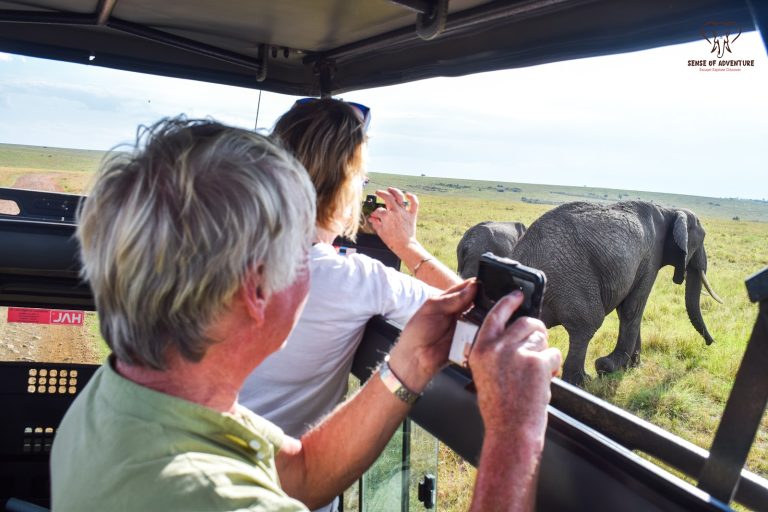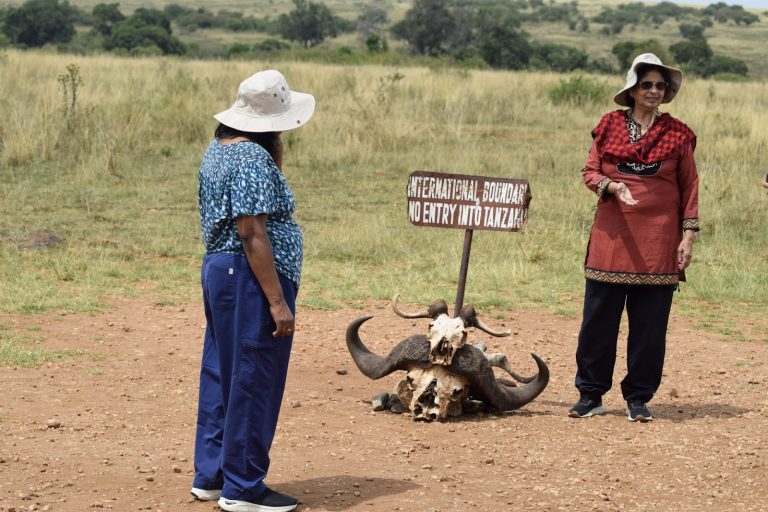

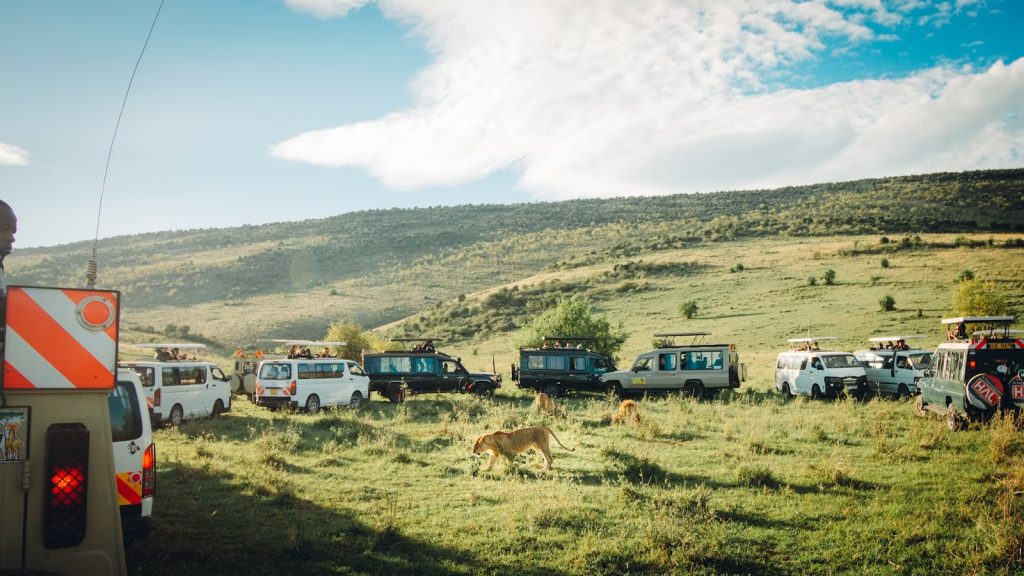
It is half past six and colder than you expected. The guide hands round a flask of tea as the Land Cruiser bumps out of camp, and the plains are still grey when he stops, points, and says nothing. Two cheetahs are sitting on a termite mound thirty yards away, watching a line of gazelle. Nobody speaks. Twenty minutes later you are the only vehicle there, the sun is up, and the tea has gone cold, and none of that matters.
Planning a Kenya safari from the UK is less complicated than it looks from Heathrow. Two airlines fly nonstop to Nairobi, the paperwork is an online form and an insurance policy, the time difference is three hours at most, and prices are quoted in US dollars by every operator in the country, so the comparisons are easy. This guide sets out everything a British traveller needs in the order you will need it.
Sense of Adventure is a Nairobi safari company licensed by Kenya’s Tourism Regulatory Authority (TRA1/47/C01/77087). British guests are our largest European market, so we know the questions: is it safe, what does the FCDO actually say, how does it compare with Kruger, and can we fit it into half-term. We wrote this Kenya safari from the UK guide on 29 October 2026 using the FCDO’s current regional advice, the official eTA portal and our own trip pages, and we date anything that may change.
✅ Kenya Safari from the UK: The Quick Answer
- Paperwork: a Kenya eTA from the official portal (from about USD 30) and the mandatory Kenyan travel health insurance (about USD 44), both bought online before you fly. No visa.
- FCDO advice: the Foreign Office advises against all travel to the Somali border counties and most of Lamu County, and against all but essential travel to a strip of the northern coast. The safari parks and Diani are outside both.
- Flights: British Airways and Kenya Airways fly nonstop from Heathrow to Nairobi in about 8 and a half to 9 hours. Kenya is 3 hours ahead of GMT and 2 hours ahead of BST.
- Cost: our listed private safaris run from USD 1,290 per person for 5 days to USD 4,650 for 14 days, before flights. A comfortable week on the ground works out at roughly £2,000 to £3,500 per person at recent exchange rates.
- When: July and August for the Great Migration (and the summer holidays); October half-term for value; February half-term for big cats and clear Kilimanjaro mornings.
- Length: a week on the ground is the sweet spot; 10 to 12 days adds Diani Beach for a bush-and-beach holiday.
🌍 Planning a Kenya Safari from the UK?
Tell us your dates, who is travelling and your rough budget, and we reply with a written, itemised quote. 💬 WhatsApp Us Now or call +254 799 160 081
Why British Travellers Choose Kenya
Kenya has been the British safari destination for a century, and the practical reasons still hold. The flight is shorter than to Cape Town, there is no jet lag to speak of, English is spoken everywhere, and the wildlife density in the Masai Mara is as high as anywhere in Africa. The plugs are the same as at home, which sounds trivial until you have spent a holiday hunting for adaptors.
The comparison most British travellers make is with South Africa. Kruger is cheaper to self-drive and malaria-free in parts, and it suits a first trip on a tight budget. Kenya offers open plains rather than thick bush, so you see more and see it further away, the Great Migration, Kilimanjaro from Amboseli and a tropical coast three hours from the parks. Our Kenya vs South Africa safari comparison sets it out fairly, and is a Kenya safari worth it answers the question most people are really asking.
What the FCDO Says, Region by Region
Read the FCDO’s Kenya travel advice before you book and again before you fly, and sign up for its email alerts. It is also the page your insurer will refer to if you ever make a claim.
As of its 28 October 2026 update, the FCDO advises against all travel to: Mandera County; the Tarbaj and Wajir East constituencies of Wajir County except Wajir Town, and anywhere in Wajir within 60 km of the Somali border; Garissa County except Garissa Town, Lagdera constituency and parts of Balambala; and Lamu County except Lamu Island and Manda Island. It advises against all but essential travel to Garissa Town, to Tana River County north of the river as far as Saka, and to the coast within 15 km of the sea between the Tana and Galana rivers. The reasons are terrorism and kidnapping linked to the Somali border. On 7 October 2026 the FCDO also added a note on Kenya’s first imported case of Bundibugyo virus disease, a form of Ebola, without changing its regional advice.
Now place a safari on that map. The Masai Mara, Lake Nakuru, Lake Naivasha, Amboseli and Tsavo are in the south and west of the country, several hundred miles from any of the named areas. Diani Beach is south of Mombasa; the coastal strip the FCDO warns about is north of Malindi. Watamu and Malindi themselves are outside the warning but close to it, so if you want the north coast, ask us to walk you through the current wording first. None of our standard routes enters an FCDO warning area, and we will compare your exact route with the advice in writing. Our guides to whether Kenya is safe for tourists and leaving JKIA safely cover the city and the airport.
Expert tip from our Nairobi team: Most UK travel insurance is void if you travel against FCDO advice, so the regional detail matters more than the headline. Keep a dated copy of the advice page from the day you booked; it is useful if the advice changes later and you need to discuss cover.
Entry Rules: The eTA and Kenya’s Travel Insurance
British passport holders do not need a visa for Kenya, but you do need two things arranged online before you fly, both through the official portal at etakenya.go.ke. Avoid the copycat sites that appear above it in search results; they charge several times the fee for the same form.
- Kenya eTA: required for every traveller, children included. Apply between three months and 72 hours before departure with a passport photo, your flight details and your first night’s accommodation. Approval usually takes up to three working days. The fee is from about USD 30; check the portal for the current amount.
- Passport: valid for at least six months beyond your stay, with a blank page, and carry proof of your return flight.
- Kenyan travel health insurance: since 5 October 2026 visitors staying under 12 months must buy a Kenyan policy with at least USD 50,000 of cover as part of the eTA application, at about USD 44 per adult plus a small fee. Your UK policy does not exempt you. Our mandatory travel insurance guide explains how it works.
- Your own insurance: the Kenyan policy is a minimum. Buy a UK policy with cancellation, medical and repatriation cover, declare any conditions, and check it still applies if you connect through a third country.
Every Sense of Adventure safari also includes AMREF Flying Doctors evacuation cover for the days you are with us.
Flights from the UK to Nairobi
London is one of the best-connected cities in Europe for Kenya. British Airways and Kenya Airways both fly nonstop from Heathrow to Nairobi’s Jomo Kenyatta International Airport, with a flight time of about 8 and a half to 9 hours. The usual pattern is an evening departure and an early-morning arrival, which means you can be in Amboseli or at Lake Naivasha for a late lunch on your first day, or spend a quiet first night in Nairobi if you prefer.
| From | Route | Typical total time | Notes |
|---|---|---|---|
| London Heathrow | British Airways or Kenya Airways nonstop | 8.5 to 9 hours | Overnight southbound; Kenya Airways connects onward to Mombasa and Zanzibar |
| Manchester, Edinburgh, Birmingham | KLM via Amsterdam, Lufthansa via Frankfurt or Air France via Paris | 12 to 14 hours | Avoids a Heathrow transfer; good for Scotland and the North |
| Any UK airport | Qatar Airways via Doha, Emirates via Dubai or Turkish via Istanbul | 14 to 17 hours | Often the keenest fares; longer but comfortable |
| Any UK airport | Ethiopian Airlines via Addis Ababa | 13 to 15 hours | Short final leg to Nairobi; worth comparing in peak season |
Times are approximate and schedules change, so check with the airlines. Kenya is on East Africa Time (UTC+3) all year: 3 hours ahead of the UK in winter and 2 hours ahead during British Summer Time, so there is no real jet lag. Our guide to booking flights or safari first explains why we suggest holding the camps before you buy the flights, and our Nairobi vs Addis Ababa layover guide compares the connecting hubs.
What a Kenya Safari from the UK Costs
Kenya prices safaris in US dollars, so every quote you receive, from us or anyone else, will be in dollars. That is useful for comparing operators and less useful for your bank balance, so convert at the day’s rate and allow a margin for movement between booking and travel. Our guide to how much an African safari costs goes into detail; the short version is below.
| Level | Per person per day, on the ground | What you get |
|---|---|---|
| Comfortable mid-range | USD 350 to 600 (roughly £270 to £460) | Private 4×4 with driver-guide, good tented camps and lodges, all park fees and meals |
| Premium | USD 600 to 1,000 (roughly £460 to £770) | Smaller camps in conservancies, some internal flights, more inclusions |
| Luxury | USD 1,000 to 2,000+ (roughly £770 to £1,550+) | Exclusive camps, fly-in throughout, private guides, drinks and extras included |
For reference, these are real Sense of Adventure trips with the starting prices shown on their pages on 29 October 2026, per person sharing, before flights: the 5-day Kenya Family Safari from USD 1,290, the 7-day Kenya Classic Safari from USD 1,650, the 10-day Kenya Safari and Beach Holiday from USD 2,450, the 6-day fly-in safari for over-60s from USD 3,600 and the 14-day Kenya Grand Slam from USD 4,650. The full range is on our Kenya safari packages from the UK page.
Add return flights (typically £600 to £1,100 in economy, more in the school holidays), the eTA and Kenyan insurance, your own travel insurance, tips, drinks and any optional extras. A sunrise balloon flight over the Mara is the big one at about USD 450 to 550 per person, and it is worth every penny once.
Expert tip from our Nairobi team: A package holiday in the UK sense, with flights and ATOL protection in one price, is a different product from a ground safari booked directly with a Kenyan operator. Direct booking is usually cheaper and gives you the people who will meet you at the airport, but your flights are then your own booking, so pay for them with a credit card and insure the whole trip from the day you pay the deposit.
When to Go: Kenya by the British School Calendar
Kenya has wildlife in every month, so the question is really which trade-off you prefer: the Great Migration with the crowds and prices that come with it, or quieter plains at a better rate.
- Summer holidays (late July to August): the dry season and the Great Migration in the Masai Mara, with river crossings most likely from late July into September. The busiest and most expensive weeks of the year; book 9 to 12 months ahead. Our Great Migration 2027 guide gives honest crossing odds.
- October half-term: our favourite week for British families. Still mostly dry, the last herds moving south, far fewer vehicles than August and lower rates. The short rains may start late in the month.
- Christmas and New Year: warm and green, with resident big cats and popular camps booked early. Read our Christmas safari in Kenya guide.
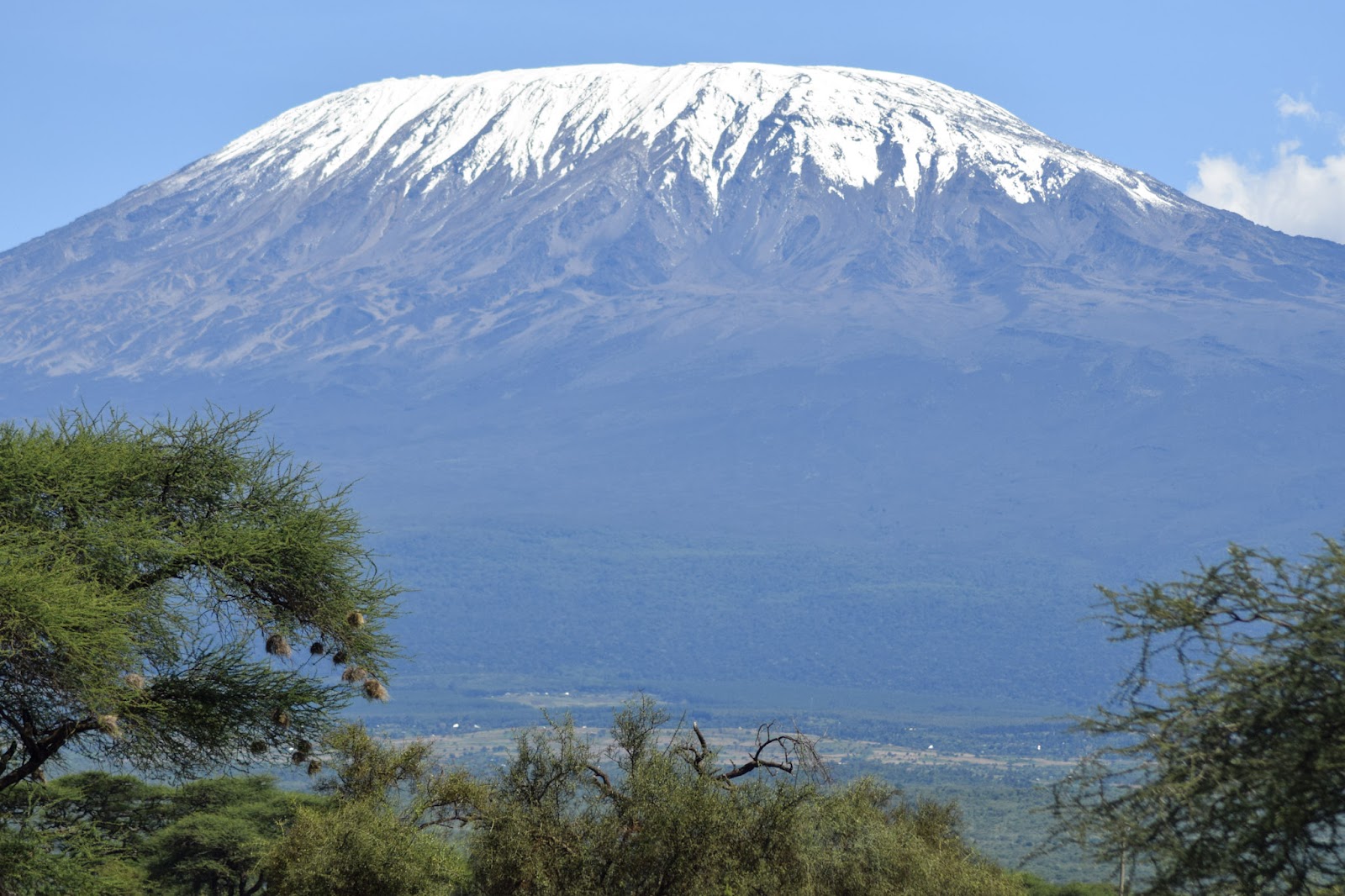
- February half-term: hot, dry and quiet, with newborn animals, excellent big-cat viewing and the clearest Kilimanjaro mornings of the year in Amboseli. See Kenya safari in January.
- Easter and May half-term: the long rains, usually from late March to May. Green, dramatic and the cheapest time to go, but some tracks are muddy and a few camps close. We will tell you plainly what to expect for your dates.
If you have the flexibility, the first half of June and the whole of October give most of the dry-season advantages at a noticeably lower price than July and August.
Where to Go: The Parks British Travellers Choose
- Masai Mara: the big cats, the migration and the open plains that make Kenya famous. Two or three nights minimum. The private conservancies on its northern edge cap vehicle numbers and allow night drives and walks. See our Masai Mara safari page.
- Amboseli: large elephant herds with Kilimanjaro behind them. Two nights, with a sunrise drive for the mountain. See Amboseli safari.
- Lake Nakuru and Lake Naivasha: rhinos, flamingos, a boat among hippos and the chance to cycle through Hell’s Gate. A natural break on the road between Amboseli and the Mara.
- Ol Pejeta and Samburu: the northern circuit, with rhino conservation, the last two northern white rhinos and the dry-country species of Samburu. Adds three or four days.
- Diani Beach: the white-sand finish that British travellers love, with Kisite dolphins and dhow sundowners. Read combining a safari with a beach holiday.

Health: Jabs, Malaria Tablets and the NHS
See your GP or a travel clinic 6 to 8 weeks before you fly, and check TravelHealthPro or NHS Fit for Travel for the current recommendations. Malaria risk is present year-round in the safari parks and on the coast, and low in central Nairobi, so most British visitors take antimalarials for a safari and use repellent from dusk. Some antimalarials are available at a pharmacy without a prescription; start them in good time. Hepatitis A, typhoid and up-to-date tetanus are the usual recommendations. No yellow fever certificate is required for a direct flight from the UK, but one is required if you arrive from a yellow fever country, and vaccination is generally advised.
Kenya is screening arrivals for Ebola and asks travellers arriving from several neighbouring countries to complete a digital health form; a direct flight from London is unaffected. Our Kenya safari malaria guide and getting sick on safari explain how care works in the bush and why evacuation cover matters.
Packing and Tipping
Pack layers: dawn game drives are cold enough for a fleece, afternoons are hot. Neutral colours, a wide-brimmed hat, binoculars and a camera with a zoom of at least 200 mm. Kenya uses the same three-pin Type G sockets as the UK at 240 V, so leave the adaptors at home. If your itinerary includes a light aircraft, luggage is limited to 15 kg in a soft bag. Our Kenya safari packing list covers the rest.
Tipping is expected and appreciated, and the amounts are modest. A fair benchmark is USD 10 to 15 per guest per day for your driver-guide and USD 5 to 10 per guest per day into the camp staff box, with a few dollars for porters. US dollars in small, newer notes are easiest; sterling is accepted at some camps but not all. Our tipping on safari guide has the full breakdown.
Choosing an Operator from the UK
British travellers have three routes: a UK tour operator with ATOL protection, an online marketplace, or booking directly with a licensed Kenyan company. The first costs more and bundles the flights; the last is usually the best value and puts you in touch with the team on the ground. Whichever you choose, check the same things.
- Licence: Kenyan operators must hold a Tourism Regulatory Authority licence. Ours is TRA1/47/C01/77087.
- Private vehicle: a 4×4 with a pop-up roof that is yours alone, with a window seat for every guest, rather than a shared minibus.
- Itemised quote: every park fee, meal and transfer on its own line, with the deposit and cancellation terms in writing before you pay.
- Evacuation cover: ask whether flying-doctor cover is included for the safari days.
- Recent reviews: read how problems were handled, not just the star rating.
Our 10 questions to ask before booking a safari and safari cancellation policy guide are worth ten minutes before you commit to anyone, including us.
A Sample Week: Our Kenya Classic Safari
This is our 7-day Kenya Classic Safari, listed from USD 1,650 per person sharing, and the route we suggest most often for a first Kenya safari from the UK. It fits a week off work with the overnight flights either side.
- Day 1, Nairobi to Amboseli: met off the morning flight, drive south and arrive for lunch, then an afternoon game drive among the elephants.
- Day 2, Amboseli: a sunrise drive for Kilimanjaro, Observation Hill, and an afternoon by the swamps.
- Day 3, Amboseli to Lake Naivasha: into the Rift Valley; a boat trip among hippos or cycling in Hell’s Gate.
- Day 4, Naivasha to the Masai Mara: arrive for lunch and an afternoon game drive.
- Days 5 and 6, Masai Mara: a full day on the plains with a picnic lunch, then more drives with an optional balloon flight or Maasai village visit.
- Day 7, Mara to Nairobi: an early game drive, then back to Nairobi by road or by air for the evening flight to London.
With ten days, our Kenya Safari and Beach Holiday adds three nights on Diani. Families should look at our Kenya family safari packages, and couples at our Kenya honeymoon safari page.
Kenya Safari from the UK FAQs
Do British citizens need a visa for Kenya?
No visa, but every traveller needs an approved Kenya eTA from etakenya.go.ke, applied for between three months and 72 hours before departure, plus the Kenyan travel health insurance bought during the application. Your passport must be valid for six months beyond your stay.
Is Kenya safe for British tourists?
The FCDO advises against all travel to the Somali border counties and most of Lamu County, and against all but essential travel to a strip of the northern coast. The Masai Mara, Amboseli, Nakuru, Naivasha, Tsavo and Diani are outside these areas. Read the current FCDO page before you book and ask your insurer how it affects your cover.
How long is the flight from London to Nairobi?
About 8 and a half to 9 hours nonstop from Heathrow with British Airways or Kenya Airways. Connections via Amsterdam, Paris, Doha, Dubai or Addis Ababa take 12 to 17 hours in total and are often cheaper.
How much does a Kenya safari cost from the UK?
Budget USD 350 to 600 per person per day on the ground for a comfortable private safari, roughly £270 to £460. Our listed trips run from USD 1,290 for 5 days to USD 4,650 for 14 days, before return flights of about £600 to £1,100.
When is the best time for a Kenya safari from the UK?
July and August for the Great Migration, which coincides with the summer holidays and is busiest. October half-term offers dry weather and value. February half-term is excellent for big cats and clear views of Kilimanjaro.
What is the time difference between the UK and Kenya?
Kenya is on UTC+3 all year, so it is 3 hours ahead of the UK in winter and 2 hours ahead during British Summer Time. There is no real jet lag.
Do I need malaria tablets for Kenya?
Malaria risk is present year-round in the safari parks and on the coast, so antimalarials are usually recommended for a safari. See your GP or a travel clinic 6 to 8 weeks before you fly and check TravelHealthPro.
Is Kenya better than South Africa for a safari?
They suit different trips. Kruger is cheaper to self-drive and partly malaria-free. Kenya has open plains with higher wildlife density, the Great Migration, Kilimanjaro views and a tropical coast close to the parks, with a shorter flight and almost no time difference from the UK.
🏕 Plan Your Kenya Safari With Sense of Adventure
Kenya-based experts. Real local knowledge. Transparent pricing. Tell us your dates and who is travelling and we will build your safari around the right parks, the right camps and the right week of the school calendar. 💬 WhatsApp Us — Start Planning Today
Call or WhatsApp: +254 799 160 081 · Email: info@senseofadventure.co.ke
Related Safari Guides
- › Kenya Safari Packages From the UK
- › Kenya vs South Africa Safari
- › Great Migration 2027: Timing and Odds
- › Combining a Safari With a Beach Holiday
- › Masai Mara Safari
Official resources: FCDO Kenya travel advice ↗ · Kenya eTA portal ↗ · TravelHealthPro Kenya ↗ · Kenya Wildlife Service ↗