Wer eine Kenia Safari planen will, needs a clear order of steps more than anything else: when to book, which paperwork to arrange, how to get from Frankfurt, Vienna or Zurich to Nairobi, what to pack and how to brief the people who will run your trip. This guide sets out those steps in English, with the German terms you will meet along the way, so it works for travellers from Germany, Austria and Switzerland alike. Ready to compare trips? See our Kenya safari packages for routes and prices; this page is about planning them well.
Sense of Adventure is a Nairobi safari company and DMC licensed by Kenya’s Tourism Regulatory Authority (TRA1/47/C01/77087). We run private safaris in 4×4 Land Cruisers with pop-up roofs, reclining seats and charging ports, each with its own driver-guide, and German-speaking guests ask us the same sharp, practical questions every week. The answers are below, in the order you will need them.

✅ Kenia Safari planen: Das Wichtigste in Kürze
- Vorlauf: 9 bis 12 Monate für Juli bis Oktober und Weihnachten; 4 bis 6 Monate für ruhigere Monate.
- Einreise: eine Kenia-eTA über das offizielle Portal plus Kenias Pflicht-Reisekrankenversicherung, beides vor dem Abflug. Reisepass, kein Personalausweis.
- Flug: Lufthansa fliegt nonstop von Frankfurt nach Nairobi in rund achteinhalb Stunden; andere Flughäfen in Deutschland, Österreich und der Schweiz mit einem Umstieg.
- Zeitverschiebung: im Winter 2 Stunden, im Sommer 1 Stunde später als in Mitteleuropa.
- Geld: Safaris werden in US-Dollar berechnet; nehmen Sie etwas USD in kleinen Scheinen für Trinkgeld mit.
- Gepäck: 15 kg in einer weichen Tasche, wenn Ihre Route einen Kleinflug enthält.
Kenia Safari planen mit uns?
Nennen Sie uns Reisezeit und Gruppengröße, wir schlagen Ihnen passende Routen mit Preisen vor.
Schritt 1: Your Planning Timeline (Zeitplan)
The best camps in the Masai Mara and Amboseli have a limited number of tents, and in the busiest weeks they fill long before flights become expensive. That is why the order matters: secure the safari first, then the flights, then the paperwork.
- 9 to 12 months before: decide on dates and send us your brief if you are travelling in July to October or over Christmas. Pay the deposit to hold camps and vehicle.
- Same week as the deposit: take out your Reiserücktrittsversicherung, so cancellation cover starts when your money is committed.
- 6 to 9 months before: book international flights and send us the flight numbers, so we can plan the first and last day around them.
- 3 months before: check that every passport, including children’s, is valid for at least six months after your return.
- 6 to 8 weeks before: see your Hausarzt or a Tropeninstitut about vaccinations and malaria tablets.
- 3 to 4 weeks before: apply for the eTA and Kenya’s travel insurance, and pay the balance of your safari.
- The final week: pack to the luggage limit, collect US dollars in small notes and save our WhatsApp number and your guide’s details.
For January, February, early December and the green season, four to six months is usually enough, and last-minute trips are sometimes possible. Our guide to safari costs explains what moves the price at each level, so you can set a budget before you write to anyone.
Wer eine Kenia Safari planen möchte, sollte also zuerst die Safari und erst dann die Flüge festmachen. So sichern Sie die besten Camps, bevor sie ausgebucht sind, und können Ihre Flüge danach passend zu den Parks wählen.
Schritt 2: Reisezeit and the Ferien
Kenya has wildlife in every month. The real choice is between the Great Migration, with the demand and prices that come with it, and quieter plains at a better rate. For families, the school calendar usually decides.
- Sommerferien: German summer holidays are staggered by Bundesland and spread from late June into September; Austria’s begin in July, and Swiss holidays are set by canton. They overlap the dry season and the Great Migration in the Masai Mara, which is also the busiest time, so book early. Our Great Migration 2027 guide gives honest timing and odds.
- Herbstferien (October): usually still dry, with the last herds in the Mara, fewer vehicles and better value. A strong choice for families who can travel then.
- Weihnachtsferien: warm and green after the short rains, with resident big cats and popular camps booked early. See our Christmas safari in Kenya guide.
- Winterferien, Semesterferien and Sportferien (January to March): hot, dry and quiet, with young animals, excellent big-cat viewing and the clearest Kilimanjaro mornings. Read Kenya safari in January.
- Osterferien: the long rains usually begin in late March or April. Green landscapes and the lowest rates, with some muddy tracks and a few seasonal camp closures; we tell you plainly what to expect for your dates.
Check your own Bundesland, Austrian state or canton calendar before you fix dates, because the exact weeks change every year.
Ferienzeit? Sichern Sie Ihre Wunschtermine
In den Sommerferien und über Weihnachten sind die beliebtesten Camps oft Monate im Voraus belegt. Schreiben Sie uns Ihre Daten, wir prüfen die Verfügbarkeit.
Meine Reisedaten sichernSchritt 3: Route and Trip Length
Kenya is a guided-safari country rather than a self-drive one, which suits most German-speaking guests: a trained driver-guide finds the animals, explains what you see, handles the park formalities and drives the roads. For a first safari, plan seven days on the ground. The classic route links Amboseli’s elephants below Kilimanjaro, the hippos of Lake Naivasha and the open plains of the Masai Mara; our 7-day Kenya Classic Safari follows exactly that line.
With ten to fourteen days, add a Badeverlängerung on the coast, as on our Kenya Safari and Beach Holiday, or a northern park such as Samburu. Photographers often build a whole trip around one park; the Big Cats Photographic Safari is a good example. Active travellers can pair the savanna with Mount Kenya through our hiking and safari combinations, and Tanzania joins easily through our Kenya and Tanzania safari packages.
Kenia Safari planen: Beispielrouten und Preise
Wenn Sie Ihre Kenia Safari planen, helfen feste Preisrahmen bei der Entscheidung. Unsere 7-tägige Kenya Classic Safari durch Amboseli, Lake Naivasha und die Masai Mara beginnt ab USD 1.650 pro Person. Die 10-tägige Safari mit Badeverlängerung in Diani beginnt ab USD 2.450 pro Person, und die 14-tägige Grand Slam Signature Safari ab USD 4.650 pro Person im Doppelzimmer.
Alle Preise sind Startpreise in US-Dollar und hängen von Saison, Gruppengröße und Unterkunft ab. Jedes Angebot, das Sie von uns erhalten, ist schriftlich und listet Parkgebühren, Unterkünfte und Transfers einzeln auf.
Welche Route passt zu Ihnen?
Erzählen Sie uns, was Ihnen wichtig ist: Tierwanderung, Fotografie, Familie oder Strand. Wir vergleichen zwei bis drei Routen für Ihre Reisezeit.
Route für uns vergleichenSchritt 4: eTA, Reisepass and Kenya’s Travel Insurance
German, Austrian and Swiss passport holders do not need a visa, but every traveller, including children, needs an approved Electronic Travel Authorisation before departure. Apply only on the official portal, etakenya.go.ke; look-alike sites charge far more for the same thing.
- Prepare the documents: a Reisepass valid for at least six months with a blank page, a passport-style photo or selfie, your flight itinerary, your accommodation confirmation (we send this), an email address, a phone number and a payment card.
- Apply online: one application per traveller. A Personalausweis is not accepted for entry.
- Allow processing time: the portal states that processing typically takes three working days and can take longer, so do not leave it to the last week.
- Arrange Kenya’s travel health insurance: Kenya now requires short-stay visitors to buy the Kenyan Government travel health policy during the eTA application or on the eCitizen portal. It costs USD 44 per traveller, each child needs their own policy, and a German, Austrian or Swiss policy cannot be uploaded or used instead. Our Kenya mandatory travel insurance guide explains how it works.
- Print and save: keep the approved eTA and insurance proof on your phone and on paper for check-in and arrival.
Before you book, we talk you through your route and the current travel conditions, and confirm everything in writing.
Tipp für alle, die eine Kenia Safari planen: Lesen Sie vor der Buchung die aktuellen Reise- und Sicherheitshinweise des Auswärtigen Amts (für Österreich und die Schweiz die Hinweise Ihres Außenministeriums). Allgemeine Informationen zu Kenias Reisezielen finden Sie bei Magical Kenya.
Schritt 5: Reiserücktrittsversicherung and Your Own Cover
Kenya’s mandatory insurance is an entry requirement, not a replacement for the policies you buy at home. Most German-speaking travellers take two:
- Reiserücktrittsversicherung: trip cancellation cover, ideally bought when you pay the deposit. Check that the sum insured matches the full safari price plus flights, and read which reasons for cancellation are covered.
- Auslandsreisekrankenversicherung: travel medical insurance that includes medically necessary Rücktransport. If you plan to trek on Mount Kenya, confirm the altitude limit.
Every Sense of Adventure safari also includes AMREF Flying Doctors evacuation cover for the days you travel with us. It is a valuable safety net in remote parks, and it works alongside your own insurance rather than replacing it.
Tipp: Wer eine Kenia Safari planen will, sollte die Reiserücktrittsversicherung nicht bis kurz vor Abflug aufschieben. Viele Tarife müssen kurz nach der Buchung abgeschlossen werden, also prüfen Sie die Fristen Ihres Versicherers.
Schritt 6: Flights and the Time Difference
Frankfurt is the gateway. Lufthansa flies nonstop from Frankfurt to Nairobi with a scheduled flight time of about eight and a half hours; the late-morning departure lands in Nairobi in the evening, so a first night in Nairobi is the natural start before heading to the parks next morning.
- Munich, Berlin, Hamburg, Düsseldorf, Stuttgart: connect once, via Frankfurt on one ticket, or via a European, Gulf or African hub.
- Vienna: one-stop routings via Frankfurt or other hubs.
- Zurich and Geneva: connect via Frankfurt or other European, Gulf or African hubs.
We never bundle the international flight, so you are free to choose carrier and fare; schedules change by season, so check the airline’s own site for your dates. Zeitverschiebung: Kenya stays on East Africa Time (UTC+3) all year and does not change its clocks. When Germany, Austria and Switzerland are on CET in winter, Kenya is 2 hours ahead; during CEST from late March to late October, it is only 1 hour ahead. Jet lag is barely noticeable, and a sunrise game drive on day two is realistic.
Für viele, die eine Kenia Safari planen, ist der kurze Zeitunterschied ein großer Vorteil: Sie kommen abends in Nairobi an, schlafen sich aus und starten am nächsten Morgen ausgeruht in die Parks.
Schritt 7: Money: USD, EUR and CHF
Kenyan safaris, park fees and camps are priced in US dollars, so your written quote is in USD and your bank converts it into euros or Swiss francs when you pay. Because exchange rates move daily, we do not quote in EUR or CHF; ask your bank about its card and transfer fees before you pay the deposit.
- Cards: Visa and Mastercard work in most hotels and many camps; let your bank know you are travelling.
- Cash: bring some US dollars in small, newer, undamaged notes for tips and small purchases. Euros and francs are accepted in some places but not everywhere.
- Kenyan shillings: useful for markets and small shops; ATMs in Nairobi dispense them.
- Trinkgeld: tipping is customary in Kenya and a real part of staff income. Ask us for current guidance; we include tipping suggestions for guides and camp staff in your final travel documents.
Our guide to money and SIM cards at JKIA covers cash, cards, M-Pesa and eSIMs on arrival.
Tipp: Wenn Sie Ihre Kenia Safari planen, legen Sie das Trinkgeld für Guide und Camp-Team schon vor der Abreise in kleinen US-Dollar-Scheinen bereit. Das spart Wege in Nairobi.
Schritt 8: Health Prep with Your Hausarzt or Tropeninstitut
Book an appointment with your Hausarzt or a Tropeninstitut travel clinic six to eight weeks before departure. They will check your standard vaccinations, recommend travel vaccines for your route and prescribe Malariaprophylaxe, which is advised for the main safari parks and the coast. Our Kenya vaccination requirements guide explains which rules depend on your route, and the Kenya safari malaria guide covers tablets and bite prevention.
Simple habits do most of the work: repellent in the evenings, long sleeves after sunset, sleeping under the net where one is provided and drinking plenty of water on hot days. Pack a small Reiseapotheke with your regular medication in hand luggage, rehydration salts, plasters, sun cream and anything your doctor recommends. Camps keep first-aid kits, and your guide carries one in the vehicle.
Tipp: Alle, die eine Kenia Safari planen, sollten Impfpass und Medikamente im Handgepäck tragen, damit sie auch bei verspätetem Gepäck griffbereit sind.
Schritt 9: Packliste and Light-Aircraft Luggage
If your route includes a flight on a light aircraft, for example from Nairobi to the Masai Mara, luggage is limited to about 15 kg per person in a soft bag without a frame, including hand luggage. Hard suitcases do not fit the hold. We can store extra luggage in Nairobi while you are in the bush; our safari duffel bag guide shows how to pack to the limit.
- Clothes: layers for cold dawns and warm afternoons, a fleece, a light rain jacket and neutral colours. Leave camouflage at home, as it is reserved for the military in Kenya.
- Kit: binoculars for each traveller, a wide-brimmed hat, sunglasses, a headtorch and a camera with a zoom lens.
- Power: Kenya uses British three-pin Type G sockets at 240 V, so bring an adapter. Our vehicles have charging ports for phones and camera batteries.
- Plastic: Kenya has banned single-use plastic carrier bags, so pack with fabric bags or packing cubes instead.
Our full Kenya safari packing list is the checklist we send to every guest.
Kamera-Ausrüstung und 15 kg Gepäck?
Nennen Sie uns Ihre Route und Ihre Ausrüstung. Wir sagen Ihnen ehrlich, ob eine Straßen- oder eine Flugsafari besser zu Ihnen passt.
Gepäckfrage stellenSchritt 10: A Typical Safari Day and a German-Speaking Guide
Kenya sits on the equator, so sunrise and sunset fall at roughly 6:30 and 18:30 all year, and the day follows the light. A wake-up coffee arrives before dawn, and you are out on the first game drive as the predators finish the night. Breakfast is back at camp or a picnic in the bush. Midday is for rest, a swim or a book while the animals shelter from the heat. After lunch and tea, the afternoon drive runs until sunset, followed by dinner and often a fire under the stars. On a private safari the timing is yours: stay with a leopard for an hour, or head back early for a quiet afternoon.
All our driver-guides speak English. A German-speaking guide is available on request; availability depends on your dates and route, and it is confirmed in your written quote, together with any supplement, before you book. Ask early for July and August. Mobile coverage is good across much of the safari circuit, and most camps offer Wi-Fi in the main area, although speeds vary in remote places. Our window seat guide explains how seating works in a private vehicle.
Tipp: Wer eine Kenia Safari planen und einen deutschsprachigen Guide haben möchte, sollte das gleich in der ersten Anfrage erwähnen, besonders für die Sommerferien.
Schritt 11: Nachhaltig reisen
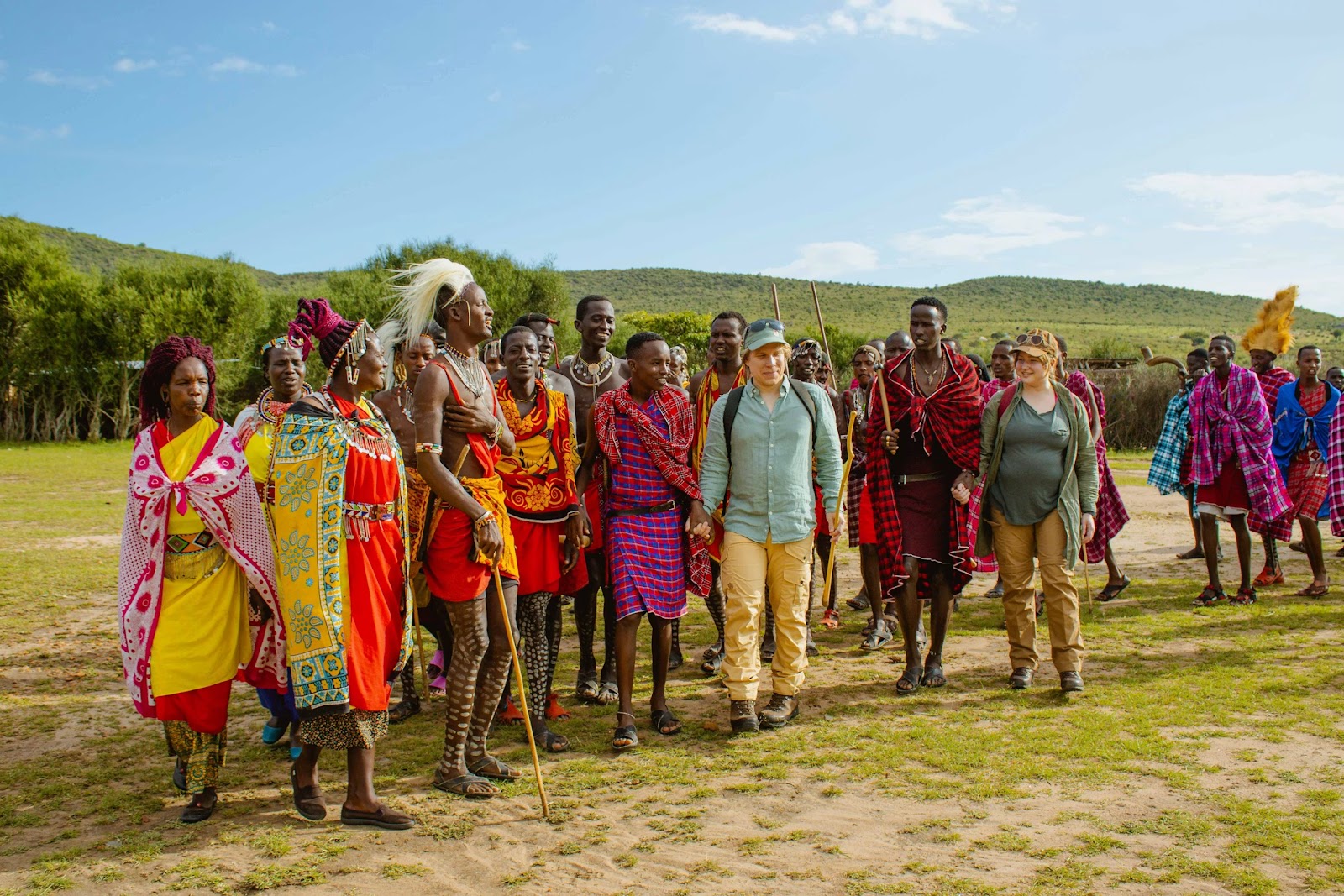
Sustainability is one of the first questions German-speaking guests raise, and Kenya has a strong answer in its conservancy model. Around the Masai Mara, Maasai landowners lease their land to a small number of camps; vehicle numbers are limited and lease payments go directly to the families. Spending even two or three nights in a conservancy is one of the most effective choices you can make, and our guide to conservancy fees in Kenya shows where the money goes.
Beyond that, choose camps that use solar power and manage their water carefully, refill a bottle instead of buying plastic, avoid any activity that involves touching or feeding wild animals, and tip the people who make the trip work. A private vehicle also means fewer, longer stops instead of a convoy chasing every sighting. Our responsible safari checklist lists ten checks for operators and camps.
Wer seine Kenia Safari planen und dabei nachhaltig reisen möchte, fragt am besten gezielt nach Conservancy-Camps, kleinen Gruppen und lokalen Guides. Wir zeigen Ihnen gern, welche Unterkünfte auf Ihrer Route diese Kriterien erfüllen.
Schritt 12: Choose an Operator and Brief Us
You can book through a Reiseveranstalter at home, with Pauschalreise protection, or directly with a licensed Kenyan company, which puts you in touch with the people who will meet you at the airport. Whichever you choose, check the same points: a Tourism Regulatory Authority licence, a private vehicle with a window seat for everyone, an itemised quote with every fee on its own line, written deposit and cancellation terms, and evacuation cover for the safari days.
To brief us, send these details in one message and we reply with a written, itemised quote in US dollars, offered as Midrange 3* and Standard Luxury 4* options:
- Travel dates or a window, and your arrival and departure flights if booked.
- Number of travellers, children’s ages and room types.
- A budget per person; give it in EUR or CHF if easier and we will work in USD.
- Parks or interests: Great Migration, photography, birding, trekking, beach.
- Whether you would like a German-speaking guide.
- Diets, mobility needs or celebrations.
You can also use our Plan My Safari form, or browse ready-made routes on our Kenya safari packages page first. Park rules and fees are published by the Kenya Wildlife Service.
Kenia Safari planen: Ihre Checkliste auf einen Blick
Zum Schluss alle Schritte kompakt, damit Sie Ihre Kenia Safari planen können, ohne etwas zu vergessen:
- Reisezeit und Ferien festlegen, Safari zuerst reservieren.
- Reiserücktrittsversicherung am Tag der Anzahlung abschließen.
- Flüge buchen und uns die Flugnummern schicken.
- Reisepass prüfen: mindestens sechs Monate gültig, eine freie Seite.
- Hausarzt oder Tropeninstitut sechs bis acht Wochen vorher besuchen.
- eTA und Kenias Pflicht-Reisekrankenversicherung drei bis vier Wochen vorher beantragen.
- Weiche Reisetasche packen, USD in kleinen Scheinen mitnehmen.
Kenia Safari planen mit Kindern
Familien, die eine Kenia Safari planen, profitieren von einem privaten Fahrzeug, kurzen Fahrstrecken und Camps mit Familienzelten. Plant man die Route um Amboseli und Lake Naivasha, sind die Fahrzeiten zwischen den Parks überschaubar. Unsere Familiensafaris zeigen Beispiele mit Preisen.
Kenia Safari planen: FAQs
Brauchen deutsche Staatsbürger ein Visum für Kenia?
Nein, ein Visum ist nicht nötig. Jeder Reisende, auch Kinder, braucht aber vor dem Abflug eine genehmigte Kenia-eTA von etakenya.go.ke sowie Kenias Pflicht-Reisekrankenversicherung (USD 44 pro Person, über das eTA- oder eCitizen-Portal; eine heimische Police ersetzt sie nicht). Der Reisepass muss sechs Monate über den Aufenthalt hinaus gültig sein; ein Personalausweis reicht nicht.
Wie weit im Voraus sollte ich eine Kenia Safari planen?
Wer eine Kenia Safari planen möchte, sollte für Juli bis Oktober und Weihnachten neun bis zwölf Monate Vorlauf einplanen, weil die besten Camps zuerst ausgebucht sind. Für Januar, Februar und die Grünsaison reichen meist vier bis sechs Monate. Buchen Sie zuerst die Safari, dann die Flüge.
Wie lange fliegt man von Frankfurt nach Nairobi?
Lufthansa fliegt nonstop von Frankfurt nach Nairobi, mit einer planmäßigen Flugzeit von rund achteinhalb Stunden und Ankunft am Abend. Von anderen Flughäfen in Deutschland, Österreich und der Schweiz geht es mit einem Umstieg, etwa über Frankfurt oder ein Drehkreuz am Golf.
Wie groß ist die Zeitverschiebung zwischen Deutschland und Kenia?
Kenia liegt das ganze Jahr auf UTC+3 und stellt die Uhren nicht um. Im Winter (MEZ) ist Kenia Deutschland, Österreich und der Schweiz 2 Stunden voraus, im Sommer (MESZ) nur 1 Stunde. Jetlag ist daher kaum ein Thema, und eine Pirschfahrt am ersten Morgen ist gut möglich.
Soll ich Euro, Franken oder US-Dollar mitnehmen?
Safaris werden in US-Dollar berechnet und bezahlt. Nehmen Sie etwas Bargeld in USD in kleinen, neueren Scheinen für Trinkgeld mit. Karten funktionieren in den meisten Hotels und vielen Camps. Euro und Franken werden manchmal, aber nicht überall angenommen.
Brauche ich Malariaprophylaxe für eine Kenia Safari?
Für die wichtigsten Safariparks und die Küste wird eine Malariaprophylaxe empfohlen. Gehen Sie sechs bis acht Wochen vor der Reise zu Ihrem Hausarzt oder einem Tropeninstitut, um die passenden Tabletten zu wählen und Ihre Impfungen für die Route zu prüfen.
Wie viel Gepäck darf ich auf Safari-Flügen mitnehmen?
Kleinflugzeuge in die Parks erlauben meist rund 15 kg pro Person in einer weichen Tasche ohne Rahmen, inklusive Handgepäck. Hartschalenkoffer passen nicht in den Frachtraum. Zusätzliches Gepäck können wir während der Safari in Nairobi für Sie aufbewahren.
Gibt es deutschsprachige Guides?
Ja, auf Anfrage. Die Verfügbarkeit hängt von Reisedatum und Route ab; ein deutschsprachiger Guide wird vor der Buchung mit einem eventuellen Aufpreis in Ihrem schriftlichen Angebot bestätigt. Alle unsere Guides sprechen Englisch. Für Juli und August fragen Sie am besten früh an.
Kenia Safari planen mit Sense of Adventure
Escape. Explore. Discover. Unser Team in Nairobi plant Ihre private Safari mit den richtigen Parks, der passenden Reisezeit und ehrlichen, einzeln aufgeschlüsselten Preisen. Schreiben, mailen oder rufen Sie uns an.
Bevor Sie Ihre Kenia Safari planen und buchen: Aktuelle Parkregeln und Eintrittsgebühren veröffentlicht der Kenya Wildlife Service (kws.go.ke), die offizielle Behörde für Kenias Nationalparks und Reservate.
Related Safari Guides
- › Kenya Safari Packages: Compare Trips, Prices and Itineraries
- › Kenya Safari Packages from Germany, Austria and Switzerland
- › Kenya Safari from Europe: Tips for Group Travellers
- › Kenya Mandatory Travel Insurance Explained
- › Great Migration 2027: Timing and Odds
- › Private Amboseli Safari: Elephants and Kilimanjaro