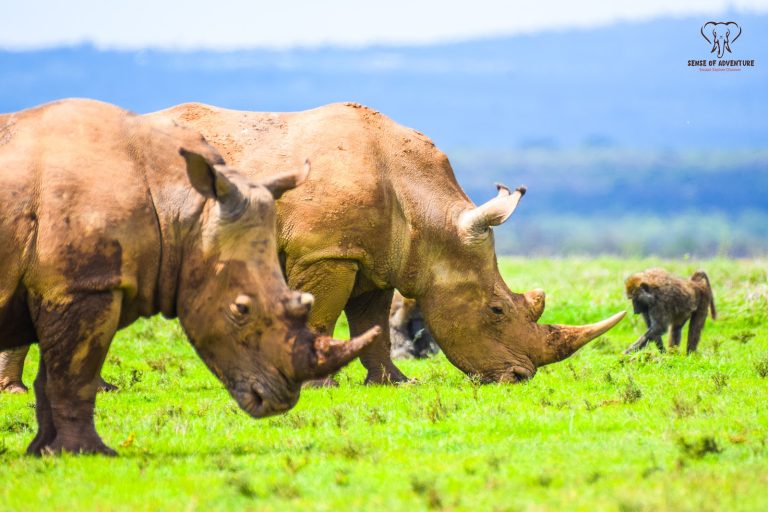
The last northern white rhinos on Earth are two females, Najin and her daughter Fatu, and they live under round-the-clock protection at Ol Pejeta Conservancy in Laikipia, central Kenya. There is no male left, and neither female can carry a calf. Yet their story is not over: an international team of scientists and Kenyan conservationists is using IVF and surrogate mothers to try to bring the subspecies back.
This guide tells their story, explains where the rescue mission stands at the time of writing in November 2026, and shows how you can see Najin and Fatu for yourself on a private safari with Sense of Adventure, a licensed Kenyan tour operator based in Nairobi.
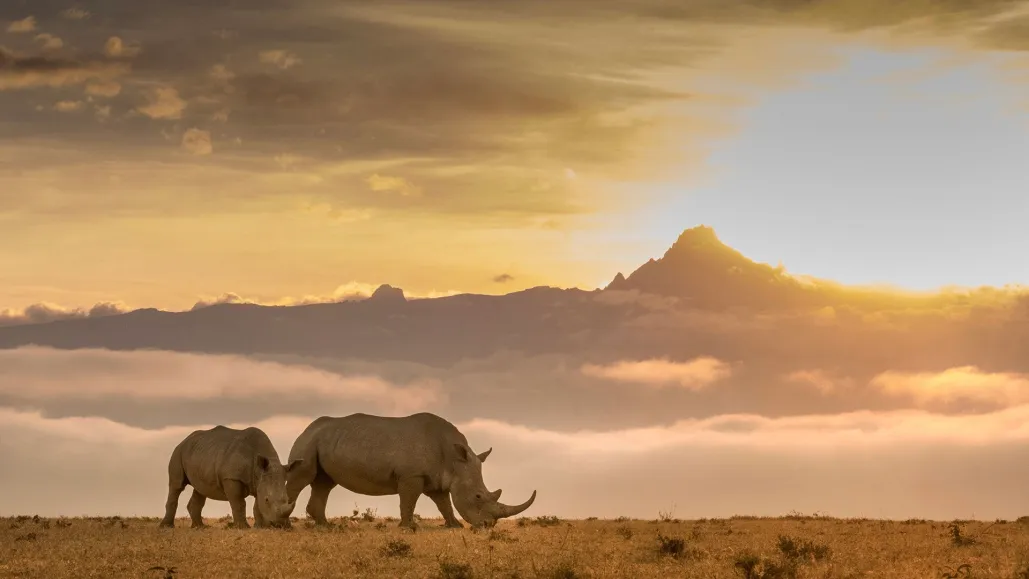
Quick answer: the last northern white rhinos
- Who: Najin, born in 1989, and her daughter Fatu, born in 2000. Both are female.
- Where: Ol Pejeta Conservancy, near Nanyuki in Laikipia, about four hours by road north of Nairobi.
- Why no calves: the last male, Sudan, died at Ol Pejeta in March 2018, and neither female can safely carry a pregnancy.
- The rescue plan: eggs from Fatu are fertilised in the lab with frozen sperm from males that have died. By April 2026 scientists held 39 northern white rhino embryos, waiting for a southern white rhino surrogate mother.
- Can you see them? Yes. Ol Pejeta offers guided visits to their protected enclosure, and we arrange this on our Ol Pejeta safaris.
Table of Contents
Meet Najin and Fatu, the Last Northern White Rhinos
Najin was born in captivity in 1989 and is now in her late thirties, which is elderly for a rhino. Fatu, her daughter, was born in 2000. Their keepers describe two quite different characters: Najin is the calmer of the pair, a steadying presence, while Fatu is livelier and more playful. They spend their days grazing side by side, and for a species reduced to two animals, that companionship matters.
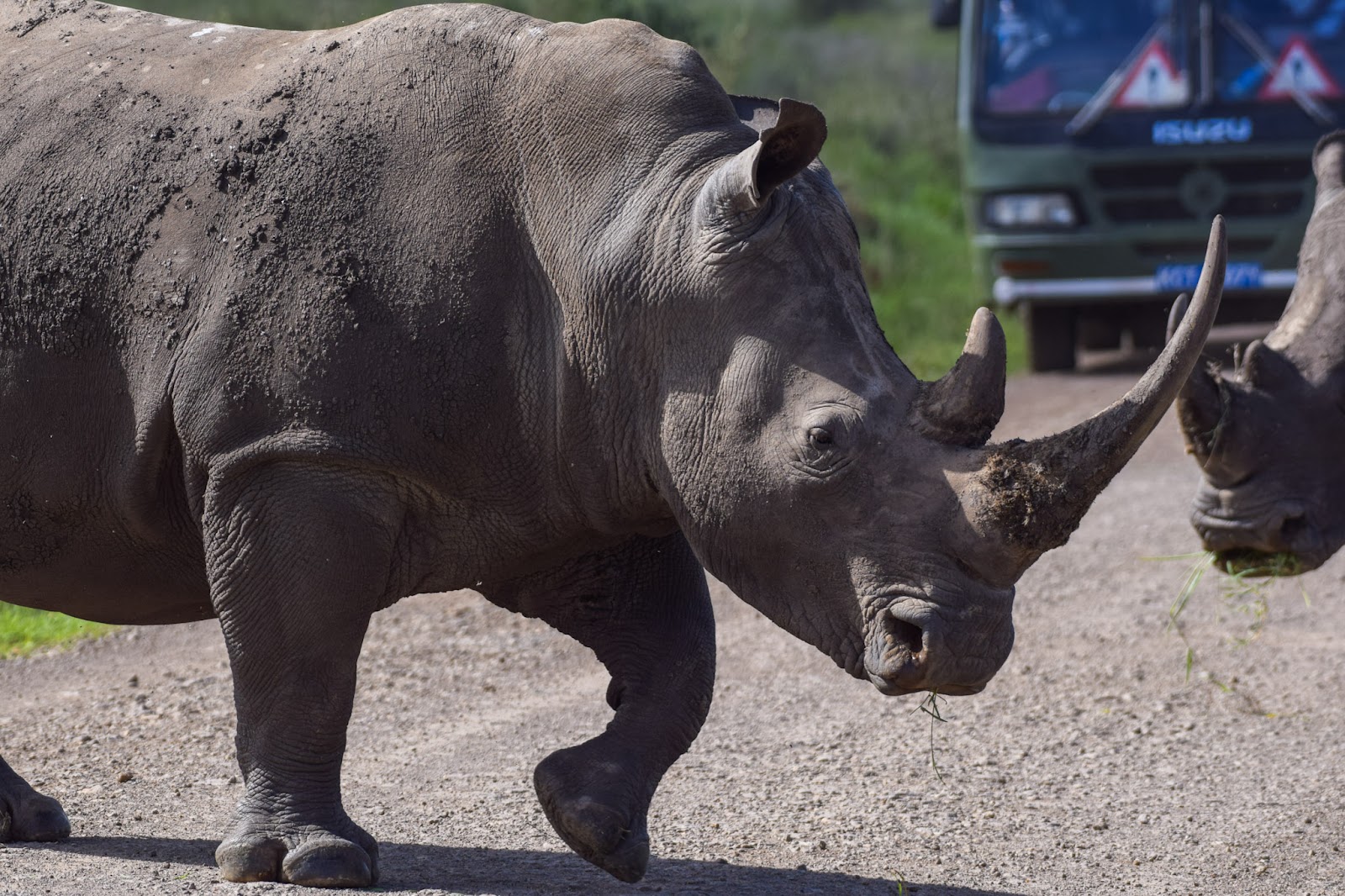
To most visitors, a northern white rhino looks much like the southern white rhinos found across Kenya’s parks and conservancies. Both have the broad, square lip of a grazer. The northern form is a little smaller, with a flatter back, and it is genetically distinct after a long separation from its southern cousins. That distinct genetic line is exactly what the rescue mission is trying to save.
Seeing the last northern white rhinos is unlike any other wildlife encounter in Africa. There is no chase and no drama, just two quiet animals in the grass and the knowledge that you are looking at the end of a line that walked across central Africa for thousands of years.
How the Northern White Rhino Came to the Brink
Northern white rhinos once roamed the grasslands and open woodlands of central and east-central Africa, in parts of today’s Uganda, South Sudan, Sudan, Chad, the Central African Republic and the Democratic Republic of the Congo. Through the twentieth century, habitat loss, civil war and, above all, poaching for rhino horn cut their numbers again and again.
The last wild population survived in Garamba National Park in the Democratic Republic of the Congo, where determined protection efforts held on for years. Poaching finally overwhelmed them, and by the late 2000s the northern white rhino had vanished from the wild. The only survivors were a handful of animals in zoos, most of them too old to breed, and two of them would become the last northern white rhinos.
From a Czech Zoo to Kenya: the 2009 Move to Ol Pejeta
Najin and Fatu were both born at Dvůr Králové Zoo in the Czech Republic, one of the few places that kept northern white rhinos. In December 2009 they were flown to Kenya with two males, Sudan and Suni, in a bold attempt to save the subspecies. The hope was that African grass, African sun and a natural climate would encourage the four rhinos to breed where years in a European zoo had not.
Ol Pejeta was chosen because it already had a strong record in rhino protection. The rhinos settled well, and mating was observed, but no pregnancy followed. Suni died in 2014. In March 2018 Sudan, the last male northern white rhino in the world, died at Ol Pejeta aged 45. Photographs of his caretakers saying goodbye travelled around the world, and for many people Sudan became a symbol of what extinction really means.
Before he died, scientists had collected and frozen genetic material from Sudan and other males. That frozen material is one of the reasons the story of the last northern white rhinos did not end in 2018.
Why Najin and Fatu Cannot Have Calves
Even with a male, natural breeding would not be possible. Najin has weakness in her hind legs that would make a pregnancy dangerous for her, and Fatu has a uterine condition that prevents her from carrying a calf. Najin was also retired from the egg collection programme in 2021 because of her age and health, which leaves Fatu as the only egg donor for the whole subspecies.
This is why the rescue relies on science rather than nature. The aim is to create northern white rhino embryos in the laboratory and place them in healthy southern white rhino females, who would carry the calves that the last northern white rhinos cannot.
The Rescue Mission: IVF, 39 Embryos and Surrogate Mothers
Since 2019, a research consortium known as BioRescue has led the effort, working with the Kenya Wildlife Service, the Wildlife Research and Training Institute, Ol Pejeta Conservancy, Dvůr Králové Zoo and the Leibniz Institute for Zoo and Wildlife Research in Berlin. It is one of the most ambitious conservation projects ever attempted for a large mammal.
- Egg collection: under general anaesthetic, a veterinary team collects immature egg cells from Fatu at Ol Pejeta. She has been through the procedure more than 20 times, with careful monitoring of her health.
- Fertilisation in the lab: the eggs are flown to a specialist laboratory in Cremona, Italy, matured, and fertilised with frozen sperm from northern white males that have died.
- Embryo bank: successful embryos are frozen in liquid nitrogen in Berlin and Cremona. A new embryo from an egg collection on Fatu early in 2026 brought the total to 39 pure northern white rhino embryos, according to a BioRescue release in April 2026.
- Proof that it can work: in 2023 the team achieved the world’s first rhino IVF pregnancy, using a southern white rhino embryo in a southern white surrogate at Ol Pejeta. The surrogate died of an infection before the calf could be born, but the pregnancy showed that the method works.
- Northern white transfers: by April 2026 the consortium had carried out six embryo transfers in total, including three with northern white embryos in the second half of 2025. None has yet led to a lasting pregnancy, and two new southern white females have joined the group of possible surrogates.
A first northern white calf would be a historic moment, but scientists are clear that one calf is only a beginning. A healthy population needs many animals and more genetic variety than two females can provide, so longer-term research is also exploring stem cell techniques that could one day produce eggs from preserved tissue of rhinos that have died. You can follow official updates from the Leibniz Institute for Zoo and Wildlife Research.
Want to see Najin and Fatu for yourself?
We add a guided visit to the last northern white rhinos to any Ol Pejeta safari, in your own private Land Cruiser with a driver-guide. Tell us your dates and we will send a written quote.
WhatsApp +254 799 160 081 Email Our TeamLife at Ol Pejeta: How the Last Two Are Protected
Najin and Fatu, the last northern white rhinos, live in their own large, protected enclosure within Ol Pejeta, where they graze freely on natural grassland. Armed rangers guard them day and night, and a dedicated team of caretakers knows every habit and mood of the two females. Their health is checked closely, and the veterinary team plans every procedure around their welfare.
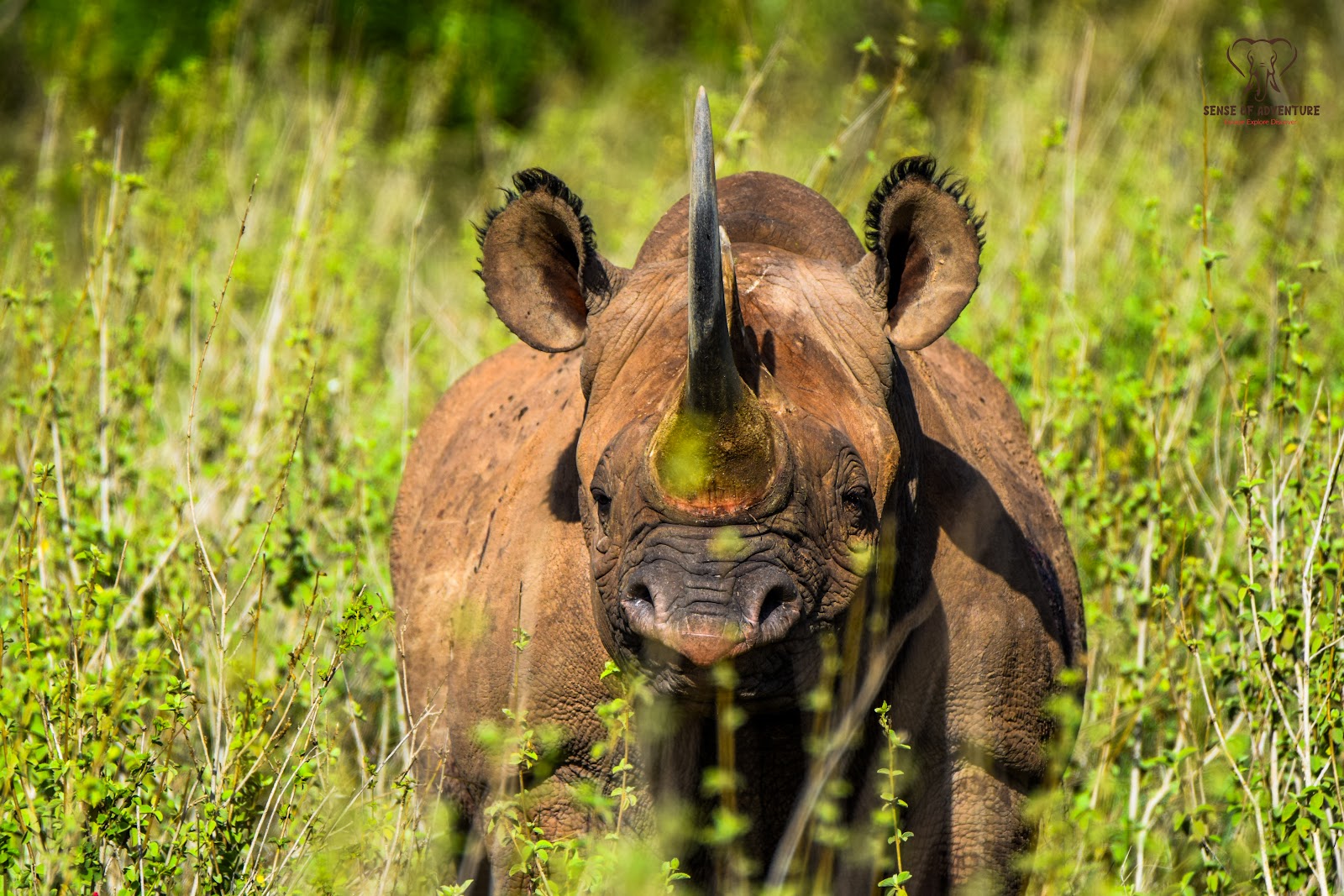
The conservancy around them is a rhino stronghold in its own right. Ol Pejeta is one of East Africa’s most important sanctuaries for the critically endangered black rhino, and it also protects southern white rhinos, including the females being considered as surrogates. It is home to all of the Big Five and to a chimpanzee sanctuary, the only place in Kenya where you can see chimpanzees, which care for animals rescued from elsewhere in Africa.
Can You Visit the Last Northern White Rhinos?
Yes. Ol Pejeta offers guided visits to Najin and Fatu’s enclosure, where a ranger or caretaker introduces you to the rhinos and explains their story and the rescue work. It is a calm, respectful encounter, usually on foot near the enclosure fence, and for most of our guests it becomes the emotional high point of their safari. The conservancy sets the visit fee and the rules, which can change, so we confirm both in writing and book the visit for you when you reserve your trip.
- Follow the ranger’s lead: keep your voice low, stay where you are asked to stand and never try to feed or touch the rhinos.
- Photography: a 70 to 200 mm lens is plenty. Switch off the flash and turn off any shutter sounds.
- Pay your respects to Sudan: the conservancy keeps a memorial to rhinos lost to poaching, where Sudan is also remembered. Ask your guide to stop there.
- Make a day of it: combine the visit with game drives for lions and black rhinos, the chimpanzee sanctuary and, where your camp offers it, a night drive. Our guide to night drives on safari explains what to expect.
Getting to Ol Pejeta
Ol Pejeta lies on the equator near the town of Nanyuki, between the Aberdare Range and Mount Kenya. By road it is about four hours from Nairobi, and short scheduled flights also connect Nairobi with Nanyuki. A day trip is possible if you start early, but one or two nights let you visit the last northern white rhinos without rushing and enjoy the conservancy’s other wildlife. Ol Pejeta also links easily with Samburu to the north and with the Masai Mara by light aircraft.
Best time to visit
You can see Najin and Fatu in any month. Laikipia’s drier months, roughly January to February and June to October, bring easier tracks and clearer views of Mount Kenya, while the green seasons after the rains are quieter and beautifully lush. The rhinos themselves do not migrate, so the choice really depends on the rest of your Kenya itinerary.
Safaris That Include Ol Pejeta
Every trip below runs privately in our 4×4 Land Cruisers with a pop-up roof and your own driver-guide, and we can add a visit to the last northern white rhinos to any of them. Prices are the starting prices on each trip page, in US dollars per person sharing, and your written quote confirms the price for your dates.
- Ol Pejeta Day Safari from Nairobi: a full day in the conservancy, back in Nairobi the same evening. From USD 380.
- Ol Pejeta and Masai Mara Luxury Conservancy Safari (6 days): the last northern white rhinos, then exclusive game viewing in the Mara. From USD 3,900.
- Kenya Highlights Safari (9 days): Samburu, Ol Pejeta, Lake Nakuru and the Masai Mara. From USD 2,350.
- Gentle Fly-in Safari for Seniors (6 days): Ol Pejeta and the Mara with short flights and a relaxed pace. From USD 3,600.
Comparing rhino destinations? Read Ol Pejeta vs Lewa, Nairobi National Park vs Ol Pejeta and our Sera Rhino Sanctuary guide, or see every route on our private Kenya safari page.
How Your Visit Helps
Conservation in Kenya is funded in large part by visitors. The conservancy fees included in your safari help pay for rangers, veterinary care, community programmes and the daily protection of the last northern white rhinos. Choosing a conservancy stay rather than a rushed drive-through puts more of that support where it is needed. Our guides to conservancy fees in Kenya and how to choose a responsible safari explain how it works.
You can also follow the rhinos’ news and support their care directly through Ol Pejeta Conservancy, and learn about rhino protection across the country from the Kenya Wildlife Service. Before you book, we brief you on the current official travel advice for your route and confirm every detail in writing.
Last Northern White Rhinos: FAQs
How many northern white rhinos are left in the world?
Two. The last northern white rhinos are Najin and her daughter Fatu, both female, who live under 24-hour protection at Ol Pejeta Conservancy in Laikipia, Kenya.
Where do the last northern white rhinos live?
At Ol Pejeta Conservancy near Nanyuki in central Kenya, about four hours by road from Nairobi. They have lived there since they were flown from a zoo in the Czech Republic in December 2009.
How old are Najin and Fatu?
Najin was born in 1989 and Fatu, her daughter, was born in 2000. Najin is elderly for a rhino and was retired from egg collection in 2021, so Fatu is now the only egg donor.
When did the last male northern white rhino die?
Sudan, the last male, died at Ol Pejeta in March 2018 at the age of 45. Frozen sperm from Sudan and other males is now used to create embryos in the laboratory.
Can the northern white rhino be saved?
Scientists believe it is possible. By April 2026 the BioRescue team had created 39 pure northern white rhino embryos, which are meant to be carried by southern white rhino surrogate mothers. No lasting pregnancy has been achieved yet.
Can tourists visit the northern white rhinos?
Yes. Ol Pejeta offers guided visits to the enclosure where Najin and Fatu live. The conservancy sets the fee and rules, and we book the visit and confirm the details in writing when you reserve your safari.
How do I get to Ol Pejeta from Nairobi?
By road it takes about four hours to reach Ol Pejeta near Nanyuki, or you can take a short scheduled flight from Nairobi to Nanyuki. We offer a day safari from Nairobi as well as longer trips with one or more nights in the conservancy.
Stand Beside the Last of Their Kind
Meet Najin and Fatu at Ol Pejeta on a private safari planned around you. Escape. Explore. Discover.
WhatsApp +254 799 160 081 Email info@senseofadventure.co.ke