
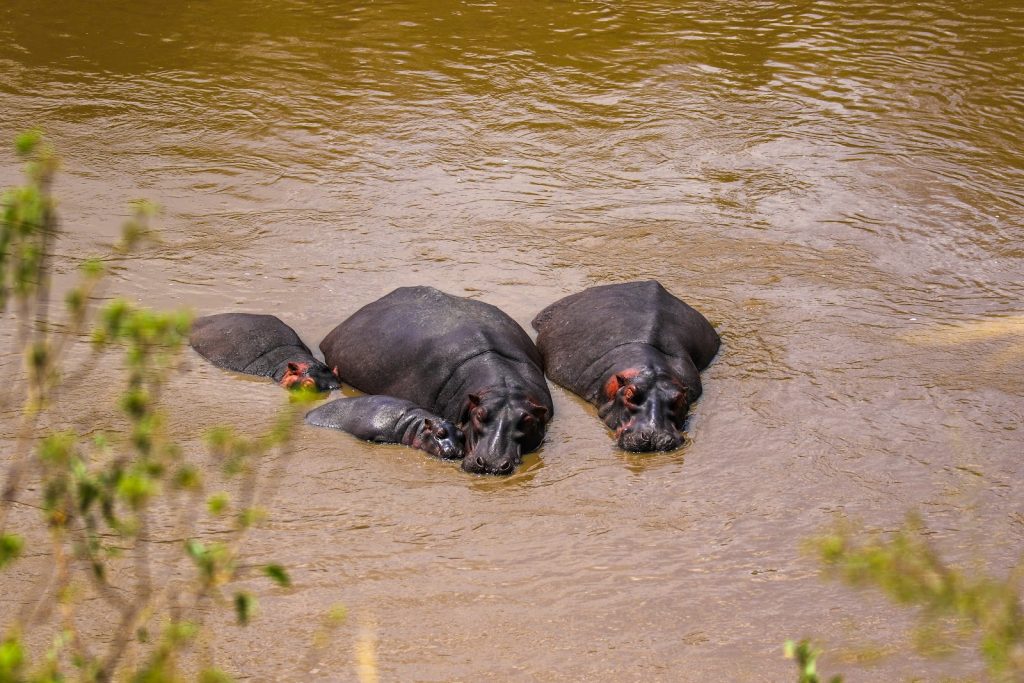
Mzima Springs is Tsavo West’s freshwater miracle: fifty shades of dust and thorn, and then suddenly — palm groves, raphia shade and pools so clear you can watch hippos walking on the bottom. The springs surge out of the ground at a staggering 250 million litres a day, water that fell on the Chyulu Hills decades ago and has been filtering through porous lava ever since. The result is the clearest natural water in Kenya, complete with a submerged viewing chamber built in 1969 so visitors can meet hippos and barbel fish at eye level. It is one of the few places in any Kenyan park you explore on foot — armed ranger ahead, vervet monkeys overhead. No Tsavo West itinerary from Sense of Adventure skips it.
Walk the Oasis in the Red Desert
Mzima’s ranger-guided walk anchors every good Tsavo West day. Let us slot it into your two-park safari.
How Mzima Springs Works
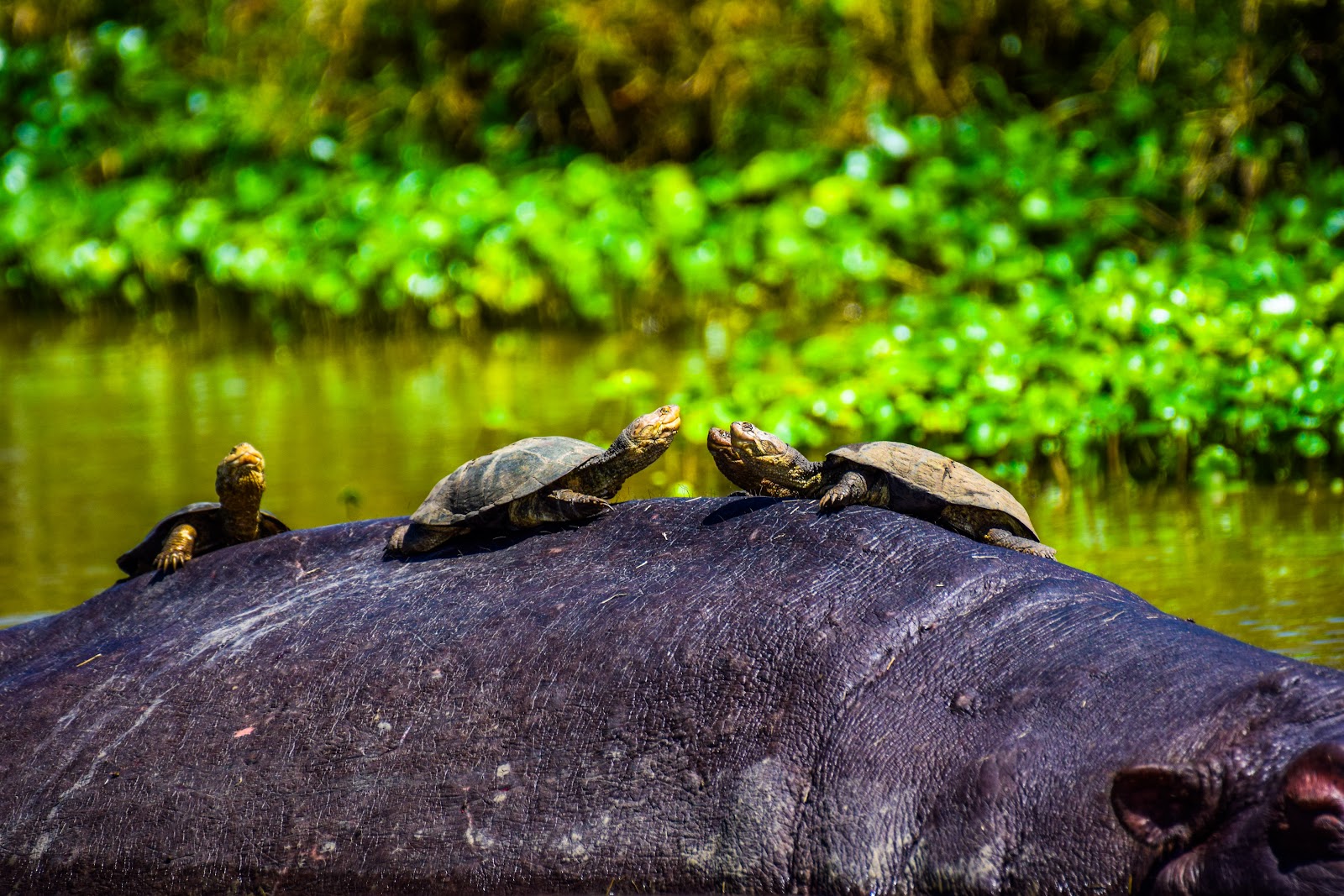
Rain falling on the green Chyulu Hills, forty kilometres north, sinks instantly into the young volcanic rock — the hills are so porous they hold no surface streams at all. That water creeps through underground lava aquifers for an estimated quarter of a century before pressure forces it out at Mzima in two great spring heads, filtered to glass clarity. The pools support resident hippo pods and crocodiles, shoals of blue barbel that groom the hippos like cleaner fish on a reef, and a fig-and-palm forest full of vervets, Sykes’ monkeys and fruit bats. Mzima’s water matters beyond the park: a pipeline built in the 1950s still supplies Mombasa city from these very springs.
The underwater hide is bonkers in the best way — a hippo walked past the window like a chubby astronaut, trailed by a cloud of fish. Above ground it’s all palms and birdsong while the rest of Tsavo bakes. Strangest, loveliest hour of our safari.
— Sense of Adventure guest, Tsavo West day
The 5 Essential Mzima Springs Experiences
The Underwater Hippo Hide — Kenya’s only submerged wildlife window
A concrete chamber sunk into the first pool in 1969 puts your face level with the riverbed. Hippos punt past the glass in slow motion, barbel swirling around them; crocodiles occasionally cruise by like submarines. Mornings offer the best clarity and activity. There is nothing else like it in East African safari.
The Ranger-Guided Walk — on foot between the pools
An armed KWS ranger leads the shaded path from the top spring head to the lower pool — one of very few sanctioned walks inside a big-game park. You track hippo footpaths, spot crocs from safe overlooks and feel the temperature drop ten degrees under the figs. Kids rate this hour above almost everything else in Tsavo.
The Spring Heads — watching a river being born
At the top of the site, water simply boils up out of the rock — millions of litres an hour appearing from nowhere, instantly forming a river. Knowing it fell on the Chyulus around a quarter-century ago makes the sight quietly profound. Photograph the upwellings early, before wind ruffles the surface.
Monkeys, Bats and Birdlife — the oasis crowd
The palm-fig canopy hums: vervets and Sykes’ monkeys work the branches (guard your snacks — they are professionals), epauletted fruit bats cluster under fronds, and the birding is superb — African finfoot on quiet edges, kingfishers, turacos and water thick-knees. Binoculars earn their place on this walk.
The Chyulu Connection — seeing the whole water story
Pair Mzima with a drive toward the green Chyulu Hills or the black Shetani lava flow nearby, and the geology clicks: rain there, lava filter between, oasis here. Shetani’s barely-vegetated flow — “devil” in Kiswahili — erupted only a few centuries ago. Together they make Tsavo West Kenya’s best geology-on-safari lesson.
Tsavo West in One Perfect Day
Mzima Springs, Shetani lava, Rhino Valley and a floodlit waterhole night — ask for our classic Tsavo West routing.
Mzima Springs Facts
- Output: about 250 million litres surge from the springs every day — a full river born on the spot.
- The filter: water spends an estimated 25 years seeping through Chyulu lava before surfacing crystal-clear.
- City lifeline: a 1950s pipeline still carries Mzima water over 200 km to supply Mombasa.
- The hide: the underwater viewing chamber dates to 1969 — arrive early for the clearest hippo views.
- On foot: walks are ranger-escorted; the loop takes 45-60 unhurried minutes in deep shade.
- Neighbours: combine with the Shetani lava flow and Chaimu crater cone, both minutes away by road.
Fitting Mzima Into a Tsavo Safari
Mzima headlines the western half of our 3-day Tsavo East & West safari, and the Tsavo safari guide sets out both parks in full. Compare the two sides in Tsavo East vs Tsavo West, then meet the neighbours: the red elephants drink downstream of these very springs.
The Desert Hides an Oasis
Come watch a river being born and a hippo walk underwater — all before lunch. Message us to plan it.
Frequently Asked Questions
What is Mzima Springs famous for?
Mzima Springs in Tsavo West is famous for its crystal-clear pools fed by 250 million litres of lava-filtered water daily, its resident hippos and crocodiles, and Kenya’s only underwater viewing chamber — a 1969 hide where visitors watch hippos walk the pool floor at eye level.
Where does Mzima Springs water come from?
Mzima Springs’ water is rain that fell on the Chyulu Hills about 40 km away, absorbed instantly by porous volcanic rock and filtered underground for an estimated 25 years before surfacing in Tsavo West. The lava filtration is why the pools are so extraordinarily clear.
Can you walk at Mzima Springs?
Yes — Mzima Springs is one of the few places in Tsavo where visitors explore on foot. An armed KWS ranger escorts the shaded 45-60 minute loop between the spring heads, the hippo pools and the underwater hide, through fig and raphia palm forest full of monkeys.
Are there hippos and crocodiles at Mzima Springs?
Yes — resident hippo pods and Nile crocodiles live in Mzima Springs’ pools year-round, along with shoals of barbel fish that groom the hippos. The submerged hide lets you watch them underwater; above the surface, overlooks give safe views across both pools.
Does Mombasa really get its water from Mzima Springs?
Yes — a pipeline completed in the 1950s carries Mzima Springs water more than 200 km to Mombasa, and it remains a key source for the coastal city. The springs’ 250-million-litre daily flow supports both the pipeline and Tsavo West’s wildlife oasis.