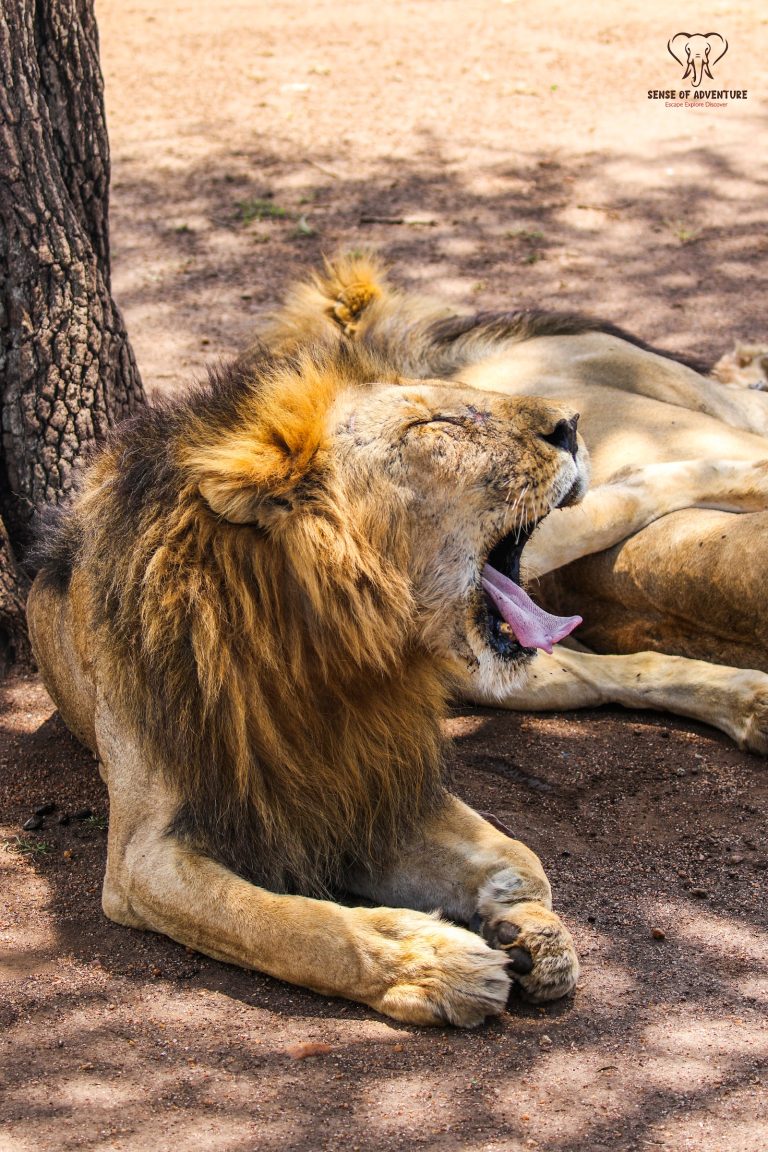


Lake Nakuru lions have a habit that catches every visitor off guard: they climb trees. Drive the yellow-barked acacia groves along the park’s southern circuits and you may find an entire pride draped through the branches like heavy fruit — a behaviour common in only a handful of places in Africa. Add one of Kenya’s better leopard-sighting records, big spotted hyena clans and jackals working the shoreline flats, and this compact rhino sanctuary quietly doubles as a predator park. Nakuru’s fence keeps its cats resident and its prey abundant, which makes sightings unusually dependable. Sense of Adventure treats the park as a full safari stop, never just a flamingo photo-op — the cats are why.
Find the Lions in the Trees
Our Nakuru circuits sweep the acacia groves where the prides lounge. Come see the park’s worst-kept secret.
Why Lake Nakuru’s Lions Climb Trees
Tree-climbing lions are famous in Uganda’s Ishasha and Tanzania’s Lake Manyara — and Nakuru belongs on that short list. The park’s yellow-fever acacias offer low, ladder-like branching that even a 180-kg cat can manage, and the payoff is real: breezes above the biting flies, a cooler siesta, and a raised view over the flats where buffalo and zebra graze. The behaviour spreads culturally — cubs copy mothers — so certain Nakuru prides climb habitually while others never bother. Leopards, naturally arboreal, thrive here too, favouring the euphorbia forest and the wooded cliffs; dawn and dusk drives along the southern woodland roads produce them with pleasing regularity.

Our guide slowed under a big acacia and said, “Count the tails.” Five lions were layered through it, one dangling a paw right over the road. Rhinos in the morning, lions in a tree after lunch — Nakuru massively over-delivered.
— Sense of Adventure guest, Nakuru-Mara safari
The 5 Essential Predator Sightings at Lake Nakuru
Lions in the Yellow Acacias — the sighting nobody expects
Scan every big fever tree along the southern lakeshore circuits — the classic find is a pride stacked through the branches, tails swinging in the breeze. Midday, when ground temperatures peak and flies bite hardest, is prime climbing time, turning the “dead hours” of safari into Nakuru’s best show.
Leopard at the Forest Edge — Kenya’s underrated leopard park
Nakuru’s leopard sightings surprise people who reserve that hope for the Mara. The euphorbia forest — a habitat no other Kenyan park offers at this scale — plus wooded cliffs and dense woodland give leopards perfect cover with abundant impala. First light along the southern woodland roads is your window.
The Buffalo Standoffs — heavyweight drama on the flats
Nakuru carries a dense buffalo population, and its lions test the herds constantly. When a pride commits, the flats stage full-scale battles — dust, bellowing, cavalry counter-charges by the herd. The fence means the drama plays out in a bounded arena; if a hunt starts, you will likely see how it ends.
Hyena Clans of the Shoreline — the cleanup crew at work
Big spotted hyena clans patrol the lake flats at dawn, loping between rhino families and flamingo lines — a peculiar, wonderful Nakuru tableau. They den in the calcrete banks and duel the lions over every carcass. Early gates entry catches them commuting home, muddy and satisfied.
Jackals and the Small Hunters — the supporting predators
Black-backed jackals trot the shoreline pans in bonded pairs, serval hunt rodents in the tall grass margins, and African wildcats slink the woodland edges at dusk. Nakuru’s compactness means these small-predator sightings punctuate the day constantly, filling the gaps between the headline cats.
Rhinos at Dawn, Lions After Lunch
One park, two safaris. Ask us to schedule Nakuru as a full day — the predators justify every extra hour.

Lake Nakuru Predator Facts
- Tree club: Nakuru joins Ishasha (Uganda) and Manyara (Tanzania) among Africa’s known tree-climbing lion populations.
- Why climb: flies, heat and lookout advantage — behaviour passed culturally from lioness to cubs.
- Leopard odds: the euphorbia forest and southern woodlands give Nakuru one of central Kenya’s best leopard records.
- Prey base: dense buffalo, waterbuck, impala and zebra populations keep the fenced park’s predators fat and resident.
- Best hours: dawn for leopards and hyenas; midday heat for lions aloft in the acacias.
- No cheetahs: the wooded, fenced habitat suits ambush cats — cheetah are absent; the Mara supplies them next door.
Pairing Nakuru’s Cats With the Bigger Circuit
Nakuru slots naturally between Nairobi and the Mara — our Lake Nakuru day safari makes the intro, and Rift-to-Mara loops like the 7-day Kenya safari give the park its full day. Meet the other residents in our Lake Nakuru rhinos guide and Nakuru birds guide.
Count the Tails in the Trees
Nakuru’s prides are lounging overhead right now. Message us to put the park properly on your route.
Frequently Asked Questions
Are there lions in Lake Nakuru National Park?
Yes — Lake Nakuru supports resident lion prides within its fenced 188 km², famous for their tree-climbing habit. Prides regularly lounge in the park’s yellow-barked acacias, especially through the midday heat, making Nakuru one of the few places in Africa to see lions in trees.
Why do Lake Nakuru’s lions climb trees?
Lake Nakuru lions climb the low-branched yellow fever acacias to escape biting flies and ground heat and to gain a lookout over prey on the flats. The behaviour is cultural — cubs learn it from their mothers — so some Nakuru prides climb habitually while others rarely do.
Can you see leopards at Lake Nakuru?
Yes — Lake Nakuru has one of central Kenya’s better leopard-sighting records. The park’s unique euphorbia forest, wooded cliffs and dense southern woodland hold well-fed resident leopards; dawn and dusk drives along the forest-edge roads give the best chances.
What predators live in Lake Nakuru?
Lake Nakuru’s predators include tree-climbing lions, leopards, large spotted hyena clans, black-backed jackals, servals and African wildcats. Cheetahs are absent — the fenced, wooded habitat favours ambush hunters over sprinters — but the park’s predator viewing still surprises most visitors.
Is Lake Nakuru good for big cats compared to the Masai Mara?
The Masai Mara offers more cats in bigger country, but Lake Nakuru holds its own: near-guaranteed rhinos plus realistic lion and leopard sightings in a single compact day. The classic plan pairs them — Nakuru’s certainty on the way to the Mara’s abundance.