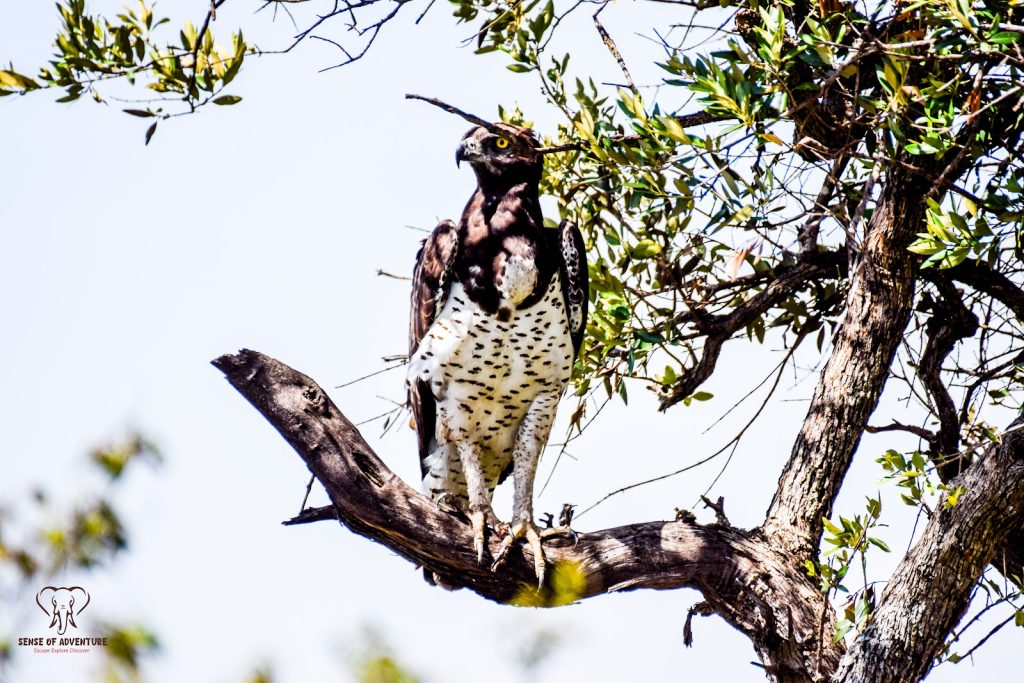
Raptors of Kenya do things most visitors never expect from a bird. The martial eagle, one of Africa’s largest eagles at up to about 6 kg with a wingspan of around 2 metres or more, hunts gamebirds, hyraxes, monitor lizards and young antelope, often spotting prey from a soaring height before stooping to strike. The African fish eagle, with its white head and ringing call often described as “the voice of Africa”, snatches fish from the water’s surface with rough-soled, sharply curved talons.
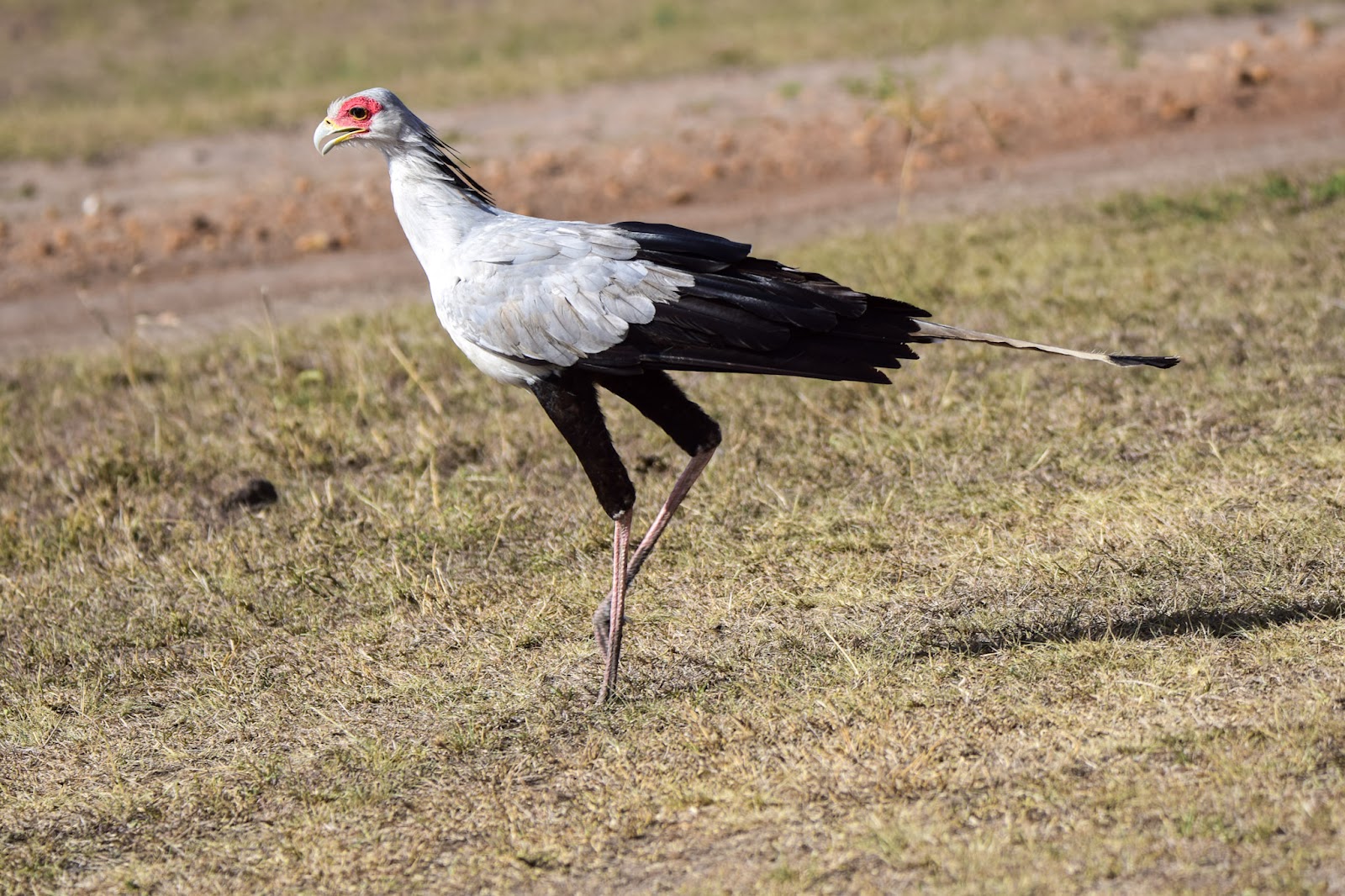
Most unusual of all is the secretary bird, which barely looks like a raptor: a bird about 1.3 metres tall on crane-like legs that hunts on foot and kills snakes and lizards with lightning-fast kicks. Picture a bird stamping on a snake rather than striking from the air, and you see why Sense of Adventure guides point out birds of prey on every game drive, not just the big cats.
✅ Raptors of Kenya: Quick Answer
- Headline three: martial eagle, African fish eagle and secretary bird.
- Also look for: bateleur, tawny eagle, augur buzzard, Verreaux’s eagle and the tiny pygmy falcon.
- Best areas: the Masai Mara for eagles and secretary birds, Lake Naivasha and Baringo for fish eagles, Samburu and Tsavo for dry-country raptors.
- Best season: all year, with extra migrant raptors from about October to April.
- Conservation: the martial eagle, secretary bird and bateleur are all listed as Endangered.
- Bring: binoculars and a guide who knows birds as well as mammals.
Hoping to see a martial eagle or a secretary bird? We plan raptor-rich routes.
Plan My Raptor RouteThree Completely Different Hunting Strategies
The three best-known raptors of Kenya each hunt in a completely different way. The martial eagle, listed as Endangered on the IUCN Red List, usually hunts from high soaring flight or a commanding perch, then stoops onto prey it has spotted from a long distance. Typical prey includes guineafowl and other gamebirds, hyraxes, monitor lizards, and young antelope or monkeys. It favours open savanna with scattered trees, including the Masai Mara, Laikipia, Samburu and Tsavo.
The African fish eagle takes a different approach. It perches near open water at places such as Lake Naivasha and Lake Baringo, then swoops to snatch fish, usually up to around 1 kg, from just below the surface. Its call is one of the best-known sounds of an African safari, and it is the national bird of several countries, including Zambia, Zimbabwe and Namibia.
The secretary bird abandons aerial hunting altogether. Standing about 1.3 metres tall, it strides across open grassland and kills snakes, lizards, rodents and large insects with rapid, precise kicks. It is the only bird of prey that hunts mainly on foot in this way.

Kenya’s Standout Raptor Species
These six are the raptors of Kenya our guests most often ask about, and most can be seen on a standard safari circuit.
Martial Eagle — One of Africa’s Largest Eagles — up to about 6 kg, hunts gamebirds, hyraxes and young antelope
A powerful predator of open savanna, found in the Mara, Laikipia, Samburu and Tsavo. It is listed as Endangered, so every sighting is worth savouring.
African Fish Eagle — “The Voice of Africa” — iconic call, hunts fish from lakes and rivers
Best seen around Lake Naivasha and similar water bodies, its call is one of the most recognisable sounds of an East African safari. See our Lake Naivasha boat safari guide.
Secretary Bird — A Raptor That Hunts on Foot — about 1.3 m tall, kills prey with fast kicks
Unlike any other raptor on this list, it hunts across open grassland on foot rather than from the air, specialising in snakes, lizards and rodents.
Bateleur — The Tightrope Walker — red face, very short tail, rocking flight
Its name comes from a French word for an acrobat, after the way it tilts from side to side in flight. It is now listed as Endangered.
Augur Buzzard — The Highland Regular — rufous tail, black-and-white or dark plumage
One of the most common large raptors in Kenya’s highlands, often perched on poles and trees around Nairobi, Naivasha and Laikipia.
Pygmy Falcon — Africa’s Smallest Raptor — about the size of a thrush
Found in dry bush in Samburu and Tsavo, it often nests in the large stick nests of white-headed buffalo weavers.
More Raptors of Kenya Worth Looking For
A keen eye and a good guide will add several more species to your list. These are regular sightings in the right habitat.
Tawny eagle
A brown, rather plain eagle that is common in the Mara and Samburu. It hunts, scavenges and often steals food from other birds. It is now listed as Vulnerable.
Verreaux’s eagle
A striking black eagle with a white V on its back, living around cliffs and gorges such as Hell’s Gate and the Lake Baringo escarpment. It feeds mainly on rock hyraxes.
African crowned eagle
A powerful forest eagle that hunts monkeys and small antelope. Look in forests such as Kakamega and the riverine woodland of central Kenya.
Long-crested eagle
Easy to recognise by the floppy crest on its head, this small eagle perches on poles and dead trees around Naivasha, Nairobi and the farmland of the highlands, watching for rodents.
Snake eagles and chanting goshawks
Black-chested and brown snake eagles hover or watch from perches for snakes. In dry country, the pale eastern chanting goshawk sits upright on bush tops in Samburu and Tsavo.
Vultures
Several of Kenya’s vultures are Critically Endangered. Read our guide to vulture species in Kenya and our page on Masai Mara vultures.
The Secretary Bird’s Famous Kick
The secretary bird’s hunting style has been studied in detail. A 2016 study led by Steven Portugal and published in Current Biology measured the kicks of a captive male secretary bird striking a target. The force of each kick was around five times the bird’s own body weight, and contact lasted only about 15 milliseconds.
That speed and precision matter. A venomous snake can strike back, so the bird needs to land a disabling blow quickly while keeping its long legs out of reach. Its wings are also held out for balance and can act as a shield. On a game drive you are more likely to see a secretary bird walking steadily through the grass than mid-kick, but patience is sometimes rewarded.

Raptors of Kenya Compared
This table compares the birds of prey most visitors ask about, with where to look and their conservation status.
| Species | Quick ID | Best places | IUCN status |
|---|---|---|---|
| Martial eagle | Dark hood, spotted white chest | Mara, Laikipia, Samburu, Tsavo | Endangered |
| African fish eagle | White head and chest, chestnut body | Naivasha, Baringo, Mara River | Least Concern |
| Secretary bird | Long legs, quill-like crest | Mara, Nairobi NP, Amboseli | Endangered |
| Bateleur | Red face, very short tail | Mara, Tsavo, Samburu | Endangered |
| Tawny eagle | Plain brown, yellow gape | Mara, Samburu, Amboseli | Vulnerable |
| Verreaux’s eagle | Black with white V on back | Hell’s Gate, Baringo cliffs | Least Concern |
| African crowned eagle | Barred chest, short crest | Kakamega and other forests | Near Threatened |
| Augur buzzard | Rufous tail | Nairobi, Naivasha, Laikipia | Least Concern |
| Long-crested eagle | Floppy head crest | Naivasha, central highlands | Least Concern |
| Pygmy falcon | Tiny, white below, grey above | Samburu, Tsavo | Least Concern |
Status can change, so check the latest listing on the IUCN Red List.
Where to See Raptors in Kenya
Kenya’s mix of grassland, lakes, cliffs, dry bush and forest means different raptors of Kenya turn up in different places. Combining two or three habitats gives the longest list.
Masai Mara
The open plains suit martial eagles, tawny eagles, bateleurs, secretary birds and vultures at kills. The Mara is a national reserve managed by Narok County. Read our guide to the birds of the Masai Mara.
Lake Naivasha and Lake Baringo
These freshwater lakes are the classic places for African fish eagles, and Baringo’s cliffs add Verreaux’s eagles. Long-crested eagles and augur buzzards are common around Naivasha.
Hell’s Gate
The gorge and cliffs hold Verreaux’s eagles and other cliff-nesting raptors. It combines easily with Naivasha.
Samburu and Tsavo
Dry country brings pygmy falcons, chanting goshawks, bateleurs and martial eagles. See our guide to the birds of Tsavo.
Nairobi National Park
Secretary birds, augur buzzards and several eagles can be seen within sight of the city. Read our guide to the birds of Nairobi National Park.
How to Plan a Raptor-Rich Route
Use this rule of thumb to match a route to the birds of prey you most want to see.
- Martial eagle and secretary bird: spend at least three nights in the Masai Mara or Laikipia.
- Fish eagles: add a night at Lake Naivasha with a boat trip, or Lake Baringo.
- Cliff raptors: add Hell’s Gate or the Baringo escarpment.
- Dry-country species: add Samburu or Tsavo.
- Serious birders: choose a dedicated birding tour with a specialist guide.
Mara Grasslands, Rift Valley Cliffs or Samburu Scrub?
Tell us which birds of prey are on your list and how many days you have. We will suggest the habitats and route that give you the best chance.
Raptor ID Tips for Game Drives
Birds of prey can be tricky to name in a quick glimpse. These checks help you identify the raptors of Kenya with your guide.
- Look at the shape in flight: the bateleur’s almost tailless outline is unmistakable, while vultures show long, broad wings.
- Check the head: a white head over water means fish eagle; a floppy crest means long-crested eagle.
- Watch the behaviour: a tall bird walking through grass is a secretary bird; a bird hovering over grass may be a snake eagle or kestrel.
- Note the perch: martial eagles favour tall, isolated trees with a wide view.
- Use good binoculars: see our guide to binoculars for safari.
Best Time to See Raptors in Kenya
Most resident raptors of Kenya can be seen all year, but the season changes what you find.
- October/November to March/April: migrant raptors from Europe and Asia, such as steppe eagles, steppe buzzards and harriers, join the residents. See our guide to migratory birds of Kenya.
- June to October: short grass in the dry season makes secretary birds and ground-hunting raptors easier to spot.
- After rain: termite emergences can draw falcons, kites and other raptors to feed.
- Time of day: perched birds are easiest in the early morning; soaring eagles and vultures rise once the air warms up.
What a Birding Safari Costs
You can see many raptors of Kenya on a standard safari, or choose a trip with a specialist guide. These are starting prices for trips already on our site; final prices depend on season, accommodation and group size.
- Masai Mara & Lake Nakuru Camping Safari (4 days): from USD 590.
- Kenya Birding Tour, Rift Valley Lakes, Kakamega & Masai Mara (8 days): from USD 2,050.
- Kenya Luxury Big Five Safari, Mara, Amboseli & Samburu (8 days): from USD 4,800 per person.
Masai Mara reserve fees are USD 100 per adult per day in the low season and USD 200 in the peak season. Fees for parks run by Kenya Wildlife Service, such as Nairobi, Nakuru and Tsavo, are published on its website.
Ask for a Birding Safari Quote
Send your dates, group size and the raptors on your wish list. We will reply with a written, itemised quote. Specialist birding guides are limited, so it pays to ask early for migrant season.
Quote My Raptor SafariKenya Raptor Facts
- Martial eagle size: up to about 6 kg with a wingspan of around 2 metres or more, among Africa’s largest eagles.
- Martial eagle status: listed as Endangered by the IUCN, threatened by persecution, poisoning and habitat loss.
- Fish eagle prey: mostly fish up to around 1 kg, taken from just below the surface.
- Fish eagle national status: the national bird of several countries, including Zambia, Zimbabwe and Namibia.
- Secretary bird height: about 1.3 metres tall, with an eagle-like body on very long legs.
- Secretary bird kick: measured at around five times its body weight, lasting about 15 milliseconds (Portugal et al., Current Biology, 2016).
- Secretary bird status: moved from Vulnerable to Endangered on the IUCN Red List in 2020.
- Smallest raptor: the pygmy falcon, Africa’s smallest bird of prey.
Why Kenya’s Raptors Need Protection
Many raptors of Kenya are declining. Poisoning, collisions with power lines, habitat loss and persecution all play a part. Vultures are hit especially hard when carcasses are poisoned, and large eagles need big territories that are shrinking as land is fenced and farmed.
You can help by choosing operators and lodges that support conservation, by never encouraging guides to approach nests, and by reporting sightings of rare species to citizen-science projects. To learn more, visit Nature Kenya, BirdLife International and The Peregrine Fund, which runs raptor conservation work in Kenya.
Building a Raptor-Inclusive Kenya Trip
Read our Birds of the Masai Mara and Lake Nakuru birds beyond flamingos guides for wider birding context. To see the raptors of Kenya alongside the Big Five, combine them with our Kenya Luxury Big Five Safari.
Keen birders should look at our Kenya Birding Tour and our Kenya birdwatching safari guide. For a fully tailored route, see our private Kenya safari options or Masai Mara safari packages. Before you travel, apply for your eTA on the Kenya eTA portal.
Eagles, Falcons and a Bird That Hunts on Foot
Tell us which birds of prey you most want to see. We will plan a route with guides who know their raptors as well as their lions.
Frequently Asked Questions
What is the largest eagle in Kenya?
The martial eagle is one of Africa’s largest eagles and the biggest you are likely to see on a Kenya safari, weighing up to about 6 kg with a wingspan of around 2 metres or more. It hunts gamebirds, hyraxes, monitor lizards and young antelope. Look for it on tall, isolated trees in the Mara and Laikipia.
Where can you see African fish eagles in Kenya?
African fish eagles are easiest to see around freshwater lakes and rivers, especially Lake Naivasha and Lake Baringo, and along the Mara River. They perch in tall trees near the shore and swoop to take fish from just below the surface. A boat trip on Naivasha often gives close views.
How does a secretary bird hunt?
The secretary bird hunts on foot, striding through grassland and killing prey with fast, precise kicks. A 2016 study led by Steven Portugal in Current Biology measured a captive male’s kicks at about five times its body weight, with contact lasting around 15 milliseconds. Its prey includes snakes, lizards, rodents and large insects.
Is the secretary bird endangered?
Yes. The secretary bird was moved from Vulnerable to Endangered on the IUCN Red List in 2020 because of rapid population declines linked to habitat loss and other threats. Kenya’s grasslands, including the Masai Mara and Nairobi National Park, remain good places to see one, but every sighting matters.
What are the best raptors of Kenya to look for on safari?
The highlights are the martial eagle, African fish eagle and secretary bird, plus the bateleur, tawny eagle, augur buzzard, Verreaux’s eagle and pygmy falcon. Most are seen on a standard safari through the Mara, the Rift Valley lakes and Samburu or Tsavo, especially with a guide who knows birds.
When is the best time to see raptors in Kenya?
Resident raptors can be seen all year. From about October or November to March or April, migrant raptors from Europe and Asia, such as steppe eagles and steppe buzzards, add to the variety. The dry season from June to October makes ground-hunting birds like the secretary bird easier to spot.
Do I need binoculars to see birds of prey?
Yes, binoculars make a big difference. Many raptors perch high in trees or soar far overhead, and features such as head markings or tail shape are hard to see with the naked eye. A pair per person is ideal, and a mid-range 8×42 or 10×42 pair suits most safari travellers.