Hippo behaviour is far more interesting than the half-submerged, apparently sleepy animal you photograph in a Kenyan lake or river suggests. Hippos are often described as Africa’s most dangerous large land mammal, because of a mix of territorial aggression, unpredictability and sheer bulk: adult males average around 1.5 tonnes and big bulls can top 2 tonnes. What most visitors never see is what happens after dark, when hippos leave the water at dusk, follow well-worn paths inland and graze for several hours, eating around 35–40 kg of grass a night, before returning to the water by dawn.
Picture the animal you watched barely move all day covering the equivalent of a long evening walk while you sleep. Sense of Adventure guides explain hippo behaviour at every sighting, so you understand what you are looking at and how to stay safe around it.
✅ Hippo Behaviour: Quick Answer
- By day: hippos rest in water or mud to stay cool and protect their sensitive skin.
- By night: they leave the water to graze on land for several hours.
- Warning signs: a wide yawn, head-shaking, loud snorts and sudden splashing.
- Territory: dominant bulls defend a stretch of river or lake shore against rival males.
- Danger: often described as Africa’s most dangerous large land mammal; never get between a hippo and the water.
- Best viewing: a boat on Lake Naivasha, the Mara River hippo pools, or the underwater hide at Mzima Springs.
Want to watch hippos safely, by boat or from an underwater hide? We can arrange it.
Docile By Day, On the Move By Night
Hippos spend most daylight hours in water or wallowing in mud. This is about temperature control rather than laziness. Their skin loses water quickly and is sensitive to strong sun, so water and shade are essential through the heat of the day. Their skin also produces a reddish fluid, sometimes called “blood sweat”, which is neither blood nor sweat but appears to act as a natural sunscreen and skin protector.
At dusk everything changes. Hippos emerge and walk inland along established paths to graze, usually for four to five hours. Most stay within a few kilometres of the water, though they will travel further when grazing is poor. They return by dawn, which is why almost no daytime visitor sees this part of hippo behaviour.
Dominant males defend stretches of water. Figures commonly quoted are around 50–100 metres of riverbank or 250–500 metres of lake shore, though this varies with crowding and water levels. Inside that area the bull tolerates females, young and subordinate males, but challenges rival bulls. This territorial instinct, combined with unpredictability and enormous weight, is why hippos are so often described as Africa’s most dangerous large land mammal.

Understanding Hippo Behaviour
These six patterns explain almost all the hippo behaviour you will see on safari.
Daytime — Resting in Water to Keep Cool — water and mud protect sensitive skin
Hippos spend most of the day in water or mud to regulate their body temperature and protect skin that dries out quickly in the sun.
Night-Time — Grazing on Land — around 35–40 kg of grass a night
After dark, hippos leave the water along established paths and graze for several hours, usually within a few kilometres of the shore, before returning by dawn.
Territorial Defence — Bulls Guard a Stretch of Water — challenged by rival males
Dominant bulls hold water territories linked to breeding access. Fights between rivals can leave deep scars from their tusk-like canines.
Why They Are Considered So Dangerous — weight, speed and territorial aggression
A 1.5-tonne animal that can run at around 30 km/h in short bursts, defends its space and feels threatened when cut off from water is why hippos are often described as Africa’s most dangerous large land mammal.
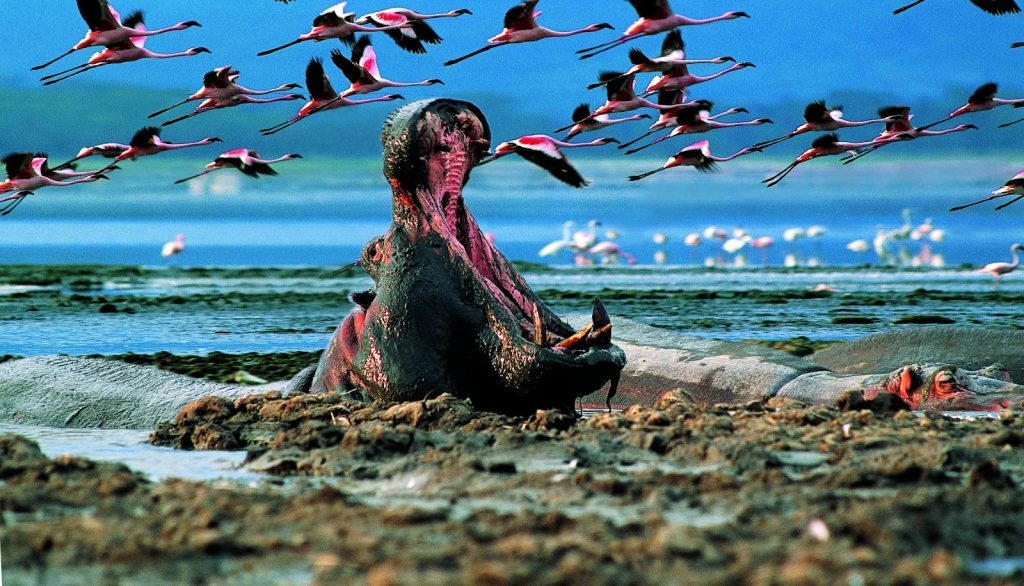
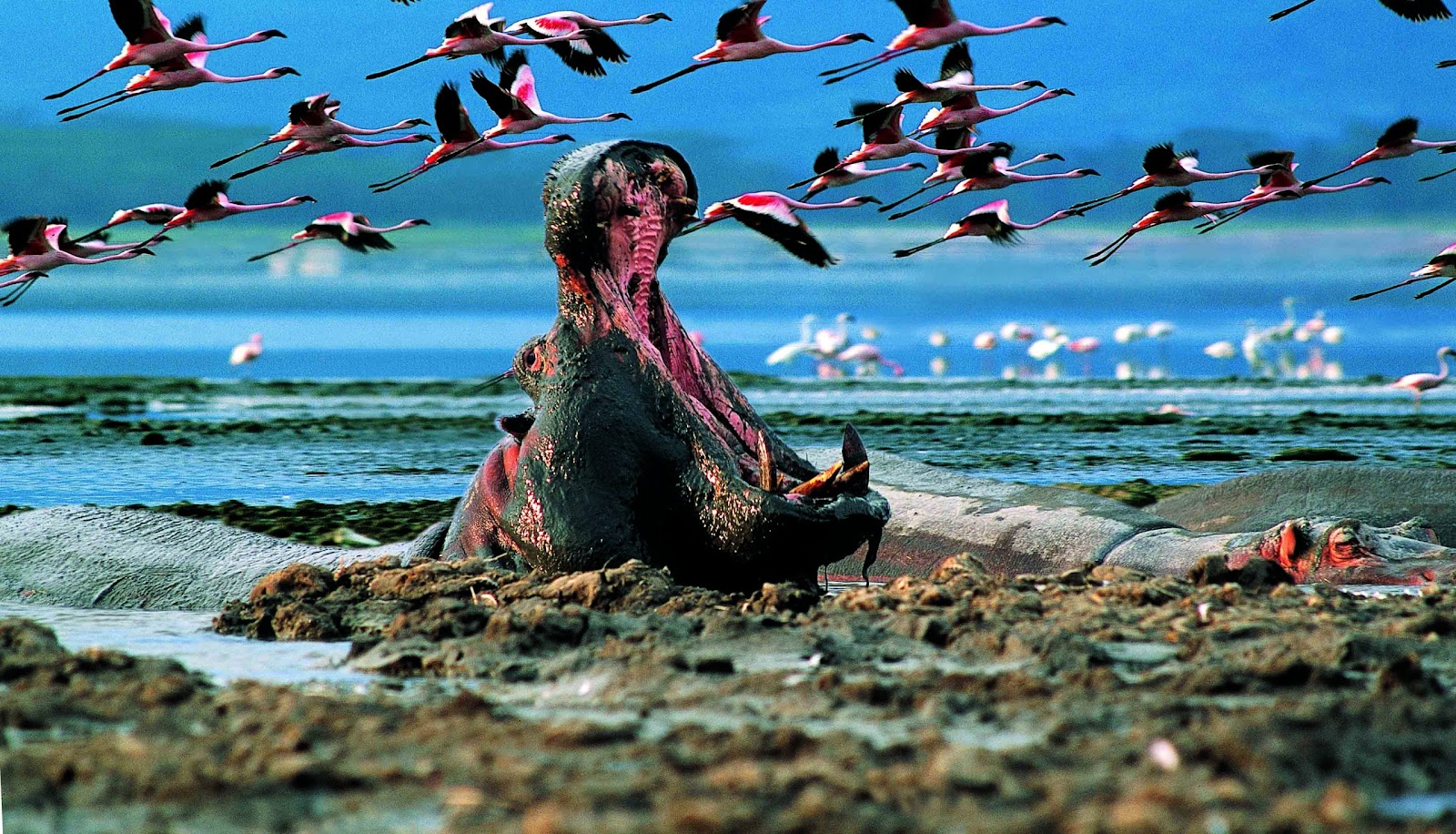
The Yawn Is a Warning — not a sign of tiredness
A wide-open mouth showing the canines is usually a threat display aimed at a rival, or at a boat that has come too close.
Dung Showering — marking territory with a spinning tail
Bulls flick their tails rapidly while defecating, spraying dung across bushes and paths to mark their presence.
How to Read Hippo Behaviour on Safari
Your guide watches for small changes in posture and sound. Learning the same signs makes every sighting more rewarding, and safer.
Relaxed hippos
Calm hippo behaviour is easy to recognise. Hippos lying with only their eyes, ears and nostrils above water, surfacing calmly every few minutes and flicking their ears, are usually settled. Pods resting on a sandbank in the sun, often with birds on their backs, are another good sign.
Signs of stress
Watch for repeated wide yawns pointed in your direction, loud snorts, head-shaking, sudden submerging close to a boat, or a hippo turning to face you. These are clear signals to back away calmly and give the animal more space.
How to read hippo behaviour from a boat
On Lake Naivasha, experienced boatmen keep a respectful distance, approach from the side rather than head-on and avoid getting between hippos and deep water. If a bull starts yawning at the boat, a good skipper simply moves away.
Sounds to listen for
Hippos are noisy. The deep, repeated “wheeze-honk” call carries a long way across water, especially at dusk and through the night. Many lakeside guests say it is the sound they remember most from Naivasha.
Hippo Social Life, Calves and Communication
Social hippo behaviour centres on the pod. Hippos live in groups called pods or schools. These are usually made up of females, their young and a few younger males, with a dominant bull controlling the stretch of water. Group size varies a lot with how much water is available, from a handful of animals in a small pool to large gatherings in rivers during the dry season.
Females give birth after a pregnancy of around eight months, often in shallow water. Calves can suckle underwater and stay close to their mothers, who are fiercely protective. That is another reason to keep your distance from any group with young.
Despite living in water, hippos are not true swimmers. They mostly walk or push off along the bottom and can stay under for several minutes. Their closest living relatives are whales and dolphins, a link scientists have confirmed through genetic studies.
Where to See Hippos in Kenya
Hippos live in most permanent rivers and freshwater lakes in Kenya. These places give the best mix of reliable sightings, safe viewing and natural hippo behaviour.
Lake Naivasha
A short boat trip on this freshwater Rift Valley lake is the easiest way to see a pod at close but safe range. Fish eagles and many waterbirds come as a bonus. Read our Lake Naivasha boat safari guide.
Mara River
Large pods crowd the deeper pools of the Mara River, and you watch them from the bank at well-known viewpoints. The Masai Mara is a national reserve managed by Narok County. See our Mara River wildlife guide.

Mzima Springs, Tsavo West
Crystal-clear spring water and an underwater viewing chamber make Mzima unique: on a good day you can watch hippos walking along the bottom. See our Mzima Springs guide.
Other good spots
Lake Baringo, the swamps of Amboseli, the Hippo Pools area of Nairobi National Park and parts of Lake Nakuru also hold hippos. Sightings vary with water levels.
Boat, Bank or Underwater Hide: Choosing How to Watch Hippos
Each way of watching shows a different side of hippo behaviour, so it is worth choosing deliberately.
| Where | How you watch | What you see best | Best for |
|---|---|---|---|
| Lake Naivasha | Guided boat | Pods at eye level, yawning, calves | Families, short trips from Nairobi |
| Mara River | From the bank | Large pods, crocodiles, territorial fights | Big-game safaris |
| Mzima Springs | Underwater chamber and paths | Hippos walking underwater | Curious travellers, photographers |
| Lake Baringo | Boat | Hippos near the shore, birds | Birders, Rift Valley trips |
| Nairobi NP Hippo Pools | Short guided walk | Small groups in the river | Layovers, half-day trips |
If you only have one or two days, Lake Naivasha is the simplest choice. If hippos are one highlight among many, the Mara River fits naturally into a big-game safari. For something different, add Mzima Springs to a Tsavo trip.
Boat on Naivasha or Hide at Mzima?
Tell us how many days you have and what else you want to see. We will suggest the hippo viewing that fits your route best.
Hippo Safety Rules for Travellers
Most hippo incidents happen when people on foot or in small boats surprise a hippo or block its route to water. Understand basic hippo behaviour, follow these rules and you can enjoy hippos with very little risk.
- Never stand between a hippo and the water. This is the single most important rule.
- Do not walk near lake shores or riverbanks after dark unless escorted, including around lakeside camps and hotels at Naivasha.
- Stay in the vehicle or boat unless your guide says otherwise, and follow every instruction.
- Keep your distance from mothers with calves and from bulls that are yawning or splashing.
- Use a licensed boat operator with life jackets, and do not ask the skipper to move closer.
- Respect walking rules: at sites with guided walks, stay with the ranger. Read more in our guide to walking safari safety.
Best Time to Watch Hippo Behaviour
Hippos are resident all year, so you can see them in any month. The season and time of day change the hippo behaviour you see.
- Dry seasons (June to October, January to February): hippos crowd into shrinking pools, so more animals are packed together and territorial clashes are more common.
- Rainy seasons (March to May, November): water spreads out and pods are more scattered, but scenery is green and lodges are quieter.
- Early morning: the best time to catch hippos returning to the water after a night of grazing.
- Late afternoon: hippos become more active and vocal before heading out to graze.
Midday is the quietest time, when most of the pod is resting. For month-by-month weather, see our Kenya weather by month guide.
What a Hippo-Viewing Trip Costs
Watching hippo behaviour is usually part of a wider trip rather than a standalone excursion. These are starting prices for trips already on our site; final prices depend on season, accommodation and group size.
- Lake Naivasha trips: from USD 160, as listed in our Lake Naivasha safari guide.
- Tsavo East & West Safari (3 days), including Mzima Springs: from USD 600.
- Lake Naivasha Family Safari (4 days): from USD 780 per adult.
- Kenya Family Safari, Nairobi, Lake Naivasha & Masai Mara (5 days): from USD 1,290.
- Kenya Group Safari, Masai Mara, Lake Nakuru & Naivasha (6 days): from USD 1,390.
Masai Mara reserve fees are USD 100 per adult per day in the low season and USD 200 in the peak season. Fees for Kenya Wildlife Service parks, including Tsavo West, are published by Kenya Wildlife Service.
Get a Written Price for Your Hippo Trip
Send your dates and group size. We will reply with an itemised quote including boat trips and park fees. Mara fees rise in the peak season, so check prices before you fix your dates.
Kenya Hippo Facts
- Typical male weight: around 1.5 tonnes, with the biggest bulls topping 2 tonnes.
- Night grazing: several hours on land, usually within a few kilometres of the water.
- Night-time food intake: roughly 35–40 kg of grass per hippo.
- Lake territory: commonly quoted at around 250–500 metres of shore, held by a dominant bull.
- River territory: commonly quoted at around 50–100 metres of bank.
- Danger reputation: often described as Africa’s most dangerous large land mammal to people.
- Conservation status: listed as Vulnerable on the IUCN Red List.
Seeing Hippos With Real Context
Read our Mara River wildlife guide for hippo and crocodile viewing specifics, or book our Tsavo East & West Safari for wider wildlife context alongside hippo pods. For where to see them across the country, see our hippos in Kenya guide, and for the hippo’s river neighbour, read about Nile crocodile behaviour.
For a tailored route, see our private Kenya safari options or compare Masai Mara safari packages. Kenya’s official tourism site, Magical Kenya, has more on the Rift Valley lakes, and you can apply for your eTA on the Kenya eTA portal.
See What Hippos Really Do, Day and Night
From a quiet boat on Naivasha to the underwater window at Mzima Springs, we will plan hippo viewing with guides who explain the behaviour and keep you safe.
Frequently Asked Questions
Why are hippos considered Africa’s most dangerous animal?
Hippos are often described as Africa’s most dangerous large land mammal because they are huge, fast over short distances and defend their space fiercely. Most incidents happen when people on foot or in small boats surprise a hippo or block its route to water. Keeping your distance and following your guide removes most of the risk.
Do hippos actually leave the water?
Yes. Hippos spend the day in water to stay cool, then leave at dusk to graze on land for several hours, eating around 35–40 kg of grass. They usually stay within a few kilometres of the water and return by dawn. You may see their wide, well-worn paths leading up from the shore.
What does it mean when a hippo yawns?
A wide hippo yawn is usually a threat display, not tiredness. By opening its jaws and showing its canines, a hippo warns rivals, predators or boats to keep away. If a hippo yawns repeatedly towards you, it is a clear signal to back off calmly. Understanding this is a key part of reading hippo behaviour.
How big is a hippo territory?
Dominant bulls defend a stretch of water rather than land. Figures commonly quoted are around 50–100 metres of riverbank or 250–500 metres of lake shore, though territory size changes with crowding and water levels. Females, young and subordinate males can live inside a bull’s territory without being driven out.
How much does an adult hippo weigh?
Adult male hippos typically weigh around 1.5 tonnes, and the biggest bulls can top 2 tonnes. Females are a little smaller. Despite this bulk, hippos can run at around 30 km/h in short bursts on land, which is one reason guides insist that visitors never approach them on foot.
Can you see hippos underwater in Kenya?
Yes. Mzima Springs in Tsavo West National Park has an underwater viewing chamber where, on a good day, you can watch hippos walk along the bottom of the clear spring pool. Sightings are not guaranteed, as hippos move around, but it is one of the most unusual wildlife experiences in Kenya.
Is it safe to take a boat ride with hippos on Lake Naivasha?
Yes, when you use a licensed operator with life jackets and an experienced skipper. Good boatmen keep a respectful distance, avoid blocking hippos from deep water and move away at any sign of stress. Do not ask your skipper to go closer, and keep your hands inside the boat.