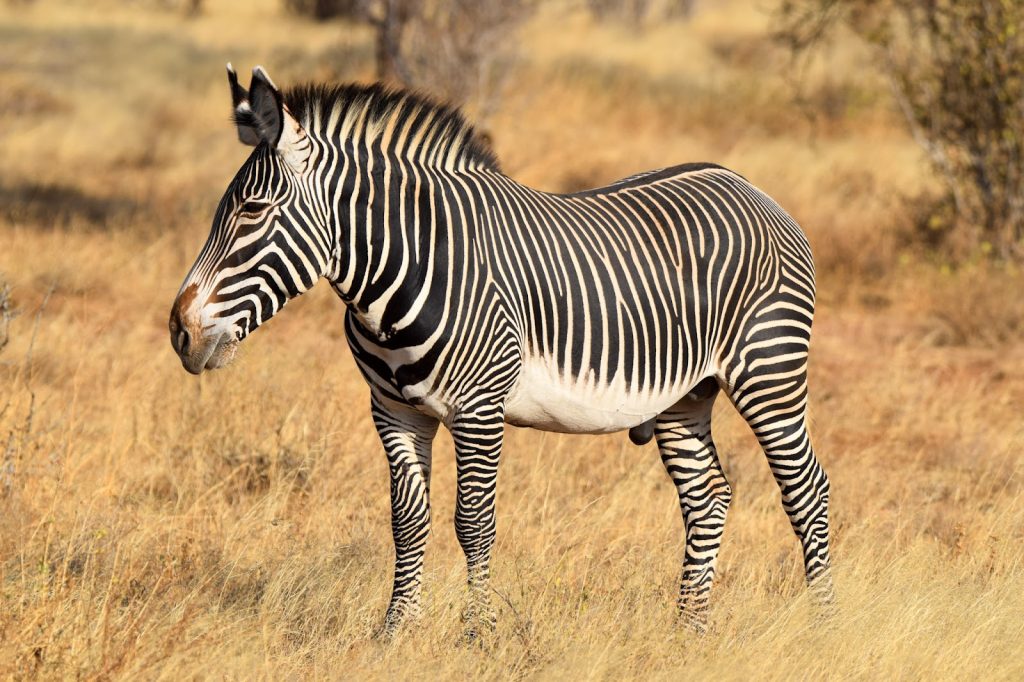
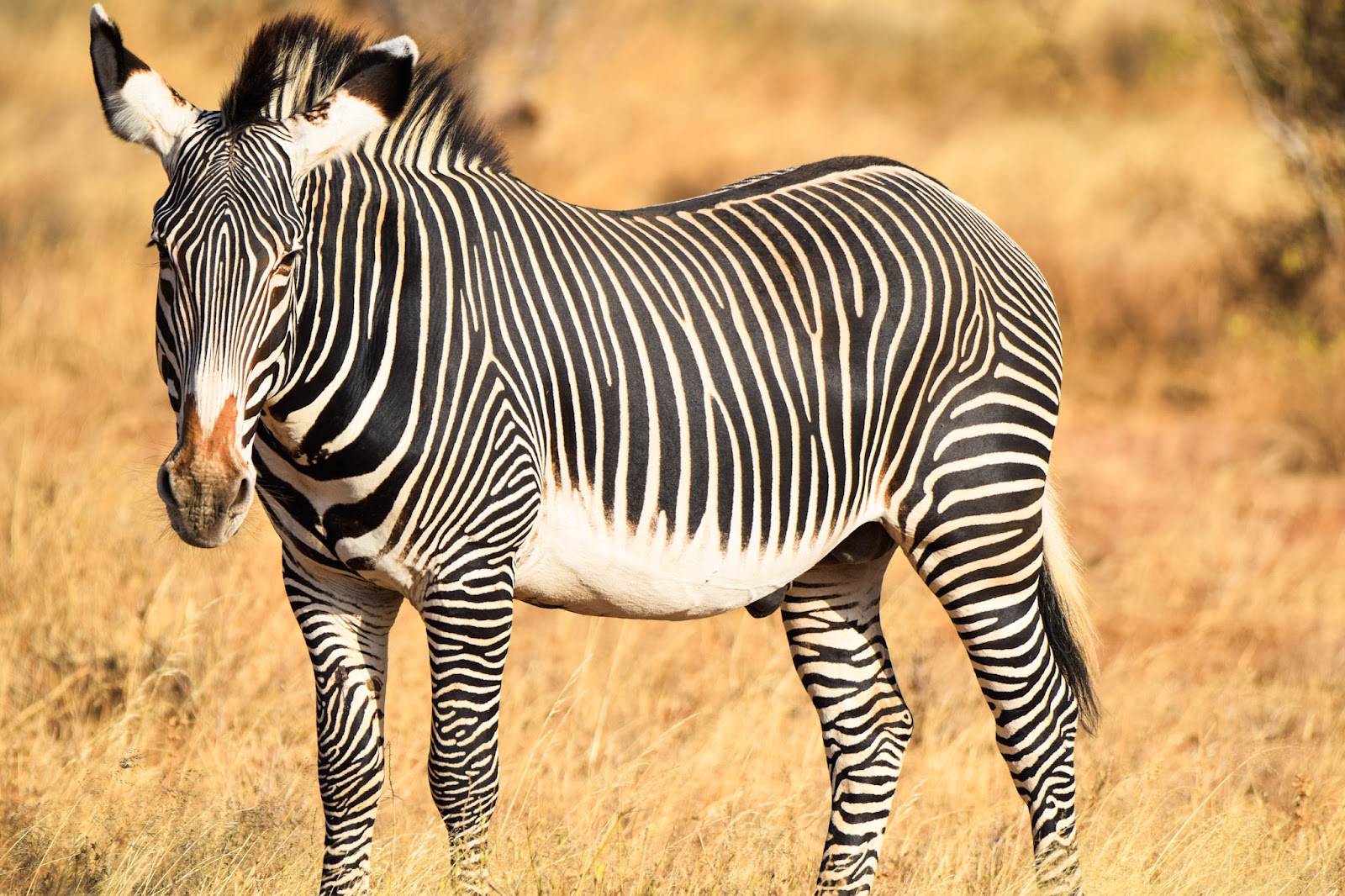
Samburu Special Five is northern Kenya’s answer to the Big Five — and for seasoned safari-goers it is the more coveted checklist. These five dry-country specialists exist only north of the equator’s rain shadow: the imperial-striped Grevy’s zebra, largest and rarest of all wild equids; the reticulated giraffe wearing crisp geometric netting; the beisa oryx with its rapier horns; the gerenuk browsing on two legs like a gazelle impersonating a giraffe; and the blue-shanked Somali ostrich. None of them walk the Masai Mara. One game drive along Samburu’s Ewaso Nyiro river can deliver all five before lunch, which is precisely why Sense of Adventure sends every wildlife connoisseur north.
Collect the North’s Rarest Checklist
All five specials in a day is a realistic target with guides who know the river circuits. Come tick them with us.
Why the Special Five Exist Only in the North
North of Mount Kenya the land drops into hot, semi-arid country — acacia scrub, red earth and the green artery of the Ewaso Nyiro river. Millennia of isolation in this dry belt produced species built for scarcity: the Grevy’s zebra tolerates days without water; the oryx recycles its own body heat to avoid sweating; the gerenuk extracts all its moisture from leaves and never drinks at all. Samburu National Reserve, with sister reserves Buffalo Springs and Shaba across the river, is the most accessible stage for the full set — 165 km² where every drive circuit intersects the specials’ feeding grounds. July-October and January-March concentrate wildlife along the river for the easiest full-house days.
By 11 am we had all five — the gerenuk did its two-legged trick right beside the track and our guide just grinned like he’d arranged it personally. The Mara gave us lions; Samburu gave us animals I’d never even heard of. Both trips felt essential.
— Sense of Adventure guest, northern Kenya circuit
The Special Five, One by One
Grevy’s Zebra — the endangered emperor
Larger than the common zebra, with pinstripe coats, white bellies and enormous round ears, Grevy’s zebra survives in fewer than 3,000 individuals — most of them in this northern ecosystem. Named for a French president gifted one in 1882, it is Africa’s most endangered large mammal you can reliably see. Samburu’s open flats hold bachelor herds year-round.
Reticulated Giraffe — the one wearing the net
Crisp white lines dividing rich chestnut polygons — the reticulated giraffe looks drawn with a ruler, unmistakably different from the blotchy Masai giraffe of the south. Northern Kenya is its global stronghold. Samburu’s riverine acacias bring browsing herds to eye level along the main river road daily.
Beisa Oryx — the desert swordsman
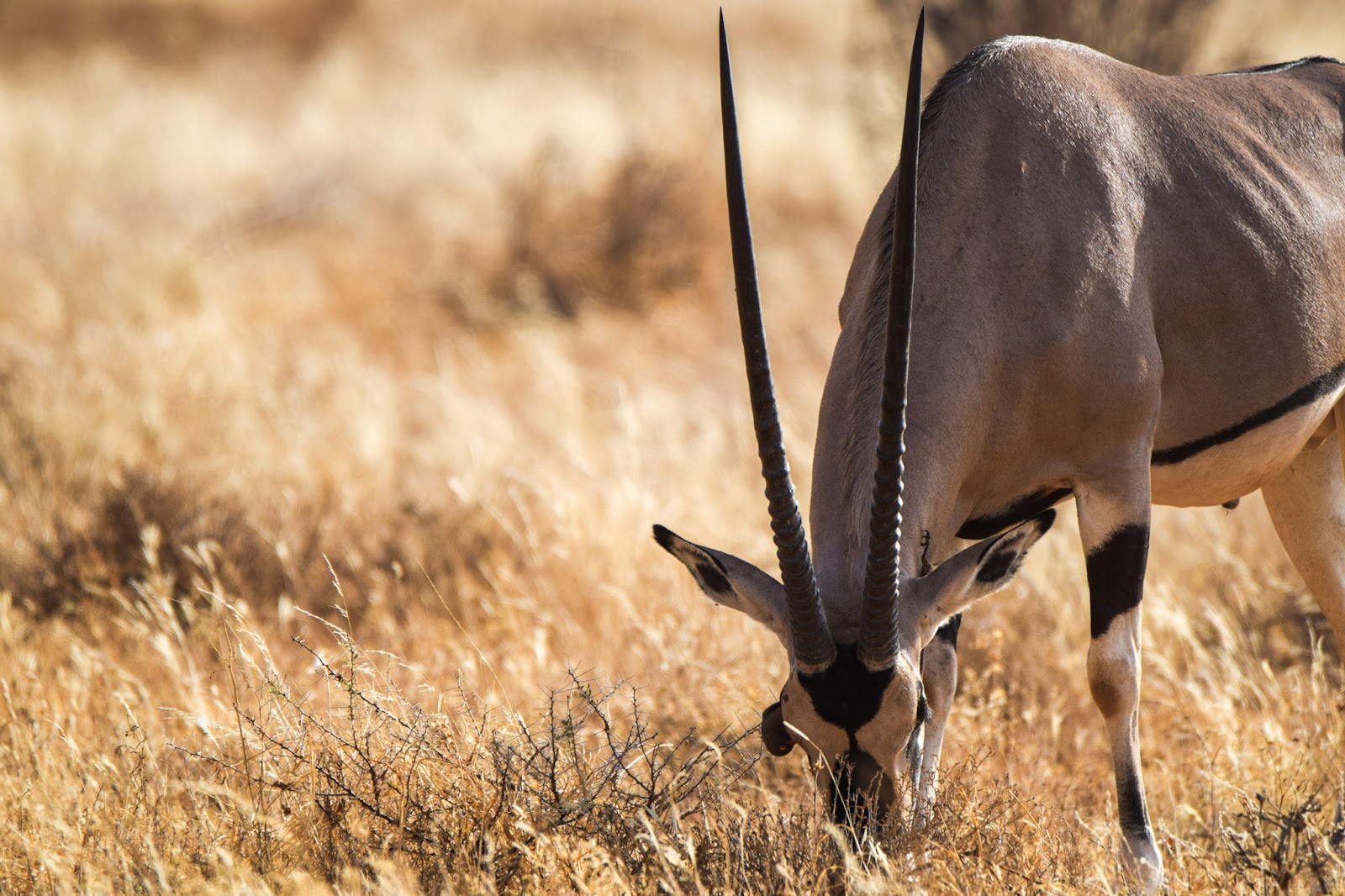
Grey flanks, black war-paint face and metre-long rapier horns on both sexes — the beisa oryx is the north’s heraldic antelope, engineered for heat no other grazer tolerates. Herds patrol the open plains away from the river, especially toward Buffalo Springs. Backlit at dawn, they are the most photogenic animals in the reserve.
Gerenuk — the gazelle that thinks it’s a giraffe
Swahili calls it swala twiga — the gazelle-giraffe — and one sighting explains why: the gerenuk stands vertically on its hind legs, spine straight, to browse thorn tips two metres up. It never needs open water, living entirely on leaf moisture. Samburu’s dry scrub circuits deliver the upright pose with delightful regularity.
Somali Ostrich — the blue-legged giant
The males give it away instantly: neck and thighs in slate blue-grey rather than the southern ostrich’s pink. Recently recognised as a full species, the Somali ostrich struts Samburu’s open country in scattered pairs. It completes the set — and spotting the colour difference makes every guest feel like a proper naturalist.
North Beats the Crowds Too
Samburu runs quieter than the southern circuit — rare animals, empty tracks. Ask about our Samburu itineraries.
Special Five Facts
- The set: Grevy’s zebra, reticulated giraffe, beisa oryx, gerenuk, Somali ostrich — all absent from Kenya’s southern parks.
- Rarity king: Grevy’s zebra: under 3,000 remain globally, the rarest of all zebras and wild horses.
- Water maths: gerenuk never drink; oryx barely; Grevy’s last days dry — desert engineering on display.
- Where: Samburu National Reserve plus Buffalo Springs and Shaba across the Ewaso Nyiro river.
- Best window: dry months (July-October, January-March) pull everything toward the river circuits.
- Bonus cast: Samburu adds elephants, leopards, lions and wild dog possibilities around the specials.
Adding Samburu to Your Kenya Route
Samburu anchors the northern leg of our 8-day Big Five circuit and pairs with culture on the 3-day Samburu Cultural & Wildlife Experience. Background reading: our Samburu reserve guide and the Samburu culture guide complete the picture.
Five Animals the Mara Cannot Show You
One flight or a morning’s drive north, and the checklist begins. Message us to plan your Special Five day.
Frequently Asked Questions
What are the Samburu Special Five?
The Samburu Special Five are five species unique to northern Kenya’s dry country: Grevy’s zebra, reticulated giraffe, beisa oryx, gerenuk and Somali ostrich. None occur in the Masai Mara or Kenya’s southern parks, making them the north’s signature safari checklist.
Can you see all the Special Five in one day?
Yes — a full day’s game driving in Samburu National Reserve regularly produces all five specials, since their habitats overlap along the Ewaso Nyiro river and adjacent plains. Dry-season visits (July-October, January-March) concentrate wildlife and raise the odds further.
How rare is the Grevy’s zebra?
Grevy’s zebra is Africa’s rarest zebra and the world’s most endangered large equid, with fewer than 3,000 individuals surviving — the great majority in northern Kenya. Samburu offers the most reliable sightings anywhere, often in bachelor herds on the open flats.
What is the difference between a reticulated and Masai giraffe?
The reticulated giraffe of Samburu wears sharp-edged chestnut polygons divided by clean white lines — like netting — while the southern Masai giraffe has ragged, leaf-shaped blotches. They are distinct species, and northern Kenya is the reticulated giraffe’s global stronghold.
Why does the gerenuk stand on two legs?
The gerenuk stands vertically on its hind legs to browse acacia leaves up to two metres high — reaching a feeding zone no other gazelle exploits. Its long neck and this upright posture earned it the Swahili name swala twiga, “the gazelle-giraffe”. Samburu is the classic place to watch it.