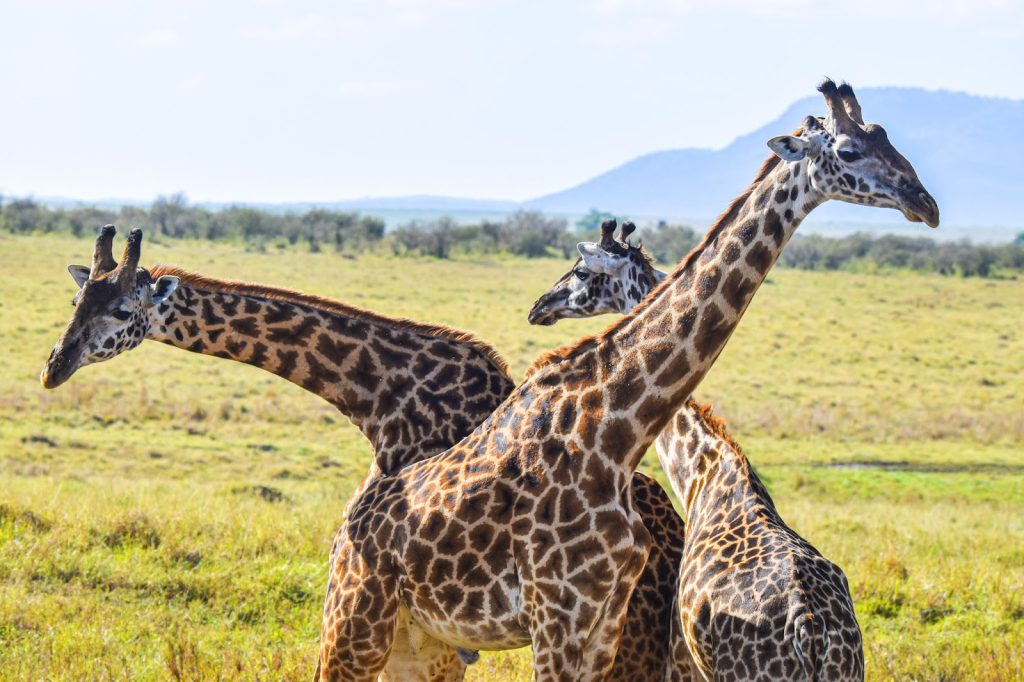
Giraffe park Nairobi searches almost always lead to one specific place: the AFEW Giraffe Centre in Lang’ata, a 60-acre sanctuary built around one of Africa’s most successful single-species rescue stories. In 1979, with the Rothschild giraffe reduced to barely 130 individuals confined to a single Western Kenyan ranch being subdivided for resettlement, Jock and Betty Leslie-Melville began raising two orphaned calves at their own home — a personal rescue that grew into a breeding and education programme now credited with helping restore the subspecies to healthy, breeding populations across multiple Kenyan conservancies. Today’s visitors climb a raised wooden platform and feed pellets directly into a giraffe’s mouth at eye level, a genuinely close encounter framed by a genuinely important conservation story. Sense of Adventure treats the Centre as one of Nairobi’s must-do stops, not just a photo opportunity.
Meet the Giraffe a Rescue Story Saved
Feed a Rothschild giraffe at eye level and hear how close the species came to disappearing. Ask us to add the Centre to your day.
The Rescue Story Behind the Feeding Platform
The crisis began quietly: by the late 1970s, the Rothschild giraffe — a distinct subspecies recognisable by its paler colouring and near-total lack of markings below the knee — had lost virtually all its historic range, with the last meaningful population squeezed onto Soy Ranch in Western Kenya just as the land was being subdivided to resettle displaced families. Jock and Betty Leslie-Melville, having founded the African Fund for Endangered Wildlife (AFEW), brought two young giraffes named Daisy and Marlon to their own Lang’ata home, starting a captive breeding programme from what was essentially a backyard rescue. Public donations, most significantly through AFEW’s American chapter, funded a proper 60-acre education centre that opened its doors in 1983 to immediate enthusiasm — over 800 schoolchildren visited in its first year alone. Decades of steady breeding success later, more than 300 Rothschild giraffes descend from or connect to this programme, with herds established at Soysambu Ranch on Lake Elementaita, Kigio Conservancy and Sergoit Ranch near Mount Elgon — a genuine, measurable species recovery that the raised feeding platform lets every visitor participate in directly. Few conservation stories anywhere in Africa offer such a direct, tangible way for a tourist to connect with the outcome: the pellet you hand-feed a giraffe today supports the same breeding and land-partnership work that pulled this subspecies back from a population small enough to count individually.
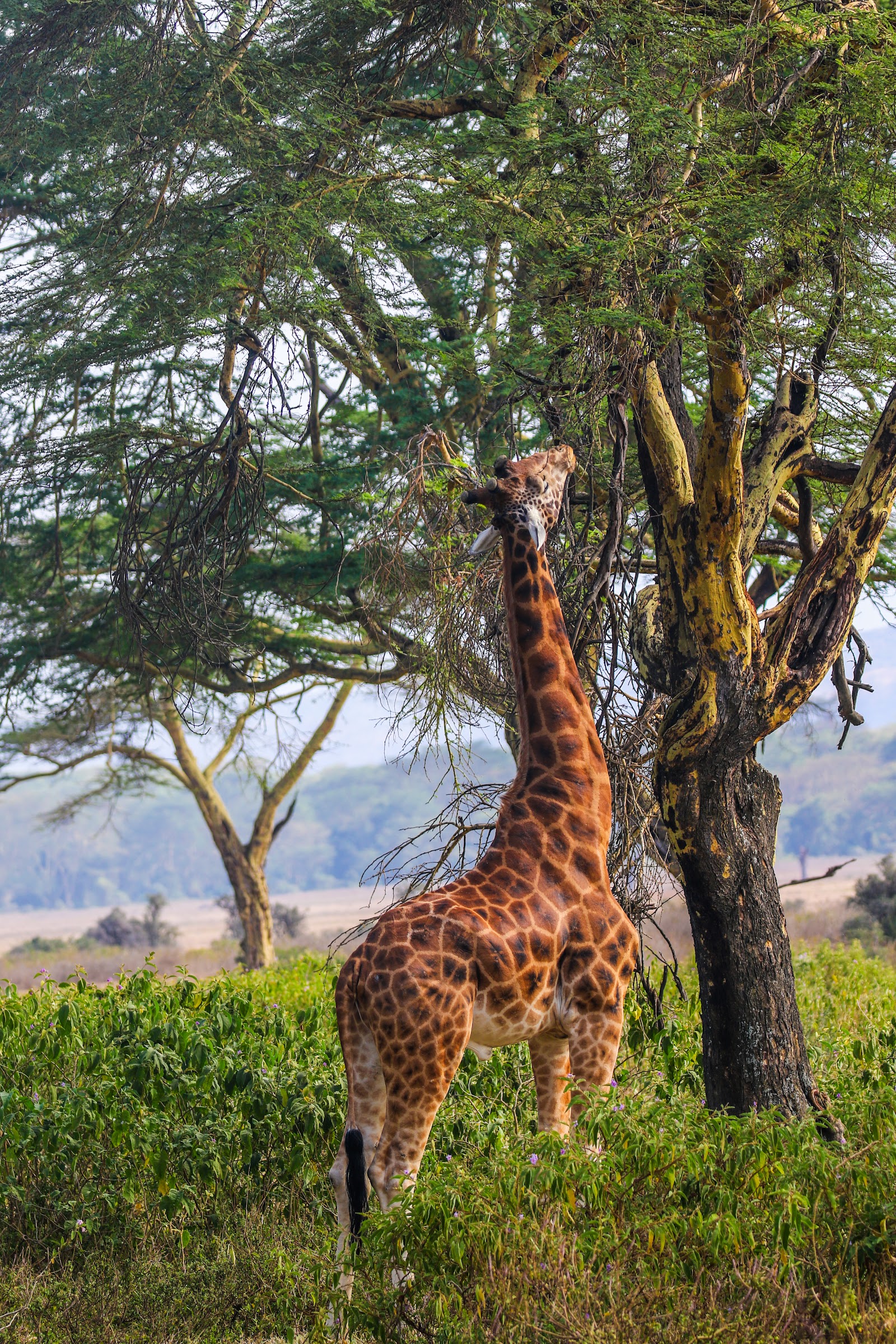
A giraffe’s tongue wrapped around my palm for the pellet and I actually laughed out loud — nobody warns you how long and how purple it is. Then the guide told us the whole 1979 story, that this exact bloodline came from two calves rescued off a ranch being bulldozed. Suddenly it wasn’t just a fun photo, it meant something.
— Sense of Adventure guest, Nairobi city day
The 7 Things That Make the Giraffe Centre Worth Visiting
The Raised Feeding Platform — eye-level with a giraffe
The Centre’s signature experience puts visitors on a wooden platform at exactly the right height to hand-feed pellets directly into a giraffe’s mouth — an intimate, slightly startling encounter (that tongue truly is remarkable) that no vehicle-based safari sighting can replicate at any distance.
The Rothschild Giraffe, Explained — why this subspecies needed saving specifically
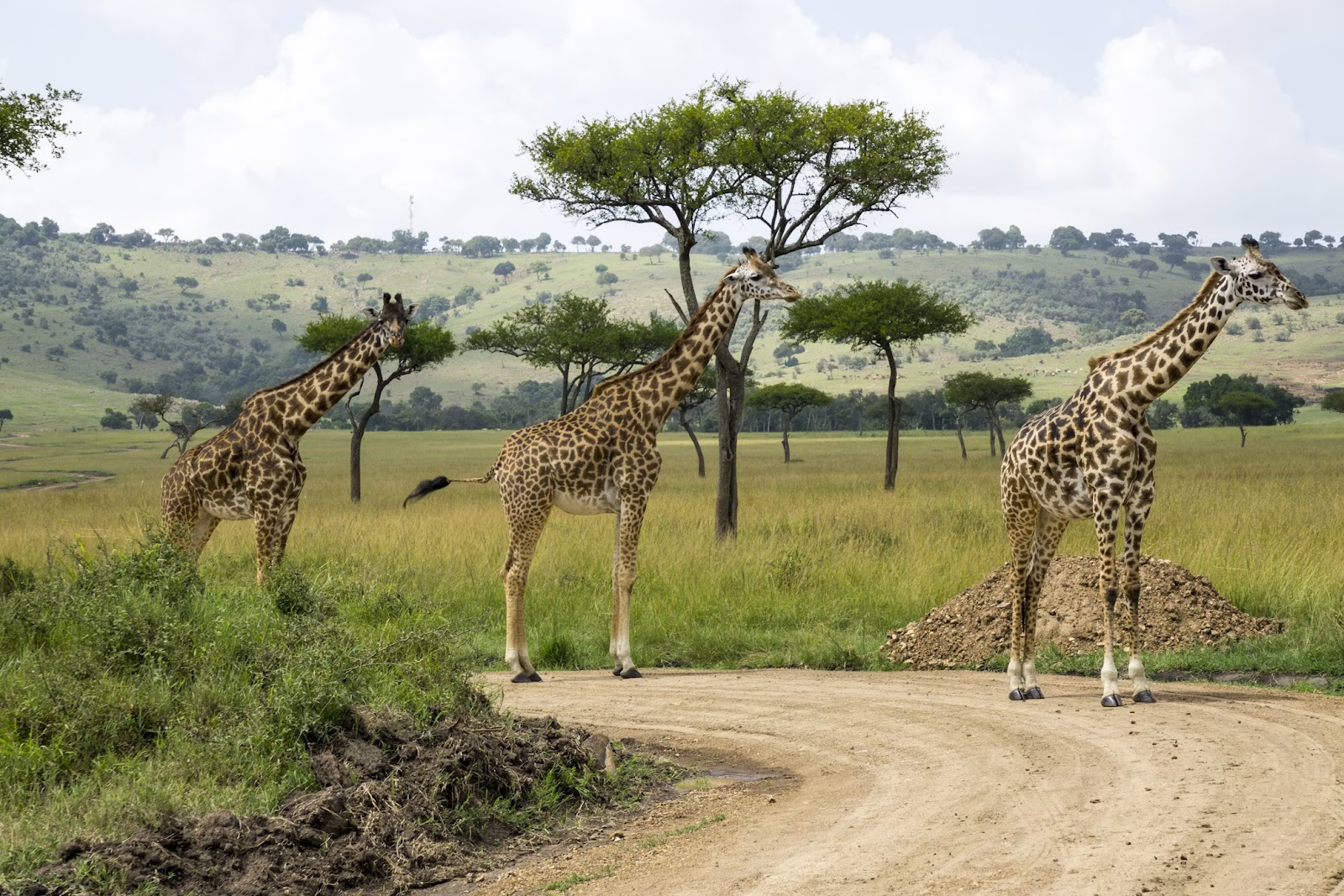
Rothschild giraffes are visually distinct from the more common Masai giraffe seen on safari — paler overall, with sharper-edged patches that fade to plain, unmarked lower legs almost like they are wearing white socks. Guides explain these differences on-site, turning a feeding session into a genuine identification lesson.
The Leslie-Melvilles’ Personal Rescue — from a backyard to a movement
The programme’s origin as two individuals raising orphaned calves at their own Lang’ata home, rather than a government or institutional initiative, gives the Centre’s history a genuinely personal, almost accidental quality — a reminder that major conservation outcomes sometimes start with one committed household rather than a grand plan.
A Genuine Conservation Success — measured in hundreds of thriving animals
Unlike many conservation stories that remain precarious for decades, the Rothschild giraffe’s recovery to 300-plus individuals across multiple secure Kenyan properties is a rare, clearly measurable win — visitors are literally feeding a member of a subspecies whose population has more than doubled since the rescue began.
The Education Centre’s Wider Mission — thousands of Kenyan schoolchildren every year
Beyond tourism, the Centre operates as a genuine nature-education institution, hosting large numbers of Kenyan school groups annually — a mission that predates and outlasts the tourist feeding platform, and one that donations and entry fees directly support.
Comparing to the Wild Encounter — why a controlled setting still has real value
A wild giraffe sighting on safari happens at a respectful distance and on the animal’s own terms, which is exactly right for wild herds — but it rarely allows the close, unhurried, educational encounter the Centre’s controlled setting provides, making the two experiences complementary rather than competing.
The Giraffe Manor Connection — the neighbouring luxury stay
Adjacent to the Centre sits Giraffe Manor, the famous boutique hotel where the Centre’s giraffes sometimes wander onto the property and poke their heads through breakfast-room windows — not part of the Centre itself, but a natural pairing for guests wanting to extend the giraffe encounter into an overnight stay.
Timing and Combining Your Visit — the natural Lang’ata loop
The Centre sits close to several other Lang’ata-area attractions, making it easy to combine with a Nairobi National Park game drive, the Safari Walk, or the Sheldrick elephant nursery into a single, efficient day without significant backtracking across the city.
Feed a Piece of Conservation History
The Rothschild giraffe rescue is one of Kenya’s best conservation stories — see it in person. Ask us to plan your visit.
Giraffe Centre Facts
- Founded: the rescue effort began in 1979; the public education centre opened in 1983 on a 60-acre sanctuary.
- The crisis: the Rothschild giraffe had fallen to roughly 130 individuals on a single Western Kenyan ranch being subdivided for resettlement.
- The founders: Jock and Betty Leslie-Melville, through their organisation AFEW (African Fund for Endangered Wildlife).
- Recovery: more than 300 Rothschild giraffes now thrive across secure Kenyan properties including Soysambu Ranch, Kigio Conservancy and Sergoit Ranch.
- The experience: a raised wooden platform lets visitors hand-feed giraffes at eye level.
- Species ID: Rothschild giraffes are paler with sharper-edged patches and plain, unmarked lower legs, distinct from the common Masai giraffe.
- Neighbour: Giraffe Manor, the boutique hotel famous for giraffes visiting guest rooms, sits adjacent to the Centre.
- Feeding pellets: sold on-site specifically for the raised platform experience, formulated to be safe for giraffes to eat in quantity.
Combining the Giraffe Centre With Your Nairobi Day
The Centre pairs naturally with the Animal Orphanage and Nairobi Safari Walk — see our complete elephant orphanage & Giraffe Centre visitor guide for practical logistics, and the wider Nairobi National Park guide for the full circuit. Book the whole loop via the Nairobi City & Wildlife day tour. Ask about morning versus afternoon feeding sessions when planning your visit, since giraffe activity and platform crowd levels both shift noticeably across the day.
A Species Saved, One Feeding at a Time
Come meet the Rothschild giraffe and hear how close it came to vanishing. Message us to plan your visit.
Frequently Asked Questions
What is the Giraffe Centre in Nairobi?
The Giraffe Centre in Nairobi is a 60-acre sanctuary and education centre in Lang’ata run by AFEW, built around the rescue of the endangered Rothschild giraffe, where visitors hand-feed giraffes from a raised wooden platform at eye level.
Why was the Rothschild giraffe endangered?
The Rothschild giraffe had fallen to roughly 130 individuals by the late 1970s after losing almost all its historic range, with the last significant population confined to a single Western Kenyan ranch being subdivided for resettlement — prompting the rescue that founded the Giraffe Centre.
Who founded the Giraffe Centre in Nairobi?
The Giraffe Centre traces back to Jock and Betty Leslie-Melville, who founded the African Fund for Endangered Wildlife (AFEW) in 1979 and began raising two orphaned Rothschild giraffe calves at their own Lang’ata home before the public centre opened in 1983.
Can you feed giraffes at the Nairobi Giraffe Centre?
Yes — the Centre’s signature experience is a raised wooden feeding platform where visitors hand-feed pellets directly into a giraffe’s mouth at eye level, one of Nairobi’s most popular close wildlife encounters.
Is the Giraffe Centre near Giraffe Manor?
Yes — Giraffe Manor, the famous boutique hotel where giraffes sometimes put their heads through breakfast-room windows, sits directly adjacent to the Giraffe Centre, though it operates as a separate, independent property.
How much time should I budget for the Giraffe Centre?
Most visitors comfortably experience the Giraffe Centre’s feeding platform, information displays and grounds in about 45-60 minutes, making it an easy single stop within a larger half-day or full-day Nairobi wildlife itinerary.