
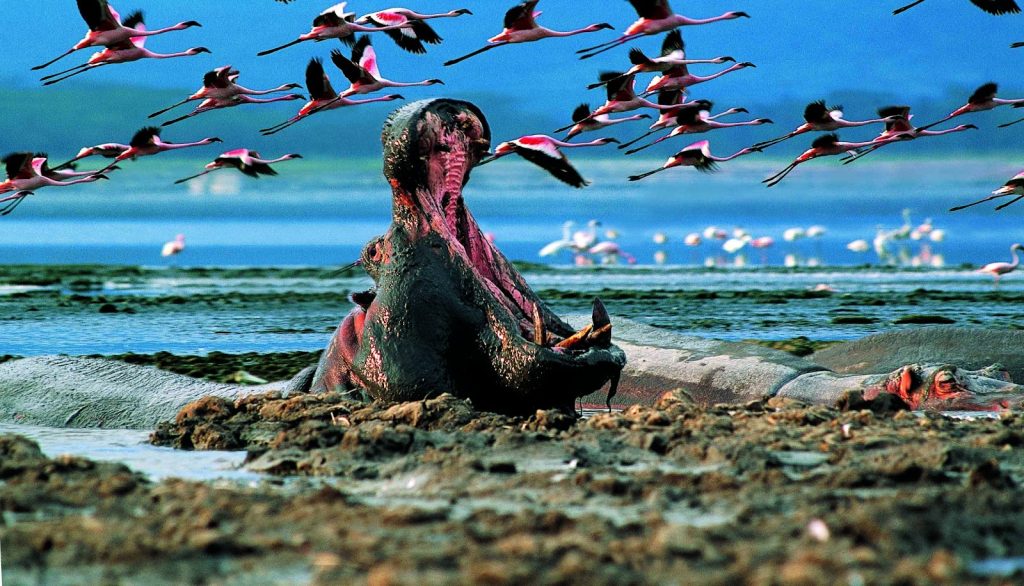
The hippo you photograph half-submerged and apparently docile in a Kenyan lake or river is, by most measures, Africa’s most dangerous large land mammal — not lions, not elephants, but hippos, through a combination of territorial aggression, unpredictability and sheer bulk. Adult males average around 1.5 tonnes, with exceptionally large individuals recorded up to 2.66 tonnes, and defend water territories of 250-500 metres on lakes or 50-100 metres on rivers with genuine ferocity against rival males. What most visitors never see is the behaviour that happens after dark: hippos leave the water at dusk and walk 3-5 kilometres inland to graze, eating around 40kg of grass a night, before returning to the water by dawn. Picture the animal you watched barely move all day covering the equivalent of a long evening walk while you sleep. Sense of Adventure explains this nocturnal routine on every hippo sighting.
See the Full Hippo Story, Not Just a Lake Photo
Message us to build a trip that explains hippo behaviour, not just points them out.
Docile By Day, On the Move By Night
Hippos spend the overwhelming majority of daylight hours submerged in water or wallowing in mud, a behaviour driven by thermoregulation rather than laziness — their skin is highly sensitive to sun exposure, making water and shade essential through the heat of the day. At dusk, this changes entirely: hippos emerge and travel 3-5 kilometres inland along established paths to graze, consuming roughly 40kg of grass in a single night before returning to the water by dawn, a nocturnal routine almost no daytime safari visitor ever witnesses directly. Male hippos are fiercely territorial over water, controlling zones of 250-500 metres in lakes or a tighter 50-100 metres in rivers, and will aggressively defend these boundaries against rival males seeking breeding access to females — this territorial aggression, combined with genuine unpredictability and the animal’s sheer weight (adult males average roughly 1.5 tonnes, with exceptional individuals recorded up to 2.66 tonnes), is the core reason hippos are widely considered Africa’s most dangerous large land mammal to humans, responsible for more fatalities than lions in most tallies.
We’d assumed the hippos in the pod near our camp barely moved all day, then our guide explained they were walking kilometres inland every single night to graze while we slept. It completely changed how we thought about an animal we’d written off as sleepy.
— Sense of Adventure guest, Lake Naivasha safari
Understanding Hippo Behaviour
Daytime — Submerged for Thermoregulation — water and mud protect sensitive skin from sun
Hippos spend most of the day in water or wallowing in mud specifically to protect their sun-sensitive skin and regulate body temperature, not out of laziness.
Nighttime — A 3-5km Grazing Walk — 40kg of grass consumed per night
After dark, hippos leave the water along established paths to graze inland, covering 3-5 kilometres and eating around 40kg of grass before returning by dawn.
Territorial Defence — 250-500m on Lakes, 50-100m on Rivers — aggressively defended against rival males
Male hippos control and fiercely defend water territories tied directly to breeding access, a major driver of the aggression that makes hippos genuinely dangerous.
Why They’re Considered So Dangerous — weight, unpredictability and territorial aggression combined
The combination of near-2-tonne average weight, unpredictable behaviour and fierce territorial defence puts hippos ahead of lions in most tallies of Africa’s most dangerous large land mammal to humans.
A Safari With Real Behavioural Context
Message us to build a trip that explains what hippos actually do, day and night.
Kenya Hippo Facts
- Average male weight: approximately 1.5 tonnes, with exceptionally large individuals recorded up to 2.66 tonnes.
- Nightly grazing distance: 3-5 kilometres inland from water, along established paths.
- Nightly food intake: roughly 40kg of grass per hippo.
- Lake territory size: 250-500 metres, defended by dominant males.
- River territory size: a tighter 50-100 metres, also male-defended.
- Danger ranking: widely considered Africa’s most dangerous large land mammal to humans, ahead of lions in most fatality tallies.
Seeing Hippos With Real Context
Read our Mara River wildlife guide for hippo and crocodile viewing specifics, or book our Tsavo East & West Safari for wider wildlife context alongside hippo pods.
Understand the Animal, Not Just Photograph It
Message us to plan a wildlife-focused trip with real behavioural context.
Frequently Asked Questions
Why are hippos considered Africa’s most dangerous animal?
Hippos combine near-1.5-tonne average weight, genuine unpredictability and fierce territorial aggression around water, a combination that puts them ahead of lions in most tallies of Africa’s most dangerous large land mammal to humans.
Do hippos actually leave the water?
Yes — hippos spend daylight hours submerged for thermoregulation, but emerge at dusk to walk 3-5 kilometres inland to graze, eating around 40kg of grass a night before returning to the water by dawn.
How big is a hippo territory?
Male hippos defend water territories of roughly 250-500 metres on lakes or a tighter 50-100 metres on rivers, aggressively guarding these zones against rival males seeking breeding access.
How much does an adult hippo weigh?
Adult male hippos average around 1.5 tonnes, with exceptionally large individuals recorded at up to 2.66 tonnes; males continue growing throughout their lives.
Why do hippos stay in water during the day?
Hippos remain in water or mud through the day primarily for thermoregulation and to protect their sun-sensitive skin, only emerging at night specifically to graze on land.