The best binoculars for safari are usually 8×42 or 10×42: bright enough for dawn and dusk, steady enough to hold in a vehicle and light enough to carry all day. Bring one pair per person if you can, because guides and camps may supply only one or two pairs per vehicle, and sharing means missing the moment.
Sense of Adventure is a licensed safari operator based at Mountain Mall on Thika Road, Nairobi (TRA licence TRA1/47/C01/77087), and our guides use binoculars on every game drive. This guide explains what the numbers mean, 8×42 vs 10×42, compact vs full size, what to spend, whether camps provide binoculars, options for children and birders, and how to protect them from dust on a Kenya safari.
Table of Contents
✅ Binoculars for Safari: The Quick Answer
- Best all-round choice: 8×42 or 10×42 roof-prism binoculars, waterproof and fog-proof.
- Low light and children: 8x magnification is steadier and brighter at dawn and dusk.
- Distant plains and birds: 10x shows more detail if your hands are steady.
- Lightweight option: 8×32 or 8×25 compacts for fly-in trips with a 15 kg bag limit.
- One pair each: sharing a single pair in the vehicle is the most common regret we hear.
- Do camps supply them? Some do, especially at higher-end camps, but numbers vary, so ask before you book.
🌎 Wondering What Your Safari Includes?
Ask us which camps on your route provide binoculars and what else you should pack. 💬 WhatsApp Us Now or call +254 799 160 081
Do You Really Need Binoculars for Safari?
Yes: binoculars for safari are the single most useful piece of kit after a hat and sunscreen, even if you also bring a camera.
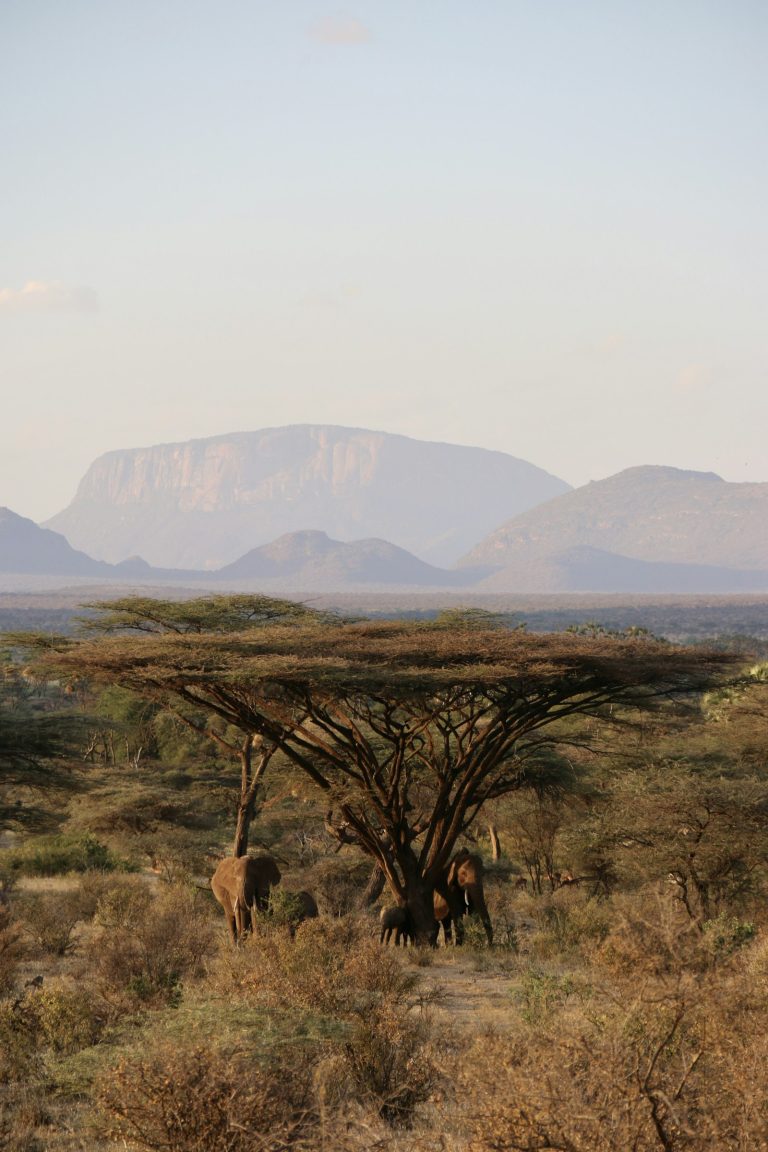
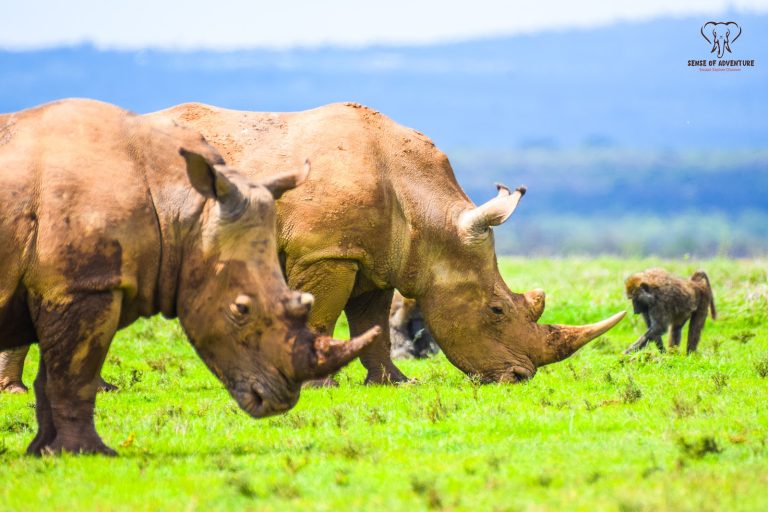
Many animals are seen at a distance. A leopard resting in a tree, a cheetah on a termite mound or a rhino in long grass may be 200 metres or more from the track, and park rules often stop vehicles leaving the road. Binoculars let you see expressions, behaviour and colour that the naked eye misses. In conservancies where off-road driving is allowed, they help you understand what your guide has spotted before you move closer.
Binoculars are also essential for birds. Kenya has more than 1,100 recorded bird species, according to the national tourism board Magical Kenya, and many of the most beautiful are small.
Binoculars or a camera zoom?
A camera zoom is not a substitute. Looking through a viewfinder for long periods is tiring, and many cameras are slow to focus on distant animals. Binoculars give a wide, bright, three-dimensional view and are faster to use. Most experienced travellers carry both.
What the Numbers on Binoculars for Safari Mean
The two numbers on binoculars, such as 8×42, tell you the magnification and the size of the front lenses in millimetres.
| Term | Example | What it means on safari |
|---|---|---|
| Magnification | The 8 in 8×42 | Animals look eight times closer |
| Objective lens | The 42 in 8×42 | Larger lenses gather more light, so the view is brighter |
| Exit pupil | 42 ÷ 8 = 5.25 mm | Bigger numbers give a brighter view at dawn and dusk |
| Field of view | Often 110–140 m at 1,000 m | Wider views make it easier to find and follow animals |
| Close focus | Often 2–3 m | Useful for birds and insects near camp |
As a rule, higher magnification shows more detail but a narrower, shakier image. Larger lenses give a brighter view but add weight. Good binoculars for safari balance the two.
8×42 vs 10×42: Which Binoculars for Safari?
Choose 8×42 if you want an easy, bright, steady view, and 10×42 if you want more detail on open plains and have steady hands.
| Feature | 8×42 | 10×42 |
|---|---|---|
| Steadiness | Very steady, even in a moving vehicle | Slightly more shake |
| Brightness at dawn and dusk | Brighter (5.25 mm exit pupil) | A little darker (4.2 mm exit pupil) |
| Field of view | Wider, easier to find animals | Narrower |
| Detail at distance | Good | Better for birds and far-off animals |
| Best for | First-timers, children, forest and bush | Birders, open plains like the Mara and Amboseli |
Expert tip from our Nairobi team: if you cannot decide, choose 8×42. On game drives you often look from a vehicle with the engine running, and the steadier, wider view of 8x magnification makes it easier to find a moving animal quickly.
Is 12x or higher worth it?
Usually not, unless the binoculars are image-stabilised. At 12x and above, small hand movements make the view shake, and a vehicle’s engine adds vibration. Image-stabilised models solve this but are heavier and need batteries, so pack spares in your hand luggage in line with IATA and airline rules.
Compact vs Full-Size Binoculars for Safari
Full-size binoculars give the best view, but compact models are a sensible choice for fly-in trips and travellers who want a light bag.
- Full size (42 mm): brightest and most comfortable for long viewing; usually 600–850 g.
- Mid size (32 mm): a good compromise; lighter and still bright in daylight.
- Compact (20–28 mm): pocket-sized and light, but darker at dawn and dusk and harder to hold steady.
Light aircraft in Kenya usually allow about 15 kg per person in a soft bag, including hand luggage. Our safari duffel bag guide explains how to pack within this. A full-size pair of binoculars for safari is worth the weight for most travellers, but a 32 mm pair is a smart choice if every gram counts.
Do Safari Camps Provide Binoculars?
Some safari camps and operators provide binoculars, but how many pairs and how good they are varies widely, so do not rely on it.
Higher-end camps and conservancy lodges often keep binoculars for safari guests, with one or more pairs in each vehicle, and your guide will almost always carry a personal pair. On a shared game drive with six people, however, one or two pairs means waiting your turn just as the leopard steps out of the tree. Budget and mid-range safaris may not provide them at all.
Before you book, ask your operator three simple questions: are binoculars provided, how many pairs per vehicle, and are they for guests or the guide? Our guide to what is included in a Kenya safari covers other items to check, and our guide to the window seat guarantee explains how many people usually share a vehicle.
Why bring your own binoculars for safari
Expert tip from our Nairobi team: bring your own pair even if the camp provides some. You will use them in camp too, to watch elephants at the waterhole, birds at breakfast and the night sky over the Mara.
How Much to Spend on Binoculars for Safari
You do not need expensive binoculars for safari, but very cheap pairs often have dim, blurry optics that cause eye strain.
| Budget level | What you usually get | Who it suits |
|---|---|---|
| Entry level | Basic roof-prism, often waterproof; acceptable in daylight | Children, occasional users, a second pair |
| Mid range | Better glass and coatings, sharper and brighter, fully sealed | Most safari travellers |
| Premium | Top-quality glass, very bright and sharp, long warranties | Keen birders, photographers, repeat safari-goers |
Look for these features whatever your budget: waterproof and fog-proof (nitrogen or argon filled), fully multi-coated lenses, phase-corrected prisms for roof-prism designs, twist-up eyecups for glasses wearers, and a comfortable neck strap or harness.
Binoculars for Safari With Children
Children enjoy safari much more with their own binoculars, and the right pair is light, tough and easy to focus.
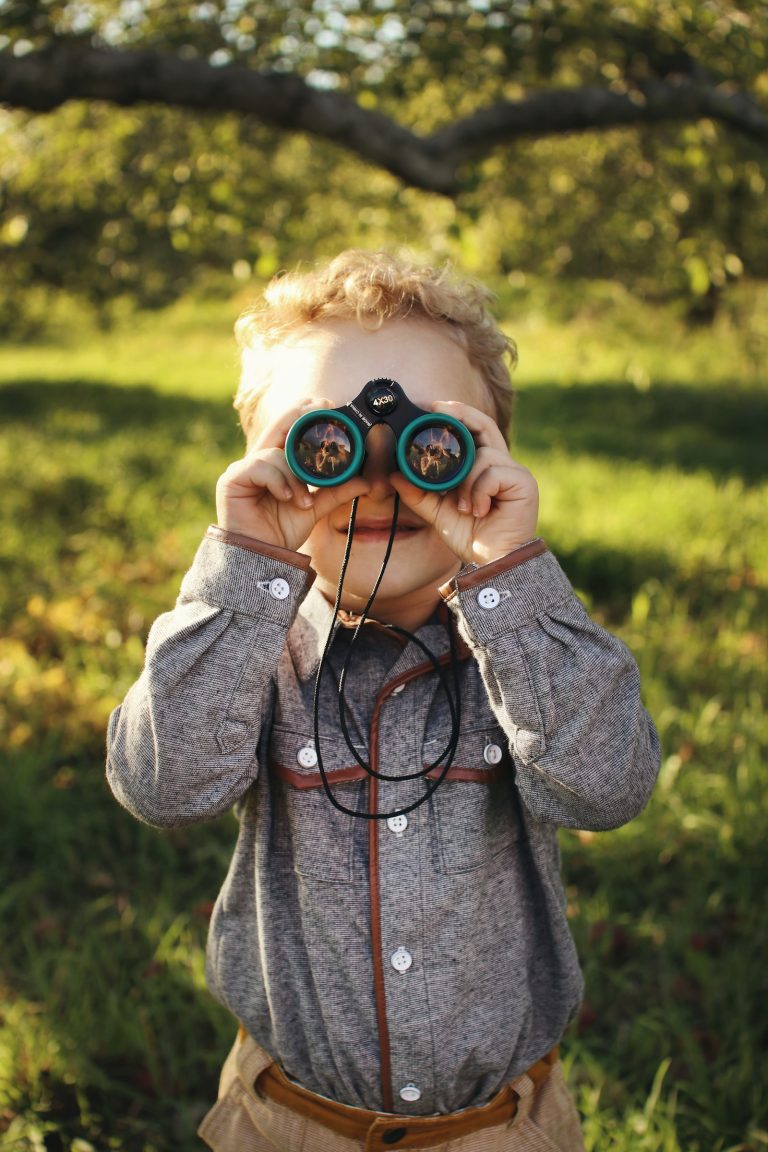
When choosing binoculars for safari with children, pick a compact model of about 6x or 8x magnification with rubber armour and a narrow distance between the eyepieces for small faces. Avoid toy binoculars with plastic lenses, which can be frustrating. A neck strap stops them being dropped out of the vehicle. Our guides to an Africa safari with toddlers and babies and a Kenya safari with teenagers have more tips for families, and our Kenya Family Safari is designed for younger travellers.
📅 Get a Free, No-Obligation Safari Quote
Send us your dates and we will suggest a route, and a packing list that includes the kit you really need. ✉ Send Us Your Dates on WhatsApp
Binoculars for Safari Birding and Photography
Birders and photographers have slightly different needs, so a few extra features are worth paying for.
For birders
Birders often prefer binoculars for safari in 8×42 or 10×42 with a close focus of 2 metres or less, a wide field of view and excellent colour. Kenya’s habitats range from Rift Valley lakes to forest and semi-desert, and you will use your binoculars constantly. Our guide to the Kenya birdwatching safari and our Kenya Birding Tour show where to go.
For photographers
Photographers often spot with binoculars, then lift the camera. A pair with a harness keeps them on your chest and away from your camera strap. If you are on our Big Cats Photographic Safari, ask about a private vehicle, which gives you space for both. Message us for a quote.
Binoculars for Safari by Park and Activity
The right binoculars for safari can depend a little on where you go and what you do, although one good mid-size pair covers almost everything.
| Park or activity | What you will look at | Best binoculars for safari here |
|---|---|---|
| Masai Mara plains | Lions, cheetahs and migration herds at a distance | 10×42 for detail, or 8×42 for steadiness |
| Amboseli | Elephants, Kilimanjaro views, swamp birds | 8×42 or 10×42 |
| Samburu and northern Kenya | Shy species along rivers and in dry bush | 8×42 for a wide view in thicker cover |
| Lake Nakuru and Naivasha | Flamingos, pelicans, rhinos, fish eagles | 10×42 for birds across the water |
| Walking safaris | Tracks, birds and animals on foot | Light 8×32 that sits comfortably on a harness |
| Night drives | Animals in the spotter’s beam | 8×42 or brighter 8×56; small binoculars struggle at night |
On a night drive, the bright exit pupil of 8×42 binoculars for safari makes a real difference. Our guide to night drives on safari explains where they are allowed and what you may see.
Binoculars for safari in the dusty season
From July to October, dust is constant in the Mara and Amboseli. Keep binoculars in a closed case on the vehicle seat between sightings, and wipe the body, not the lenses, with a damp cloth each evening.
How to Use and Protect Binoculars on a Game Drive
Dust, bumps and sudden sightings are the main challenges, so a few habits keep your binoculars working and ready.
- Set the eyepiece distance at home so the two circles merge into one.
- Adjust the dioptre for your right eye once, then focus with the central wheel.
- Wear them on a strap or harness so they do not bounce on rough tracks.
- Keep lens caps on between sightings in dusty months such as July to October.
- Clean with a blower brush first, then a microfibre cloth; never rub grit across the glass.
- Brace your elbows on the vehicle frame or your knees, and ask the driver to switch off the engine for long viewing.
- Store them in a dry bag in the rainy months, and let them reach room temperature before use to avoid misting.
Park rules from the Kenya Wildlife Service ask visitors to stay in vehicles except at designated points, which is another reason binoculars matter. Our guide to Kenya safari etiquette explains how to behave at sightings.
Binoculars for Safari: A Final Packing Checklist
Use this short list before you travel to make sure your binoculars for safari are ready.
- One pair of binoculars per person, ideally 8×42 or 10×42.
- Neck strap or harness, plus lens caps and a soft case.
- Blower brush and microfibre cloth.
- Small dry bag for rainy months and boat trips.
- Spare batteries for image-stabilised models, packed in hand luggage.
- Insurance cover for valuables; keep binoculars with you rather than in checked bags.
The UK Foreign Office Kenya page advises travellers to take care of valuables in busy areas, so keep binoculars out of sight in cities and airports. For the full kit list, see our guide to what to pack for an African safari and our list of what not to bring on safari.
Binoculars for Safari FAQs
What are the best binoculars for safari?
For most travellers, the best binoculars for safari are 8×42 or 10×42 roof-prism models that are waterproof and fog-proof. They are bright at dawn and dusk, steady enough to hold in a vehicle and comfortable for long use. Lighter 8×32 pairs suit fly-in trips with strict luggage limits.
Is 8×42 or 10×42 better for safari?
Both work well. 8×42 gives a brighter, wider and steadier view, which suits first-timers, children and low light. 10×42 shows more detail on open plains and for birds, but shakes slightly more. If you are unsure, 8×42 is the safer all-round choice for a Kenya safari.
Do safari camps provide binoculars?
Some do, especially higher-end camps and conservancy lodges, which may keep one or more pairs in each vehicle. Numbers and quality vary, and budget safaris may not provide any. Ask your operator before you book, and bring your own pair so you never have to wait your turn.
Do I need binoculars if I have a zoom lens?
Yes, most travellers find both useful. Binoculars give a wider, brighter and more natural view and are quicker for finding animals and birds. A camera zoom is best for taking the photo. Looking through a viewfinder for long periods is tiring and you may miss behaviour.
How much should I spend on safari binoculars?
You do not need the most expensive pair. A mid-range, fully waterproof model with multi-coated lenses suits most travellers and is much better than very cheap binoculars. Keen birders and repeat visitors may prefer premium glass. Buy before you travel, because choice in Kenya is limited.
What binoculars are best for children on safari?
Choose a light, compact pair of about 6x or 8x magnification with rubber armour, a neck strap and eyepieces that adjust close together for small faces. Avoid toy binoculars with plastic lenses, which give a poor view. Let children practise at home so they know how to focus.
Can I buy binoculars in Nairobi?
Some camera and outdoor shops in Nairobi sell binoculars, but the choice is limited and prices are often higher than at home. It is easier to buy and test a pair before you travel, so you arrive already familiar with how they focus and feel.
🏕 Plan Your Safari With Sense of Adventure
Kenya-based experts. Real local knowledge. Transparent pricing. Our guides will help you spot more on every game drive, and we will tell you exactly what to pack before you fly. 💬 WhatsApp Us — Start Planning Today
Call or WhatsApp: +254 799 160 081
Related Safari Guides
- ›What to Pack for an African Safari
- ›What Not to Bring on Safari
- ›Safari Duffel Bag Guide
- ›What Makes a Good Safari Guide?
- ›Kenya Birdwatching Safari
Official travel & park resource: Kenya Wildlife Service ↗