
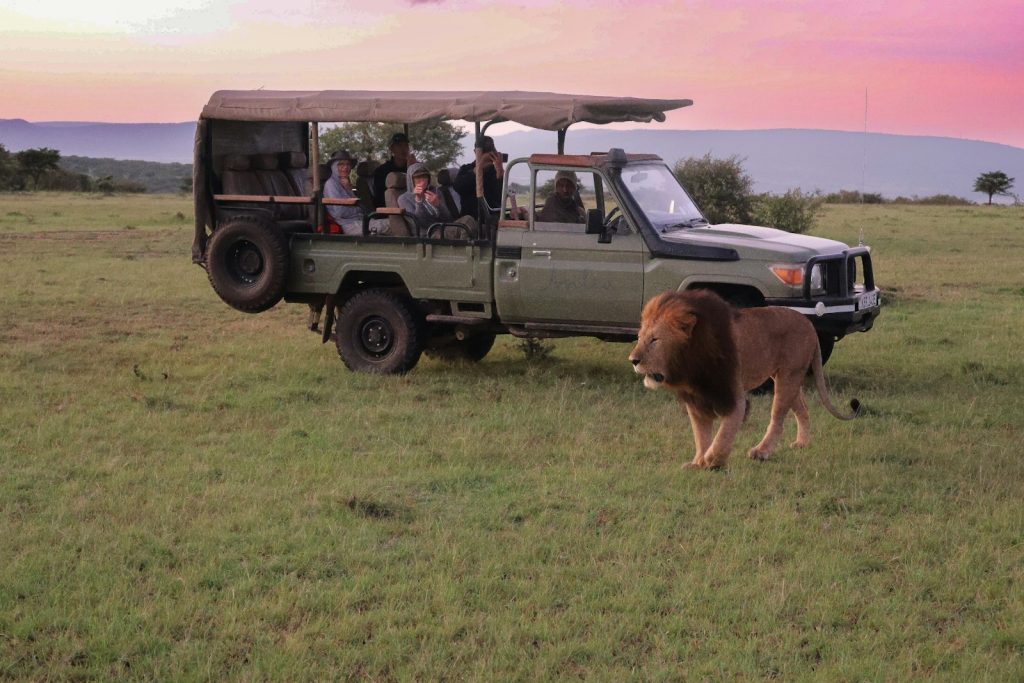
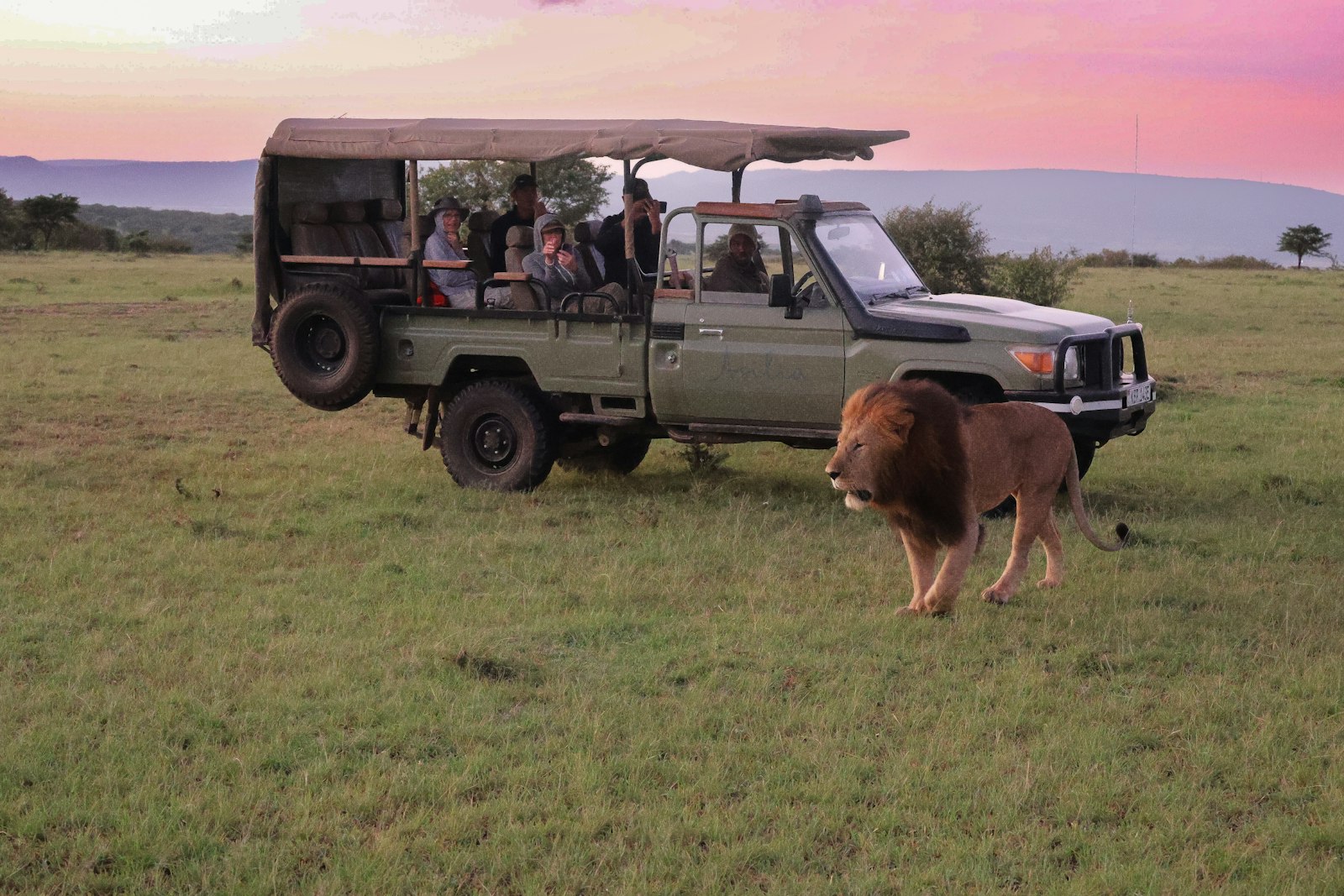
A window seat guarantee on safari means every passenger sits beside a window rather than in a middle seat. In Kenya, a typical 4×4 Land Cruiser or safari minivan carries six or seven guests with a pop-up roof, so on a shared trip you may share with up to six strangers. A private safari means only your group rides.
Sense of Adventure is a licensed safari operator based in Nairobi (TRA licence TRA1/47/C01/77087), and vehicle seating is one of the questions we answer most before people book. This guide explains what a window seat guarantee really covers, how many people share a safari vehicle in Kenya, how private and shared trips differ, which seats are best for photos and what to ask your operator before you pay a deposit.
✅ Window Seat Guarantee: The Quick Answer
- What it means: no one is stuck in a middle seat; each guest has a window on at least one side.
- Typical capacity in Kenya: six or seven guests in a Land Cruiser or minivan, each by a window.
- Shared safaris: seats are sold individually, so the vehicle may be full of other travellers.
- Private safaris: the vehicle and guide are yours alone, whatever the size of your group.
- Conservancy camps: open-sided vehicles are often limited to fewer guests than they can seat.
- What it does not cover: a guaranteed spot under the pop-up roof or the front seat.
🌎 Want to Know Exactly Who Shares Your Vehicle?
Tell us your group size and dates and we will explain the vehicle, the seating and the private option before you book. 💬 WhatsApp Us Now or call +254 799 160 081
What Does a Window Seat Guarantee Mean on Safari?
A window seat guarantee is a promise that the operator will not sell more seats than there are windows, so nobody spends the day squeezed between two other guests.
Game viewing is mostly about looking sideways. Lions lie in the grass beside the track, elephants cross in front, and a leopard may be in a tree to your left. A middle seat blocks your view and your camera. That is why reputable safari companies build their vehicles and bookings around window seats, and why the phrase appears in so many safari adverts.
A window seat guarantee is about seating, not exclusivity. On a shared trip, the person beside the other window may be a stranger, and you may still swap sides of the vehicle during the day. It also does not promise you the best seat at every sighting; your guide positions the vehicle so that everyone gets a turn.
How Many People Share a Safari Vehicle in Kenya?
Most Kenya safari vehicles carry six or seven guests plus the driver-guide, and the exact number depends on the vehicle type and whether the trip is shared or private.
| Vehicle | Typical guest seats | Roof | Common use |
|---|---|---|---|
| 4×4 Toyota Land Cruiser | 6 or 7, each by a window | Pop-up roof | Most mid-range and private safaris |
| Safari minivan | Up to 7, each by a window | Pop-up roof | Budget and shared road safaris |
| Open-sided conservancy vehicle | Seats about 9; many camps limit numbers | Canvas canopy | Camp-based drives in conservancies |
| Extended or stretched 4×4 | More than 7, sometimes with middle seats | Varies | Some large groups; ask before booking |
Our guide to safari vehicles in Kenya explains the Land Cruiser layout, pop-up roofs and charging points in more detail.
Land Cruiser or minivan: does it change the window seat guarantee?
Both usually come with a window seat guarantee, but the ride is different. A Land Cruiser sits higher, copes better with rough or muddy tracks and feels more comfortable on long drives. A minivan is cheaper to run and works well on dry roads and in parks such as Nakuru and Amboseli. In the wet months, or for longer trips, a 4×4 is the safer choice.
Shared vs Private Safari: Who Sits in Your Vehicle?
On a shared (or “joining”) safari you buy a seat, and on a private safari you buy the whole vehicle; that difference matters more than the window seat guarantee itself.
| Question | Shared safari | Private safari |
|---|---|---|
| Who rides with you? | Other travellers, up to vehicle capacity | Only your own party |
| Window seat guarantee? | Usually yes; check the maximum number | Yes, with spare seats if your group is small |
| Who sets the pace? | The group and the fixed itinerary | You and your guide |
| Long sightings and photography | A compromise between guests | As long as you like, within park rules |
| Cost | Lowest per person for solo travellers and couples | Higher for one or two people; good value for four to six |
If you are travelling as two, a private vehicle usually costs noticeably more per person than a shared one. For a family or group of four to six, the difference shrinks, because you share the vehicle cost among yourselves. Our comparison of a private safari in Kenya and our small group safari guide explain the trade-offs.
Expert tip from our Nairobi team: for a couple, the sweet spot is often a private vehicle for the whole trip. You get two windows each, room for camera bags and the freedom to stay at a sighting. Ask for both prices; the gap is sometimes smaller than people expect, especially in the low season.
The Pop-Up Roof and the Front Seat: What a Window Seat Guarantee Does Not Cover
A window seat guarantee covers where you sit, but much of the best viewing on a Kenya safari happens standing up under the pop-up roof.
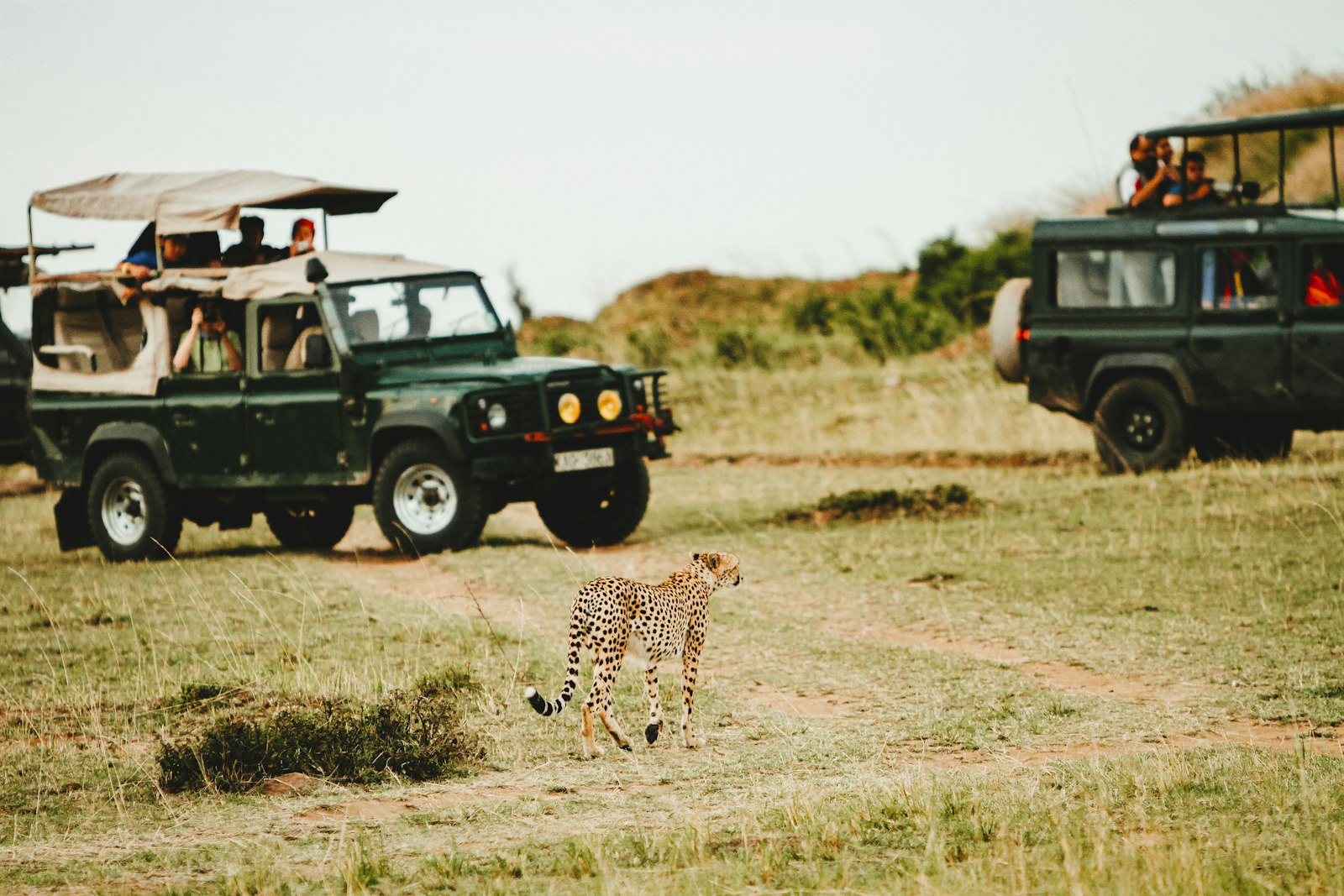
When the guide stops at a sighting, guests stand and look out through the raised roof. In a full vehicle of seven, the roof space can feel crowded, and tall guests may block shorter ones. Good guides ask people to take turns and position the vehicle so both sides get a view. In a vehicle with four or five guests, the window seat guarantee comes with plenty of roof space for everyone.
- Front passenger seat: in many Kenya vehicles it is left free or used by the guide’s notes and radio; some operators let guests rotate into it.
- Back row: often the bumpiest seat on rough tracks; worth avoiding if you have back problems.
- Rotation: fair operators rotate seats each day so nobody is always at the back.
If comfort matters because of knees, hips or your back, our guide to a safari with limited mobility explains how to request the easiest seat and a step for climbing in.
Open Vehicles in Conservancies and Lodges
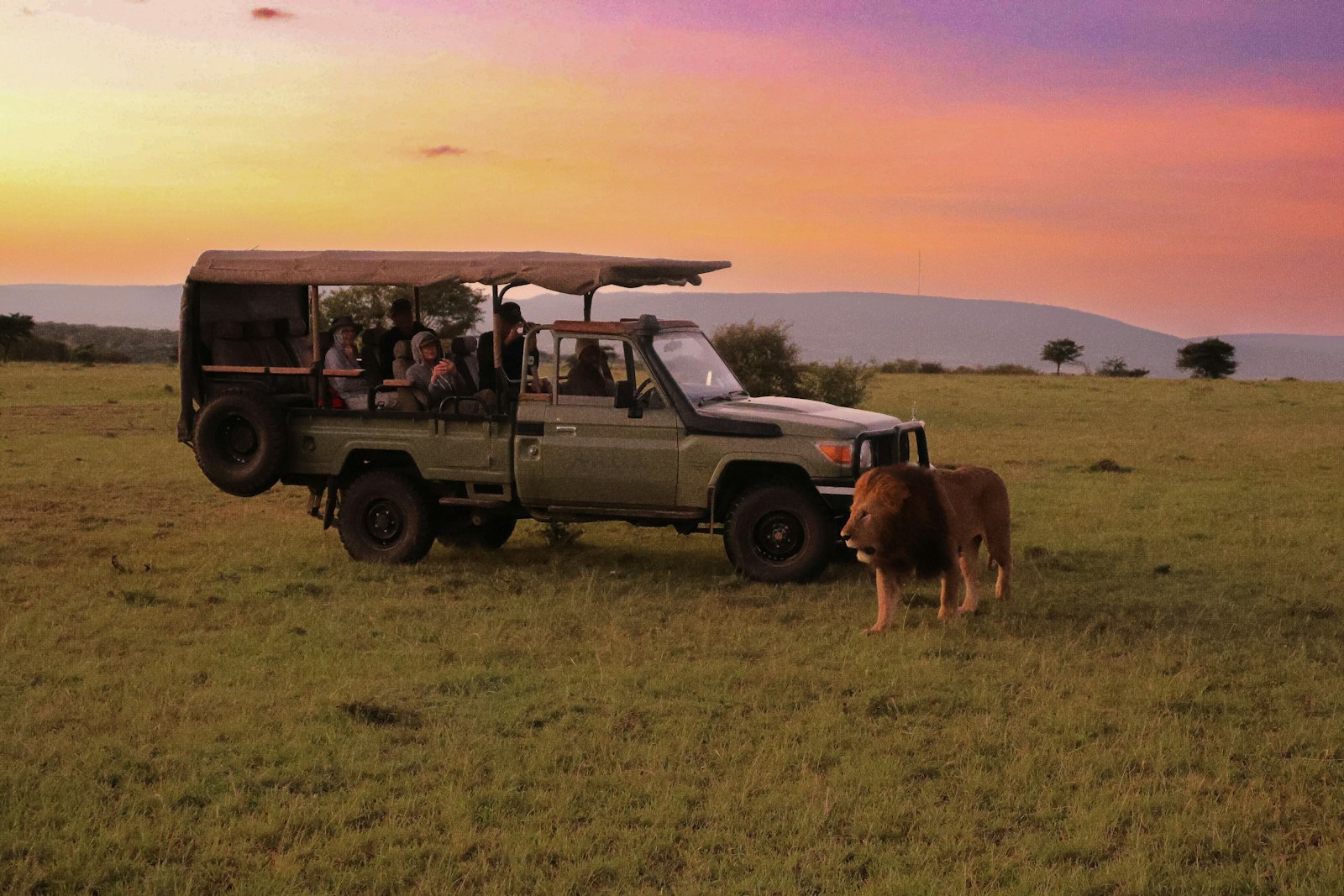
Camps in private conservancies often use open-sided vehicles, and the best of them limit the number of guests so everyone has an outside seat.
These vehicles usually have three tiered rows behind the driver. In theory each row can seat three, which would put guests in middle seats. Many conservancy camps therefore cap numbers at about four to six guests per vehicle, so that a window seat guarantee, or rather an outside-seat guarantee, holds for everyone, and some offer a private vehicle for families or for an extra charge. Policies differ from camp to camp, so treat any number as something to confirm.
Conservancies also limit how many vehicles can gather at one sighting, which improves the experience further. Our guide to conservancy fees in Kenya explains what those fees pay for, and the Masai Mara conservancies guide compares the main areas.
Lodge vehicles and mixed groups
If you fly into a camp, you will usually drive in the camp’s own vehicles with other guests. Ask whether the camp offers a window seat guarantee, how many guests share, and whether a private vehicle is available. On a road safari, by contrast, the same vehicle and guide usually stay with you for the whole trip.
Which Seat Is Best for Photography?
For photography, a window seat guarantee is only the start; a window seat with space beside it is best, which is why keen photographers often book a private vehicle or one with no more than three or four guests.
- Get low: shooting from a window gives a lower, more natural angle than standing under the roof.
- Use a beanbag: rest your lens on the window frame for steady shots; ask your operator if they provide one.
- Ask for engine off: vibration ruins long-lens shots, and good guides switch off when it is safe.
- Keep both sides free: with spare seats, you can move to whichever side the action is on.
- Agree the plan: on a shared trip, tell the group early that you want to wait for light or behaviour.
Our safari photography tips cover settings and lenses, and the Photographic Safari in the Masai Mara and Great Rift is built around private vehicles and flexible timings.
📅 Get a Free, No-Obligation Safari Quote
Send us your dates and group size and we will quote both a shared and a private vehicle so you can compare. ✉ Send Us Your Dates on WhatsApp
How Group Size Changes the Price of a Safari Vehicle
A safari vehicle and guide cost roughly the same per day whether they carry two guests or six, so the more seats you fill with your own people, the less each person pays.
| Your party | Best option | Why |
|---|---|---|
| Solo traveller | Shared safari, or private if budget allows | Shared seats keep costs down; see our single supplement guide |
| Couple | Private for comfort, shared for budget | Private gives two windows each and full flexibility |
| Family of 4 | Private vehicle | Good value per person and you set the pace |
| Group of 5 or 6 | Private vehicle | Fills the vehicle with a window seat guarantee for all |
| Group of 7 to 12 | Two private vehicles | More space and two sets of eyes looking for wildlife |
For groups of seven, many operators will suggest two vehicles rather than filling one completely, even when a seven-seat vehicle would still honour the window seat guarantee. It costs more, but everyone gets space at the roof and a choice of windows. Our packages such as the 6-Day Kenya Group Safari and the Kenya Classic Group Safari can run privately for your group.
8 Questions to Ask About the Window Seat Guarantee Before You Book
Clear answers to these questions will show whether the window seat guarantee is real and how much space you will have on every game drive.
- Is the vehicle private, or will we share with other travellers?
- What is the maximum number of guests in the vehicle?
- Is there a written window seat guarantee for every guest?
- Is it a 4×4 Land Cruiser or a minivan, and does it have a pop-up roof?
- Will the same vehicle and guide stay with us for the whole trip?
- At fly-in camps, how many guests share the camp’s vehicles?
- Can we upgrade to a private vehicle, and what does it cost?
- Does the vehicle have charging points, binoculars, a cool box and a beanbag?
Our list of questions to ask before booking a safari covers camps, park fees and payments too, and our guide to what is included in a Kenya safari shows what a good quote lists.
Group Sizes on Gorilla Treks, Walks and Bush Flights
“How many people share?” matters beyond the vehicle, and some activities have strict group limits set by park authorities.
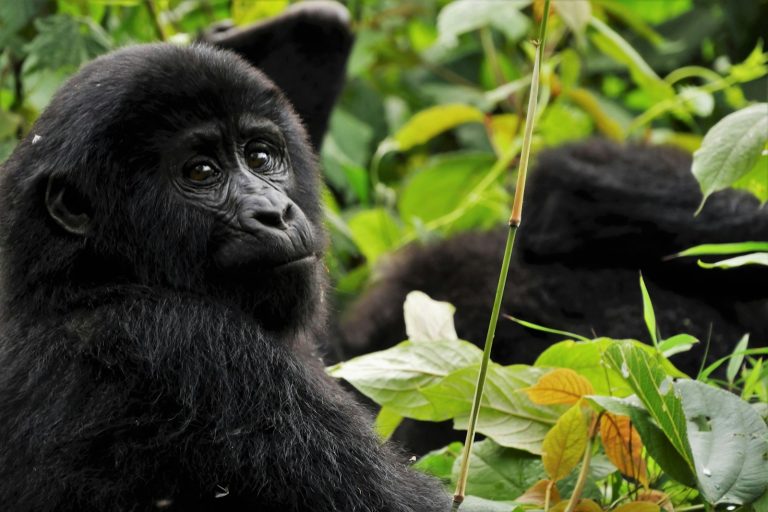
- Gorilla trekking: in Uganda and Rwanda, a maximum of eight visitors may visit each habituated gorilla family per day.
- Walking safaris: many conservancies limit walking groups to about six to eight guests per guide.
- Light aircraft: scheduled safari flights use small planes with most seats by a window; seats are not usually assigned in advance.
- Balloon flights: baskets carry larger groups, often a dozen or more passengers, divided into compartments.
These limits protect wildlife and keep the experience personal. The Uganda Wildlife Authority and Visit Rwanda publish current gorilla rules.
Is a Window Seat Guarantee Enough, or Should You Go Private?
A window seat guarantee is the minimum you should accept; whether you also need a private vehicle depends on your budget, group size and how much flexibility you want.
Shared safaris with a window seat guarantee suit solo travellers, younger budget travellers and people who enjoy meeting others. Private safaris suit families with young children, photographers, honeymooners and anyone who wants to set their own pace. Between the two, ask about small-group departures that cap numbers at four to six guests.
Expert tip from our Nairobi team: if you book a shared trip, ask for a seat in the middle row. It is usually the smoothest ride, closest to the roof hatch and easy to get in and out of. And on day one, agree with the group how you will share the roof space; it makes every sighting more relaxed.
Before you travel, check current road and safety advice on the UK Foreign Office Kenya page, and see Magical Kenya for official visitor information.
Window Seat Guarantee FAQs
What does window seat guarantee mean on a safari?
It means every passenger sits beside a window, so no one is stuck in a middle seat between two others. It is about seating, not privacy: on a shared trip other travellers may still fill the vehicle. It does not guarantee the front seat or a fixed place under the pop-up roof.
How many people are in a safari vehicle in Kenya?
Most Kenya safari vehicles, whether 4×4 Land Cruisers or minivans, carry six or seven guests plus the driver-guide, each with a window seat. Open-sided vehicles at conservancy camps can seat more, but many camps limit numbers. On a private safari, only your own group rides in the vehicle.
Is a private safari vehicle worth the extra cost?
For families, groups of four to six, photographers and honeymooners, usually yes. You set the pace, stay at sightings as long as you like and have space to move between windows. For solo travellers on a tight budget, a shared safari with a window seat guarantee is often better value.
Which is the best seat in a safari vehicle?
The middle row is often the best all-round seat, with a smooth ride and easy access to the pop-up roof. The back row can be bumpy on rough tracks. For photography, any window seat with a free seat beside it is ideal, because you can switch sides quickly.
Do all safari minivans have a window seat for everyone?
Most reputable operators in Kenya use minivans with up to seven seats, each by a window, and a pop-up roof. Some larger or stretched vehicles have middle seats, so always ask the maximum number of guests and whether every person has a window before you book.
Can I choose who shares my safari vehicle?
Only on a private safari. On a shared or joining safari, seats are sold individually and you may share with travellers from other countries. If you want a vehicle just for your family or friends, book a private safari; the cost per person falls as your group grows.
How many people go on a gorilla trek together?
In both Uganda and Rwanda, a maximum of eight visitors may visit each habituated gorilla family per day, with rangers and trackers leading the group. This limit protects the gorillas from disease and stress, and it keeps the hour with the family calm and personal.
🏕 Plan Your Safari With Sense of Adventure
Kenya-based experts. Real local knowledge. Transparent pricing. We will tell you exactly which vehicle you will ride in and who shares it before you book. 💬 WhatsApp Us — Start Planning Today
Call or WhatsApp: +254 799 160 081
Related Safari Guides
- ›Safari Vehicles in Kenya: Land Cruisers and Pop-Up Roofs
- ›Private Safari in Kenya: Everything You Should Know
- ›Small Group Safari Kenya for 2 to 8 Travellers
- ›Masai Mara Game Drive Guide
- ›Conservancy Fees in Kenya Explained
Official travel & park resource: Kenya Wildlife Service ↗