
Nairobi National Park rhinos deliver the most surreal conservation picture in Africa: a critically endangered black rhino browsing thornbush while glass towers glitter on the horizon behind it. The world’s only capital-city national park doubles as one of Kenya’s most important rhino sanctuaries — its fenced-on-three-sides 117 km² proved so secure through the poaching crises that it became a breeding bank, exporting rhinos to restock parks across the country. Both black and white rhinos live here in remarkable density, and the neighbouring Sheldrick nursery raises orphaned calves you can meet at mud-bath hour. Sense of Adventure’s Nairobi days are built around this improbable, hopeful spectacle.
Rhinos Before Your Flight Even Boards
Half-day park safaris with rhino-country routing — the world’s only skyline-backed sanctuary is minutes from your hotel.
How a Capital City Became a Rhino Stronghold
Nairobi National Park’s odd geography — fenced along the city edges, open only across the southern Kitengela plains — made it accidentally perfect for rhino security: patrollable, compact and under the nation’s nose. During the 1970s-80s poaching catastrophe, survivors were concentrated here, and the park’s black rhino population bred so successfully it became a source herd, translocating founders to Tsavo, Meru and the Laikipia sanctuaries. Today roughly a hundred rhinos — black rhinos browsing the acacia thickets, white rhinos cropping the open grasslands — share the park with lions, buffalo and giraffes, all within sight of downtown. Morning game drives along the forest edges and southern valleys find them with gratifying reliability.
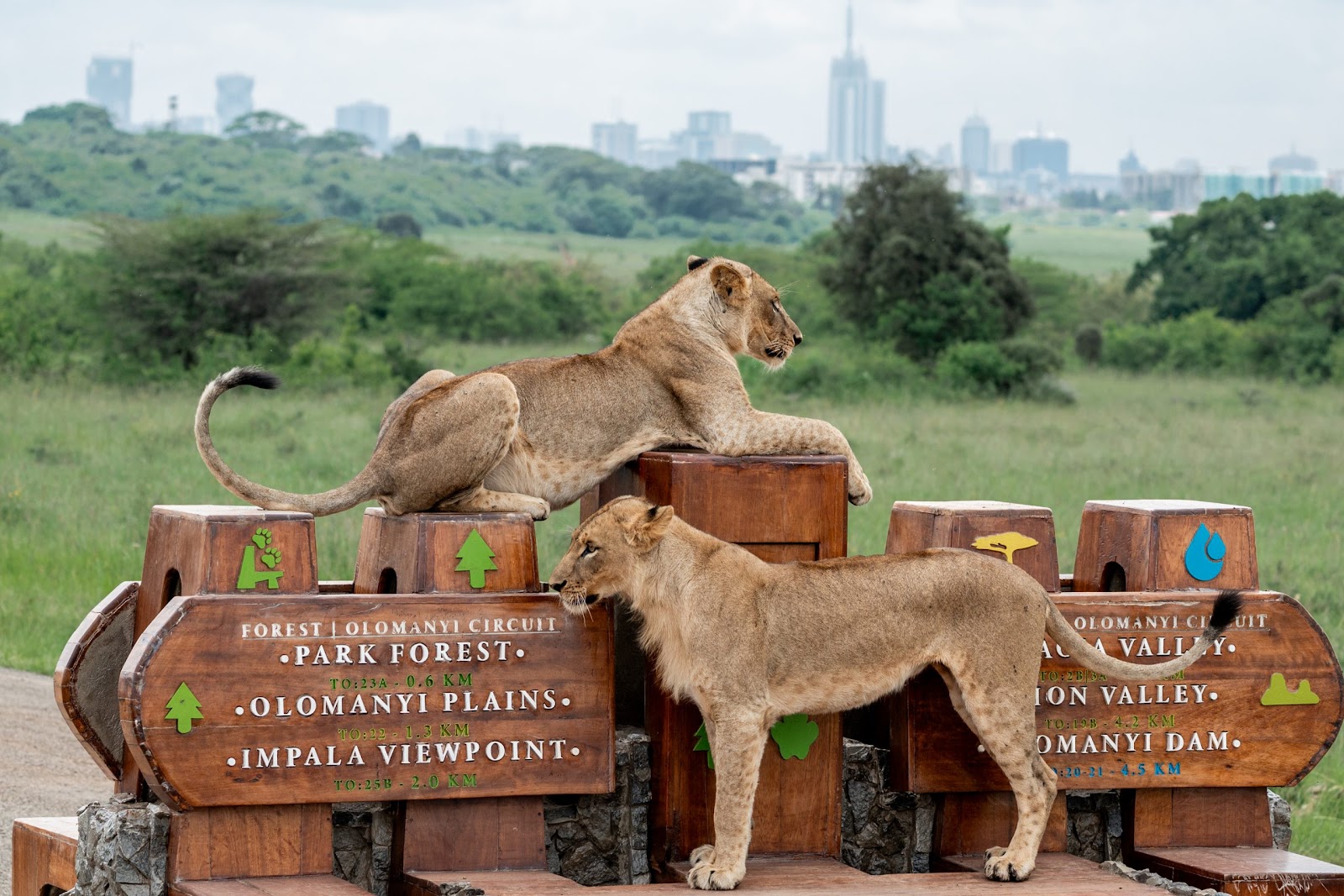
A black rhino crossed the track in front of us, and behind its horn you could count the skyscrapers. My layover was nine hours; I spent four of them watching rhinos and made my flight with time to spare. Unreal city, Nairobi.
— Sense of Adventure guest, layover safari
The 5 Essential Rhino Experiences in Nairobi
Black Rhino Against the Skyline — the photograph only Nairobi offers
The park’s signature frame — a browsing black rhino with the CBD towers stacked behind — happens along the northern forest edges and open leleshwa country in the first two morning hours. It is conservation’s strangest juxtaposition and its most hopeful: the city grew, and the rhinos stayed anyway.
White Rhinos on the Athi Plains — grazers in the open south
The park’s white rhinos favour the southern grasslands toward the Athi basin, grazing in relaxed family groups that let vehicles settle close. Against yellow grass with kongoni and zebra scattered behind, the viewing feels like a full-sized park — until a jet from Wilson banks overhead to remind you.
The Sheldrick Nursery Mud Bath — orphans growing up in public
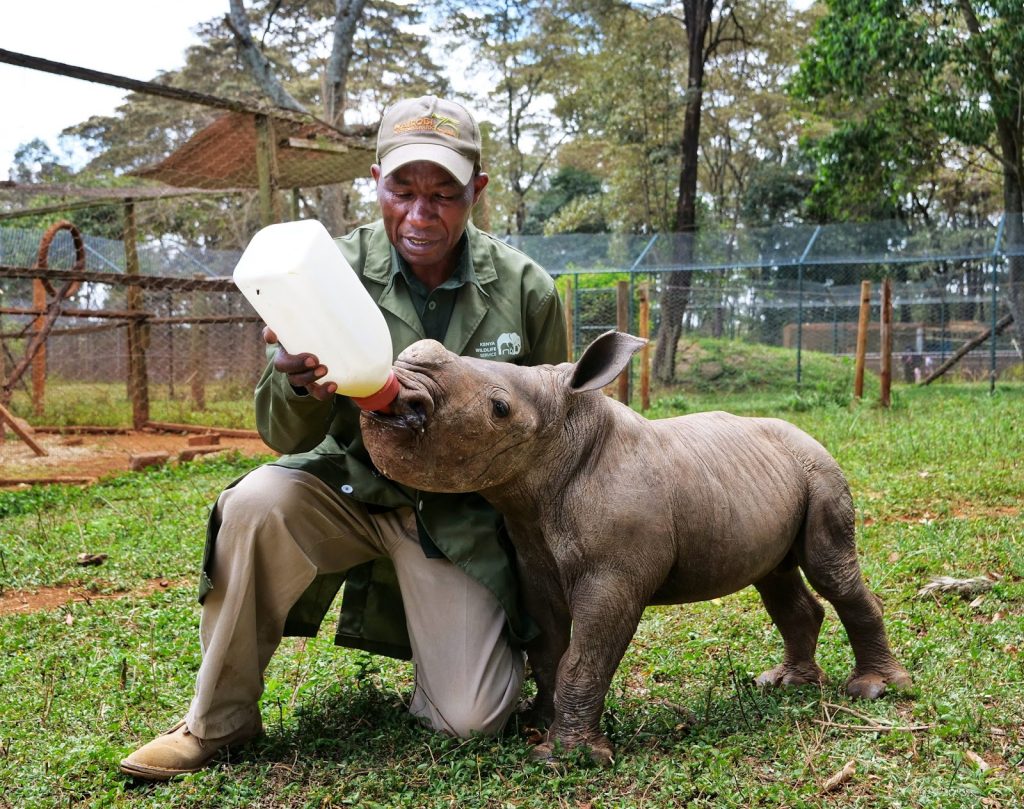
At the park’s edge, the Sheldrick Wildlife Trust nursery raises orphaned elephants — and periodically rhino calves like the famous blind Maxwell — with a daily public hour of milk bottles and mud wallowing. It is the emotional counterpoint to the wild sightings: the pipeline that returns orphans to protected wilds. Book ahead; it sells out.
The Ivory Burning Site — where Kenya drew the line
Inside the park stands the monument where, in 1989, Kenya burned 12 tonnes of confiscated ivory — the fire that changed global wildlife politics. Later burns followed, the largest in 2016. Standing at the ash memorials between rhino sightings gives the park’s security story its full weight.
Dawn at the Forest Edge — the connoisseur’s rhino hour
Gates open at six, and the first hour belongs to the browsers: black rhinos finishing their night rounds along the highland forest margin, bushbuck slipping between glades, lions walking the tracks home. By eight the city hum rises and the rhinos melt into thicket — the early alarm is the whole trick.
Half-Day Safari, Full-Size Wildlife
Hotel pickup, dawn gates, rhino circuits and the Sheldrick hour — Nairobi’s perfect morning, arranged in one message.
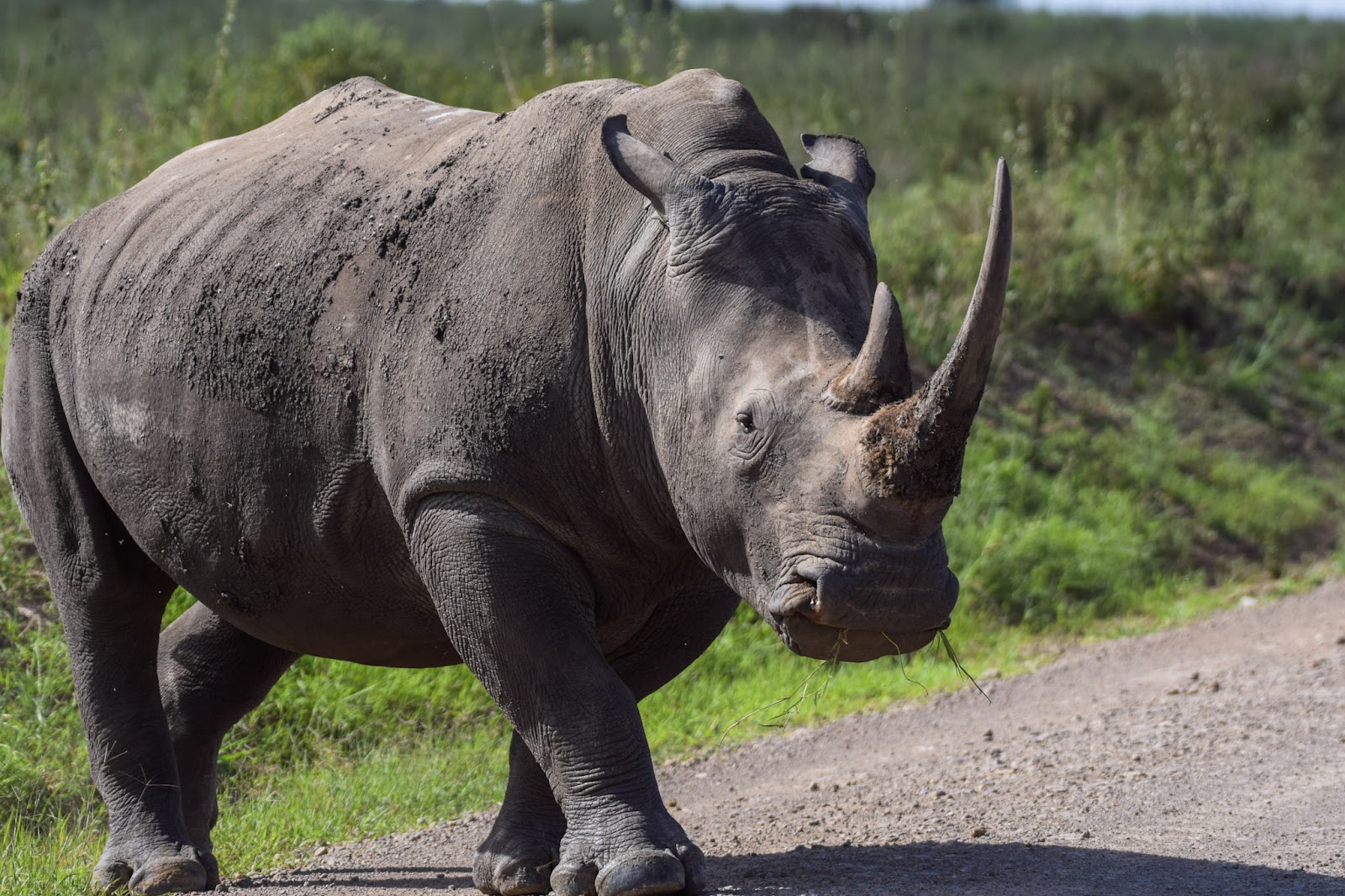
Nairobi Rhino Facts
- Density: roughly 100 rhinos in 117 km² makes this one of the densest rhino sanctuaries anywhere.
- Both species: black rhinos browse the thickets and forest edge; white rhinos graze the open southern plains.
- Source herd: Nairobi-bred black rhinos have restocked Tsavo, Meru and multiple Laikipia sanctuaries.
- History: gazetted 1946 as Kenya’s first national park; the ivory-burning monument commemorates the 1989 fire.
- Neighbours: the Sheldrick nursery and Giraffe Centre sit on the park’s edge — the classic Nairobi wildlife morning.
- Timing: dawn entry is decisive for black rhino; white rhinos show well all morning.
Building the Perfect Nairobi Wildlife Day
Our Nairobi City & Wildlife day tour strings the park, Sheldrick nursery and Giraffe Centre into one seamless morning; see also the orphanage & Giraffe Centre guide. The wider park story lives in our Nairobi National Park guide, and layover travellers should read the layover safari plan.
The Only Skyline With Rhinos In It
Seven kilometres from your Nairobi hotel, a sanctuary is quietly saving a species. Come see it at dawn.
Frequently Asked Questions
Are there rhinos in Nairobi National Park?
Yes — Nairobi National Park protects roughly a hundred rhinos of both species in just 117 km², making it one of the densest rhino sanctuaries in Africa. Black rhinos browse its forest edges and thickets while white rhinos graze the open southern plains, all against the city skyline.
Why is Nairobi National Park important for rhinos?
Nairobi National Park served as a secure breeding bank through Kenya’s poaching crises — its black rhinos bred so well that the park became a source herd, supplying founder rhinos to restock Tsavo, Meru and the Laikipia sanctuaries. It remains a cornerstone of Kenya’s rhino recovery.
Where can I see baby rhinos in Nairobi?
Orphaned rhino calves are raised at the Sheldrick Wildlife Trust nursery on Nairobi National Park’s edge, alongside its famous elephant orphans — long-term resident Maxwell, a blind black rhino, is a visitor favourite. Wild rhino calves are also seen regularly inside the park itself.
What time is best to see rhinos in Nairobi National Park?
Enter Nairobi National Park at the 6 am gate opening for black rhinos — they finish night feeding along the forest edges in the first cool hour. White rhinos graze the southern grasslands visibly throughout the morning. Afternoons are slower but the skyline light improves.
How much of a day do I need for Nairobi National Park’s rhinos?
A half-day is enough: four hours in Nairobi National Park delivers realistic sightings of both rhino species plus lions, buffalo and giraffes, and pairs neatly with the Sheldrick nursery’s late-morning public hour. It slots before an afternoon flight with time to spare.