
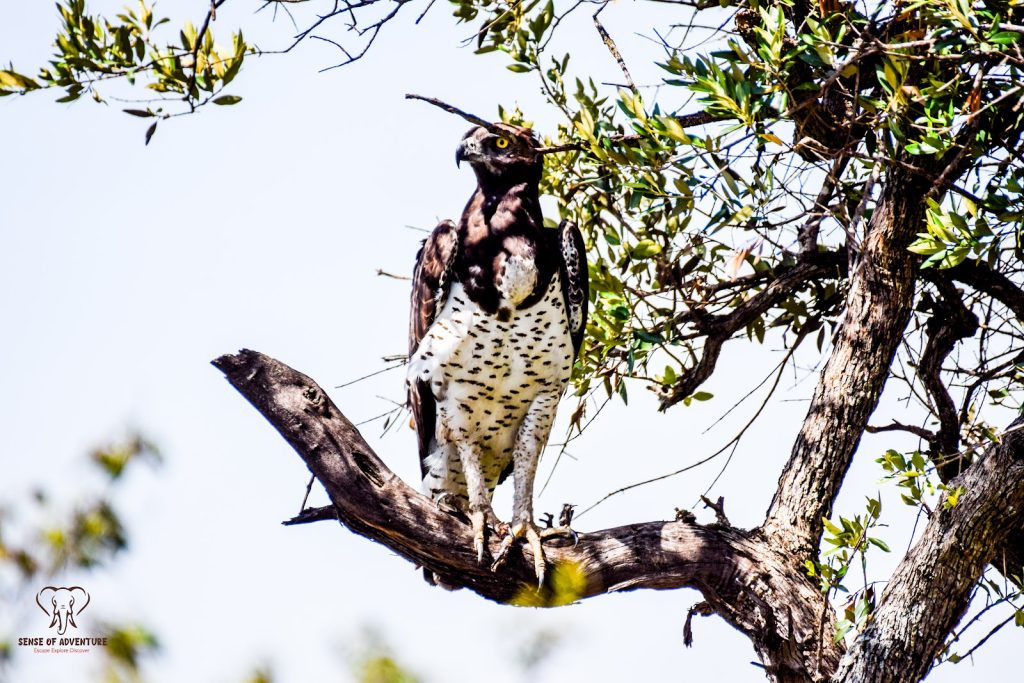
Kenya’s raptors do things most visitors never expect from a bird — the martial eagle, Africa’s largest eagle by some measures at up to 6.5kg with a wingspan reaching 2.4 metres, hunts monkeys, small antelope fawns and monitor lizards from a soaring height before stooping sharply to strike. The African fish eagle, instantly recognisable by its white head and haunting call often described as “the voice of Africa,” snatches fish straight from the water’s surface using specialised gripping talons. Most unusual of all is the secretary bird, which barely resembles a raptor at all — a 1.3-metre-tall bird on crane-like legs that hunts entirely on foot, stomping prey including snakes with a force equal to five times its own body weight. Picture watching a bird kill a venomous snake by stamping on it repeatedly rather than striking with talons from the air. Sense of Adventure points out this behavioural range on every birding-inclusive game drive.
Add Raptors to Your Kenya Safari
Message us to build a birding-inclusive itinerary covering Kenya’s birds of prey.
Three Completely Different Hunting Strategies
The martial eagle, classified Endangered by the IUCN, hunts from high soaring flight before stooping sharply onto prey it has spotted from a distance — typical targets weigh 1-5kg and include small antelope fawns, vervet and grivet monkeys, guineafowl and monitor lizards, found throughout well-wooded Kenyan habitat including the Great Rift Valley and the Masai Mara. The African fish eagle takes an entirely different approach, perching near open water at spots like Lake Naivasha and Lake Baringo before swooping down to snatch fish weighing 200g to 1kg directly from the surface using specialised toe structures for gripping slippery prey — its distinctive call, a shrill “weee-ah, hyo-hyo,” is widely described as evocative of the African landscape itself and serves as the national bird of several neighbouring countries. The secretary bird abandons aerial hunting altogether: standing roughly 1.3 metres tall on long, crane-like legs, it pursues prey entirely on foot across open grassland, using a stamping technique measured at five times its own body weight with a contact time of just 10-15 milliseconds — devastatingly effective against snakes and lizards that other raptors would approach from the air.
We watched a secretary bird actually hunt, stamping repeatedly on something in the grass with this incredibly fast, precise motion — our guide explained afterward it was almost certainly a snake, and that the bird’s whole hunting style is built around exactly that stomp.
— Sense of Adventure guest, Masai Mara safari
Kenya’s Standout Raptor Species
Martial Eagle — Africa’s Heaviest Hunting Eagle — up to 6.5kg, hunts monkeys and small antelope
An apex aerial predator found throughout well-wooded Kenyan habitat including the Rift Valley and Masai Mara, capable of taking prey up to 5kg despite being classified Endangered.
African Fish Eagle — “The Voice of Africa” — iconic call, hunts fish from lakes and rivers
Best seen around Lake Naivasha and similar water bodies, its distinctive call is one of the most recognisable sounds of an East African safari. See our Lake Naivasha boat safari guide.
Secretary Bird — A Raptor That Hunts on Foot — 1.3m tall, stomps prey at 5x its body weight
Genuinely unlike any other raptor on this list, hunting across open grassland on foot rather than from the air, and specialising in snakes and lizards via a devastating stamping technique.
Build a Birding-Inclusive Kenya Safari
Message us to add raptor viewing to a standard wildlife itinerary.
Kenya Raptor Facts
- Martial eagle size: up to 6.5kg with a wingspan reaching 2.4 metres, among Africa’s largest and heaviest eagles.
- Martial eagle status: classified Endangered by the IUCN, partly due to unwarranted persecution by farmers.
- Fish eagle prey: typically catches fish weighing 200g to 1kg, occasionally up to 4.2kg.
- Fish eagle national status: the national bird of Malawi, Namibia, Zambia and Zimbabwe.
- Secretary bird height: approximately 1.3 metres tall, with a body more like an eagle mounted on crane-like legs.
- Secretary bird hunting force: a stomp measured at 5 times its own body weight, lasting just 10-15 milliseconds.
- Secretary bird status: reclassified from Vulnerable to Endangered in 2020 due to rapid population decline.
Building a Raptor-Inclusive Kenya Trip
Read our Birds of the Masai Mara and Lake Nakuru birds beyond flamingos guides for wider birding context, and combine with our Kenya Luxury Big Five Safari.
Add Real Raptor Sightings to Your Safari
Message us to build a trip covering Kenya’s most distinctive birds of prey.
Frequently Asked Questions
What is the largest eagle in Kenya?
The martial eagle is among Africa’s largest and heaviest eagles, reaching up to 6.5kg with a wingspan of up to 2.4 metres, and is capable of hunting prey as large as small antelope fawns and monkeys.
Where can you see African fish eagles in Kenya?
African fish eagles are best seen around open water bodies such as Lake Naivasha and Lake Baringo, where they perch near the shore before swooping to snatch fish from the surface.
How does a secretary bird hunt?
Unlike most raptors, the secretary bird hunts entirely on foot across open grassland, using a powerful stamping technique measured at five times its own body weight to kill prey including snakes and lizards.
Is the secretary bird endangered?
Yes — the secretary bird was reclassified from Vulnerable to Endangered by the IUCN in 2020 due to rapid population decline linked to habitat loss and fragmentation.
What does the African fish eagle sound like?
The African fish eagle’s distinctive call, often transcribed as “weee-ah, hyo-hyo,” is widely described as evocative of the African landscape and is one of the most recognisable sounds of an East African safari.