
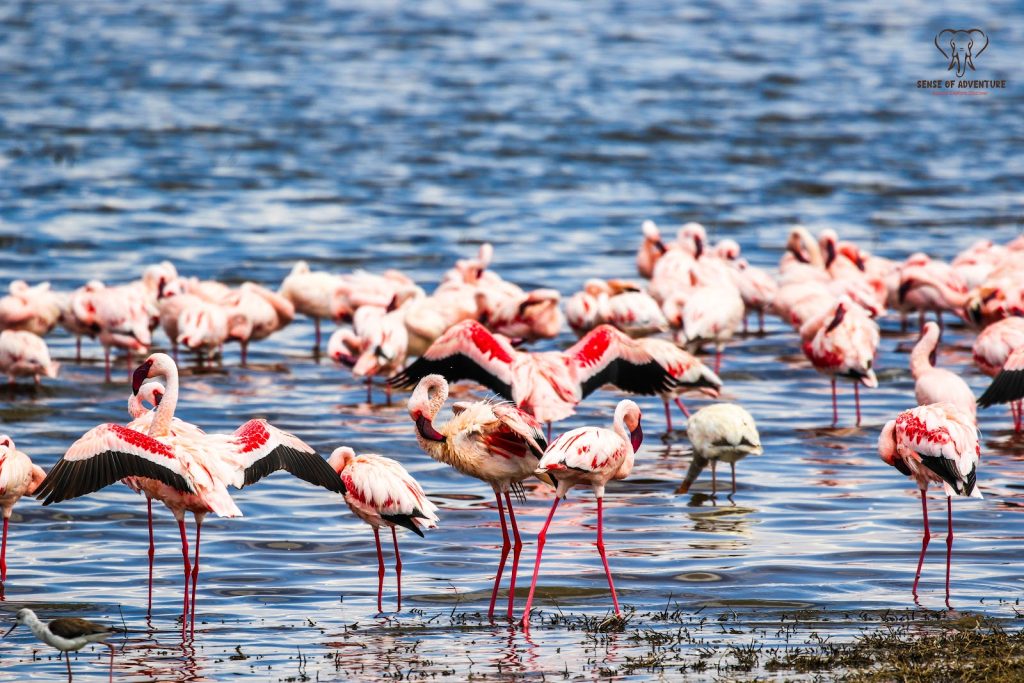
Why are flamingos pink in Kenya’s Rift Valley lakes is a question with a genuinely satisfying answer, and it has nothing to do with the birds themselves. Flamingos are born grey, not pink, and stay that colour for their first couple of years. The pink comes entirely from what they eat: specific pigments in the algae and tiny crustaceans filling Lake Nakuru and Lake Bogoria, absorbed through digestion and deposited directly into new feathers. Change the food source and the colour changes too, which is exactly why Kenya’s flamingos can run paler some years than the vivid pink postcards suggest. Sense of Adventure times Rift Valley visits around exactly this kind of detail.
See the Pink Shores for Yourself
Message us to time your Lake Nakuru or Bogoria visit for the best flamingo numbers.
The Real Science Behind Kenya Pink Flamingos
Flamingos get their colour from carotenoid pigments, mainly beta-carotene, found in the algae, brine shrimp and brine fly larvae they filter-feed from soda lake water. Once eaten, the bird liver converts much of that beta-carotene into a related pigment, canthaxanthin, which is then stored in fat and deposited into newly growing feathers rather than existing ones. That is why a flamingo does not turn pink overnight; it happens feather by feather, moult by moult, over roughly two to three years. Lake Nakuru’s flamingos, feeding on a drought-affected soda lake, often run visibly paler than the vivid Caribbean birds people expect from postcards.
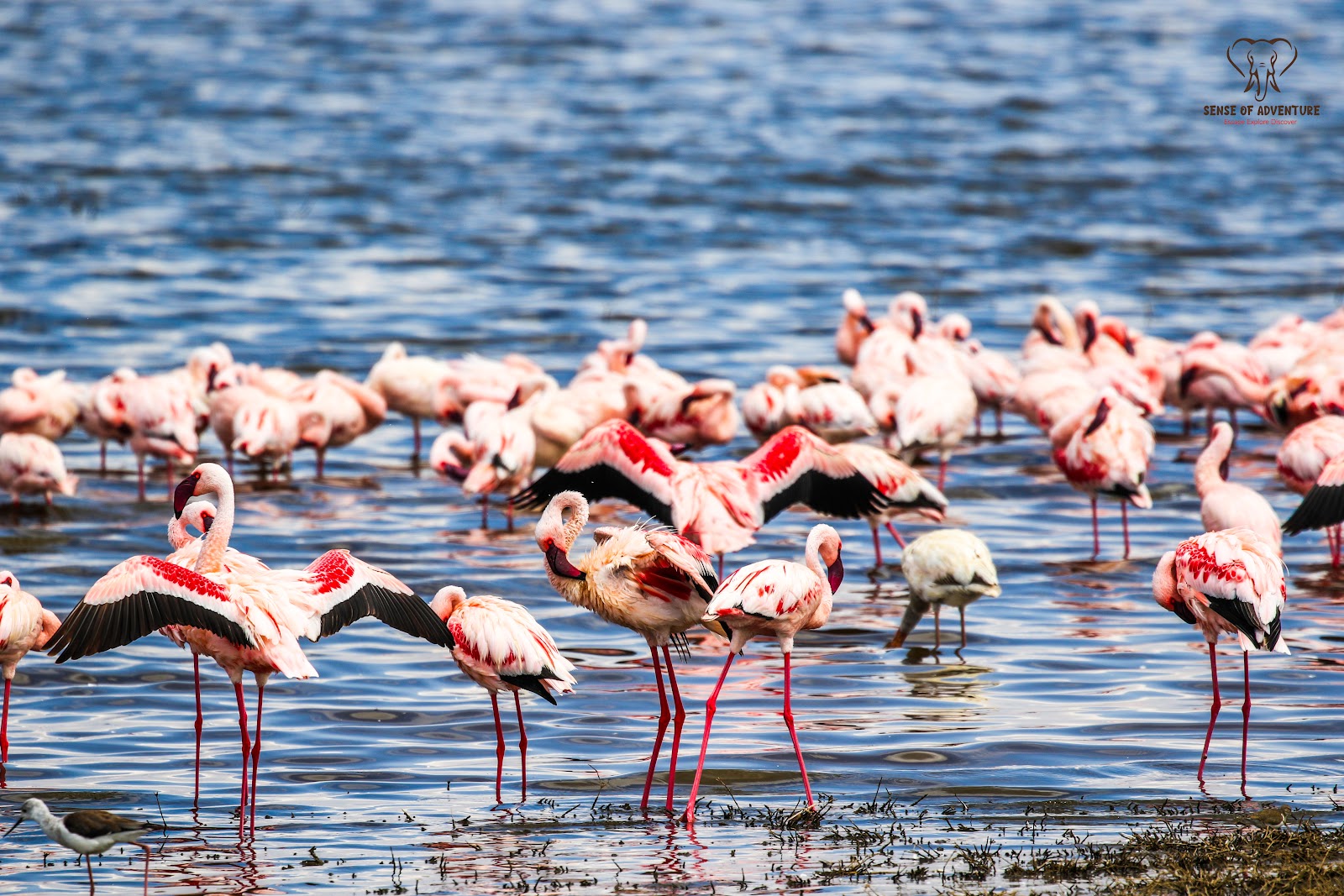
Our guide explained the pink comes entirely from the algae they eat, not something built into the bird itself, and my kids would not stop repeating that fact for the rest of the trip. It turned what could have been just another pretty photo stop into the one story everyone told first once we got home.
— Sense of Adventure guest, Lake Nakuru family safari
5 Facts Behind the Pink
1. Flamingo Chicks Are Born Grey, Not Pink
Newly hatched flamingos have grey downy feathers and straight bills, only developing the pink colour and curved bill shape gradually over their first few years of life.
2. The Colour Comes Entirely From Diet
Carotenoid pigments from algae, brine shrimp and brine fly larvae are metabolised and deposited into growing feathers, meaning a flamingo cannot turn pink without eating the right food.
3. Location Changes the Shade
Carotenoid levels vary by lake and region, which is why Caribbean flamingos run bright red-orange while Kenya’s Rift Valley flamingos, dependent on local soda-lake algae, are usually a paler pink.
4. It Changes Feather by Feather, Not All at Once
Pigment is only deposited into newly growing feathers, so the pink deepens gradually across successive moults rather than a single dramatic colour change.
5. Lake Nakuru and Lake Bogoria Are Kenya Pink Capitals
Both Rift Valley soda lakes support the algae flamingos depend on, though populations shift between them year to year depending on water levels, which is why guides check current conditions before recommending one over the other.
Book Your Flamingo Safari
We check current lake conditions before recommending Nakuru or Bogoria for your visit.
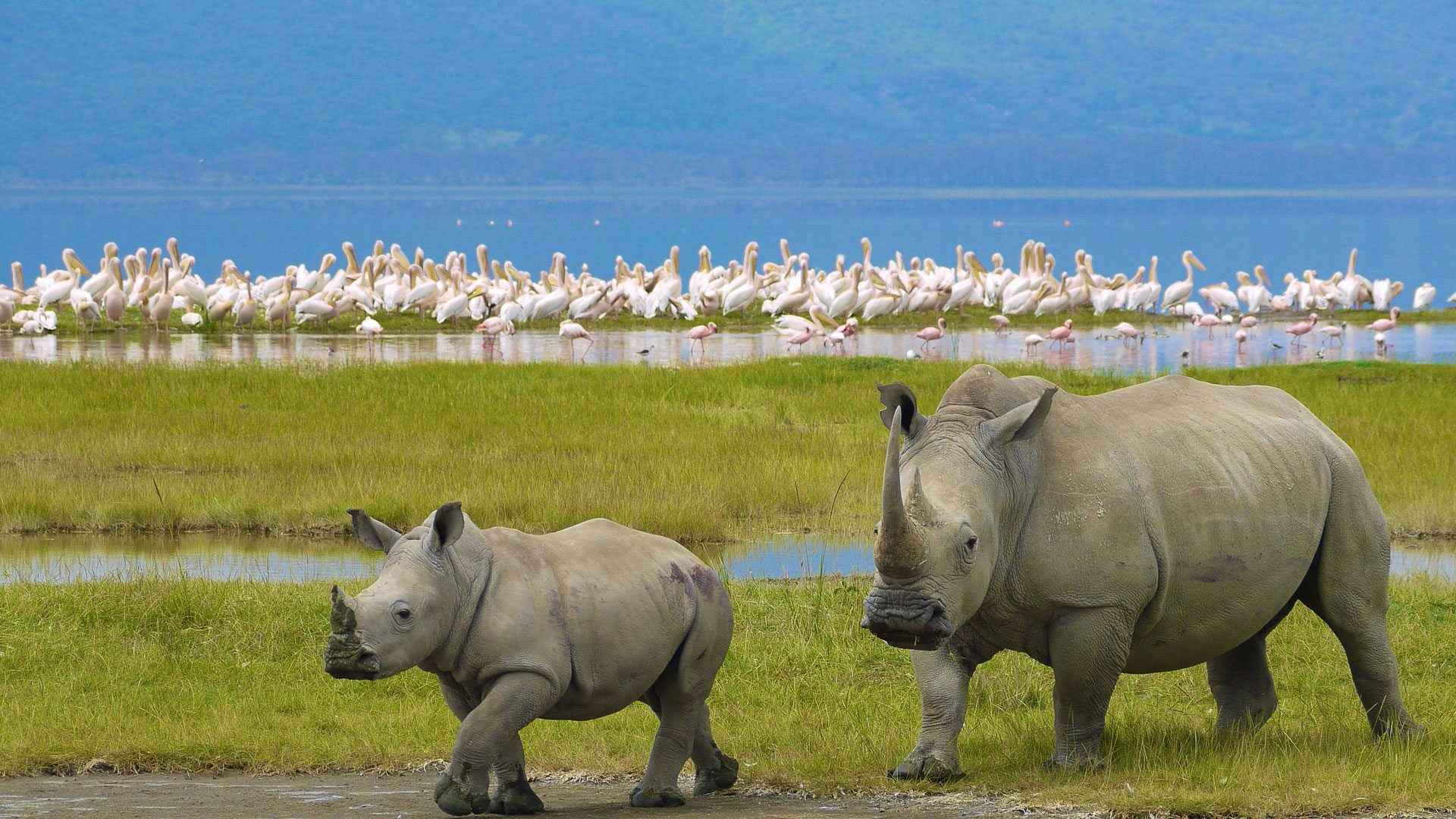
Kenya Flamingos: Quick Reference
- Source of colour: carotenoid pigments from algae and brine shrimp, not a natural body pigment.
- Birth colour: grey, changing to pink over roughly 2-3 years.
- Main Kenya lakes: Lake Nakuru and Lake Bogoria in the Rift Valley.
- Colour variation: depends on local algae levels, which is why shades differ by lake and region.
- Colour change process: happens feather by feather across successive moults.
- Population shifts: numbers move between Nakuru and Bogoria depending on water levels year to year.
Planning Your Flamingo Visit
Timing matters more than most guides admit, since flamingo numbers genuinely shift between lakes year to year. Our Flamingos in Lake Nakuru: 2026 Status guide covers current numbers in detail, and our Lake Bogoria Guide covers the alternative lake and its hot springs.
Time Your Visit to the Pink Shores
Message us today and we will confirm current flamingo numbers before you travel.
Frequently Asked Questions
Why are flamingos pink in Kenya?
Flamingos in Kenya are pink because of carotenoid pigments in the algae, brine shrimp and brine fly larvae they eat in Rift Valley soda lakes. The bird liver converts these pigments and deposits them into growing feathers, producing the pink colour over time.
Are flamingos born pink?
No, flamingo chicks hatch with grey downy feathers and straight bills. It takes roughly two to three years of feeding on carotenoid-rich algae and crustaceans for a chick to develop its full adult pink colour.
Why are Kenya flamingos paler than Caribbean flamingos?
Carotenoid pigment levels vary by region, and Kenya’s Rift Valley soda lakes generally produce a paler pink than the algae and shrimp available to Caribbean flamingos, which is why the two populations look noticeably different in colour.
Where can I see flamingos in Kenya?
Lake Nakuru and Lake Bogoria in Kenya’s Rift Valley are the two main flamingo locations, though numbers shift between the two lakes year to year depending on water levels and algae availability.
What would happen if a flamingo stopped eating its normal diet?
A flamingo removed from its normal carotenoid-rich diet would gradually lose its pink colour as new feathers grow in without the pigment, reverting toward a paler or greyish tone over successive moults.