Gorilla trekking Uganda Bwindi style means walking into one of Africa’s oldest rainforests with a ranger and a small group of travellers, then spending one unforgettable hour with a wild mountain gorilla family. This guide explains how it works, when to go, how to get there, what to pack and how to plan it with confidence.
There is a moment, somewhere in the ancient montane forest of southwestern Uganda, when the vegetation ahead of you moves with a force that is unmistakably not wind. The trackers ahead pause and signal silence. You push through a last wall of leaves — and there, five metres away, a mountain gorilla sits regarding you with calm, dark eyes that carry an intelligence that is entirely, uncomfortably familiar. This is gorilla trekking in Bwindi Impenetrable National Park, and it is one of the most extraordinary wildlife experiences available anywhere on earth.
Mountain gorillas — one of the world’s most endangered large mammals, with a wild population of approximately 1,063 individuals — exist in only two places: the Virunga Massif (shared between Uganda, Rwanda, and the DRC) and Bwindi Impenetrable National Park in Uganda. Sense of Adventure designs gorilla trekking safaris across both Uganda and Rwanda, and this guide covers the Uganda experience in depth.
✅ Gorilla Trekking Uganda Bwindi: The Quick Answer
- Where: Bwindi Impenetrable National Park, southwestern Uganda, with four trekking sectors: Buhoma, Rushaga, Nkuringo and Ruhija.
- Time with the gorillas: exactly one hour once the trackers find your family; the trek itself can take 30 minutes to 6 hours.
- Permit: issued by the Uganda Wildlife Authority (USD $800 at 2026 pricing); prices change, so always confirm on ugandawildlife.org.
- Group size and age: a maximum of eight visitors per gorilla family per day; trekkers must be at least 15 years old.
- Best time: June–September and December–February are the driest months; gorillas can be trekked all year.
- Booking: secure permits 3–6 months ahead for peak season, then build lodges and transport around them.
Gorilla Trekking Uganda Bwindi: Inside Bwindi Impenetrable National Park

Bwindi Impenetrable National Park covers 331 square kilometres of ancient montane rainforest in Uganda’s Kigezi Highlands, near the borders with Rwanda and the DRC. The forest is one of Africa’s most biodiverse — it has survived intact through multiple ice ages, serving as a refuge for species that retreated from drying lowlands, and today supports over 120 mammal species, 350 bird species (including 23 Albertine Rift endemics), and over 1,000 plant species alongside its famous gorilla population.
That richness is why Bwindi is listed as a UNESCO World Heritage Site. The forest sits on steep ridges and deep valleys, roughly between 1,160 and 2,600 metres above sea level, so every gorilla trekking Uganda Bwindi day involves real hills, thick undergrowth and cool, damp air, even on sunny mornings.
Bwindi is divided into four sectors, each with habituated gorilla groups available for trekking: Buhoma (north, the original and most developed sector), Rushaga (south, largest sector with the most gorilla groups), Nkuringo (south, dramatic scenery and more adventurous trekking), and Ruhija (east, highest altitude, the most remote and exclusive). Each sector has different character, different trekking terrain, and different lodge options.
Choosing a Sector for Gorilla Trekking Uganda Bwindi
Your permit is issued for one sector, and you must sleep close to its ranger station because briefings start early. For gorilla trekking Uganda Bwindi first-timers, Buhoma is often the easiest choice: it has the longest history, a good spread of lodges and access from the Kihihi airstrip. It also suits travellers combining the trek with Queen Elizabeth National Park to the north.
Rushaga and Nkuringo in the south are closer to the Rwanda border, which makes them practical if you are flying into Kigali. Rushaga has the most gorilla families, so permits are often easier to find there. Nkuringo has superb views towards the Virunga volcanoes, but its trails are among the steepest in the park. Ruhija, high on the eastern ridges, is quieter, cooler and a favourite with birdwatchers.
The Gorilla Trekking Experience
Each gorilla trekking permit allows one hour with a habituated gorilla family in their natural habitat. This single hour is, for the vast majority of visitors, among the most powerful and emotionally affecting wildlife experiences of their entire lives. Here is what to expect:
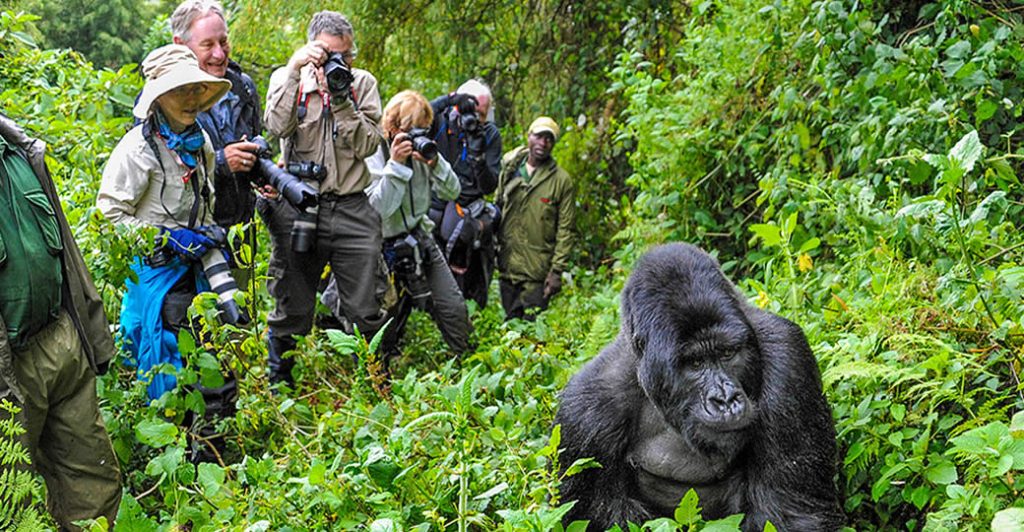
Morning briefing (07:00–08:00): At the sector’s ranger station, groups of up to eight permit holders gather for a briefing. Rangers explain the health protocol (keep 7 metres from the gorillas, no trekking if you have respiratory illness), the rules (no flash photography, speak quietly, do not block a gorilla’s path), and the likely location of the gorilla family based on the trackers’ morning report.
The trek: Duration varies from 30 minutes to 6 hours of forest hiking depending on where the gorillas have moved overnight. The forest terrain is genuinely challenging — steep, wet, tangled vegetation — and the effort is real. Most trekkers describe the physical challenge as entirely worth it, but appropriate physical preparation is advisable.
On any gorilla trekking Uganda Bwindi day, porter services are available at all sectors (highly recommended, as porters also provide physical support on steep sections and the income directly supports local communities).
The encounter: When the trackers locate the family, they clear a viewing area and the group circles in. What happens next is different every time — but it is always extraordinary. A silverback male might be eating thirty metres up a fig tree, occasionally looking down with magnificent indifference. Females groom each other in a clearing while juveniles play chase through the vegetation.
A baby scrambles over its mother’s back and peers at the strange-smelling bipeds from a safe distance. The hour passes with a speed that feels deeply unfair.
What makes it so profound: Mountain gorillas share approximately 98.3% of their DNA with humans. In that hour, you see that genetic kinship expressed in every gesture, every look, every social interaction. The silverback’s authority. The mother’s tenderness. The young male’s bravado. The infant’s curiosity. You are looking at yourself in a mirror that evolution has been constructing for 10 million years.
Rules That Protect the Gorillas
The rules on a gorilla trekking Uganda Bwindi visit exist because gorillas can catch human illnesses such as colds and flu. If you feel unwell, tell the rangers; they may ask you not to trek. Wear a face mask if asked, keep your voice low, never eat or drink near the gorillas, and turn away if you need to cough or sneeze. Follow your ranger’s instructions at all times.
Mountain gorillas are listed as Endangered on the IUCN Red List. Their numbers have grown slowly over recent decades thanks to strict protection, careful tourism and the permit fees that fund rangers and local communities. Every responsible trekker helps keep that recovery going.
Gorilla Trekking Permits: Cost and Booking
Uganda gorilla trekking permits are issued by the Uganda Wildlife Authority (UWA) at USD $800 per person (2026 pricing). Permit prices change from time to time, so always check the current rate directly with the Uganda Wildlife Authority at ugandawildlife.org before you budget.
Permits are limited — each gorilla family receives a maximum of eight visitors per day — and demand significantly exceeds supply for the most popular families and sectors during peak season. Book at least 3–6 months ahead for the Buhoma and Rushaga sectors during July–September and December–February.
We handle all gorilla permit booking and coordination as part of our Uganda safari packages. Permit availability is our first planning step — once we secure your permits, we build the accommodation and logistics around them.
What the Gorilla Permit Includes
A standard permit for gorilla trekking Uganda Bwindi covers park entry for the day, the ranger briefing, armed ranger escort, the trackers and one hour with the gorilla family. It does not cover transport, lodges, meals, porters or tips, so budget for these separately. Uganda also offers a longer gorilla habituation experience in Rushaga at a higher price; ask us or UWA for current details.
For a side-by-side look at Uganda and Rwanda permits, read our gorilla trekking permit cost guide.
What a Gorilla Trekking Uganda Bwindi Safari Costs Overall
The permit is the largest single cost of most gorilla trekking Uganda Bwindi trips, but it is only one part of the total. Your final price depends on how you travel to Bwindi (road or domestic flight), the standard of lodge you choose, how many nights you stay, whether you add a second trek, and the other parks you combine it with.
The simplest way to see the full picture is to start from a ready-made package and adjust it. Our Uganda Bwindi Gorilla Trek (3 Days) is the short option, while the Uganda Gorillas & Chimps Safari (5 Days) adds chimpanzee tracking in Kibale. Each package page shows what is included, and we confirm the current permit price when you book.
Best Time to Trek Gorillas in Uganda
- June–September (dry season): The most popular trekking window. Trails are drier and more manageable. The forest is beautiful in dry-season light. This is peak season — book permits 4–6 months ahead.
- December–February (short dry season): Another excellent window, with drier conditions and high permit availability relative to June–September. Good value for accommodation. Our favourite window for gorilla trekking.
- March–May (long rains): The gorillas are present year-round — trekking happens in all weather — but trails become very muddy and slippery. Lower permit demand means easier booking. Some lodges offer reduced rates. The forest is extraordinarily lush and atmospheric in the rain.
Bwindi is a rainforest, so a shower is possible in any month. Gorilla trekking Uganda Bwindi in October and November is also possible: short rains can make trails slippery, but permits are usually easier to secure and the forest is green and quiet. Whatever the month, mornings are cool at altitude and the gorillas are just as active.
How to Get to Bwindi for Gorilla Trekking

There are three main ways to reach the park for gorilla trekking Uganda Bwindi. By road from Entebbe or Kampala, the drive takes most of a day (often 8–10 hours with stops), usually broken with a night in Queen Elizabeth National Park or Lake Mburo. It is scenic and good value, but long.
Domestic flights from Entebbe to the Kihihi airstrip (for Buhoma and Ruhija) or Kisoro (for Rushaga and Nkuringo) save a full day each way. From Kigali in Rwanda, the southern sectors are usually a road journey of around four to five hours, including the border crossing, which makes gorilla trekking Uganda Bwindi a smart option for travellers flying into Rwanda.
Visas and Health Entry Rules
Before gorilla trekking Uganda Bwindi, most visitors need a Uganda e-visa, and travellers visiting Uganda, Kenya and Rwanda together can often use the East Africa Tourist Visa. Uganda no longer requires a yellow fever certificate for entry (the rule was removed in October 2026), but the vaccine is still recommended, and Kenya, Rwanda, Tanzania or your airline may ask for proof when you travel on from Uganda. Rules change, so check the latest guidance, such as the UK foreign travel advice for Uganda, before you fly.
How Fit Do You Need to Be?
You do not need to be an athlete for gorilla trekking Uganda Bwindi, but you should be comfortable walking for several hours on steep, muddy and uneven ground at altitude. Regular walks on hills or stairs in the weeks before you travel make a big difference. Rangers set a steady pace and stop often.
When you book, tell us about any knee, back or heart concerns so we can request a family that is usually closer to the trailhead. Hiring a porter and using a walking stick (usually provided at the station) make the trek far easier. Our guide to safari fitness explains how to prepare.
What to Pack for Gorilla Trekking Uganda Bwindi
- Waterproof hiking boots with good grip, already worn in.
- Long trousers and long-sleeved shirts in muted colours to protect against nettles, thorns and insects; tuck trousers into socks.
- Gardening or cycling gloves for gripping vines and branches.
- A light rain jacket and a warm layer for cool mornings.
- A small daypack with a rain cover, at least two litres of water, snacks and packed lunch.
- Camera without flash, spare batteries and a dry bag; a zoom lens is useful but not essential.
- Insect repellent, sunscreen, face masks, your passport and a printed copy of your permit.
Common Mistakes to Avoid
- Booking flights before permits: secure your gorilla trekking Uganda Bwindi permits first, then fix your travel dates around them.
- Sleeping in the wrong sector: lodges in one sector can be hours from another; stay close to your permit’s ranger station.
- Skipping a porter to save money: porters make steep sections safer and support local families.
- Trekking while ill: a cold you can shrug off can be dangerous to gorillas.
- Spending the whole hour behind a lens: take your photos, then put the camera down and simply watch.
- Underestimating travel time: allow a buffer day so a delayed flight or long drive does not cost you your trek.
Combining Gorilla Trekking With a Kenya or Tanzania Safari
Uganda gorilla trekking combines naturally with a Kenya or Tanzania wildlife safari on an extended East Africa circuit. A typical 12-day itinerary: fly Nairobi to Entebbe (1.5 hours) → Queen Elizabeth National Park, Uganda (2 nights, tree-climbing lions and chimpanzee tracking) → Bwindi (2 nights, two gorilla treks across different families) → fly back to Nairobi → Masai Mara (4 nights). This circuit delivers one of the world’s most diverse wildlife experiences in a single East Africa journey.
See our East Africa itinerary guide for multi-country circuit options, and our Rwanda gorilla trekking guide for the alternative Virunga Massif gorilla experience. Talk to our team — we design Uganda circuits regularly and have deep knowledge of the sector options, lodge quality, and permit availability across Bwindi’s four sectors.
Ready-Made Itineraries With Gorilla Trekking Uganda Bwindi
If you want gorillas plus classic savannah game viewing in Uganda, our Uganda Wildlife & Gorillas Safari (7 Days) links Bwindi with Uganda’s national parks, and our 7-day Uganda safari itinerary explains the route day by day. For gorillas, chimpanzees and the Big Five in one trip, look at Gorillas & Savannah: Rwanda, Uganda & Kenya (11 Days).
Many travellers also add a night or two in Queen Elizabeth National Park, which sits conveniently between Kibale’s chimpanzees and Bwindi’s gorillas.
Gorilla Trekking Uganda Bwindi: Frequently Asked Questions
How much is a gorilla permit for gorilla trekking Uganda Bwindi?
The Uganda Wildlife Authority permit for gorilla trekking Uganda Bwindi is listed at USD $800 per person at 2026 pricing. Prices change from time to time, so check the current rate on ugandawildlife.org before budgeting. The permit covers park entry, rangers, trackers and one hour with a habituated gorilla family.
Is gorilla trekking Uganda Bwindi safe?
Yes. Habituated gorilla families are used to calm human visitors, and every group is led by trained, armed rangers and trackers who know each family well. The main risks are slips on steep, muddy trails, so wear good boots, hire a porter and follow every instruction. Check official travel advice for Uganda before you go.
Which Bwindi sector is best for gorilla trekking?
There is no single best sector. Buhoma suits first-timers and travellers coming from Queen Elizabeth National Park. Rushaga has the most gorilla families and is handy from Kigali. Nkuringo offers spectacular views but steep trails, while Ruhija is quieter and excellent for birding. Choose the sector that fits your route and fitness.
How long does a gorilla trek in Bwindi take?
Plan a full day for gorilla trekking Uganda Bwindi. The briefing starts around 07:00–08:00, then the trek to the gorillas can take from 30 minutes to 6 hours, depending on where the family moved overnight. You then spend exactly one hour with the gorillas and walk back, so most trekkers return in the early to late afternoon.
What is the minimum age for gorilla trekking in Uganda?
Trekkers must be at least 15 years old on the day of the trek. This rule protects gorillas from childhood illnesses and ensures trekkers can manage the terrain and follow the rules calmly. Younger children can still enjoy a Uganda safari, including boat trips and game drives, while older family members trek.
Can I do gorilla trekking Uganda Bwindi in the rainy season?
Yes. Gorillas live in Bwindi all year, so treks run in every month, including the long rains from March to May. Trails become muddier and more slippery, but permits are usually easier to find and the forest is beautifully green. Pack waterproofs, gloves and grippy boots, and allow extra time.
Gorilla trekking Uganda Bwindi is a once-in-a-lifetime hour that rewards a little planning: book permits early, choose the right sector, prepare your legs and pack for rain. Tell us your dates and we will handle the permits, lodges and transport.
💬 WhatsApp Us — Plan Your Safari Today
Call or WhatsApp: +254 799 160 081