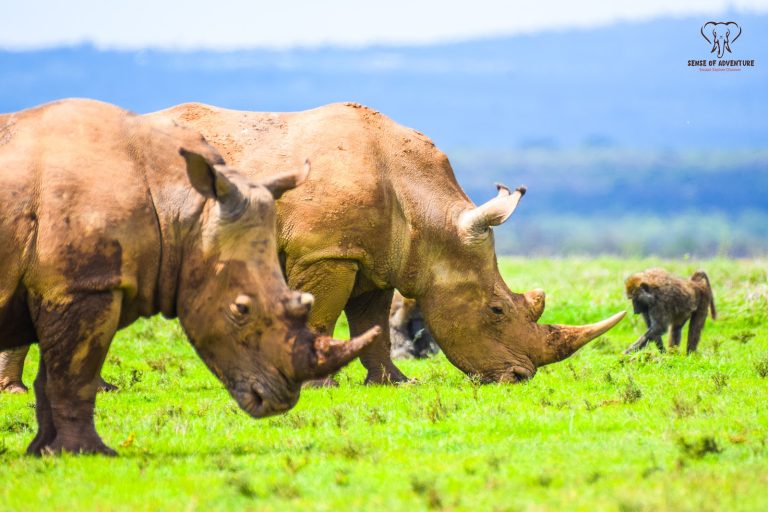
The best national parks for rhinos in Kenya tell one of Africa’s great conservation success stories, and a handful of destinations stand well above the rest. Ol Pejeta Conservancy protects East Africa’s largest black rhino sanctuary and the last two northern white rhinos on the planet, Najin and her daughter Fatu, under round-the-clock guard. Lake Nakuru holds both black and white rhinos in a fenced park that is easy to cover in a day, while Nairobi National Park, nicknamed “Kifaru Ark”, breeds black rhinos within sight of the capital’s skyline. Kenya now holds Africa’s third-largest black rhino population, after South Africa and Namibia. Picture standing near the world’s last two northern white rhinos, and you understand why Sense of Adventure treats rhino-focused trips as meaningful conservation travel.
✅ Best National Parks for Rhinos in Kenya: Quick Answer
- Top pick: Ol Pejeta Conservancy, for black and white rhinos plus the last northern white rhinos.
- Most reliable in a day: Lake Nakuru National Park, a compact fenced park with both species.
- Closest to the city: Nairobi National Park, with black rhinos 20 minutes from the centre.
- On foot: track rhinos with rangers at Lewa, Borana or Sera.
- Quieter options: Meru’s rhino sanctuary and Ngulia in Tsavo West.
- Easy add-on: our Ol Pejeta Day Safari runs from Nairobi and back the same evening.
Want to meet Najin and Fatu? We can plan your Ol Pejeta visit.
Visit the Last RhinosFour Parks, Four Different Rhino Stories
Ol Pejeta Conservancy in Laikipia is Kenya’s rhino headquarters by most measures. It runs the largest black rhino sanctuary in East Africa, keeps southern white rhinos too, and is home to Najin and Fatu, the last two northern white rhinos. Both are female, so the subspecies cannot breed naturally, and they have been under permanent guard since the last male, Sudan, died in 2018.
Lake Nakuru’s fenced park holds both black and white rhinos in a compact area that is easy to cover in a day. Nairobi National Park, sometimes called “Kifaru Ark” (kifaru is Swahili for rhino), has bred black rhinos for decades and supplied animals to restock other parks. Meru National Park adds a quieter success story, with a fenced rhino sanctuary restocked with animals translocated from other Kenyan sanctuaries.
The 8 Best Places for Rhinos in Kenya
Ol Pejeta Conservancy — The Last Northern White Rhinos — East Africa’s largest black rhino sanctuary
Ol Pejeta is Kenya’s single most significant rhino destination, with black and southern white rhinos on game drives and a guided visit to Najin and Fatu. Read the full story in The Last Northern White Rhinos and compare stays in our Ol Pejeta Conservancy camps guide.
Lake Nakuru National Park — Both Species in a Compact Sanctuary — reliable in a single day
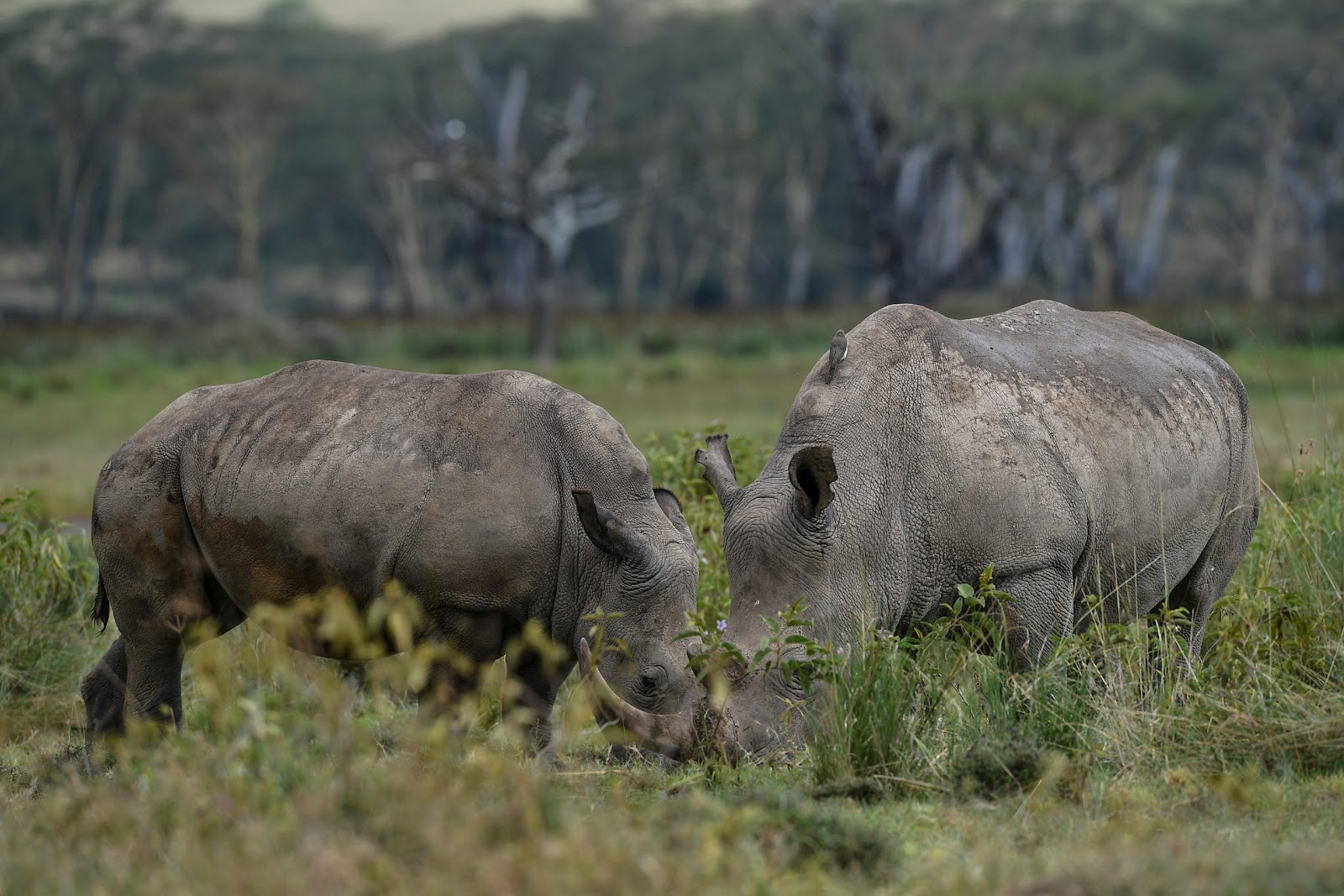
Nakuru’s fenced park holds black and white rhinos in an area easily covered on a day’s game drive, making it one of the most reliable rhino destinations in Kenya. White rhinos often graze in the open near the lake shore. See our Lake Nakuru safari page.
Nairobi National Park — “Kifaru Ark” — black rhinos beside a capital city
Nairobi National Park has bred and protected black rhinos for decades, and also holds a few white rhinos, all within a 20-minute drive of downtown Nairobi. See our Nairobi National Park rhinos guide.
Meru National Park — A Quiet Rhino Sanctuary — restocked and growing
Meru’s fenced rhino sanctuary holds both species and has grown well since rhinos were translocated in from other Kenyan sanctuaries. You will share sightings with very few vehicles. See our Meru National Park guide.
Lewa and Borana — Rhinos on Foot — private conservancies below Mount Kenya
Lewa and neighbouring Borana share an unfenced rhino landscape with black and white rhinos, and guests can track rhinos on foot with armed rangers. See our Lewa lodges guide and Borana Conservancy guide.
Sera Rhino Sanctuary — Community Rhino Tracking — Samburu country
Sera was the first community-owned rhino sanctuary in East Africa, and visitors track black rhinos on foot with community rangers. See our Sera Rhino Sanctuary guide.
Tsavo West — Ngulia Rhino Sanctuary — black rhinos in thick bush
The fenced Ngulia sanctuary protects black rhinos at the foot of the Ngulia Hills. The bush is thick, so sightings need patience, but it adds rhinos to a coast or Tsavo trip. See our Tsavo West guide.
Masai Mara — A Small, Wild Black Rhino Population — a lucky bonus
The Mara has a small population of black rhinos living wild in its thickets and along the escarpment edges. They are seen far less often than in the sanctuaries, so treat a sighting as a bonus. See our Masai Mara rhinos guide.
Best National Parks for Rhinos in Kenya Compared
This table compares sighting odds for a typical one- or two-night stay, plus which species you are likely to see.
| Destination | Rhino odds | Species | Best for |
|---|---|---|---|
| Ol Pejeta | Very high | Black, white, northern white | Conservation story, night drives |
| Lake Nakuru | Very high | Black and white | A one-day rhino fix |
| Nairobi National Park | Good | Mainly black | Layovers and short stays |
| Lewa and Borana | High | Black and white | Tracking on foot, luxury |
| Meru | Good | Black and white | Solitude |
| Sera | High on foot | Black | Community tracking |
| Tsavo West (Ngulia) | Lower | Black | Coast and Tsavo trips |
| Masai Mara | Low | Black | A rare bonus |
Black Rhino vs White Rhino: How to Tell Them Apart
Both species are grey, so the name is misleading. Look at the mouth, the head and the behaviour instead.
White rhino
The white rhino is larger, with a wide, square upper lip for grazing grass. It usually holds its heavy head low, lives in small groups and is generally calmer. A calf tends to walk in front of its mother.
Black rhino
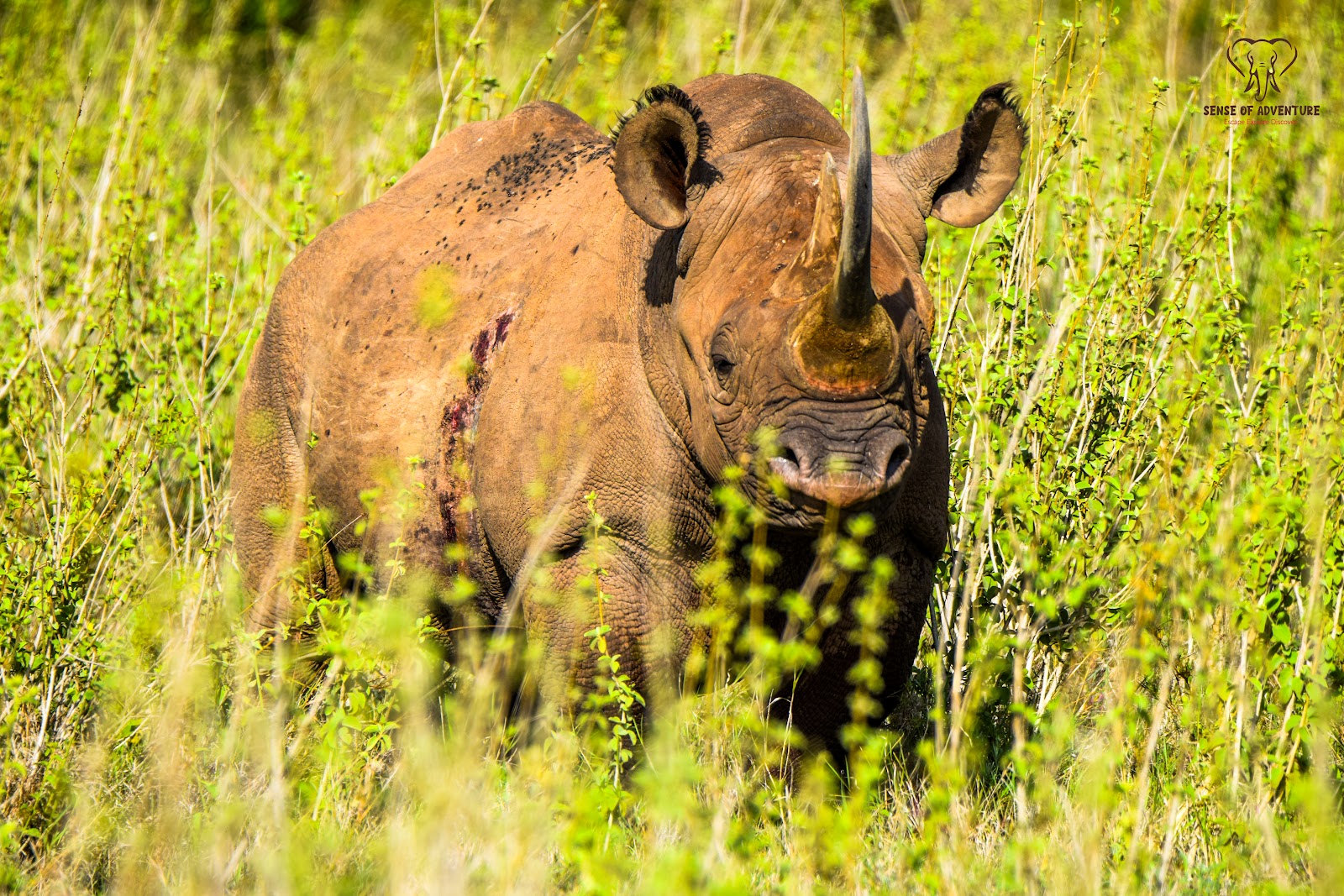
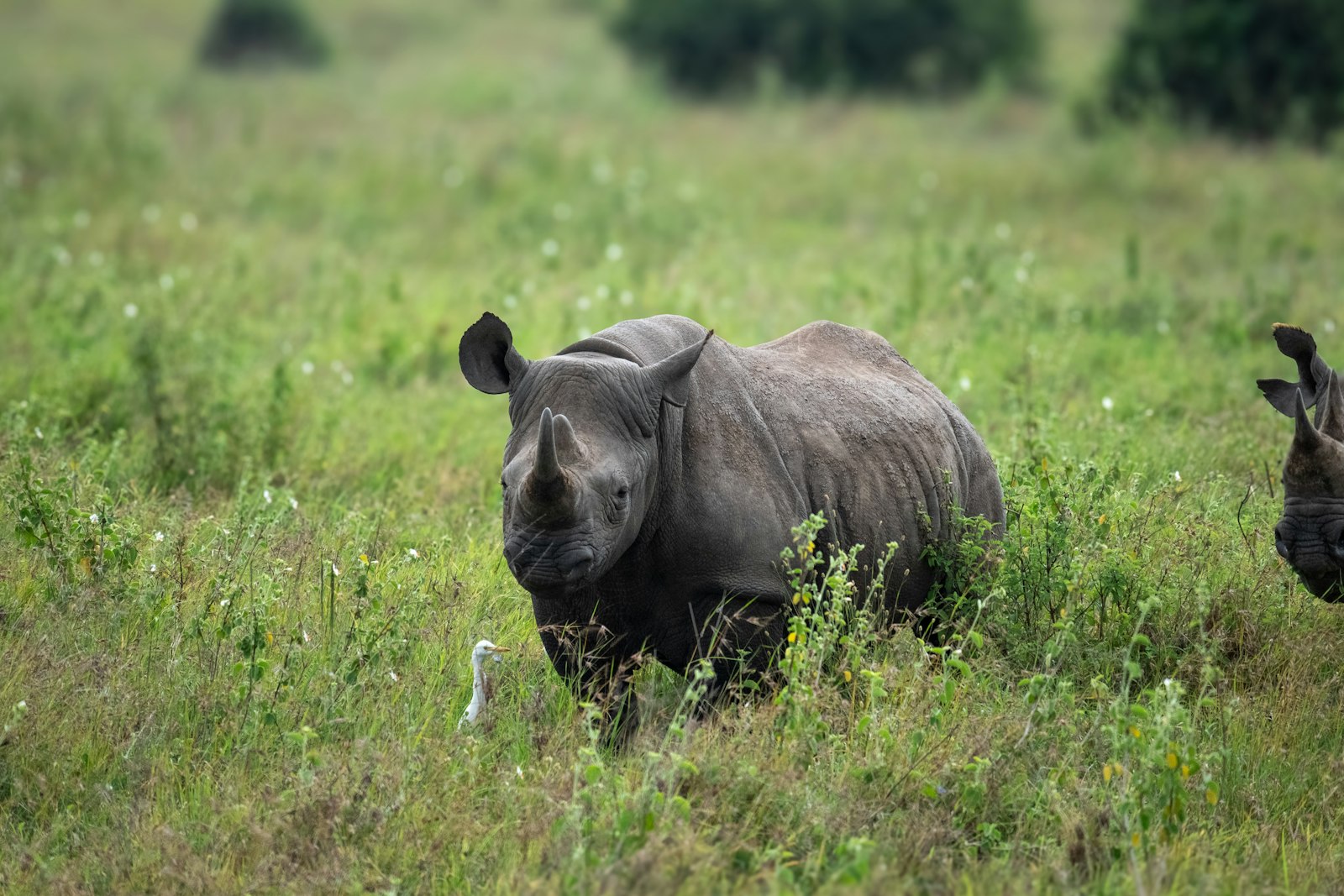
The black rhino is smaller, with a pointed, hooked upper lip for browsing leaves and twigs. It holds its head higher, is usually solitary, spends more time in thick bush and can be nervous or aggressive. A calf tends to follow behind its mother.
How to Choose Your Rhino Destination
Choosing between the best national parks for rhinos in Kenya comes down to time, budget and how close you want to get.
Only one day
Go to Nairobi National Park for a half day, or Lake Nakuru as a long day trip. Our Nairobi National Park Day Safari starts at USD 150 per person; see the Nairobi National Park safari page.
Two to three days
Combine Ol Pejeta with Lake Nakuru, or take our Ol Pejeta Day Safari from Nairobi if you are short of time.
Walking with rhinos
Choose Lewa, Borana or Sera, where tracking on foot with experienced rangers is part of the stay.
Ol Pejeta, Nakuru or Tracking on Foot?
Tell us your time and budget, and whether you want game drives or a walk with rangers. We will match the right rhino destination to your trip.
Best Time to See Rhinos in Kenya
Rhinos in fenced sanctuaries and conservancies are seen all year, so timing is less critical than for the migration.
- June to October and January to February: dry seasons with short grass and good visibility, the easiest months for rhinos.
- March to May: long rains; grass grows tall and some tracks get muddy, but Nakuru and Ol Pejeta still deliver.
- November: short rains, usually brief, with green scenery and fewer visitors.
Early morning and late afternoon are the best times of day, when rhinos are feeding in the open. For month-by-month detail see our Kenya weather by month guide.
Ready to Price a Rhino Safari?
Send your dates and group size, and we will reply with a written quote for Ol Pejeta, Nakuru or Lewa, including park and conservancy fees.
Get My Rhino QuoteKenya Rhino-Viewing Facts
- Ol Pejeta: East Africa’s largest black rhino sanctuary, plus southern white rhinos and the last two northern white rhinos.
- Northern white rhino: functionally extinct; Najin and Fatu, both female, are the last living individuals.
- Lake Nakuru: a fenced rhino sanctuary holding both black and white rhinos.
- Nairobi National Park: nicknamed “Kifaru Ark” for its long black rhino breeding record.
- Kenya ranking: Africa’s third-largest black rhino population, after South Africa and Namibia.
- Black rhino status: listed as Critically Endangered on the IUCN Red List.
- Protection: most rhinos live in guarded sanctuaries and conservancies watched by armed rangers.
Rhino-Watching Etiquette
- Keep your distance and stay quiet; black rhinos in particular can charge if startled.
- Never share a rhino’s exact location on social media; switch off geotags on your photos.
- On walking safaris, follow your ranger’s instructions exactly and stay in single file.
- Support the parks: KWS and conservancy fees pay for the rangers who protect rhinos.
Read more about rhino conservation from the Kenya Wildlife Service and the IUCN Red List, which lists the black rhino as Critically Endangered.
Building a Rhino-Focused Kenya Safari
Read our Nairobi National Park rhinos guide and Masai Mara rhinos guide for park-specific detail. Ol Pejeta and Lake Nakuru both combine naturally with a wider Laikipia or Rift Valley itinerary, and our Kenya Highlights Safari (9 days) includes Ol Pejeta, Lake Nakuru, Samburu and the Masai Mara.
For a fully tailored trip, see our private Kenya safari options or a Kenya safari from Nairobi. Before you go, check entry rules on the official Kenya eTA portal.
A Conservation Story, Not Just a Sighting
From the last northern white rhinos at Ol Pejeta to tracking black rhinos on foot, we will build a rhino safari that supports the people protecting them.
Frequently Asked Questions
What are the best national parks for rhinos in Kenya?
The best national parks for rhinos in Kenya are Ol Pejeta Conservancy, Lake Nakuru National Park and Nairobi National Park, followed by Lewa and Borana, Meru, Sera, Tsavo West’s Ngulia sanctuary and the Masai Mara. Ol Pejeta and Nakuru give the most reliable sightings of both black and white rhinos.
Where can you see the last northern white rhinos?
The last two northern white rhinos on Earth, Najin and her daughter Fatu, live at Ol Pejeta Conservancy in Laikipia under 24-hour protection. Both are female, so the subspecies is functionally extinct, and scientists are working on IVF to save it. Visitors can see them on a guided visit.
Which Kenyan park has the most rhinos?
Ol Pejeta Conservancy runs East Africa’s largest black rhino sanctuary and also holds southern white rhinos and the last two northern white rhinos. Lake Nakuru, Lewa and Nairobi National Park also hold important populations, and together these sanctuaries protect most of Kenya’s rhinos.
Can you see rhinos in Nairobi National Park?
Yes. Nairobi National Park has a long-established black rhino population and a few white rhinos, earning it the nickname “Kifaru Ark”. It is one of the best places in the world to see black rhinos on a half-day drive, just 20 minutes from the city centre. Early mornings give the best chance.
Is Lake Nakuru good for seeing rhinos?
Yes. Lake Nakuru National Park is one of the most reliable places in Kenya for rhinos because the park is fenced and compact. White rhinos often graze in the open grassland near the lake, and black rhinos browse in the acacia woodland. Most visitors see rhinos on a single day’s game drive.
What is the difference between black and white rhinos?
Both are grey. The white rhino is larger, with a wide, square lip for grazing, and is calmer and more social. The black rhino is smaller, with a hooked lip for browsing bushes, and is usually solitary and more nervous. Kenya’s parks let you see both species, sometimes on the same day.
Can you walk with rhinos in Kenya?
Yes, with trained rangers. Lewa, Borana and Sera Rhino Sanctuary offer rhino tracking on foot, where you follow fresh tracks and approach downwind to watch rhinos safely. Walks are led by armed, experienced rangers, and you must follow their instructions closely. It is one of Kenya’s most memorable wildlife experiences.