The engine dies and the silence rushes in. You are parked under a doum palm beside a slow brown river, and there is not another vehicle for miles. A hippo grunts somewhere downstream. Across the water, a herd of buffalo stands knee-deep in green swamp grass, and a malachite kingfisher flicks past like a spark. Your guide points to the far bank: fresh rhino tracks in the mud. Behind you, on a clear morning, the long shoulder of Mount Kenya floats above the haze. This is the park that gave the world Born Free, and most days it still feels like yours alone.
Meru National Park is an 870 km² Kenya Wildlife Service park east of Meru town, north-east of Mount Kenya and about 350 km from Nairobi. Gazetted in 1966, it is known for its 13 rivers, the Big Five, a rhino sanctuary with black and white rhinos, and its link to Joy and George Adamson and Elsa the lioness.
Sense of Adventure is a Nairobi-based safari company at Mountain Mall on Thika Road, licensed by Kenya’s Tourism Regulatory Authority (TRA1/47/C01/77087). We plan safaris to Meru National Park and the wider north throughout the year. This guide covers the park’s history, the communities around it, wildlife and honest sighting odds, the 2026 KWS fees, gates and access, the best months, the rules, where to stay and a sample itinerary. For every park in the country, see our complete list of Kenya national parks and reserves.

✅ Meru National Park: The Quick Answer
- Where: north-east of Mount Kenya, east of Meru town, about 350 km from Nairobi. The main entrance is Murera Gate, 35 km from Maua.
- Best for: an uncrowded Big Five safari, black and white rhinos, river scenery, birding and the Born Free story.
- Best time: the dry months of June to September and January to February.
- Entry fee: KWS lists USD 70 per non-resident adult per day under its October 2025 schedule (see the fees table below).
- How long to stay: two to three nights, often combined with Samburu, Ol Pejeta or Lewa.
- Getting there: about 5 to 6 hours by road via Nanyuki and Meru town, or by light aircraft from Wilson Airport to the park’s airstrips.
🌍 Planning a Safari to Meru National Park?
Tell us your dates and who is travelling, and we will build Meru into a northern safari that suits your pace and budget. 💬 WhatsApp Us Now or call +254 799 160 081
What Is Meru National Park?
Meru National Park is one of Kenya’s great wilderness parks: a low, hot, river-fed landscape of swamps, doum palms and bush that still sees very few vehicles.
According to the Kenya Wildlife Service, the park covers 870 km², straddles the equator and lies between about 300 and 1,000 metres above sea level. It was gazetted in 1966. Thirteen rivers and many mountain-fed streams cross it, including the Murera, Ura and Tana, which runs along the southern edge.
Rain falls mostly in the west, which gets roughly twice as much as the dry east. That gradient gives Meru its variety: tall grass and swamps in the west, wooded grassland in the middle, and thorny bushland in the north, all threaded with ribbons of doum and raffia palm forest along the rivers.
The Meru Conservation Area
Meru National Park does not stand alone. It adjoins Bisanadi National Reserve to the north-east and Kora National Park across the Tana, and together they protect a large, wild block of central Kenya. Our Kora National Park guide covers the neighbouring park where George Adamson spent his later years.
History of Meru National Park: Born Free and a Comeback
Meru’s story has two halves: the Born Free years that made it famous, and the rescue that brought it back from poaching.
Joy and George Adamson and Elsa
George Adamson was a game warden in northern Kenya when he and his wife Joy raised three orphaned lion cubs in the 1950s. One of them, Elsa, was taught to hunt and released into the wild in what is now Meru. Joy’s book Born Free, published in 1960, became a worldwide bestseller, and the film followed in 1966.
Elsa died in 1961 and is buried in the park. Part of Joy Adamson’s ashes were later scattered at Elsa’s grave. George went on to work with lions in neighbouring Kora. Visiting the grave and the old Adamson sites adds a quiet human chapter to your game drives.
From near ruin to recovery
Heavy poaching in the 1980s and 1990s left Meru National Park badly damaged. Between 2000 and 2005, the Kenya Wildlife Service, supported by the French development agency AFD and the International Fund for Animal Welfare, rebuilt roads and ranger posts, boosted anti-poaching patrols and restocked wildlife. Elephants and rhinos returned, and game numbers have recovered while visitor numbers have stayed low.
People of Meru National Park: Ameru, Tharaka and Borana
Three communities live around Meru National Park, and each gate opens onto a different culture.
KWS lists cultural villages of the Ameru people near Murera Gate, the Tharaka near Ura Gate and the Borana near Bisanadi Gate. The Ameru farm the fertile slopes of Mount Kenya and the Nyambene Hills, famous for miraa and tea. The Tharaka live in the hotter lowlands to the south, and the Borana are pastoralists of the dry country to the north.
Inside the park, KWS rangers patrol on foot and by vehicle, and a dedicated team monitors the rhinos around the clock. Many rangers and staff come from the surrounding counties.
Where your park fees go
Your daily conservation fee is paid to the Kenya Wildlife Service, which uses park income to fund rangers, anti-poaching work, roads, veterinary care and community programmes across Kenya’s parks. Because Meru National Park has few visitors, every guest who comes helps make the case for protecting this wilderness.
Expert tip from our Nairobi team: ask to visit a cultural village at the gate you enter. It is a simple, respectful way to meet the people who live alongside Meru National Park, and the visit fee goes straight to the community.
Wildlife in Meru National Park: What You Will See
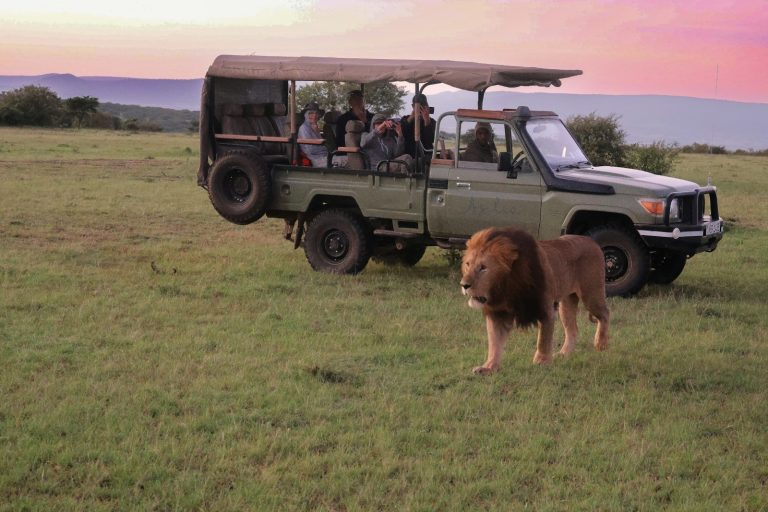
Meru National Park holds the Big Five plus the northern specials of the dry country, but thicker bush means sightings take more patience than in the Masai Mara.
| Species | Chance on a 2–3 night stay | Notes |
|---|---|---|
| Elephant | High | Often along the rivers and swamps |
| Buffalo | High | Large herds in the western swamps |
| White rhino | Good | Grazes in the open inside the rhino sanctuary |
| Black rhino | Fair | Shy browser in thick cover; best early and late |
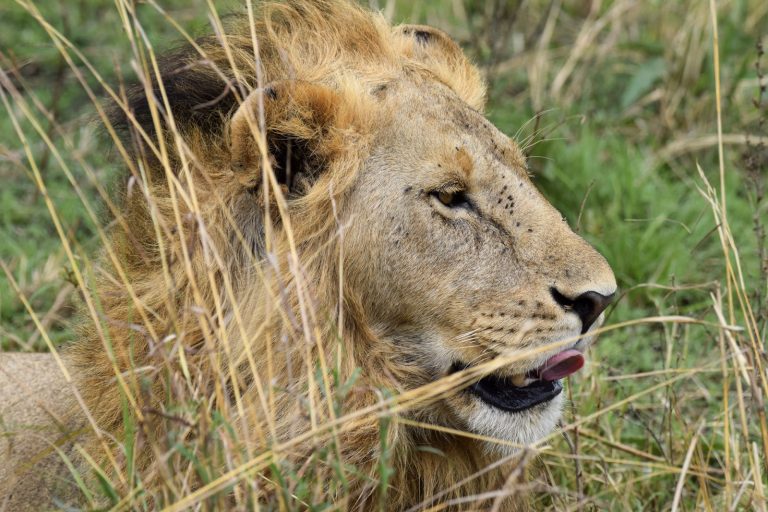
| Lion | Good | Present across the park; ask about recent sightings |
| Leopard | Low to fair | Riverine forest and rocky outcrops |
| Cheetah | Low | Open grassland in the west and centre |
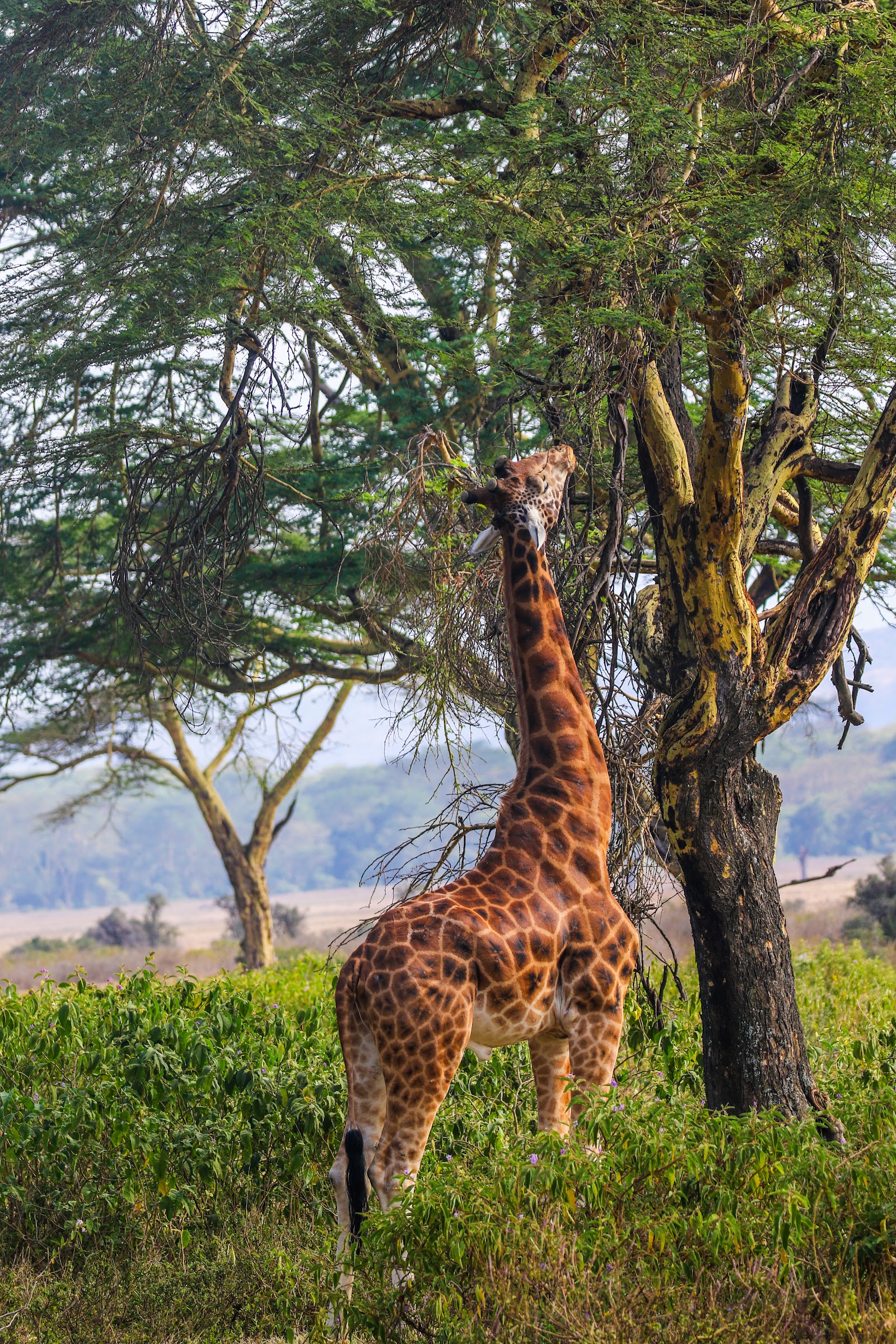
| Reticulated giraffe and Grevy’s zebra | Good | Northern specials in the drier sections |
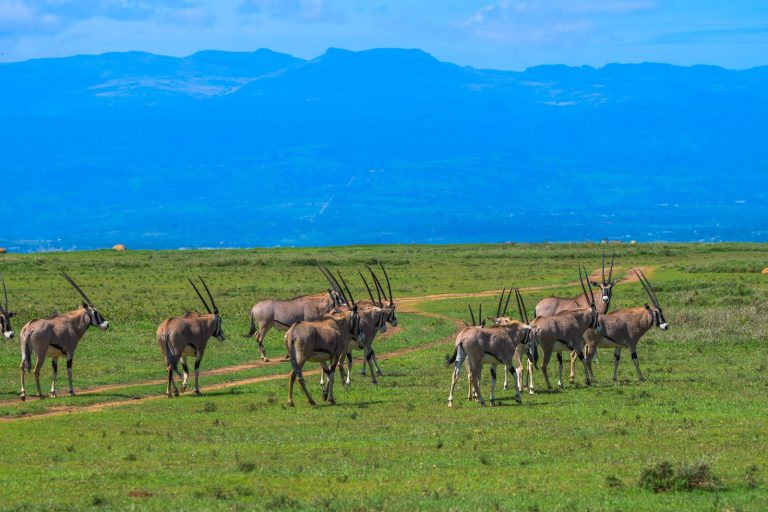
| Gerenuk, lesser kudu, beisa oryx | Fair | Dry bushland in the north and east |
| Hippo and crocodile | High | Rivers, especially the Tana |
The Meru rhino sanctuary
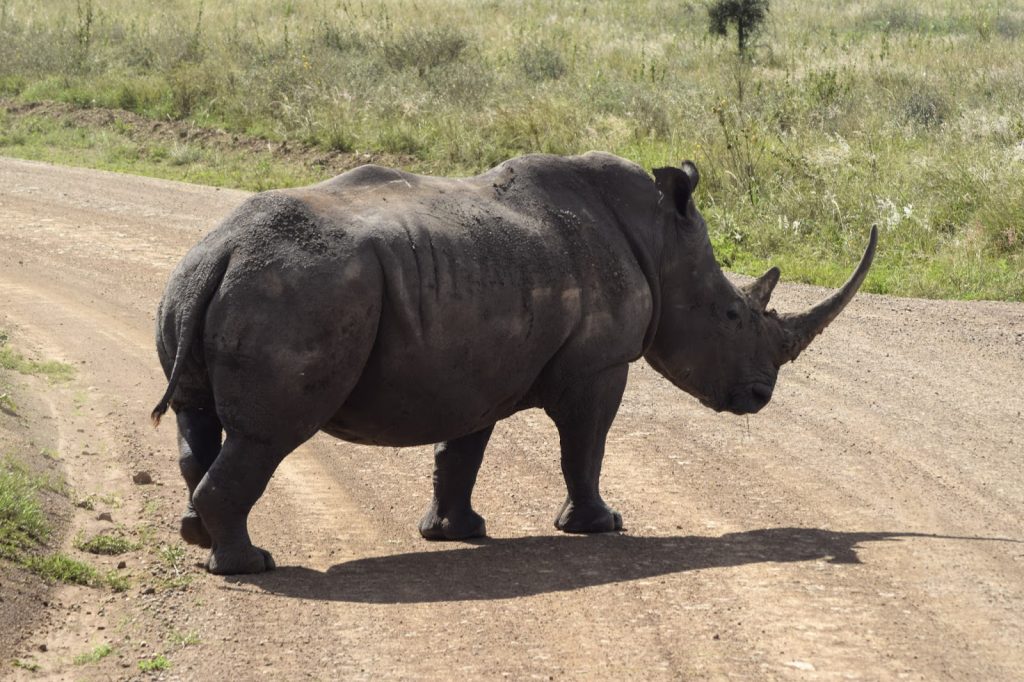
A fenced sanctuary inside Meru National Park protects both black and white rhinos, which KWS says are monitored 24 hours a day. White rhinos graze in the open and are usually easy to see. Black rhinos browse in thicker cover, so let your guide read the tracks and be patient. For more rhino options in the north, see our Sera Rhino Sanctuary guide, where you track rhinos on foot.
Birds of Meru National Park
KWS records more than 400 bird species. The rivers are the place for kingfishers, bee-eaters, palm-nut vultures and, with luck, the elusive Peter’s finfoot and Pel’s fishing owl. The dry bush holds vulturine guineafowl, hornbills, rollers and golden-breasted starlings. Birding is best from November to April, when migrants arrive. Our gerenuk facts and giraffe species in Kenya guides help you spot the northern mammals too.

Things to Do in Meru National Park
Game drives are the heart of a visit, but Meru National Park also offers rivers, waterfalls, history and some of Kenya’s quietest picnic spots.
- Game drives: morning and afternoon drives along the rivers, swamps and open plains, often with no other vehicle in sight.
- Rhino sanctuary: a morning in the sanctuary for black and white rhinos.
- Elsa’s grave and the Adamson sites: a short stop that brings the Born Free story to life.
- Adamson’s Falls and the Tana River: a long drive to the south for river views, hippos and crocodiles.
- Mount Kenya views: on clear mornings, the mountain rises to the west.
- Picnics and camping: KWS lists picnic sites, campsites and a swimming pool near the Bwatherongi bandas.
- Cultural visits: Ameru, Tharaka or Borana villages near the gates.
Night drives and walking are not normally offered inside KWS parks, so if those matter to you, pair Meru with a conservancy such as Lewa or Borana.
How to Get to Meru National Park
Most travellers drive from Nairobi in 5 to 6 hours via Nanyuki and Meru town, while flying saves time if you are combining Meru with Samburu or Laikipia.
By road
The usual route runs north past Mount Kenya through Nyeri or Embu to Nanyuki and Meru, then east over the Nyambene Hills to Maua and Murera Gate. KWS gives the distance from Nairobi as 348 km. Ura Gate in the south is about 290 km from Nairobi via Embu. A 4×4 is essential inside the park, as some tracks are rough after rain. See our guide to a Kenya safari from Nairobi.
By air
The park has two airstrips: Kinna, the main strip near Meru Mulika Lodge, and Mughwongo, next to Elsa’s Kopje. Light-aircraft flights from Wilson Airport turn a long drive into a short hop; scheduled services vary by season, and charters are always possible. Pack in a soft bag and read our guide to safari luggage weight limits.
Meru National Park gates
- Murera Gate: the main gate, 35 km from Maua.
- Ura Gate: the southern gate, reached from Embu; about 290 km from Nairobi on this route.
- Bisanadi Gate: leads to the adjoining Bisanadi National Reserve.
Meru National Park Entry Fees in 2026
Meru National Park is in the KWS Wilderness Parks group, and entry is charged per person for each visit of up to 24 hours.
| Visitor | Adult (18+) | Child (5–17) |
|---|---|---|
| East African citizen | KSh 800 | KSh 500 |
| Kenya resident | KSh 1,100 | KSh 675 |
| African citizen (non-EAC) | USD 40 | USD 20 |
| Non-resident | USD 70 | USD 40 |
These are the figures in the KWS conservation fee schedule from October 2025. Children under five enter free. The newer KWS Meru park page shows the same adult rates but lists the non-resident child rate as USD 20, so check before you pay. The new regulations have faced legal challenges, and older KWS pages still show lower rates, so fees can change at short notice. Payment is cashless through KWS systems, and processing charges may apply. KWS public campsites cost USD 20 per non-resident adult per night. We confirm every fee in writing before you pay; see our guide to Kenya national parks entrance fees for 2026.
📅 Get a Free, No-Obligation Safari Quote
Send us your dates and group size and we will price Meru National Park with your lodge, vehicle and park fees clearly shown. ✉ Send Us Your Dates on WhatsApp
Best Time to Visit Meru National Park
The best time to visit is the dry season, June to September and January to February, when animals gather near the rivers and tracks are easiest.
| Month | Conditions | What to expect |
|---|---|---|
| January–February | Hot and dry | Very good game near rivers; easy driving |
| March | Hot; rains may begin | Still good early in the month |
| April–May | Long rains | Very green; some tracks can close; quiet and good value |
| June–September | Dry and slightly cooler | The best overall months for wildlife |
| October | Dry and hot | Good game; dusty plains |
| November–December | Short rains | Lush scenery, migrant birds, young animals |
Meru is hot all year because it is low and close to the equator. For the bigger picture, see our Kenya weather by month guide.
Meru National Park Rules and Safety
KWS rules protect both you and the wildlife, and your guide will help you follow them.
- Stay in your vehicle except at designated picnic sites, viewpoints and campsites.
- Keep to marked tracks; off-road driving is not allowed.
- Gates open at 6am and close at 6pm; unless you are staying inside the park, be out by closing time.
- Keep to the 40 km/h speed limit and stay at least 20 metres from wildlife.
- Do not feed animals or leave litter; plastic carrier bags are banned in Kenya.
- Keep noise down and give animals space, especially elephants with calves.
- Drones need prior permission from KWS and the Kenya Civil Aviation Authority.
Meru is low and hot, with rivers and swamps, so malaria and tsetse flies are present. Speak to a travel clinic before you go, use repellent and wear long sleeves in the evening. Check the latest UK Foreign Office travel advice for Kenya before travel.
How Many Days Do You Need, and Where to Stay?
Two nights is the minimum to make the journey worthwhile, and three lets you reach the Tana River and the remote north of Meru National Park.
Our guide on how many days you need for a Kenya safari shows how Meru fits into a longer trip.
Where to stay in Meru National Park
There are only a handful of places to stay, which keeps the park quiet. Elsa’s Kopje sits on a rocky hill above the plains, Meru Mulika Lodge stands near the Kina airstrip, and KWS runs self-catering bandas at Bwatherongi as well as public and special campsites. Rooms are limited, so book a few months ahead for July to September. Ask us to match a lodge to your budget, or see our private Kenya safari and luxury Kenya safari options.
What to Pack for Meru National Park
Pack for heat, dust and insects, with a warm layer for early starts.
- Light, neutral long-sleeved shirts and trousers.
- A wide-brimmed hat, sunglasses and high-factor sunscreen.
- Strong insect repellent and any antimalarials your doctor advises.
- Binoculars for birds and shy antelope in thick bush.
- A refillable water bottle and a small daypack.
- A soft duffel bag if you are flying.
Our list of what not to bring on safari helps you travel light.
Combining Meru National Park With Nearby Parks
Meru sits at the heart of a northern circuit, with Samburu to the north-west and Laikipia’s rhino conservancies to the west.
- Samburu National Reserve: the Special Five and the Ewaso Nyiro River, about 3 to 4 hours by road.
- Ol Pejeta Conservancy and Lewa: rhinos, night drives and walks on the way from Nairobi.
- Mount Kenya and the Aberdares: cool forest and mountain scenery to balance Meru’s heat.
- Kora National Park: George Adamson’s wilderness across the Tana, for the adventurous.
Still deciding? Our comparisons of Meru vs Amboseli and Tsavo vs Meru set out the differences.
Sample 3-Day Meru National Park Itinerary
This three-day plan covers the rivers, the rhino sanctuary and the Born Free sites of Meru National Park.
Day 1: Nairobi to Meru
Drive north past Mount Kenya, or fly from Wilson Airport, and arrive for lunch. An afternoon game drive along the rivers introduces you to the park’s elephants, buffalo and giraffe.
Day 2: Rhinos and Born Free
Spend the morning in the rhino sanctuary, then visit Elsa’s grave. After a rest in the heat of the day, head for the open plains in the late afternoon for lion, Grevy’s zebra and sunset over the palms.
Day 3: The Tana and onward
Leave early for the Tana River and Adamson’s Falls, or explore the quiet north, then continue to Samburu or Ol Pejeta, or return to Nairobi.
For ready-made routes we can extend to include Meru, see our Kenya Highlights Safari (9 days), the Northern Kenya Cultural Safari (5 days) or the Kenya Luxury Big Five Safari (8 days). Prices depend on season, lodge and group size, so message us for a quote.
Meru National Park FAQs
How far is Meru National Park from Nairobi?
KWS gives the distance as 348 km, which takes about 5 to 6 hours by road via Nanyuki or Embu and Meru town. The main entrance, Murera Gate, is 35 km from Maua. You can also fly by light aircraft from Wilson Airport to the airstrips at Kina or Elsa’s Kopje.
What is Meru National Park famous for?
Meru is famous as the place where Joy and George Adamson released Elsa the lioness, the story told in Born Free. It is also known for its 13 rivers, doum palm forests, a rhino sanctuary with black and white rhinos, and a wild, uncrowded Big Five safari.
How much is the Meru National Park entry fee?
Under the KWS fee schedule from October 2025, non-resident adults pay USD 70 and children USD 40 per visit of up to 24 hours. East African citizens pay KSh 800 and Kenya residents KSh 1,100 per adult. Fees have faced legal challenges, so confirm current rates before you travel.
Can you see the Big Five in Meru National Park?
Yes. Meru has lion, leopard, elephant, buffalo and both black and white rhinos. Elephant and buffalo are seen on most drives, white rhinos are reliable in the sanctuary, lions are regular and leopards need more luck. Two or three days gives you a good chance of all five.
What is the best time to visit Meru National Park?
The dry seasons from June to September and January to February are best, when wildlife gathers near the rivers and tracks are easiest. The long rains of April and May can make some roads difficult, while the short rains bring lush scenery and migrant birds.
Where is Elsa’s grave in Meru National Park?
Elsa the lioness, who died in 1961, is buried inside Meru National Park, and part of Joy Adamson’s ashes were later scattered at her grave. Your guide can include the grave and the old Adamson sites on a game drive. Ask at Murera Gate for current directions and road conditions.
Is there malaria in Meru National Park?
Yes. Meru is low, hot and full of rivers and swamps, so malaria is present and mosquitoes and tsetse flies can be active. Speak to a travel clinic about antimalarials before you travel, use repellent, wear long sleeves in the evening and sleep under the nets provided.
🏕 Plan Your Meru National Park Safari With Sense of Adventure
Kenya-based experts. Real local knowledge. Transparent pricing. We plan Meru as part of tailor-made northern safaris and will match you with the right lodge, route and season. 💬 WhatsApp Us — Start Planning Today
Call or WhatsApp: +254 799 160 081 · Email: reservations@senseofadventure.co.ke
Related Safari Guides
- › Sera Rhino Sanctuary Guide
- › Samburu National Reserve Guide
- › Ol Pejeta Conservancy Guide
- › Kora National Park Guide
- › Tsavo vs Meru Compared
Official travel & park resource: Kenya Wildlife Service ↗ · Tourism: Magical Kenya ↗