Small predators in Kenya include the honey badger, several kinds of mongoose, the aardwolf, the serval, the caracal and jackals. Mongooses and jackals are often seen by day, while honey badgers, aardwolves and many others are mainly active at night. Your best chances come from patient daytime drives plus night drives in private conservancies, where they are allowed.
Sense of Adventure is a TRA-licensed private safari company based at Mountain Mall on Thika Road, Nairobi. Our guides love the moments when a mongoose troop or a hunting serval steals the show from the lions. This guide introduces nine small predators worth looking for, how to recognise them, and where and when to go.
Keen to see more than the Big Five? Ask us which camps offer night drives for small predators.
Find night-drive campsWhy Small Predators Are Worth Looking For
Small predators are worth looking for because their behaviour is often more surprising than that of the big cats, and each sighting feels earned.
A lion sleeps for much of the day. A troop of banded mongooses, by contrast, is busy from the moment it leaves the den, chattering, digging and guarding each other. A serval pouncing on a rodent in long grass is pure theatre. These small predators also tell you a lot about the health of an ecosystem, because they depend on insects, rodents, birds and termites. Ask your guide to stop for them, and your safari becomes richer.
9 Small Predators to Spot in Kenya
These nine small predators range from common daytime sightings to rare nocturnal finds.
| Species | Active | How often seen | Key ID feature |
|---|---|---|---|
| Honey badger | Mostly night, sometimes day | Uncommon | Grey-white back, black underside |
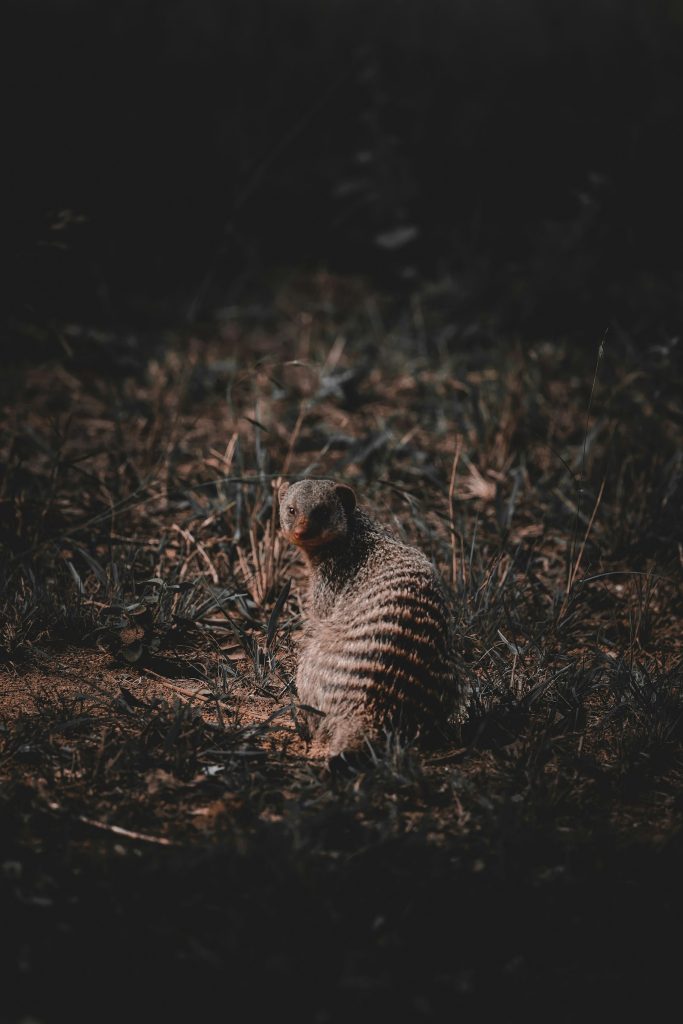
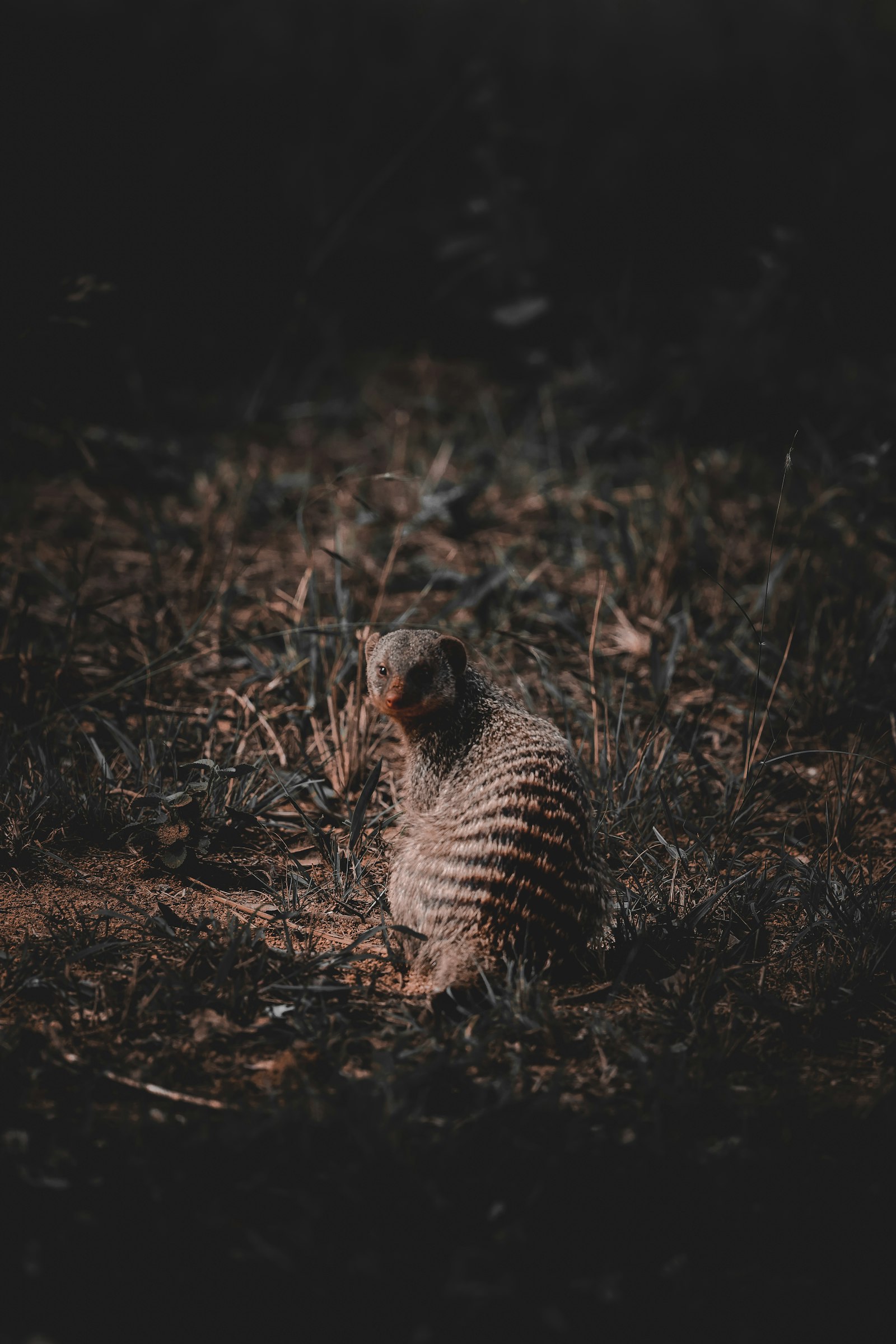
| Banded mongoose | Day | Common | Dark bands across the back; lives in groups |
| Dwarf mongoose | Day | Fairly common in dry areas | Tiny, brown; lives in termite mounds |
| Slender mongoose | Day | Fairly common | Long body, black tail tip, usually alone |
| White-tailed mongoose | Night | Seen on night drives | Large, with a bushy white tail |
| Aardwolf | Night | Rare | Striped, hyena-like, with a mane |
| Serval | Dawn, dusk and night | Uncommon | Long legs, big ears, spotted coat |
| Caracal | Mostly night | Rare | Plain tawny coat, long black ear tufts |
| Black-backed jackal | Day and night | Common | Silver saddle on a reddish body |
All nine are listed as Least Concern on the IUCN Red List, although local numbers vary and some face pressure from habitat loss and conflict with livestock owners.
Honey Badger: The Toughest of Kenya’s Small Predators
The honey badger is a stocky member of the weasel family with a fierce reputation, thick loose skin and a broad diet.
It eats insects, larvae, rodents, reptiles, birds and fruit, and digs strongly with long front claws. Its loose skin helps it twist in a predator’s grip. Research has found genetic changes that give honey badgers some resistance to snake venom, but this is resistance, not immunity. In busy areas they are mostly nocturnal, so sightings usually come on night drives or at dawn. Read our honey badger facts guide for more.
Kenya’s Mongooses
Kenya has several mongoose species, and the banded and dwarf mongooses are the most rewarding small predators to watch by day.
Banded Mongoose
Banded mongooses live in social groups, often of around twenty animals, that sleep in dens such as old termite mounds. They forage together for beetles, millipedes, eggs and small reptiles, keeping in touch with constant contact calls. When a threat appears, the group may bunch tightly and move as one, which can make predators hesitate. They are common in the Mara, Samburu and many other parks.
Dwarf Mongoose
The common dwarf mongoose is often described as Africa’s smallest carnivore. Family groups live in termite mounds in drier bush country, such as Samburu and Tsavo. Groups take turns on sentry duty, and they are known to forage alongside hornbills, which also watch for birds of prey. Look for small heads popping up from a mound in the morning sun.
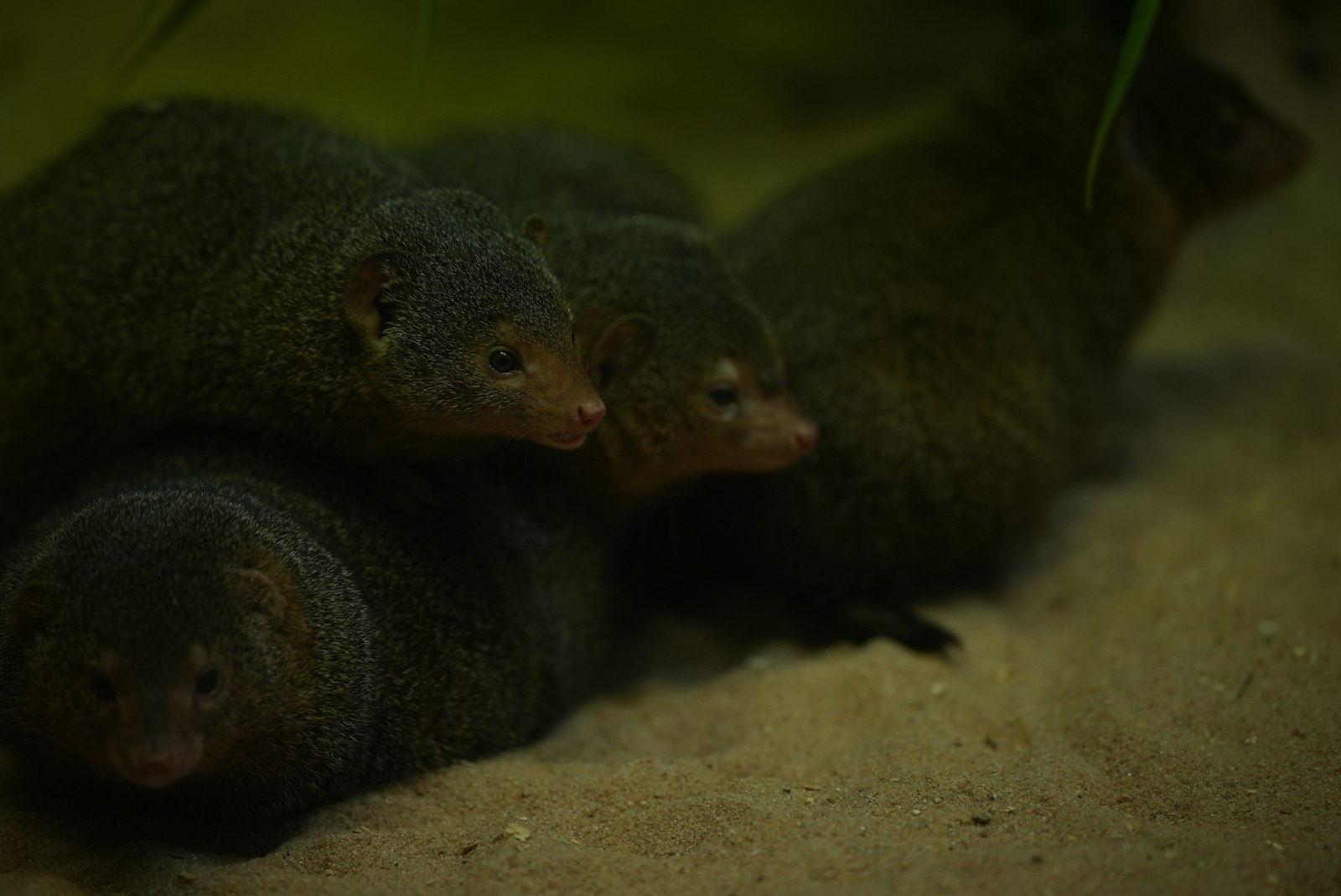
Slender and White-Tailed Mongooses
The slender mongoose is a solitary daytime hunter that often dashes across tracks with its black-tipped tail held high. The white-tailed mongoose is much larger and nocturnal, and is one of the small predators most often picked up in a spotlight on night drives.
Want a guide who stops for the little things?
Tell us the species you most want to see, from mongooses to servals, and we will match you with the right areas, camps and guide.
Aardwolf, Serval, Caracal and Jackals
These four small predators show how varied Kenya’s hunters are, from a termite specialist to cats that leap for birds.
Aardwolf
The aardwolf belongs to the hyena family but feeds mainly on termites, licking them from the ground with a broad, sticky tongue. Its small cheek teeth are suited to this diet rather than to crushing bone. It is shy and nocturnal, and lives in open grassland and dry bush. Sightings are rare and usually come on night drives in conservancies.
Serval
The serval is a slender, spotted cat with very long legs and large ears. It hunts mainly rodents in long grass and wetland edges, often locating prey by sound, then leaping high to pounce. Servals are most active around dawn, dusk and at night, and are sometimes seen in the Mara grasslands and the Aberdares.

Caracal
The caracal is a powerful, plain-coated cat with long black ear tufts. It hunts birds, hares and small antelopes, and is famous for leaping to catch birds in flight. It is secretive and mostly nocturnal, so a caracal sighting is a genuine highlight for experienced guides.
Jackals
Black-backed jackals live in pairs that hold territories and raise pups together. They hunt small prey and scavenge at kills, and are common in the Mara and Amboseli. The side-striped jackal prefers wetter woodland and is more nocturnal.
Where to See Small Predators in Kenya
Private conservancies give the best overall chances for small predators, because they allow night drives, walks and off-track viewing under their own rules.
| Area | Small predators to look for | Night drives |
|---|---|---|
| Mara conservancies | Serval, jackals, banded mongoose, honey badger, white-tailed mongoose | Yes, in many conservancies |
| Laikipia conservancies | Aardwolf, caracal, honey badger, white-tailed mongoose | Yes, in many conservancies |
| Samburu and northern conservancies | Dwarf and banded mongooses, slender mongoose, jackals | In some conservancies, not the national reserves |
| Amboseli | Jackals, mongooses | In surrounding conservancies only |
| Tsavo | Dwarf mongoose, jackals, caracal in dry bush | Generally not in the national parks |
Night drives are generally not permitted in national parks and national reserves. Rules and fees vary by area, so check the Kenya Wildlife Service for parks, our conservancy fees in Kenya guide, and our Kenya national parks entrance fees 2026 guide.
Camps for Small Predators
Choose a camp in a conservancy that offers night drives with trained guides and red-filtered spotlights. Our Laikipia luxury lodges and community conservancy lodges guides include camps where night activities are part of the programme.
Hold a conservancy camp with night drives
Small conservancy camps have few tents and book early in peak months. Send your dates and we will quote camps where night drives are part of the stay.
Night Drives and Small Predators
A night drive is the single best way to add nocturnal small predators to your sightings list.
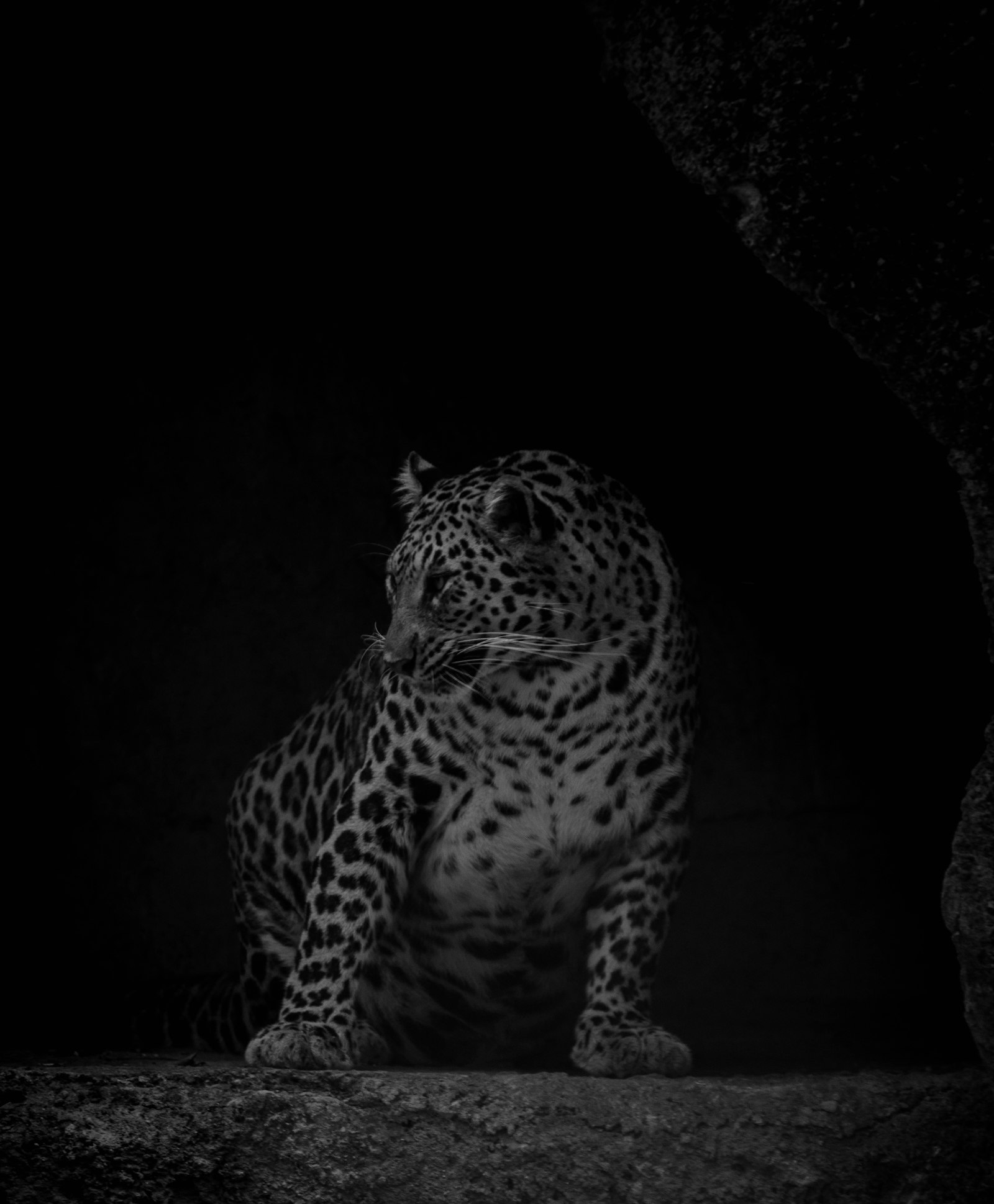
Drives usually start after dinner or straight after sundowners and last one to two hours. Guides scan with a spotlight, often red-filtered, looking for eyeshine. Good guides keep the light off animals’ eyes for long and never chase. Wear a warm layer, because nights on the plains and in Laikipia can be cold. Our genet facts and aardvark facts guides cover other night animals you may see.
Expert tip from our Nairobi team
Bring a small torch and binoculars on night drives, but let the guide work the spotlight. Watch the edges of the beam, not the centre, because small predators often move along the fringes. Ask your guide to pause by termite mounds at dawn; mongooses often sun themselves on top before setting off to forage.
Best Time of Year and Day
You can see small predators all year, but time of day matters far more than the month.
| Season | What to expect |
|---|---|
| Dry season, roughly late June to October | Short grass makes mongooses, jackals and servals easier to spot |
| Short rains, November to December | Green landscapes; termite emergences bring many small predators out |
| January to March | Generally dry and warm; good all-round viewing |
| Long rains, April to May | Long grass hides small animals; some camps close |
Early mornings and late afternoons are best for daytime species. Allow at least two nights in a conservancy if night drives matter to you. A private Kenya safari lets your guide stop as long as you like, and our Masai Mara safari packages can include conservancy nights. For the bigger names, see our guide to the Big Nine of Kenya. Browse Magical Kenya for more destination ideas, and read more about each species at Animal Diversity Web.
Small Predators FAQs
What small predators live in Kenya?
Kenya’s small predators include the honey badger, banded, dwarf, slender and white-tailed mongooses, the aardwolf, serval, caracal, African wildcat, genets, civets, bat-eared foxes and black-backed and side-striped jackals. Some are easy to see by day, while others are mainly nocturnal and are best found on night drives in conservancies.
Are honey badgers dangerous to people on safari?
Honey badgers can be aggressive if cornered, but they usually avoid people and pose no real risk to guests in a vehicle. Never feed or approach one. At camps, keep food sealed and tents closed at night, because honey badgers are clever foragers and will investigate bins and kitchens.
Where is the best place to see mongooses in Kenya?
Banded mongooses are common in the Masai Mara, Samburu and many other parks, often near termite mounds and camps. Dwarf mongooses prefer drier bush country such as Samburu and Tsavo. Look early in the morning, when groups sun themselves on mounds before setting off to forage together.
Can you see an aardwolf on safari?
Yes, but sightings are rare. Aardwolves are shy, nocturnal termite eaters found in open grassland and dry bush. Your best chance is a night drive in a conservancy that allows them, such as those in Laikipia or around the Mara, with a guide who knows where termite colonies are active.
Are night drives allowed in Kenya’s national parks?
Night drives are generally not permitted in Kenya’s national parks and national reserves, which have set gate hours. They are allowed in many private and community conservancies, including those around the Masai Mara and in Laikipia, where trained guides use spotlights under the conservancy’s own rules.
What is the difference between a serval and a caracal?
A serval has a spotted coat, very long legs and large rounded ears, and hunts mainly rodents in long grass. A caracal has a plain tawny coat and long black ear tufts, and hunts birds, hares and small antelopes. Both are secretive, but servals are seen more often than caracals.
See the Safari Most People Drive Past
We plan private safaris with patient guides, conservancy nights and time for the small wonders as well as the Big Five. Sense of Adventure is a TRA-licensed Nairobi safari company.
Kenya-based experts. Real local knowledge. Transparent pricing.