


Nairobi National Park holds one of the longest bird lists of any city on Earth — 531 recorded species across 87 families, packed into just 117 square kilometres beside a capital of five million people. Most visitors come for the lions and rhinos and never look up, but BirdLife International lists the park as a formal Important Bird Area, and the checklist here rivals reserves many times its size. Ostriches stride the open plains, martial eagles ride thermals above the skyline, and critically endangered vultures circle over the same dams where hippos wallow. You don’t need a dedicated birding trip to see any of this — it’s the same game drive, just with your eyes pointed a little higher.
Add Birding to Your Nairobi National Park Safari
Message us and we’ll build a game drive that slows down for the dams and raptor country, not just the Big Five.
One of the Longest City Bird Lists on Earth
BirdLife International designates Nairobi National Park an Important Bird Area, and its checklist reflects genuinely unusual ecological overlap for a single small site: the park hosts species from the Somali-Masai biome, the African Highlands biome, and even a handful from the Kenya Mountains Endemic Bird Area, three habitat zones that rarely stack this tightly elsewhere in the country. That diversity comes with a conservation cost — the park carries 23 threatened species on its list (7 endangered, 5 critically endangered, 11 vulnerable), which is part of why BirdLife tracks it as an IBA “in danger,” largely due to shrinking wildlife corridors on the park’s open southern boundary. For a visitor, the practical upshot is simple: a normal half-day game drive already passes through several of the best birding zones in the park without any detour required.

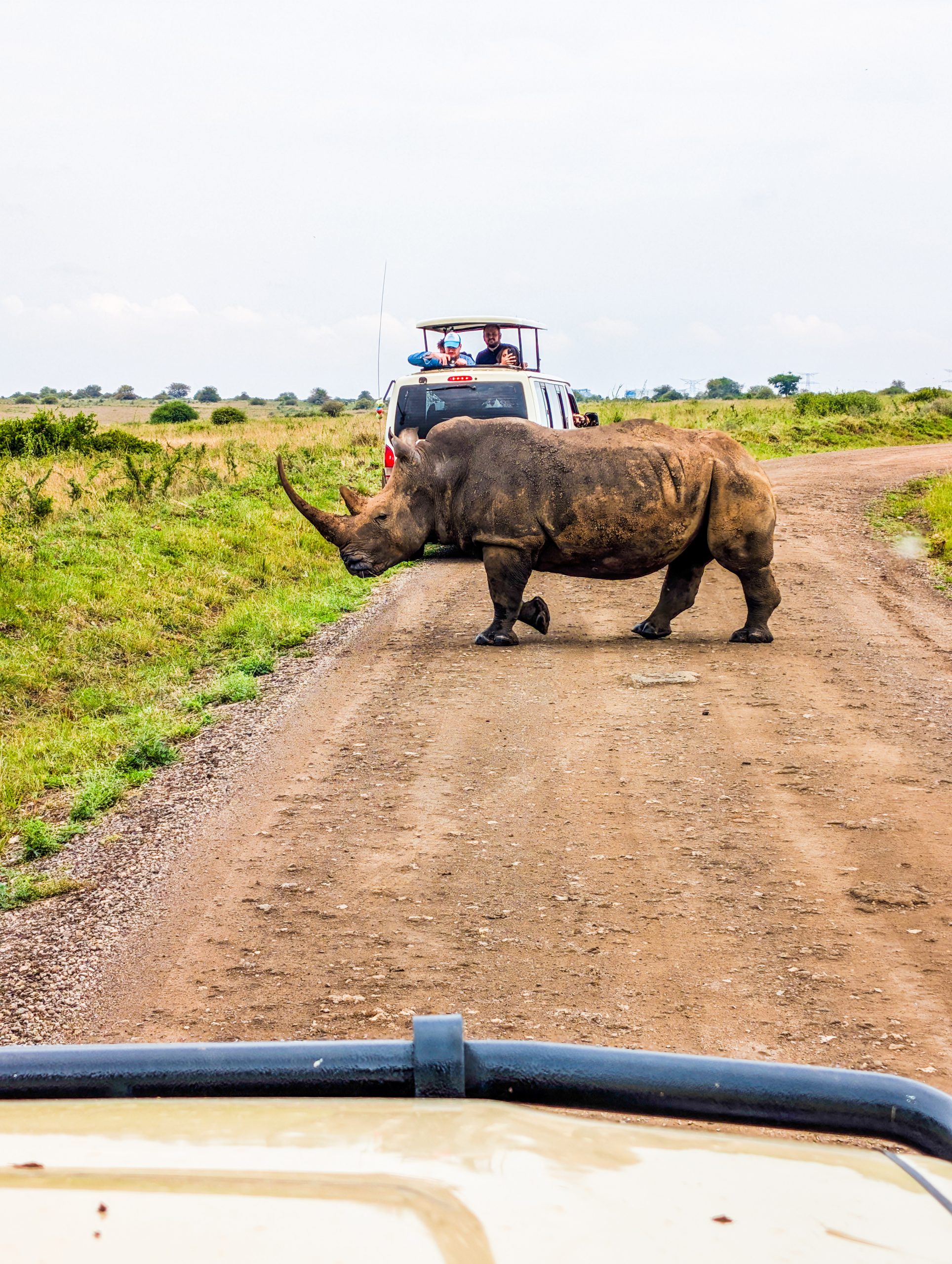
I went expecting lions and left talking about the vultures — we watched a White-backed Vulture ride a thermal in slow circles for what felt like ten minutes without a single wingbeat, right after we’d been photographing a rhino at the same waterhole. Nobody told me the birdlife would be the thing I couldn’t stop describing to people back home.
— Sense of Adventure guest, Nairobi National Park safari
What to Look For
Common Ostrich — open grassland, pairs or small groups
Africa’s largest bird is one of the most visible sightings in the park’s open plains — hard to miss even from a distance, usually seen walking, feeding, or standing alert in short-to-medium grassland.
Secretarybird — grassland raptor hunting on foot
An unmistakable long-legged raptor that stalks through the grass hunting snakes and other prey on foot rather than from the air — one of the more distinctive silhouettes in the park.
Martial Eagle — Africa’s largest eagle, soaring high overhead
One of the continent’s biggest birds of prey, frequently seen riding thermals above the plains alongside the park’s other dominant raptor family, Accipitridae (eagles, hawks and vultures).
White-backed Vulture — Critically Endangered, soars in slow circles
Regularly spotted riding thermals from around 9am onward — a species now Critically Endangered across its range, making sightings here genuinely significant, not just scenic.
Waterbirds at the Dams — Hyena Dam and Nagolomon Dam, best mid-morning
Grey Herons, African Darters, and Saddle-billed, Yellow-billed and Marabou Storks gather at both dams, with Nagolomon generally quieter and better for Pied, Malachite and Giant Kingfisher activity. The Hippo Pools walking trail, done with an armed KWS ranger, reaches riverine forest species you simply can’t see from a vehicle.
Slow Down at the Dams, Not Just the Big Five Sightings
Message us to add dedicated time at Hyena Dam and Nagolomon Dam to your Nairobi National Park itinerary.
Nairobi National Park Bird Facts
- Species count: 531 recorded species across 87 families — one of the longest bird lists of any single site in Kenya.
- IBA status: BirdLife International Important Bird Area, currently tracked as “in danger” due to shrinking wildlife corridors.
- Threatened species: 23 total on the checklist: 7 endangered, 5 critically endangered, 11 vulnerable.
- Best waterbird spots: Hyena Dam and Nagolomon Dam, both best mid-morning when activity peaks; Nagolomon is quieter with stronger kingfisher sightings.
- Best raptor viewing: from around 9am, once thermals form and eagles and vultures begin soaring.
- Walking access: the Hippo Pools trail, escorted by an armed KWS ranger, is the only way to reach riverine forest species on foot.
Planning Your Birding Safari
Pair your birding time with our game drive guide for the full half-day flow, and check entrance fees before you go. Ready to book a guide who knows where the dams and raptor spots are? Book our Nairobi National Park Day Safari.
A Guide Who Knows Where to Point the Binoculars
Message us to plan a Nairobi National Park safari built around the park’s birdlife, not just the Big Five.
Frequently Asked Questions
How many bird species are in Nairobi National Park?
531 species have been recorded across 87 families, making it one of the richest single-site bird lists in Kenya and one of the longest bird lists of any city in the world.
Is Nairobi National Park a good birdwatching destination?
Yes — BirdLife International designates it a formal Important Bird Area, and its checklist spans three overlapping habitat zones (Somali-Masai biome, African Highlands biome, and Kenya Mountains Endemic Bird Area species), an unusual concentration for a park this size.
What are the best birding spots inside Nairobi National Park?
Hyena Dam and Nagolomon Dam are the top waterbird locations, best visited mid-morning; the Hippo Pools walking trail, done with an armed KWS ranger escort, reaches riverine forest species not visible from a vehicle.
What time of day is best for spotting raptors in Nairobi National Park?
From around 9am onward, once rising thermals form and eagles and vultures — including the Critically Endangered White-backed Vulture — begin soaring overhead.
Do I need a separate birding tour to see the birdlife at Nairobi National Park?
No — a standard half-day game drive already passes through several of the park’s best birding zones, including the dams, so no dedicated detour is required to see a strong range of species.