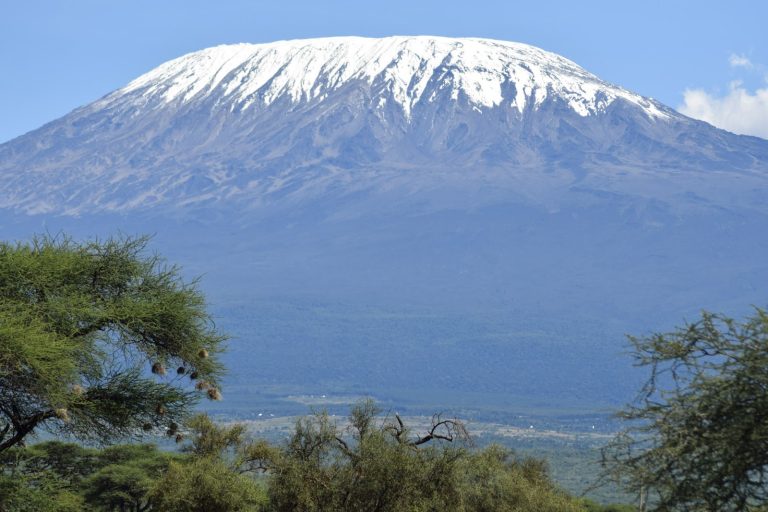

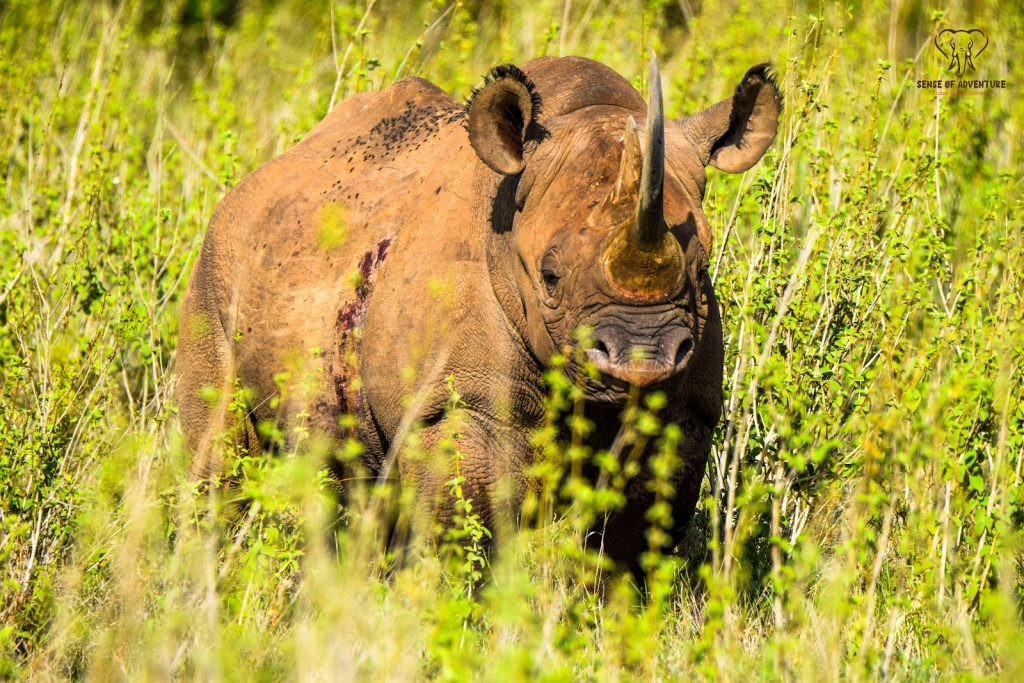
It is just after six and the air on the plateau is cold enough to see your breath. You walk single file behind a ranger in olive green, boots quiet on red earth, Mount Kenya glowing pink to the south. He stops, lifts a hand and points. Forty metres ahead, half hidden in whistling thorn, a black rhino lifts its head and tests the wind. Nobody speaks. A francolin calls. This is the moment Borana Conservancy was built for.
Borana Conservancy is a private, gazetted wildlife conservancy of around 28,000 acres on the Laikipia Plateau, on the northern slopes of Mount Kenya. Joined to Lewa by an open boundary, it protects black and white rhino, elephant, lion and Grevy’s zebra, and offers walking, riding and rhino tracking for staying guests only.
Sense of Adventure is a Nairobi-based safari company, licensed by Kenya’s Tourism Regulatory Authority (TRA1/47/C01/77087), and we plan private Laikipia safaris that include Borana every season. This guide covers everything you need before you go: the wildlife and your honest chances of seeing it, the people behind the conservancy, how to get there, what you pay, the best months, the activities, where to stay and a sample itinerary.
Table of Contents
✅ Borana Conservancy: The Quick Answer
- Where: Laikipia County, central Kenya, on the northern foothills of Mount Kenya, west of Lewa Wildlife Conservancy and next to Ngare Ndare Forest.
- Best for: Black and white rhino, rhino tracking on foot, horse riding, mountain biking, night drives and private, low-density game viewing.
- Best time: June to October and mid-December to February are the driest; May, June and October are quiet and green.
- Entry fee: No public gate fee. A 24% conservation contribution is built into lodge rates for 2026 and 2027.
- How long to stay: Three nights is the sweet spot; two is the minimum to make the flight or drive worthwhile.
- Getting there: About an hour’s flight from Nairobi to Lewa Downs or the Borana airstrip, or roughly five hours by road via Nanyuki.
🌍 Planning a Safari to Borana Conservancy?
Tell us your dates and who is travelling, and we will check live availability across Borana’s lodge and private houses. 💬 WhatsApp Us Now or call +254 799 160 081
What Is Borana Conservancy?
Borana Conservancy is a privately run, non-profit conservation area on the Laikipia Plateau that turned a cattle ranch into one of East Africa’s most important rhino habitats.
It lies just north of the equator, between dry acacia country to the north and the ancient indigenous forest of Mount Kenya to the south. The land rises and falls in ridges, valleys, dams and open grass, so every drive feels different. Altitude keeps the days warm and the nights crisp.
In 2022 Borana Ranch formally became Borana Conservancy, recognised by the Kenya Wildlife Service and the Ministry of Tourism as a gazetted protected area. Today it is managed as a protected area that runs tourism, ranching and community programmes side by side, with the profits ploughed back into conservation.
The Lewa-Borana Landscape
Borana Conservancy’s real strength is that it is not on its own. Once the reintroduced rhinos had settled, the fence with neighbouring Lewa Wildlife Conservancy came down, creating one continuous landscape of about 90,000 acres that also takes in Ngare Ndare Forest. According to Borana Conservancy, this Lewa-Borana Landscape now supports more than 250 black and white rhino, with birth rates sometimes above 9%, which makes it one of East Africa’s largest continuous rhino habitats.
If you are weighing up Laikipia’s options, read our Lewa Wildlife Conservancy guide and our comparison of Ol Pejeta vs Lewa.
The History of Borana: From Ranch to Rhino Sanctuary
Borana’s story runs from colonial ranching to a community-linked conservancy in less than a century.
According to the conservancy, the land took shape as a commercial ranch in 1928, used for cattle, wool and farming, often in conflict with wildlife. Michael Dyer began as caretaker of Borana Ranch in 1984, the same year rhinos were reintroduced to Lewa. The family has managed the land across four generations.
In the early 1990s Borana began working with the Il’Ngwesi Maa community next door. That partnership helped give rise to two wholly community-owned tourism businesses, Il’Ngwesi Lodge and Tassia, and it remains a model for Kenyan community conservancies.
2013: The Rhinos Come Home
In 2013 a founding population of 21 black rhinos was moved to Borana, the first rhinos on this land in more than 50 years, according to Save the Rhino International. Calves followed soon after the animals settled. Within a few years the population was growing fast enough that the fence with Lewa was taken down to give them more room.
People of Borana: Communities, Rangers and Your Fees at Work
Wildlife at Borana Conservancy survives because the people around it benefit from it, and your stay pays directly into that work.
The conservancy sits among neighbours who have lived with livestock and wildlife for generations, including the Il’Ngwesi Maa (Laikipiak Maasai) community to the north. Borana allows managed grazing for neighbouring herders and shares the income from livestock sales, so cattle and conservation work together rather than against each other.
Rangers on the front line
More than 120 men and women rangers protect the conservancy, and all are employed from local communities. They train each year in field-craft, first aid and tactics, and work closely with Lewa, Ol Pejeta, Ol Jogi and the Kenya Wildlife Service on anti-poaching. Borana reports that the community-focused approach has helped keep poaching incidents at zero for several years.
Health and education
Borana’s Mobile Health Clinic has run since 2005 with the Ministry of Health, visiting about ten neighbourhoods on a two-week rotation and bringing reproductive healthcare to women who would otherwise travel far. The Borana Education Support Programme, begun in 2009, has awarded over 400 scholarships and supported the salaries of more than 100 teachers.
In 2022 the conservancy launched Mazingira Yetu (“our environment”), a conservation education programme based in a converted tannery, with its own safari bus that brings local schoolchildren into the conservancy, many of them seeing rhinos for the first time.
Where your Borana Conservancy fees go
For 2026 and 2027, Borana Lodge rates include a non-commissionable 24% contribution to Borana Conservancy, which replaces a traditional conservation fee. Lodge profits fund the conservancy’s core operating costs, and retained earnings are reinvested in conservation and local livelihoods. In short, every night you sleep here pays for rangers, teachers and nurses.
Expert tip from our Nairobi team: Ask to add a conservation tour to your stay. Meeting the rangers, the clinic team or the Mazingira Yetu educators gives you a real understanding of how a private conservancy works, and it is often the part of the trip guests talk about most.
Wildlife at Borana Conservancy: What You Will See
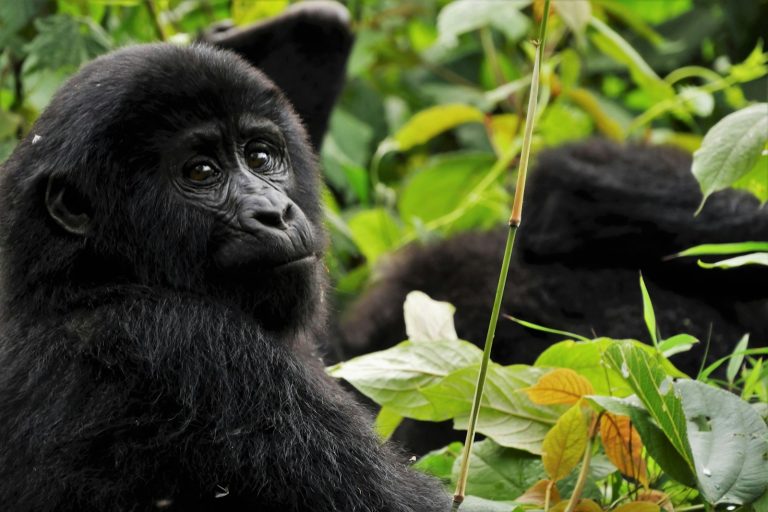
Rhino is the headline, but Borana Conservancy holds a remarkably full cast of Laikipia’s wildlife, including several endangered northern species.
Laikipia’s wider Ewaso ecosystem, which includes Borana Conservancy, is known for an exceptional diversity of large mammals. On Borana you move between open grassland, acacia bush, rocky ridges and forest edge, so the mix changes hour by hour. Below are honest odds for a three-night stay with good guiding.
| Species | Chance on a 3-night stay | Notes |
|---|---|---|
| Black rhino | High | Best on a guided tracking walk; shy and browsing in thicker bush |
| White rhino | High | Grazes open ground; easier to see from the vehicle |
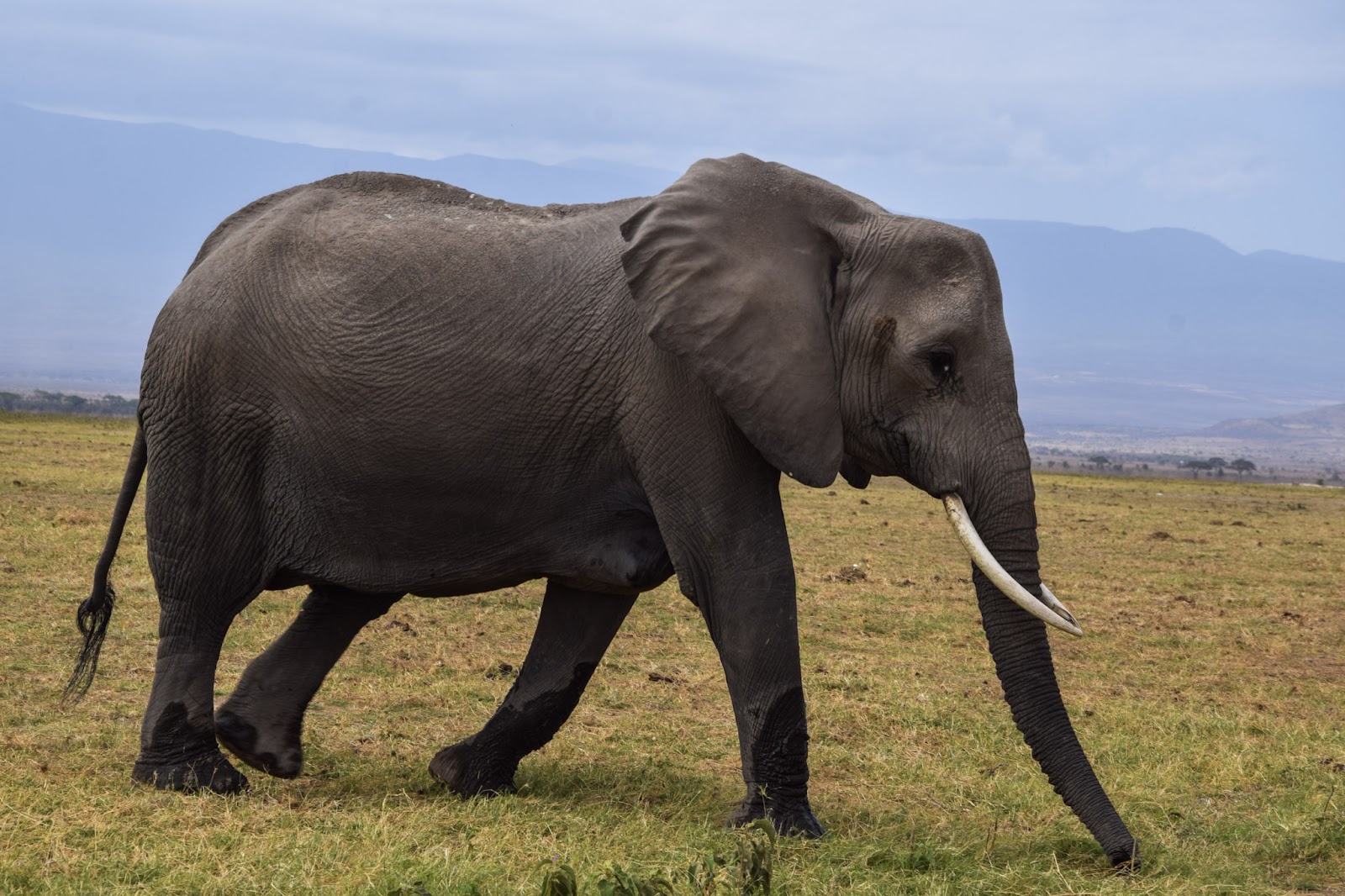
| Elephant | High | Move between Borana, Lewa and Ngare Ndare Forest |
| Grevy’s zebra | Good | Endangered; look for narrow stripes and white bellies |
| Reticulated giraffe | Good | The northern giraffe with crisp, net-like markings |
| Lion | Fair to good | Prides such as the Winter’s Pride are monitored by scouts |
| Leopard | Low to fair | Present but secretive; night drives improve your odds |
| Cheetah | Low to fair | Wide-ranging and seen occasionally |
| African wild dog | Low | Pass through Laikipia unpredictably; a sighting is a bonus |
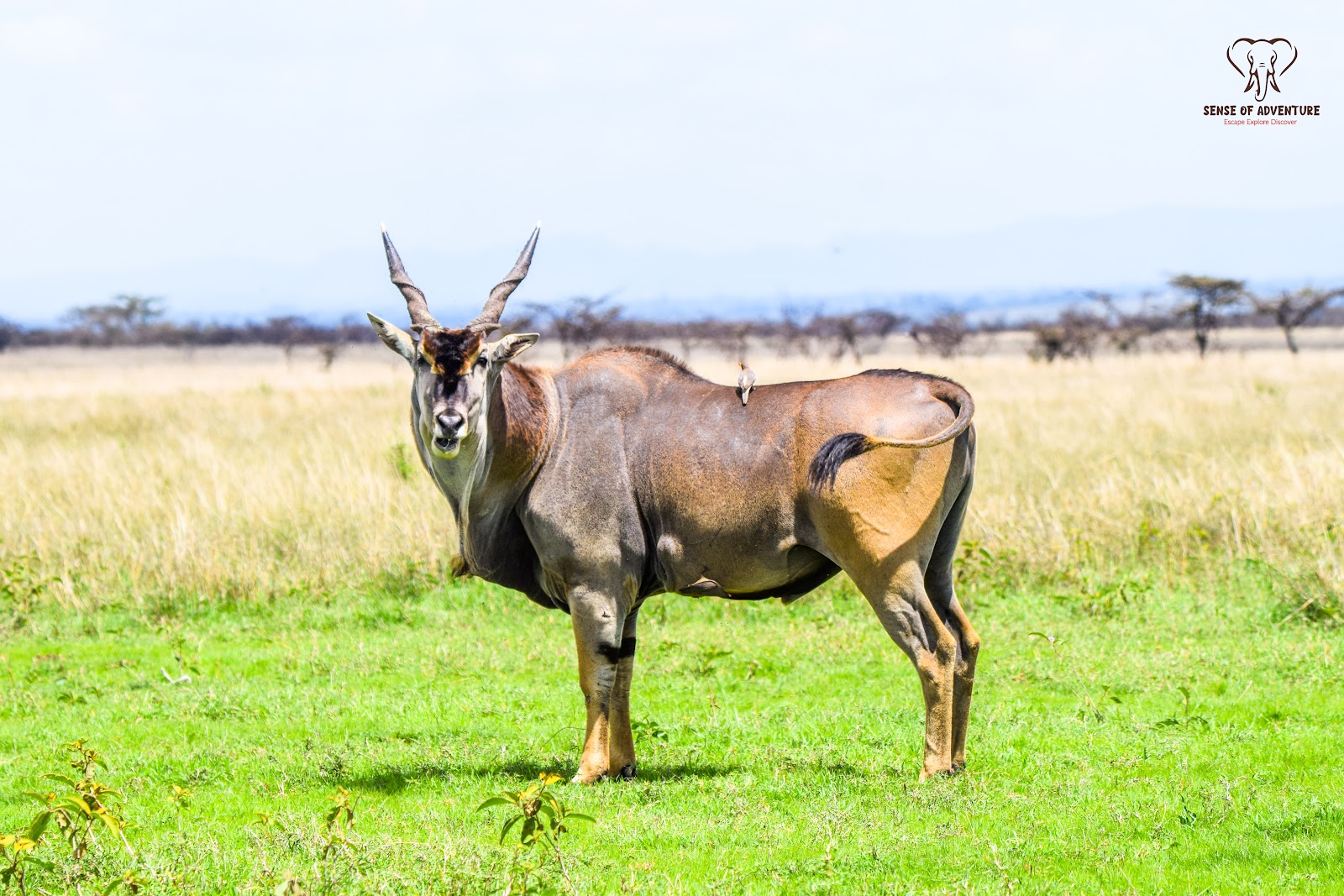
| Jackson’s hartebeest | Good | A local speciality of the Laikipia plateau |
Birds of Borana
Borana Conservancy is also a superb birding destination. On a recent World Birding Day the conservancy recorded 276 species, ranked first in Kenya in that day’s Species Leaders tally. Expect raptors over the ridges, kori bustards in the grass and forest species near Ngare Ndare.
What about buffalo and the Big Five?
Buffalo, elephant, lion, leopard and both rhinos all occur in the Lewa-Borana Landscape, so the Big Five is possible. Leopard is the hardest. If ticking off all five matters to you, combine Borana with the Masai Mara; our Laikipia vs Masai Mara comparison explains how the two complement each other.
Things to Do on a Borana Conservancy Safari
A Borana Conservancy safari is an active safari: you can walk, ride, cycle and drive at night, which you cannot do inside Kenya’s national parks.
Because it is a private conservancy, the activities are run by the lodge and conservancy teams rather than limited by park rules. For 2026 and 2027, Borana Lodge rates include these activities:
- Rhino tracking on foot: Set out at first light with an armed ranger and a guide to find rhino by their tracks and dung. It is quiet, slow and unforgettable.
- Day and night game drives: Shared drives in open vehicles. After dark, spotlights pick out genets, aardvark, porcupine and hunting cats. Read what to expect on a night drive.
- Horse riding: Ride among zebra, giraffe and eland on well-schooled horses with an experienced riding guide. See our horseback safari in Kenya guide.
- Mountain biking and eBikes: Cover more ground on two wheels across the plains.
- Bush walks, picnics and sundowners: Slow down and enjoy the views of Mount Kenya.
- Conservation tours: Meet the rangers, see how rhinos are monitored and visit Waitabit, the organic farm.
Fly camping and lion monitoring
You can spend a night under canvas away from the lodge on a fly camp, and you can join scouts as they monitor the lion prides. Both need to be arranged in advance and depend on conditions, so tell us early if they interest you.
Beyond the boundary: Ngare Ndare Forest
Ngare Ndare Forest, part of the wider landscape, has a canopy walkway and turquoise waterfall pools. Visits are arranged as an extra excursion. Check current access on the Ngare Ndare Forest Trust site.
How to Get to Borana Conservancy
Most guests fly to Borana Conservancy in about an hour from Nairobi; driving takes most of a day but lets you stop at Ol Pejeta or Mount Kenya on the way.
By air
Scheduled light-aircraft flights from Nairobi serve the Lewa Downs airstrip, about an hour and a half’s game drive from Borana Lodge. Private charters can land at the Borana Conservancy airstrip, and the lodge also has a helipad. Airstrip transfers from Borana and Lewa Downs are included in Borana Lodge rates. Remember the soft-bag rule: most local airlines allow about 15 kg including hand luggage. Our guide to safari luggage weight limits on small aircraft explains the details.
By road
The drive from Nairobi runs north through Nyeri or Naro Moru to Nanyuki and then on towards Timau. Allow roughly five hours, depending on traffic and stops. Road transfers can be arranged on request, and a road safari lets you add Ol Pejeta or a night on Mount Kenya. Our Kenya safari from Nairobi guide compares the options.
Borana Conservancy Fees and Costs in 2026
Borana Conservancy has no public gate fee; the conservancy is funded through a contribution built into what you pay for your stay.
This is different from Kenya’s national parks, where you pay a daily KWS entry fee at the gate. Here is what applies in 2026, based on Borana Lodge’s published rates page.
| Item | What applies in 2026 | Notes |
|---|---|---|
| Conservancy fee | 24% contribution included in lodge rates | Replaces a traditional per-night conservation fee |
| Activities | Included at Borana Lodge | Drives, riding, biking, walks, rhino tracking, tours |
| Airstrip transfers | Included (Borana and Lewa Downs) | Charter and scheduled flights are extra |
| Emergency evacuation cover | Included and mandatory | Flying doctors cover |
| Children | Child rate for ages 5 to 15 | Under-5s stay free at Borana Lodge |
| Not included | Gratuities, spa, premium drinks | Excursions beyond Borana are extra |
Rates for the exclusive-use houses (Arijiju, Laragai, Lengishu, Sirai House and Fuzz’s Camp) are set by each property, so we quote them on request. Fees and inclusions can change, so always check the current rates before you book. For the national parks you might combine with Borana, see our Kenya national parks entrance fees for 2026.
📅 Get a Free, No-Obligation Safari Quote
Send us your dates and group size and we will price Borana alongside the best of Laikipia, with live availability. ✉ Send Us Your Dates on WhatsApp
Best Time to Visit Borana Conservancy
Borana Conservancy is a year-round destination, but the dry months make tracking easier and the green months bring calm and colour.
The lodge describes the weather as usually warm and breezy, with rainy seasons traditionally in March and April and in November. April and May tend to bring short showers, while November storms are longer and heavier. Its team’s own favourite months are May, June and October, when there are fewer travellers, warm weather and clear views.
| Month | Conditions | Wildlife and travel notes |
|---|---|---|
| January | Dry and warm | Excellent tracking; clear mountain views |
| February | Dry, warmest | Good game near dams; popular month |
| March | Rains begin | Greener; some afternoon storms |
| April | Long rains | Quietest month; check lodge opening |
| May | Showers easing | Green and peaceful; good value |
| June | Dry, cool | A favourite: fresh grass and clear skies |
| July | Dry, cool nights | Peak family season; book early |
| August | Dry | Great tracking; busy across Kenya |
| September | Dry | Excellent all-round conditions |
| October | Dry, warm | A favourite: quiet and clear |
| November | Short rains | Heavier storms; lush landscapes |
| December | Drying out | Festive season; book well ahead |
For a nationwide picture, see our Kenya weather by month guide.
Expert tip from our Nairobi team: Nights on the Laikipia Plateau are cold all year, and early-morning rhino tracking walks start before sunrise. Pack a warm fleece, a hat and gloves even in the hottest months; you will shed them by mid-morning.
Rules and Safety in a Private Conservancy
Borana’s rules are set by the conservancy, not KWS, and they exist to protect you, the rhinos and the guests around you.
- Walk only with your guide and ranger. Rhino tracking and bush walks are always guided, and you follow their instructions without question.
- Keep your distance. Rhinos have poor eyesight but sharp hearing and smell. Stay quiet, downwind and behind your guide.
- No independent self-drive. Activities are run by the lodge and conservancy teams.
- Drones: Do not fly a drone without written permission from the conservancy and the relevant Kenyan authorities.
- Health: Borana Lodge says the malarial mosquito is not present at its altitude, but ask your doctor about medication for the rest of your safari.
- Insurance: Emergency evacuation cover is included in Borana Lodge rates; you still need full travel insurance.
Check the latest UK Foreign Office travel advice for Kenya before you travel.
How Many Days Do You Need at Borana?
Three nights at Borana Conservancy lets you track rhino on foot, ride, take a night drive and still have time to rest.
With two nights you get a taste: one tracking walk, a couple of drives and a sundowner. Three nights is ideal, and four lets you add a fly camp, a full riding morning or a day in Ngare Ndare Forest. Our guide on how many days you need for a Kenya safari helps you balance Borana with the rest of your trip.
Where to Stay in Borana Conservancy
All accommodation in Borana Conservancy is small, owner-linked and exclusive, from a six-cottage lodge to private houses.
- Borana Lodge: Six cottages on a hillside above the Hyena Valley dam, sleeping up to 18 and bookable room by room. The lodge has a spa, The Wallow.
- Arijiju: An exclusive-use house carved into the bedrock, sleeping 10.
- Laragai House: A family home for up to 16 in eight bedrooms.
- Lengishu: An exclusive-use family home sleeping 12.
- Sirai House: A ridge-top house at the foot of Mount Kenya sleeping 12.
- Fuzz’s Camp: An exclusive-use tented camp with five tents for up to 10.
Private houses suit families and friends who want their own chef, guide and vehicle. For more choices across the plateau, see our luxury Kenya safari page and our Loisaba Conservancy guide.
What to Pack for Borana Conservancy
Pack for warm days, cold nights and active mornings, in a soft bag that fits light-aircraft limits.
- Neutral-coloured clothing in layers, plus a warm fleece or down jacket
- Long trousers and closed walking shoes for rhino tracking
- Riding or cycling clothes if you plan to ride or bike
- Hat, sunglasses and high-factor sunscreen; the equatorial sun is strong at altitude
- Binoculars and a camera with a zoom lens
- Head torch, refillable water bottle and any personal medication
Laundry is available at the lodge, so you can pack light. Our full what to pack for an African safari checklist covers the rest.
Combining Borana Conservancy With Nearby Parks
Borana Conservancy sits at the heart of Kenya’s northern safari circuit, so it combines easily with rhino sanctuaries, dry-country reserves and the Masai Mara.
- Lewa Wildlife Conservancy: Next door and part of the same landscape; ideal for Grevy’s zebra and wild dog.
- Ol Pejeta Conservancy: About two hours away by road; home to the last two northern white rhinos. See our Ol Pejeta Conservancy guide.
- Samburu National Reserve: North into dry country for the Samburu Special Five. Read our Samburu National Reserve guide.
- Mount Kenya: Forest walks and mountain lodges on the slopes above. See our Mount Kenya guide.
- Masai Mara: Fly south for big cats and, from July to October, the Great Migration.
For the wider region, start with our Laikipia Plateau safari guide and our complete list of Kenya’s national parks, reserves and conservancies.
Sample 3-Day Borana Conservancy Itinerary
This three-day plan gives you rhino on foot, a ride, a night drive and time to breathe.
Day 1: Fly in and first game drive
Take a morning flight from Nairobi to Lewa Downs, then game drive across the landscape to your lodge for lunch. After a rest, head out on an afternoon drive and a sundowner with Mount Kenya on the horizon, then return after dark on a night drive.
Day 2: Rhino tracking and riding
Rise before dawn to track black rhino on foot with a ranger. After a late breakfast, relax or visit the conservation team. In the afternoon, ride out on horseback or by mountain bike among zebra and giraffe.
Day 3: Conservation and departure
Join a conservation tour or a final walk, then transfer to the airstrip to fly back to Nairobi or onward to the Masai Mara or Samburu.
Ready-made trips you can build around a Borana Conservancy stay include our Laikipia Horseback Safari (5 days), Laikipia & Masai Mara Walking Safari (7 days), Multigenerational Family Fly-in Safari (7 days) and Luxury Fly-in Safari Kenya (12 days). Prices depend on the season and the property, so message us for a quote. Prefer your own pace? Every trip can run as a private Kenya safari.
Borana Conservancy FAQs
Where is Borana Conservancy in Kenya?
Borana Conservancy is on the Laikipia Plateau in central Kenya, on the northern slopes of Mount Kenya, just north of the equator. It borders Lewa Wildlife Conservancy and Ngare Ndare Forest, and is reached in about an hour by light aircraft from Nairobi or around five hours by road via Nanyuki.
How many rhinos are in Borana Conservancy?
Borana received 21 black rhinos in 2013. Since the fence with Lewa came down, the animals range across the shared Lewa-Borana Landscape, which the conservancy says now supports more than 250 black and white rhinos, one of the largest continuous rhino habitats in East Africa.
How much does it cost to visit Borana Conservancy?
Borana has no public gate fee. For 2026 and 2027, Borana Lodge rates include a 24% contribution to the conservancy in place of a conservation fee, plus meals, drinks and most activities. Private houses price separately. Message us for a current quote for your dates.
Can you do a day trip to Borana Conservancy?
Borana does not publish a day-visitor gate fee, and its activities are arranged through the lodge and private houses for staying guests. For a day trip from Nairobi, Ol Pejeta Conservancy is the better choice. To experience Borana properly, plan at least two nights, ideally three.
What is the best time to visit Borana Conservancy?
The driest months, June to October and mid-December to February, are best for tracking and clear views. The lodge team rates May, June and October highly for quiet, warm weather. The main rains usually fall in March and April and again in November, when storms are heavier.
Is Borana Conservancy good for families?
Yes. Borana Lodge offers a child rate for ages 5 to 15 and free stays for under-fives, and exclusive-use houses such as Laragai, Lengishu and Sirai give families their own space, chef and vehicle. Guides adapt walks and rides to ages, so ask us about suitable activities.
What activities are available at Borana Conservancy?
Activities include rhino tracking on foot, day and night game drives, horse riding, mountain biking and eBikes, bush walks, picnics and sundowners, conservation tours and visits to the Waitabit organic farm. Fly camping, lion monitoring with scouts and Ngare Ndare Forest trips can be arranged as extras.
Is there malaria at Borana Conservancy?
Borana Lodge says the malarial mosquito is not present at its altitude, so it does not use mosquito nets. Most safaris also visit lower, warmer areas where malaria does occur, so ask your doctor or travel clinic about medication for your whole itinerary before you travel.
🏕 Plan Your Borana Conservancy Safari With Sense of Adventure
Kenya-based experts. Real local knowledge. Transparent pricing. We know Laikipia’s conservancies well and will match you with the right lodge or private house for your dates and budget. 💬 WhatsApp Us — Start Planning Today
Call or WhatsApp: +254 799 160 081 · Email: info@senseofadventure.co.ke
Related Safari Guides
- › Laikipia Plateau Safari Guide
- › Lewa Wildlife Conservancy Guide
- › Ol Pejeta vs Lewa: Kenya’s Top Rhino Conservancies
- › Samburu National Reserve Guide
- › Horseback Safari in Kenya
Official travel & park resource: Kenya Wildlife Service ↗ · Conservancy: Borana Conservancy ↗ · Tourism: Magical Kenya ↗