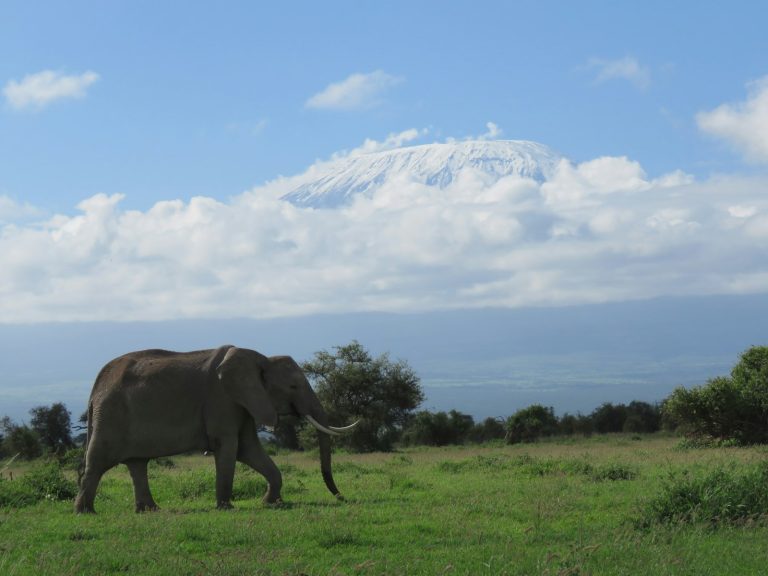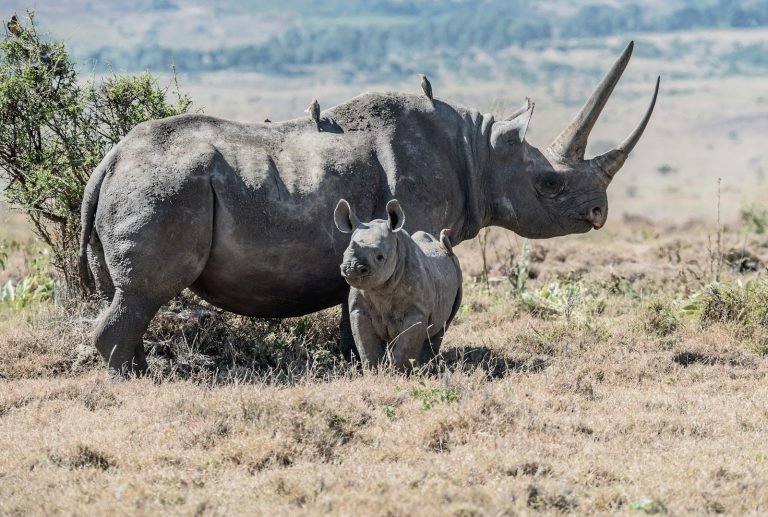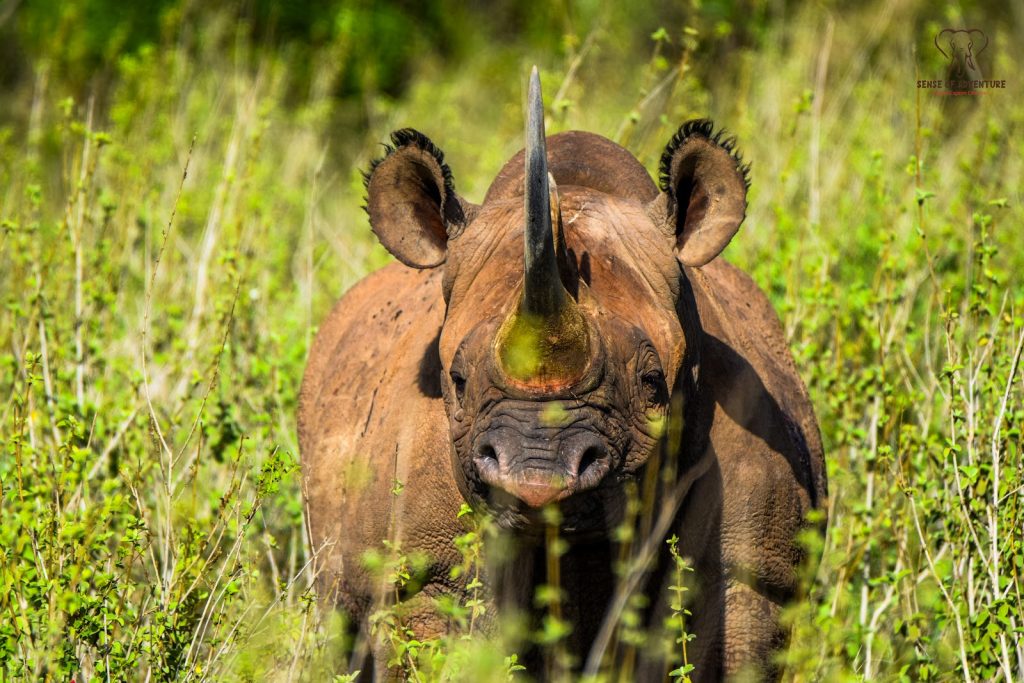
The ranger raises one hand and you freeze. It is just after dawn, the grass is wet against your trousers and Mount Kenya floats above a band of cloud to the south. Forty metres ahead, a black rhino stands side-on in the whistling thorn, ears swivelling, testing the air. You can hear it breathe. Then it snorts, turns and trots away, tail up like a flag. Your heart is pounding. Your guide is grinning. Welcome to Lewa.
Lewa Wildlife Conservancy is a not-for-profit wildlife conservancy of roughly 250 km², including Ngare Ndare Forest, at the northern foot of Mount Kenya in northern Kenya. Founded as a rhino sanctuary in 1983, it is part of the Mount Kenya World Heritage Site and protects black and white rhino, Grevy’s zebra and the Big Five.
Sense of Adventure is a Nairobi-based safari company licensed by Kenya’s Tourism Regulatory Authority (TRA1/47/C01/77087), and we plan stays at Lewa as part of private northern Kenya and Laikipia safaris. This guide covers the conservancy’s story and people, the wildlife and your honest chances of seeing it, the activities, how to get there, what you pay, the best months, rules, where to stay and a sample itinerary. For the bigger picture, see our complete list of Kenya national parks and reserves.
✅ Lewa Wildlife Conservancy: The Quick Answer
- Where: Northern foot of Mount Kenya, south of Isiolo, bordering Borana Conservancy and Ngare Ndare Forest.
- Best for: Black and white rhino, Grevy’s zebra, walking safaris, night drives and an exclusive, low-density safari.
- Best time: June to October and late December to March, the driest months.
- Entry fee: No public day ticket. A conservancy fee is charged per guest per night through your lodge; we confirm the current figure in your quote.
- How long to stay: Two to three nights.
- Getting there: Scheduled or charter flight from Nairobi to Lewa Downs airstrip, or roughly 4 to 5 hours by road via Nanyuki.
🌍 Planning a Safari to Lewa Wildlife Conservancy?
Tell us your dates and who is travelling, and we will match you with the right Lewa lodge and build the rest of your northern safari around it. 💬 WhatsApp Us Now or call +254 799 160 081
What Is Lewa Wildlife Conservancy?
Lewa Wildlife Conservancy is a private, not-for-profit conservancy that turned a cattle ranch into one of Africa’s best-known rhino sanctuaries, funded by tourism, donors and partners.
The land rises from dry acacia country in the north to cooler grassland, forest and ridges in the south, with Mount Kenya on the skyline. Together with neighbouring Ngare Ndare Forest, Lewa was added to the Mount Kenya UNESCO World Heritage Site, which describes it as part of the property’s northern extension.
The Lewa-Borana landscape
Lewa does not stand alone. According to Lewa Wildlife Conservancy, joining its land with neighbouring Borana created 93,000 acres of continuous rhino range, which now holds more than 280 rhinos, about 14% of Kenya’s rhino population, with no rhino poaching recorded since 2019. Read our Borana Conservancy guide for the other half of the story.
The History of Lewa: From Ranch to Rhino Sanctuary
Lewa’s story runs from a colonial-era cattle ranch to a conservation model copied across northern Kenya.
The Craig family ran Lewa Downs as a cattle ranch for decades. In 1983, at a time when poaching had cut Kenya’s black rhinos from an estimated 20,000 in the 1960s to fewer than 300, the Craigs and conservationist Anna Merz set up the fenced and guarded Ngare Sergoi Rhino Sanctuary on part of the ranch, starting with just 15 rhinos.
The sanctuary later expanded across the whole ranch, Ngare Ndare Forest was brought inside the fence in 1994, and Lewa Wildlife Conservancy was formally established as a non-profit in 1995. Its rhinos have since been used to restock other parks and sanctuaries in Kenya.
The Mount Kenya elephant underpass
Elephants move between Mount Kenya’s forests and the plains to the north. To keep that route open, Lewa and partners built an underpass beneath the main highway. According to Save the Elephants, the first elephant walked through on 1 January 2011, just days after it opened, linking highland and lowland elephant populations.
People of Lewa: Rangers, Teachers and Neighbours
Lewa Wildlife Conservancy works on the principle that wildlife survives only if neighbouring communities benefit, and visitor fees help fund that work.
Around the conservancy live farming communities to the south and Maa-speaking pastoralist communities to the north. The Lewa Education Program supports 28 surrounding schools and more than 9,100 students a year with classrooms, digital literacy, scholarships, teacher training and conservation education. Lewa also runs health and water projects and supports community conservancies to the north.
Rangers and security
Lewa’s rangers, tracker dogs and joint operations centre work around the clock to protect rhinos and people. Staying guests can ask to meet the tracker dog unit, visit the security operations room or the elephant underpass, and see Lewa-supported schools, clinics and water projects.
The Lewa Safari Marathon
Each year the Safaricom Lewa Safari Marathon is run on the conservancy, with runners sharing the course with wildlife. It raises money for conservation and community programmes, and it is one of the most unusual races in the world. Check the official dates before you book, as lodges fill quickly that weekend.
Expert tip from our Nairobi team: Ask for one behind-the-scenes activity during your stay. These visits are reserved for guests staying on Lewa and Borana and run first come, first served, so request them when you book rather than on arrival.
Wildlife at Lewa Wildlife Conservancy: What You Will See
Lewa Wildlife Conservancy offers some of Kenya’s most reliable rhino viewing, plus Grevy’s zebra, northern specialities and the Big Five.
Lewa holds one of the largest single populations of Grevy’s zebra in the world, about 350 animals according to published figures. Northern species such as reticulated giraffe, beisa oryx and gerenuk live alongside elephant, buffalo, lion, leopard and cheetah. The table gives honest odds for a three-night stay with good guiding.
| Species | Chance on a 3-night stay | Notes |
|---|---|---|
| White rhino | Very high | Grazes open grassland; easy to watch from the vehicle |
| Black rhino | High | Shyer and in thicker bush; tracking with a ranger helps |
| Grevy’s zebra | Very high | One of the world’s largest single populations |
| Reticulated giraffe | High | The northern giraffe with crisp, net-like markings |
| Elephant | High | Move between Lewa, Ngare Ndare and Mount Kenya |
| Buffalo | High | Common in the wetter, southern grassland |
| Lion | Good | Present across the Lewa-Borana landscape |
| Leopard | Low to fair | Secretive; night drives improve your chances |
| Cheetah | Fair | Seen on open plains, not every day |
| African wild dog | Low | Pass through Laikipia unpredictably; a real bonus |
Birds of Lewa
The mix of grassland, acacia bush, wetlands and forest supports a long bird list. Look for kori bustards, secretary birds, raptors over the ridges and bright starlings and sunbirds around the lodges. Bring binoculars, even if birds are not your main interest.
Can you see the Big Five at Lewa?
Yes. Lion, leopard, elephant, buffalo and both rhino species all live here, and leopard is the hardest to find. If seeing all five matters to you, read our guide to whether you will see the Big Five in Kenya.
Things to Do at Lewa Wildlife Conservancy
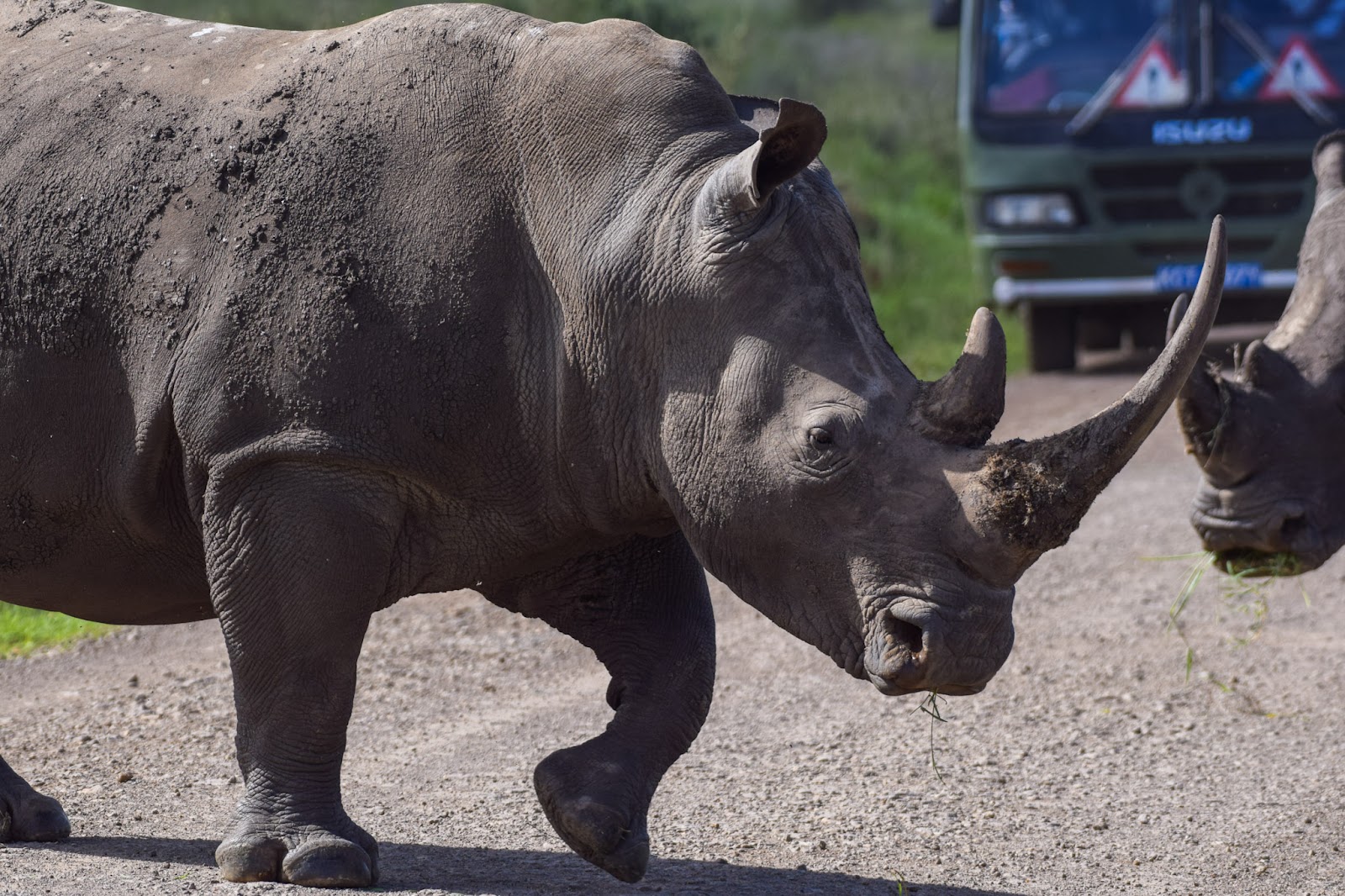
The best things to do at Lewa Wildlife Conservancy are rhino-focused game drives, guided walks, night drives, behind-the-scenes conservation visits and a day in Ngare Ndare Forest.
Game drives and walking safaris
Game drives are unhurried, with few vehicles. Walks with an experienced guide let you read tracks, smell the bush and sometimes approach rhino on foot. Our walking safari safety guide explains how guided walks are run.
Night drives
Because Lewa is a private conservancy, lodges can run night drives with a spotlight, looking for aardvark, bushbabies, genets, hyena and hunting cats. Our night drive guide covers what to expect.
Ngare Ndare Forest
Next door, Ngare Ndare Forest has a canopy walkway, clear pools and waterfalls, and it makes a lovely half-day outing from Lewa. Ask your lodge to arrange it.
Horse riding and other activities
Depending on your lodge, you may also be able to ride, cycle or take a scenic flight. Activities vary by property, so tell us what interests you and we will match the right lodge. Our horseback safari guide has more on riding in Kenya.
How to Get to Lewa Wildlife Conservancy
You can reach Lewa Wildlife Conservancy by a light-aircraft flight from Nairobi to Lewa Downs airstrip or by road via Nanyuki and Timau.
By air
Scheduled and charter flights from Wilson Airport land at Lewa Downs airstrip, and the same circuits often continue to Samburu or the Masai Mara. Your lodge meets you on arrival. Luggage is usually limited to about 15 kg in a soft bag; see our guide to safari luggage weight limits on small aircraft.
By road
The tarmac road runs north through the central highlands to Nanyuki, then around the northern side of Mount Kenya via Timau. Allow roughly 4 to 5 hours from Nairobi. Many guests drive up via Ol Pejeta Conservancy and fly out at the end of their trip.
Lewa Wildlife Conservancy Fees and Costs in 2026
Lewa Wildlife Conservancy charges a conservancy fee per guest per night, collected through your lodge, rather than selling public day tickets at a gate.
Lewa does not publish a public tariff for this fee, and lodges present it in different ways: some list it separately on their rate sheets and others include it. It funds rhino protection, research, education and community programmes. Because rates change, we confirm the exact amount in writing before you book.
| Cost | Who charges it | How it is paid | Notes |
|---|---|---|---|
| Lewa conservancy fee | Lewa Wildlife Conservancy, via your lodge | Per guest per night | Not published publicly; confirmed in your quote |
| Accommodation | Your lodge or private house | Per person per night | Mostly high-end, usually full board or all-inclusive |
| Activities | Your lodge | Often included | Walks, night drives and behind-the-scenes visits vary by lodge |
| Flights | Airline or charter | Per seat or per aircraft | Soft bags, about 15 kg, on most light aircraft |
| Samburu or national park add-ons | County or KWS | Per person per day | Charged separately if you combine parks |
For context, compare Kenya national parks entrance fees for 2026 and read conservancy fees in Kenya explained.
📅 Get a Free, No-Obligation Safari Quote
Send us your dates and we will price Lewa with the conservancy fee, flights and activities clearly itemised, alongside the best of Laikipia and Samburu. ✉ Send Us Your Dates on WhatsApp
Best Time to Visit Lewa Wildlife Conservancy
The best time to visit Lewa Wildlife Conservancy is in the dry months from June to October and late December to March, though wildlife is resident all year.
Lewa sits high, so days are warm and mornings cool, and nights can be cold. The long rains usually fall in April and May and the short rains around November. Some lodges close briefly in the long rains. See our Kenya weather by month guide for a country-wide view.
| Month | Weather | Game viewing | Notes |
|---|---|---|---|
| January–March | Dry and warm, clear mountain views | Very good | Excellent for photography |
| April–May | Long rains, lush and green | Good | Quiet; some lodges close for maintenance |
| June–October | Dry and cool, cold mornings | Excellent | Peak season; book early |
| November | Short rains, usually afternoon showers | Good | Green scenery and migrant birds |
| December | Drying out | Very good | Busy over the festive season |
What to pack for Lewa Wildlife Conservancy
- A fleece or light down jacket for early and night drives
- Neutral-coloured clothing, especially for walks
- Closed walking shoes with good grip
- Hat, sunglasses and high-factor sunscreen
- Binoculars for each person and a zoom lens
- A soft bag within the light-aircraft weight limit
Our Kenya safari packing list covers the rest.
Lewa Wildlife Conservancy Rules and Safety
Lewa Wildlife Conservancy is very safe for staying guests, and its rules protect rhinos, other wildlife and the people who work there.
- Stay with your guide: walks and drives are always led by trained guides or rangers.
- Give rhinos space: follow your guide’s instructions on distance and noise at every sighting.
- No day-tripping: Lewa is designed for staying guests; behind-the-scenes activities are reserved for them.
- No feeding wildlife, and take all rubbish away with you.
- Drones need permission: see our drone rules guide.
- Respect communities: ask before photographing people on community visits.
Before you travel, check the UK government travel advice for Kenya and take insurance with medical evacuation cover.
Expert tip from our Nairobi team: If you are flying into the north, book the Lewa leg first and build Samburu or the Mara around it. Lewa’s lodges are small, so they are usually the first part of a northern itinerary to sell out.
How Many Days Do You Need, and Where to Stay?
Two to three nights is ideal for Lewa Wildlife Conservancy: enough for rhino, Grevy’s zebra, a walk, a night drive and a conservation visit.
Two nights gives four or five activities. A third night lets you add Ngare Ndare Forest or simply slow down. Our how many days for a Kenya safari guide helps you plan the wider route.
Where to stay at Lewa
Accommodation is limited and mostly high-end, which keeps vehicle numbers low. Options include tented camps such as Lewa Safari Camp, lodges such as Lewa Wilderness and exclusive-use private houses. We match the right property to your budget, group and interests. For a tailor-made trip, see our private Kenya safari and luxury Kenya safari pages.
Combining Lewa Wildlife Conservancy With Nearby Parks
Lewa Wildlife Conservancy combines naturally with Samburu, Borana, Ol Pejeta and the Masai Mara.
Head north to Samburu National Reserve for the Special Five and riverside elephants, or stay in Laikipia with Borana, Loisaba and the Laikipia Plateau. Torn between Kenya’s two famous rhino conservancies? Our Ol Pejeta vs Lewa comparison sets out the differences. Many guests then fly to the Masai Mara.
Sample 3-Day Lewa Wildlife Conservancy Itinerary
This relaxed plan suits a first visit by air and adapts easily to a road trip or a longer northern circuit.
Day 1: Fly in and first drive
Fly from Wilson Airport to Lewa Downs, settle into your lodge and head out in the afternoon to look for white rhino and Grevy’s zebra, ending with sundowners and Mount Kenya on the horizon.
Day 2: On foot and after dark
Start with a guided walk, perhaps tracking black rhino. Rest at midday, then visit the tracker dog unit or a Lewa-supported school, and finish with a night drive.
Day 3: Forest and onward
Spend the morning in Ngare Ndare Forest or on a final drive, then fly on to Samburu or the Mara, or drive back to Nairobi.
Build Lewa into our Laikipia and Masai Mara Walking Safari, the Luxury Fly-in Safari Kenya or our Northern Kenya Cultural Safari. Prices depend on season, lodge and group size, so message us for a quote.
Lewa Wildlife Conservancy FAQs
Where is Lewa Wildlife Conservancy?
Lewa Wildlife Conservancy lies at the northern foot of Mount Kenya, south of Isiolo in northern Kenya. It borders Borana Conservancy and Ngare Ndare Forest, and together with Ngare Ndare it forms part of the Mount Kenya World Heritage Site. It is reached by light aircraft or a drive of roughly 4 to 5 hours from Nairobi.
How many rhinos are at Lewa?
Lewa started with 15 rhinos in 1983. According to the conservancy, the joined Lewa-Borana landscape of 93,000 acres now holds more than 280 black and white rhinos, about 14% of Kenya’s rhino population, and no rhino poaching has been recorded there since 2019.
How much does it cost to visit Lewa Wildlife Conservancy?
Lewa charges a conservancy fee per guest per night through your lodge, but it does not publish a public tariff, and lodges show it in different ways. Accommodation is mostly high-end. We confirm the fee, lodge rate and flights in one itemised quote before you book.
Can you visit Lewa on a day trip?
Lewa is designed for staying guests rather than day visitors, and activities such as walks, night drives and behind-the-scenes visits are reserved for them. Plan at least two nights. If you only have one day for rhinos from Nairobi, Ol Pejeta Conservancy is the practical choice.
What is Lewa Wildlife Conservancy famous for?
Lewa is famous for black and white rhino conservation, one of the world’s largest single populations of Grevy’s zebra, its community and education programmes, the Mount Kenya elephant underpass and the annual Safaricom Lewa Safari Marathon, run among the wildlife to raise conservation funds.
What is the best time to visit Lewa?
The dry months from June to October and late December to March are best for game viewing and clear views of Mount Kenya. April and May are wet and quiet, and some lodges close briefly. November brings short rains, green scenery and migrant birds.
Is Lewa better than Ol Pejeta?
They suit different travellers. Lewa is exclusive, low-density and designed for staying guests, with walks and night drives. Ol Pejeta is larger, open to day visitors and home to the last two northern white rhinos and a chimpanzee sanctuary. Many travellers visit both on a Laikipia safari.
🏕 Plan Your Lewa Wildlife Conservancy Safari With Sense of Adventure
Kenya-based experts. Real local knowledge. Transparent pricing. We will pick the right Lewa lodge for your group and pair it with the best of Laikipia, Samburu or the Mara. 💬 WhatsApp Us — Start Planning Today
Call or WhatsApp: +254 799 160 081 · Email: reservations@senseofadventure.co.ke
Related Safari Guides
- › Borana Conservancy Guide
- › Ol Pejeta Conservancy Guide
- › Ol Pejeta vs Lewa: Kenya’s Top Rhino Conservancies
- › Samburu National Reserve Guide
- › Laikipia Plateau Safari Guide
Official travel & park resource: Kenya Wildlife Service ↗ · Conservancy: Lewa Wildlife Conservancy ↗ · Tourism: Magical Kenya ↗