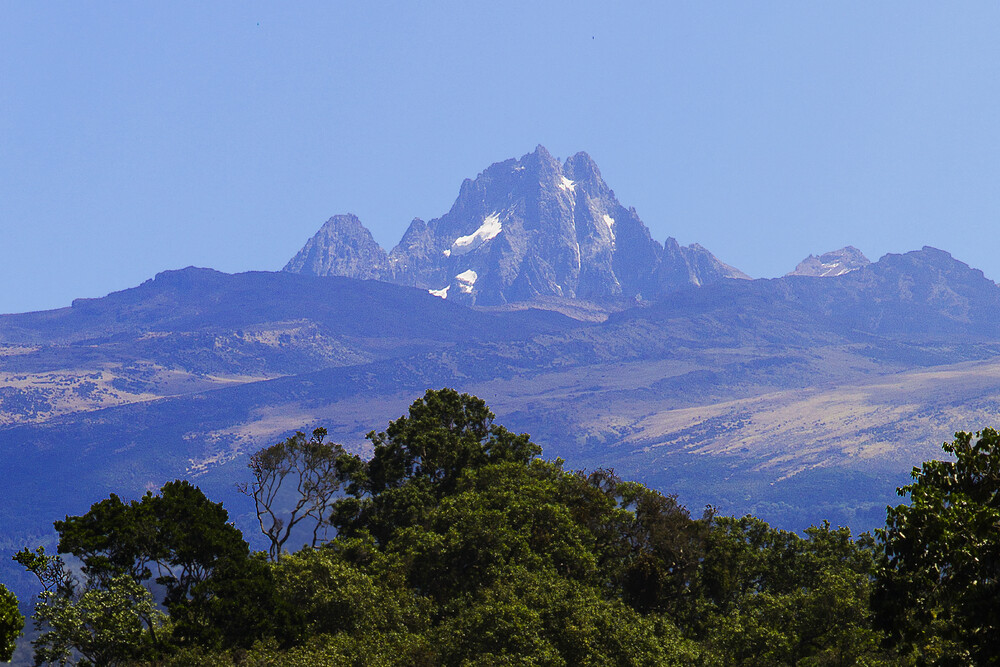
This Mount Kenya guide starts with the essentials: Mount Kenya is Africa’s second-highest mountain and one of the most dramatically beautiful on earth — a volcanic massif so ancient and so eroded that its central peaks look like they were designed by a sculptor, not shaped by geology. At 5,199 metres, the summit of Batian is permanently glaciated. Below the glacier, the mountain moves through altitude zones of extraordinary ecological variety: montane forest, bamboo belt, giant heather moorland, and the surreal Afro-alpine zone where giant lobelias and groundsels grow taller than you are. The mountain sits on the equator. It is crossed by the equatorial line. And it holds permanent snow.
Sense of Adventure offers guided Mount Kenya trekking experiences for every fitness level — from the acclimatisation-friendly Point Lenana (4,985 m) to full technical climbs on the twin peaks. This is Kenya completely off the safari circuit, and it is extraordinary.
✅ Mount Kenya Guide: Quick Answer
- Trekking summit: Point Lenana (4,985 m) — no technical climbing needed.
- Technical summits: Batian (5,199 m) and Nelion (5,188 m) — rock climbing skills required.
- How long: 4–5 days for most trekkers; 3 days is the minimum.
- Best route: Sirimon up, Chogoria down for acclimatisation and scenery.
- Best time: January–February and June–October.
- Base town: Nanyuki, roughly 3–4 hours’ drive north of Nairobi.
Trek Africa’s Second-Highest Mountain
Sense of Adventure runs guided Mount Kenya treks for all fitness levels — from 3-day Point Lenana ascents to full technical climbing. Contact us to plan your Kenya mountain adventure.
The Mount Kenya Trekking Routes
Mount Kenya has multiple established trekking routes offering different approaches, difficulty levels, and scenery. Sense of Adventure guides all three main routes and will recommend the best option based on your fitness, schedule, and summit ambitions.
⛰ The Three Main Routes
Sirimon Route (West) — The most gradual ascent, entering through the northwestern Sirimon Gate at 2,650 m and ascending through open moorland. Recommended for acclimatisation-conscious trekkers and those doing the Sirimon-Chogoria traverse (widely regarded as the finest Mount Kenya circuit). 4–5 days to Point Lenana.
Chogoria Route (East) — The most scenically dramatic route, entering through the eastern Chogoria Gate at 3,000 m and ascending past Lake Michaelson, the Hall Tarns, and the extraordinary Gorges Valley. Longer and more remote than Sirimon. 4–5 days to Point Lenana; best combined with Sirimon descent.
Naro Moru Route (West) — The fastest and most direct route, ascending through the notorious “Vertical Bog” above 3,300 m to reach the Teleki Valley. Possible to summit in 3 days, but the rapid altitude gain requires good acclimatisation. Popular with experienced trekkers who want efficiency over scenery.
For a detailed day-by-day breakdown of the summit trek, read our Mount Kenya Point Lenana trek guide. If you want to book a ready-made itinerary, the Mount Kenya Trek – Sirimon-Chogoria Traverse (5 Days) is our most popular option, and the 7 Days Mt Kenya Hiking Adventure gives a slower, more relaxed pace.
Five Mount Kenya Experiences
Point Lenana Summit — 4,985 m on the Equator
Point Lenana is the highest point accessible to trekkers without technical climbing skills — the third summit of Mount Kenya at 4,985 m. The 3am summit push, head torches cutting through freezing darkness, culminates at dawn with a view that encompasses the entire Kenya highland plateau and, on clear days, both the Kenyan coast and Kilimanjaro. Sense of Adventure’s guides know every step of every route and ensure safe, properly acclimatised ascents for all fitness levels.
Afro-Alpine Zone — Giant Lobelias & Groundsels
Above 3,500 m on Mount Kenya, the vegetation is unlike anything else on earth. Giant lobelias — plants that look like botanical sculptures — grow two to three metres tall on the moorland. Giant groundsels, ancient-looking relatives of the common garden plant, form tree-like structures on the ridge crests. Sunbirds flutter around the lobelia flower spikes. Rock hyraxes sunbathe on boulders. The landscape has the quality of a dream.
Montane Forest Walk — Colobus, Elephant & Buffalo
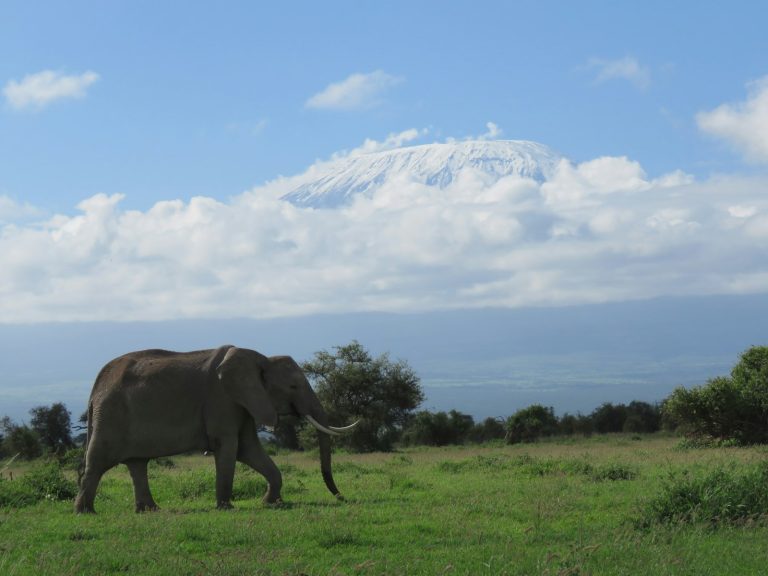
The lower montane forest belt on Mount Kenya — between the park gates at 2,400 m and the bamboo zone — is dense, dark, and full of wildlife. Black-and-white colobus monkeys move through the canopy above the trail. Buffalo tracks are pressed into the mud at every water crossing. Elephant use the forest extensively and are sometimes encountered at close range on the trail. The morning birdsong in this forest is extraordinary — over 130 bird species have been recorded in Mount Kenya’s forest belt.
Lake Michaelson & the Gorges Valley
On the Chogoria Route, Lake Michaelson occupies a glacially carved cirque at 4,020 m — a circular, impossibly blue lake beneath sheer rock walls, completely silent except for wind, absolutely remote, and one of the most beautiful places in Africa. The Gorges Valley below it is equally spectacular. These locations alone justify the Chogoria route, and Sense of Adventure’s guides know the best approach times for photography and the safest camping spots at the lake shore.
Mount Kenya Safari & Trek Combination
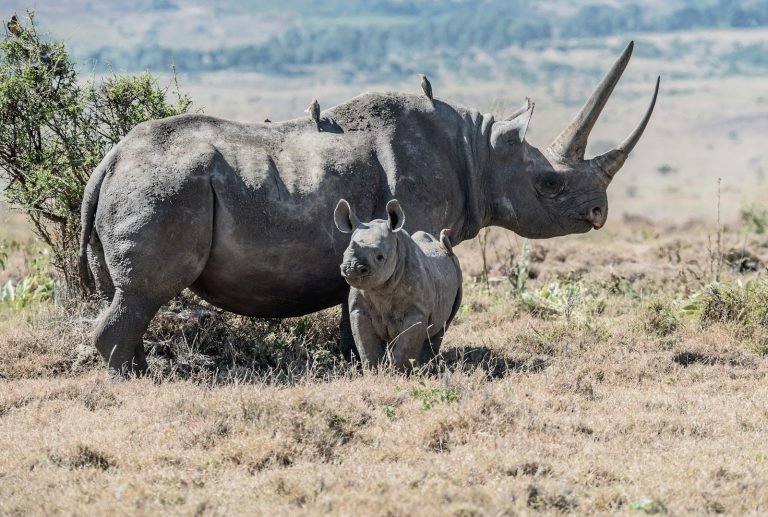
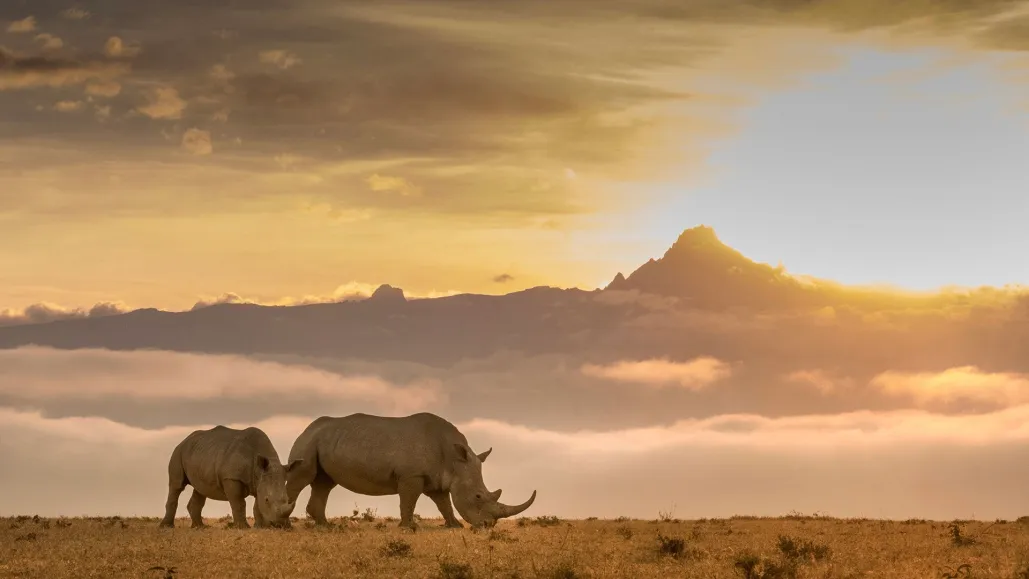
Mount Kenya’s foothills are home to Ol Pejeta Conservancy — one of Kenya’s finest wildlife sanctuaries, holding Africa’s last northern white rhinos, large black rhino populations, and the full range of savannah wildlife. Combining an Ol Pejeta game drive with a Mount Kenya trek gives guests both African wildlife and mountain wilderness in a single northern circuit. Sense of Adventure regularly builds this combination into 7–10 day Kenya itineraries alongside Samburu.
Mount Kenya Guide: Planning Your Trek
Once you know which route appeals, the practical side is straightforward. Most treks start from Nanyuki on the north-west side of the mountain, Naro Moru on the west, or Chogoria town on the east. All three are reachable by road from Nairobi in a few hours, and the crew meets you at your hotel or at the park gate.
Getting to Mount Kenya
Nanyuki is roughly 200 km north of Nairobi, usually 3–4 hours by road depending on traffic around Thika and Karatina. Scheduled light aircraft also fly from Wilson Airport to Nanyuki, which saves time if you are combining the trek with a safari. Chogoria is further round on the eastern side and takes a little longer to reach. We arrange private transfers in both directions as part of every trek.
How to Choose a Mount Kenya Guide and Crew
Your guide makes the biggest difference to safety and enjoyment. Look for a guide registered with the park authorities who has many seasons on the mountain, carries a first-aid kit and knows the evacuation options. A well-run trek has enough porters to carry tents and food without overloading anyone, a cook who understands nutrition at altitude, and a clear plan for turning back if someone becomes unwell. Ask any operator how many guides travel with the group and what happens if one trekker needs to descend early.
Park Fees and Permits
Mount Kenya National Park is managed by Kenya Wildlife Service. Trekkers pay daily conservation fees for each day inside the park, plus camping or hut fees, and rates differ for international visitors, residents and citizens. Fees change from time to time, so check the current figures on the KWS website or ask us — our trek quotes include them.
Which Trek Fits You? A Mount Kenya Guide by Traveller Type
- First-time high-altitude trekkers: Sirimon up and down, or Sirimon–Chogoria over 5 days, with an extra acclimatisation night if possible.
- Experienced hikers short on time: Naro Moru over 3–4 days, ideally after recent time at altitude.
- Photographers and scenery lovers: the Chogoria side, with time to explore Lake Michaelson, the Hall Tarns and the Gorges Valley.
- Families with teenagers: a slow Sirimon itinerary, or a shorter forest and moorland walk without the summit push.
- Climbers: a technical ascent of Nelion or Batian with a specialist guide, after acclimatising on Point Lenana.
Whichever profile fits, share it with your Mount Kenya guide before you book. A good guide will shape the pace, the camps and the summit plan around your experience rather than a fixed timetable.
Altitude, Weather and Safety on Mount Kenya
Mount Kenya rises steeply from the surrounding plains, which means trekkers gain height quickly. Altitude sickness is the most common reason people turn back, and it can affect anyone, however fit. Walk slowly, drink 3–4 litres of water a day, eat well and tell your guide early if you feel unwell. The cure for worsening symptoms is always to go down. Speak to your doctor before you travel, and see the WHO travel health pages for general guidance.
Weather on the upper mountain changes fast. Mornings are often clear, with cloud building around midday and rain or sleet possible in the afternoon. Temperatures at the high camps drop well below freezing at night. Our guides start each day early to make the most of the clear morning hours and keep an eye on conditions throughout.
What to Pack for Mount Kenya
- Waterproof, broken-in hiking boots and gaiters for the boggy moorland.
- Thermal base layers, fleece, down jacket and a fully waterproof jacket and trousers.
- Warm hat, sun hat, buff, liner gloves and insulated gloves.
- Sleeping bag rated to around minus 10°C, plus a sleeping mat if camping.
- Head torch, spare batteries, trekking poles and a 25–35 litre daypack.
- Sunscreen, lip balm, sunglasses, water purification tablets and personal medication.
Porters carry your main bag (usually up to around 15 kg), so you only carry water, snacks, layers and your camera during the day. Pack your main bag in a waterproof liner, because rain and wet grass are common even in the dry seasons.

Technical Climbing on Batian and Nelion
The twin summits are serious rock climbs with sections of ice depending on the season and route. The normal routes on Nelion and Batian involve multi-pitch climbing and are usually done over a long day from a high camp, sometimes with a night at the small emergency shelter near the top of Nelion. Climbers need solid experience of multi-pitch rock at altitude, their own technical kit and a qualified climbing guide.
Because the mountain sits on the equator, the sun swings from north to south during the year. As a general rule, north-facing rock routes tend to be in better condition around the middle of the year and south-facing routes around the turn of the year. Talk to us well in advance if you want a technical ascent so we can match you with a specialist climbing guide.
Combining Mount Kenya With a Safari
The mountain sits at the heart of Kenya’s northern safari circuit, so it is easy to add wildlife either side of a trek. After coming down, many guests spend a day at Ol Pejeta — our Ol Pejeta day safari runs from Nairobi, and Nanyuki is closer still. For a longer trip, the Northern Kenya Cultural Safari – Samburu and Laikipia or a week in the Masai Mara makes a restful contrast to the mountain. Hikers who want a second range can add our Aberdare Ranges Trek (3 Days).
The UNESCO World Heritage listing for Mount Kenya also covers the Lewa Wildlife Conservancy and Ngare Ndare Forest, linked to the mountain by an elephant corridor — a good reminder that the mountain and the Laikipia plains form one connected ecosystem. For more inspiration across the region, the Magical Kenya tourism site is a useful starting point.
Best Time to Trek Mount Kenya
| Season | Trekking Conditions | Views | Notes |
|---|---|---|---|
| Jan – Feb | ⭐⭐⭐⭐⭐ Best | ⭐⭐⭐⭐⭐ Clearest | Dry season, ideal conditions |
| Mar – May | ⭐⭐ Challenging | ⭐⭐ Limited | Long rains; trails wet; cloud frequent |
| Jun – Oct | ⭐⭐⭐⭐ Very good | ⭐⭐⭐⭐ Good | Drier; some cloud on peaks |
| Nov – Dec | ⭐⭐⭐ Good | ⭐⭐⭐ Moderate | Short rains; variable conditions |
Christmas, New Year and the August holidays are the busiest periods at the huts and campsites, so book early if you plan to trek then. Mid-week starts are usually quieter on all routes.
Frequently Asked Questions — Mount Kenya
Do I need technical climbing experience to summit Mount Kenya?
No — Point Lenana at 4,985 m is accessible to fit, acclimatised trekkers without any technical climbing experience. The Batian and Nelion peaks (5,199 m and 5,188 m) require full technical rock climbing skills and equipment. Sense of Adventure guides Point Lenana ascents for all fitness levels, with proper acclimatisation schedules to ensure safe ascents.
How long does it take to trek Mount Kenya?
A Point Lenana ascent via the Naro Moru route takes a minimum of 3 days, but 4–5 days is strongly recommended for proper acclimatisation. The Chogoria-Sirimon traverse — widely regarded as the finest Mount Kenya circuit — takes 5–6 days and is Sense of Adventure’s most recommended itinerary for guests with the time available.
Is Mount Kenya harder than Kilimanjaro?
The Point Lenana trek is technically comparable to Kilimanjaro’s Marangu route — similar altitude, similar duration, similar non-technical demands. The Chogoria route is more remote and physically demanding than most Kilimanjaro routes. Batian and Nelion technical ascents are considerably harder than any non-technical Kilimanjaro route. For acclimatisation, Mount Kenya at the equator behaves differently from Kilimanjaro — discuss your experience with Sense of Adventure when planning.
What wildlife might I see on Mount Kenya?
The montane forest zones hold elephant, buffalo, black-and-white colobus monkeys, giant forest hog, and many forest birds. Above the treeline, the moorland supports rock hyrax, eland (the world’s highest resident eland population), and occasionally leopard. The mountain is a UNESCO World Heritage Site and Biosphere Reserve, protecting one of East Africa’s most important montane ecosystems.
Do I need a Mount Kenya guide, or can I trek alone?
You should trek with a registered Mount Kenya guide. The routes cross remote, high and sometimes confusing terrain, weather can change quickly and altitude sickness needs an experienced eye. A guide also handles park entry, hut bookings and porters. Every Sense of Adventure trek includes a qualified guide, porters and a cook as standard.
Will I see snow or ice on Mount Kenya?
Yes, often. The glaciers around Batian and Nelion are still visible, although they have shrunk a great deal over the last century. Frost is normal at the high camps, and fresh snow can fall near the summit in any month, especially during the rainy seasons. Point Lenana itself is usually reached on rock and gravel rather than ice.
How much should I tip the Mount Kenya crew?
Tipping is customary and much appreciated by guides, cooks and porters, who rely on it as part of their income. The amount depends on group size and trek length, so we give every guest a clear tipping guideline before the trek. Tips are usually handed over at the end of the final day, often with a small thank-you gathering.