Loisaba Conservancy is the kind of place most first-time Kenya travellers never hear of until a guide mentions it, tucked into the northwest of the Laikipia plateau well off the standard Mara-Amboseli circuit. That obscurity is exactly the appeal. You can walk with an armed ranger through acacia country, ride out on a camel at dawn, or fall asleep on an open-air Star Bed with nothing between you and the sky.
Somewhere out in the dark, lions or hyenas may call. Because Loisaba Conservancy is private land with a small number of camps, you rarely share a sighting with more than a vehicle or two. Sense of Adventure, a TRA-licensed safari operator based in Nairobi, routes guests here specifically for that sense of space, something the busiest parts of the Mara can no longer promise. This guide covers the wildlife, things to do, where to stay, how to get there, costs and the best time to visit.
✅ Loisaba Conservancy: Quick Answer
- Where: northwest Laikipia, central-northern Kenya, between Mount Kenya and Samburu.
- Known for: Star Beds, low vehicle numbers, wild dogs, Grévy’s zebra, reticulated giraffe and elephants.
- Activities: day and night game drives, guided walks, camel and horse riding, and river time on the Ewaso Nyiro.
- How long: three to four nights.
- Getting there: a light-aircraft flight from Nairobi, or roughly six hours by road via Nanyuki.
- Best time: the dry months, roughly June to October and December to March.
- Package: our 5-day Laikipia & Loisaba safari starts from USD 3,600 per person.
Dreaming of a night on a Star Bed? Tell us your dates and we will check Loisaba options for you.
Ask About Star BedsWhat Makes Loisaba Conservancy Different From the Mara
Loisaba Conservancy sits within Laikipia, a vast patchwork of ranches and private and community conservancies stretching from the edge of the Rift Valley towards Mount Kenya. Unlike the Masai Mara National Reserve, it has no public gates or shared reserve roads; access is limited to guests of its camps, which keeps numbers low.
The landscape is dramatic: open plains, acacia woodland, rocky hills and the Ewaso Nyiro River gorge, with Mount Kenya on the horizon on clear mornings. Loisaba is home to elephants, reticulated giraffe, Grévy’s zebra, African wild dogs, leopards, lions and a long list of birds, and black rhinos returned in 2024 after an absence of decades. Conservancy rules also allow activities that national parks do not, such as walking, night drives and off-road driving to sightings. Our reserve vs conservancy guide explains the difference.

5 Reasons to Visit Loisaba Conservancy
Star Beds: sleeping under the open sky
Loisaba is famous for its Star Beds, raised wooden platforms where a four-poster bed is rolled out under the sky, with a mosquito net and no roof. On a clear Laikipia night, far from city light, the stars are extraordinary. Each platform has its own bathroom, and staff are close by, so it feels adventurous without feeling exposed.
Black rhinos back on the land
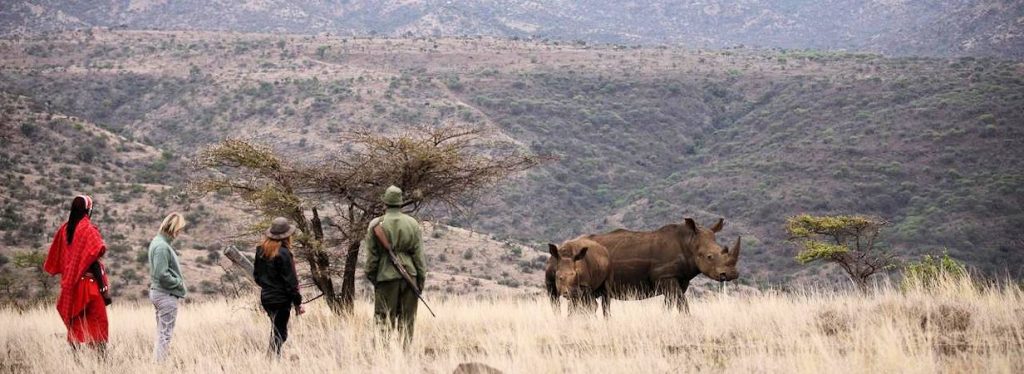
In January and February 2024, 21 eastern black rhinos were moved to Loisaba from Nairobi National Park, Lake Nakuru and Ol Pejeta, part of Kenya’s national rhino recovery plan and the first rhinos on the land in about 50 years. Save the Rhino and Loisaba Conservancy publish updates on the new population. Rhino sightings depend on the animals settling and on the conservancy’s protection rules, so ask us what is possible at the time of your visit.
Rare species: reticulated giraffe, Grévy’s zebra and wild dogs
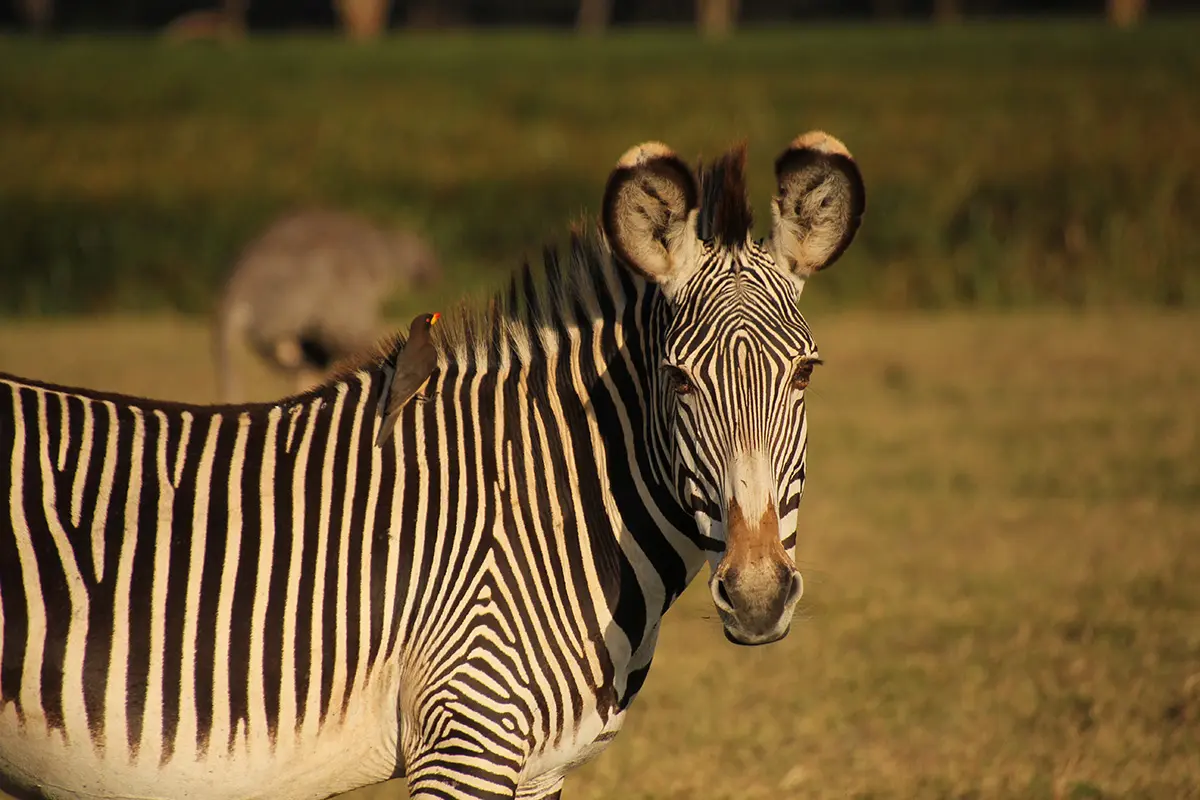
Loisaba protects several of Kenya’s rarest large mammals in one landscape. Reticulated giraffe and Grévy’s zebra are northern species you will not see in the Mara, and Laikipia is one of the best regions in East Africa for African wild dogs, though their wide-ranging packs mean sightings are never guaranteed.
Low vehicle density and private sightings
With only a few camps on a large area, Loisaba usually has very few vehicles out at once, even in peak season. That is a sharp contrast to the Mara reserve during migration season, and it means sightings feel private rather than shared with a queue of other cars.
A conservation and community model
Loisaba is owned by a non-profit conservation trust, and income from tourism helps fund wildlife protection, rangers and community programmes such as education and healthcare in the surrounding area. Staying here directly supports that work, which is a big reason many guests choose it.
Book Your Laikipia and Loisaba Safari
Our 5-day Laikipia & Loisaba Conservancy Luxury Safari puts you where the crowds are not. Ask us how it fits your travel month.
See the Loisaba ItineraryWildlife at Loisaba Conservancy
Loisaba Conservancy has a rich mix of savannah and northern dry-country wildlife. Big game is not as dense as in the Mara, but the variety and the privacy make up for it.
Predators
Lions, leopards, spotted hyenas and striped hyenas live here, along with cheetahs and African wild dogs that move across the wider Laikipia landscape. Leopards are often found around rocky outcrops and along the river, and night drives give a good chance of nocturnal predators.
Elephants and herbivores
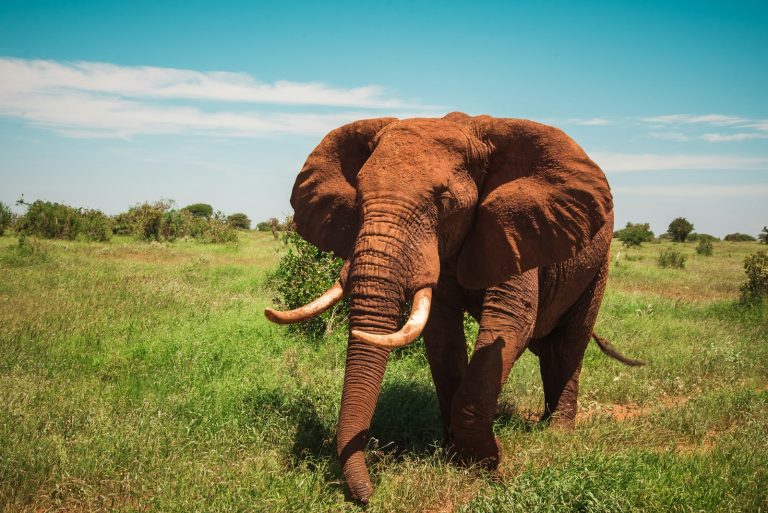
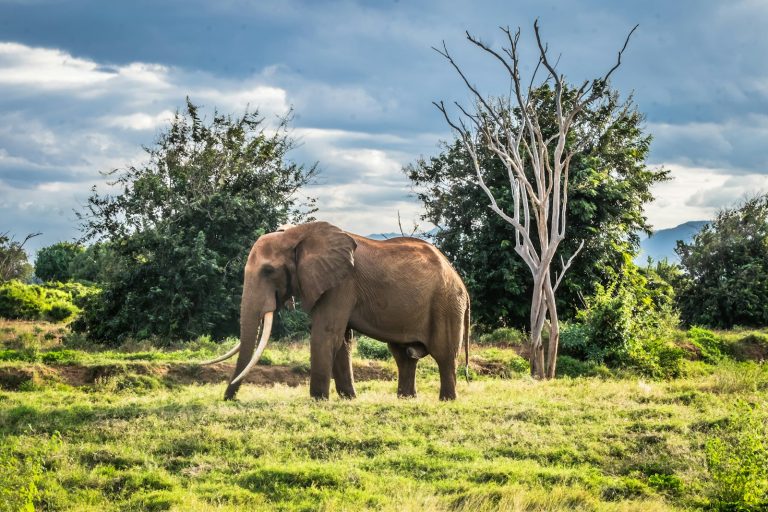
Elephants move through Laikipia in large numbers, and Loisaba is part of their range. Look for reticulated giraffe, Grévy’s and plains zebra, eland, buffalo, impala, Grant’s gazelle, gerenuk and the tiny dik-dik. Grévy’s zebra, reticulated giraffe and African wild dogs are all listed as Endangered on the IUCN Red List, which makes every sighting at Loisaba Conservancy special. Our gerenuk facts and dik-dik facts guides cover two local favourites.
Birds and small animals
The bird list is long, from ostriches and kori bustards to raptors along the escarpment. After dark, look for aardvarks, genets, bush babies and porcupines.
Things to Do at Loisaba Conservancy
Activities at Loisaba Conservancy go well beyond the usual game drive, which is why it suits travellers who have already done a classic safari.
- Day and night game drives: off-road driving to sightings is allowed under conservancy rules.
- Guided walks: with trained guides and rangers; our walking safari safety guide explains what to expect.
- Camel rides: a slow, quiet way to see the bush, often with local Samburu or Laikipiak Maasai handlers.
- Horse riding: available for experienced riders.
- River time: picnics and swims or rafting on the Ewaso Nyiro, depending on water levels and safety.
- Community visits: to see the conservation and community projects Loisaba supports.
- Sundowners: on the escarpment with views towards Mount Kenya.
Activities vary by camp and season, so we confirm the options when we book.

Where to Stay at Loisaba Conservancy
Accommodation at Loisaba Conservancy is limited to a handful of camps, which keeps the land quiet. The best-known options are Loisaba Tented Camp, set on the edge of the escarpment with wide views; Loisaba Lodo Springs, a smaller camp beside a waterhole; and the Loisaba Star Beds for one or two nights under the sky.
Many guests combine a tented camp with a Star Beds night. Availability is small, so we check options once we know your dates. For a wider view of the region’s camps, see our Laikipia luxury lodges guide and our luxury Kenya safari packages.
Tented Camp, Star Beds or Both?
Tell us your budget and how adventurous you feel, and we will suggest the right mix of Loisaba nights for your trip.
Choose My Loisaba CampHow to Get to Loisaba Conservancy
By air
Most guests fly to Loisaba Conservancy by light aircraft from Nairobi’s Wilson Airport, often with a stop at another Laikipia airstrip, landing on the conservancy’s own airstrip in roughly an hour and a half. Small planes have strict luggage limits, usually soft bags only; see our safari luggage weight limit guide if you are unsure.
By road
The drive from Nairobi takes around six hours via Nanyuki, with the final stretch on rough tracks. It works well if you are combining Loisaba with Ol Pejeta or other Laikipia conservancies by road, or starting from a Kenya safari from Nairobi. Before any road trip in northern Kenya, check the latest GOV.UK travel advice for Kenya.
Loisaba Conservancy Costs and Packages
Loisaba Conservancy is a premium destination. Camp rates usually include meals, most activities and conservancy fees, and they vary by season. Our conservancy fees guide explains why these fees matter and what they fund.
- Laikipia & Loisaba Conservancy Luxury Safari (5 Days), from USD 3,600 per person.
- Northern Kenya Cultural Safari: Samburu & Laikipia (5 Days), from USD 1,500 per person.
- Laikipia & Masai Mara Walking Safari (7 Days), from USD 4,200 per person.
- Laikipia Horseback Safari (5 Days), from USD 3,900 per person.
Prices depend on season, camp and group size, so we always confirm a written quote. Not every package stays at Loisaba itself, so ask us which one fits.
Request a Written Loisaba Quote
Loisaba has only a few rooms. Send your dates and group size, and we will check camp availability and reply with one clear price.
Best Time to Visit Loisaba Conservancy
Loisaba Conservancy can be visited all year. The dry seasons, roughly June to October and December to March, bring animals to the river and waterholes and are best for game viewing and clear Star Bed nights. The long rains, usually around April and May, turn the land green and can make tracks muddy; some camps may close briefly. Shorter rains around November are usually manageable.
Laikipia sits at altitude, so nights and early mornings can be cool, which is worth remembering for a Star Beds night. For more detail, see our Kenya weather by month guide.
| Months | Conditions | Good for |
|---|---|---|
| Jun to Oct | Dry, cool nights | Game viewing, Star Beds |
| Nov | Short rains | Green scenery, birds |
| Dec to Mar | Mostly dry, warm days | Walking, river activities |
| Apr to May | Long rains | Quiet, lush, fewer guests |
Loisaba Conservancy vs Other Laikipia Conservancies
Laikipia has many conservancies, and each has a different character. Ol Pejeta is the easiest to reach and one of the most reliable for rhino viewing, and home to the last northern white rhinos, but it is busier and allows day visitors. Lewa and Borana are known for rhinos and Mount Kenya views, with a strong walking and riding culture. Community conservancies such as Il Ngwesi offer a close connection with local Maasai communities.
Loisaba Conservancy stands out for its size, its wild, rugged scenery, the Star Beds and its very low guest numbers. It is a better fit for travellers who want space, varied activities and northern species than for those who simply want the highest density of big cats. Our Ol Pejeta vs Lewa comparison and Borana Conservancy guide help you compare.
| Conservancy | Best for | Feel |
|---|---|---|
| Loisaba | Star Beds, wild dogs, northern species, activities | Remote, rugged, very private |
| Ol Pejeta | Rhinos, easy access, families | Busier, open to day visitors |
| Lewa and Borana | Rhinos, riding, Mount Kenya views | Exclusive, conservation-led |
| Il Ngwesi | Community-run stay, culture | Intimate, Maasai-owned |
Expert tip from our Nairobi team
Book your Star Beds night for the middle of your stay, not the first evening. By then you know the camp team, you have seen the landscape by day and you are used to the night sounds, so the experience feels thrilling rather than strange. Check the moon phase too: a night close to new moon gives the darkest sky and the most stars.
Practical Tips for Loisaba Conservancy
- Pack warm layers: nights and early drives on the plateau can be surprisingly cold, especially on the Star Beds.
- Bring soft bags: light aircraft usually limit you to around 15 kg in a soft duffel.
- Book early for Star Beds: there are only a few platforms, and the best dates go first.
- Plan activities with your guide: walks, camel rides and night drives are best spread across your stay.
- Bring binoculars: wild dogs and northern antelopes are often seen at a distance.
- Respect local culture: ask before photographing people during community visits.
Loisaba Conservancy: Quick Reference
- Size: roughly 56,000 acres of private wilderness on the Laikipia plateau.
- Access: a light-aircraft flight from Nairobi, or around six hours by road via Nanyuki.
- Signature stay: the Star Beds, open-air sleeping platforms under the sky.
- Key species: elephants, reticulated giraffe, Grévy’s zebra, African wild dogs and reintroduced black rhinos.
- Activities: game drives, night drives, walks, camel and horse riding.
- Conservation model: owned by a non-profit trust that reinvests tourism income.
Fitting Loisaba Into a Wider Kenya Safari
Loisaba pairs naturally with the rest of Laikipia and the wider northern circuit rather than standing entirely alone. Read our full Laikipia Plateau safari guide for how the wider region fits together, or our Ol Pejeta Conservancy safari guide if you want to compare it with Laikipia’s most visited conservancy. Our own Laikipia & Loisaba Conservancy Luxury Safari (5 Days) and Northern Kenya Cultural Safari (5 Days) both build Laikipia into a broader northern Kenya route.
For a classic first safari, add three nights in the Masai Mara for big cats, or head north to Samburu for the Special Five. Our Laikipia vs Masai Mara comparison helps you balance the two, and a private Kenya safari lets you set the pace.

Loisaba Conservancy FAQs
What is Loisaba Conservancy known for?
Loisaba Conservancy is known for its open-air Star Beds, low vehicle numbers and northern species such as reticulated giraffe, Grevy’s zebra and African wild dogs. It is owned by a non-profit trust, and in early 2024 it received 21 eastern black rhinos, the first on the land in about 50 years.
How do I get to Loisaba Conservancy?
Most guests fly to Loisaba Conservancy by light aircraft from Nairobi’s Wilson Airport, which takes roughly an hour and a half, sometimes with a stop at another Laikipia airstrip. By road, the drive takes around six hours via Nanyuki, with the last section on rough tracks. We arrange either option.
Is Loisaba Conservancy good for seeing the Big Five?
Loisaba Conservancy has elephants, buffalo, lions and leopards, and black rhinos were reintroduced in 2024, so all five are present. Lions and rhinos are less predictable than in the Mara or Ol Pejeta, so Loisaba is best for rare northern species, privacy and activities rather than a quick checklist.
What are the Star Beds at Loisaba?
The Star Beds are raised wooden platforms where a bed is rolled out under the open sky, with a mosquito net but no roof or walls. Each has its own bathroom, and staff stay nearby. Most guests spend one or two nights there as part of a longer Loisaba stay in a tented camp.
Can I combine Loisaba with Samburu or Ol Pejeta?
Yes. Loisaba combines easily with Samburu to the north and Ol Pejeta to the south, since all sit within the wider Laikipia and northern Kenya region. Transfers are usually by road or a short light-aircraft hop, which makes a 7 to 10-day northern Kenya safari easy to plan.
How many nights should I spend at Loisaba?
Three to four nights is ideal for Loisaba Conservancy. That gives time for game drives, a night drive, a walk or camel ride and a Star Beds night without rushing. With only two nights you will still see a lot, but you may have to choose between activities.
Is Loisaba suitable for families?
Loisaba can work very well for families, because private vehicles and flexible activities make it easier to set your own pace. Some activities, such as walking or riding, have age limits, and the Star Beds may not suit young children. We will check the right camp and activities for your family’s ages.
Kenya’s Quiet Wilderness Is Waiting
From a night on the Star Beds to wild dogs at dawn, our Nairobi team will build a private Laikipia safari around Loisaba Conservancy.
Kenya-based experts. Real local knowledge. Transparent pricing.