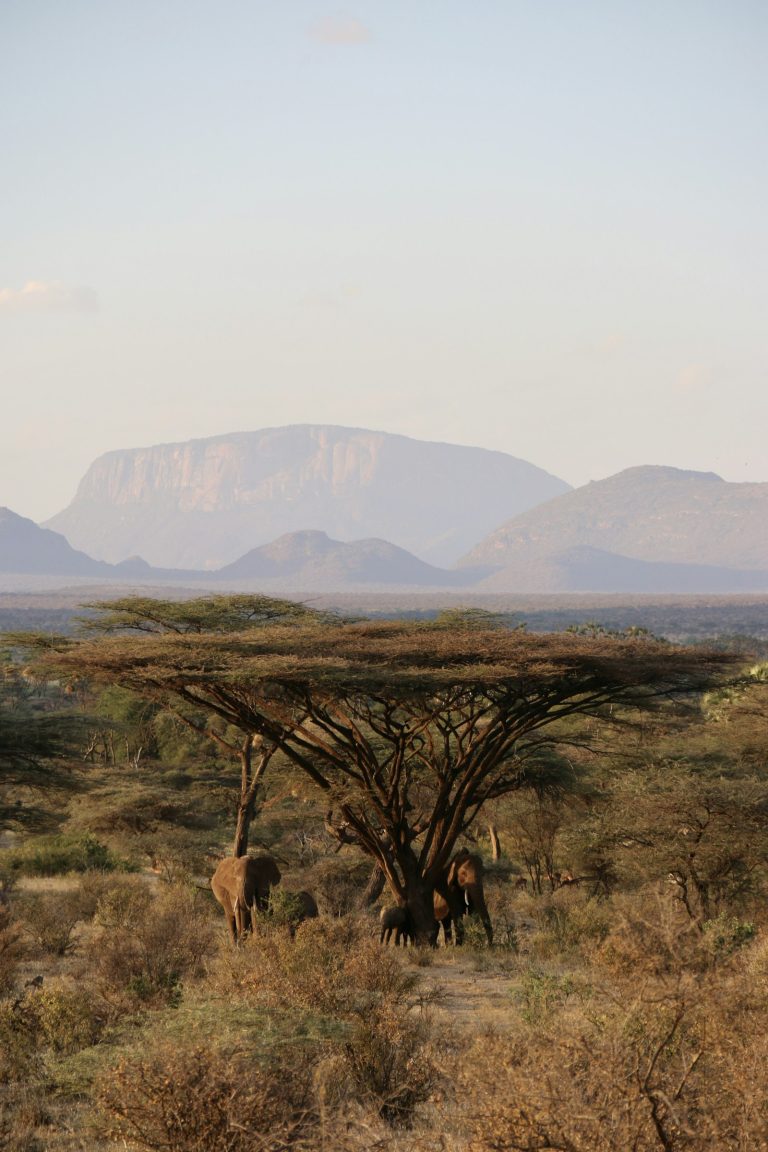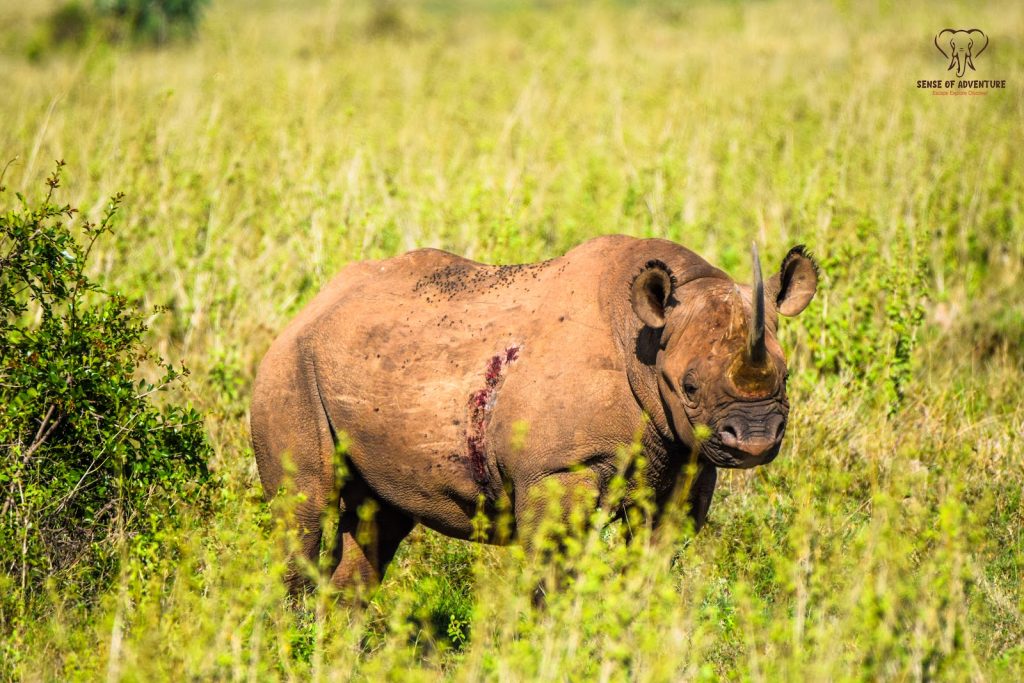
It is just after first light. The sand in the lugga is still cool under your boots, and the only sound is a flock of sandgrouse calling overhead. Ahead of you, a Samburu ranger raises one hand. You stop. He crouches by a fresh, three-toed print the size of a dinner plate, then lets a pinch of dust fall to test the wind. It drifts back towards you. Good. Thirty metres away, behind a screen of commiphora, a black rhino lifts her head, ears turning like radar. No vehicle, no engine. Just you, two rangers and one of the rarest animals on earth.
Sera Rhino Sanctuary is a protected area of about 104 km² inside Sera Community Conservancy in Samburu County, northern Kenya. Opened in 2015, it was the first community-owned and community-run black rhino sanctuary in East Africa. Today it protects more than 20 black rhinos and a small group of white rhinos, which you can track on foot with local rangers.
Sense of Adventure is a Nairobi-based safari company at Mountain Mall on Thika Road, licensed by Kenya’s Tourism Regulatory Authority (TRA1/47/C01/77087). We plan safaris across Samburu’s reserves and community conservancies all year. This guide covers everything you need to know about Sera Rhino Sanctuary: its history, the Samburu people who protect it, how rhino tracking works, your honest chances of a sighting, getting there, fees, the best months, the rules, where to stay and a sample itinerary. For the wider picture, see our complete list of Kenya national parks and reserves.
Table of Contents
✅ Sera Rhino Sanctuary: The Quick Answer
- Where: Sera Community Conservancy, Samburu County, about 94 km north of Isiolo town along the Isiolo–Marsabit road, north of Shaba National Reserve.
- Best for: tracking black rhinos (and white rhinos) on foot, a wild and uncrowded northern landscape, and community conservation you can see working.
- Best time: the dry months, June to October and late December to March.
- Entry fee: no public gate fee is published. Conservancy and tracking fees are charged through your camp and confirmed in your quote.
- How long to stay: two nights in Sera, ideally as part of four to six nights in the north.
- Getting there: a light-aircraft flight from Nairobi’s Wilson Airport to a Samburu airstrip and a road transfer, or roughly 6 to 7 hours by road from Nairobi.
🌍 Planning a Safari to Sera Rhino Sanctuary?
Tell us your dates and who is travelling, and we will check rhino-tracking availability in Sera and build the rest of your northern safari around it. 💬 WhatsApp Us Now or call +254 799 160 081
What Is Sera Rhino Sanctuary?
Sera Rhino Sanctuary is a rhino sanctuary owned and run by the Samburu community of Sera Conservancy, where black rhinos returned in 2015 after an absence of more than 25 years.
Sera Community Conservancy itself is huge. It was set up in 2001 with support from the Northern Rangelands Trust and covers roughly 3,400 km² of bush, grassland and rocky hills. According to Tusk, one of its long-term funders, it was created to bring together three historically rival communities to protect and share the natural resources of their traditional lands.
Sera Rhino Sanctuary sits inside the conservancy. Saruni, the lodge operator in Sera, gives its size as 25,650 acres, or a little over 100 km². It is a protected core where rhinos are watched every day by trained local rangers, while the wider conservancy remains open to Samburu herders and their cattle, goats and camels.
A first for East Africa
Before 2015, Kenya’s rhino sanctuaries were run by the government, private ranches or conservation trusts. Sera Rhino Sanctuary changed that. It was the first time in East Africa that a local community took full responsibility for protecting and managing a population of critically endangered black rhinos. The success of Sera Rhino Sanctuary has since helped make the case for more community rhino projects across the north.
The History of Sera Rhino Sanctuary: Rhinos Come Home
Rhinos were wiped out of Samburu by poaching in the 1970s and 1980s, and their return to Sera Rhino Sanctuary in 2015 is one of northern Kenya’s great conservation stories.
Across Africa, eastern black rhino numbers fell by around 98% between 1960 and 1995, mainly because of poaching for their horns. In Samburu, rhinos had not been seen since the late 1980s. For a generation of young Samburu, the rhino was an animal from their grandparents’ stories.
The 2015 translocation
In May 2015, the Kenya Wildlife Service, the Northern Rangelands Trust and Lewa Wildlife Conservancy began moving black rhinos into Sera Rhino Sanctuary from Lewa, Lake Nakuru and Nairobi National Park. It was not easy. Save the Rhino reports that two rhinos died after release from a gut condition and one during capture, so the programme was paused. The remaining animals were monitored around the clock and settled in.
On 11 March 2016, a female called Naitamany, moved from Lewa, gave birth to a healthy calf. It was the first black rhino born on community land in northern Kenya in more than 25 years. More births followed, and the population has grown steadily since.
White rhinos join in 2024
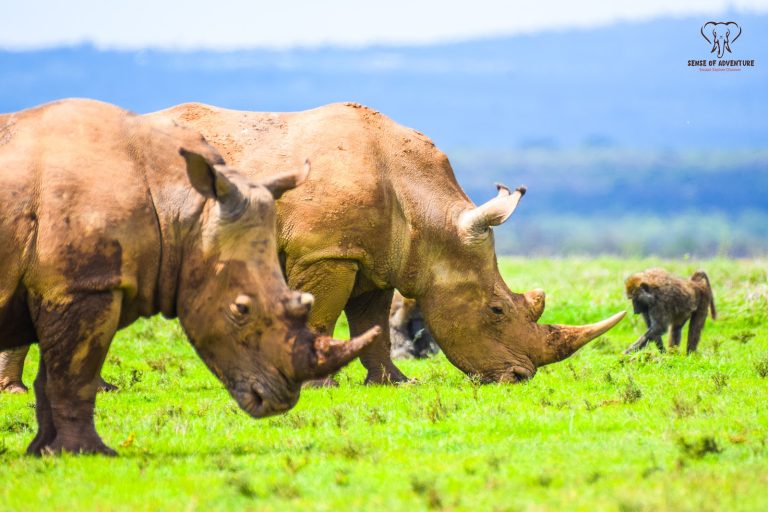
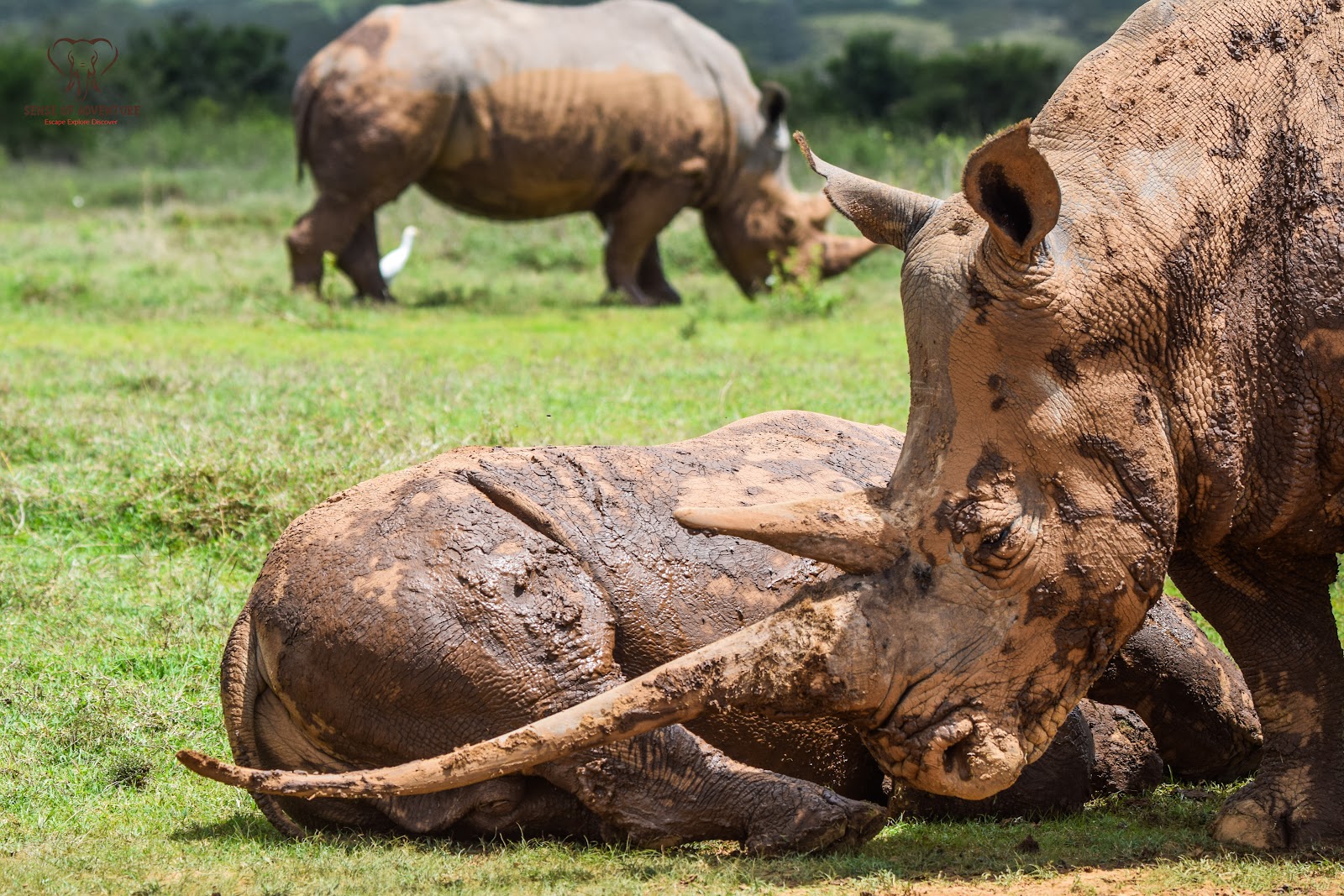
In 2024, four southern white rhinos were moved from Lewa to Sera Rhino Sanctuary, the first white rhinos in Samburu’s history. Lewa reported in May 2024 that Sera’s black rhino population stood at 21, and Saruni now reports 23. Since Sera Rhino Sanctuary opened, news reports have repeatedly noted no recorded poaching inside it. Numbers change with births and moves, so treat any count as a snapshot.
The People of Sera Rhino Sanctuary: Samburu Rangers and Guides
The people who protect Sera’s rhinos are Samburu men and women from the surrounding villages, and their daily work is what makes a rhino walk possible.
Around 16,000 semi-nomadic Samburu pastoralists live in and around Sera Conservancy. They elect the conservancy board, decide how grazing is shared and employ the rangers. Tusk lists a team of more than 30 local rangers, backed by a mobile anti-poaching unit. Inside Sera Rhino Sanctuary, rhino monitors log every animal’s location, health and behaviour, often on foot from dawn.
Women serve as rangers too. Sera’s own programmes include leadership training for the conservancy board, the Ujuzi Manyattani skills project for small businesses, peace-building work with neighbouring communities, grazing plans and a carbon project.
Where your fees go
Tourism is one of the few commercial incomes in this remote area. Saruni says its payments to the conservancy are Sera’s only commercial income, with the Northern Rangelands Trust and donors covering much of the rest of the costs of Sera Rhino Sanctuary. Every night you stay and every rhino walk you take helps pay ranger salaries and community programmes such as skills training, grazing management and peace-building. That is why your visit matters far beyond your own holiday.
Expert tip from our Nairobi team: ask your guide how the rhino monitors work and what a normal day looks like for them. The answers are fascinating, and it is the best way to understand why Sera Rhino Sanctuary succeeds where so many rhino projects failed.
Rhino Tracking on Foot at Sera Rhino Sanctuary
Rhino tracking at Sera Rhino Sanctuary means walking slowly behind a Samburu guide and armed rangers, reading tracks and wind, until you can watch a rhino quietly from a safe distance.
How a rhino walk works
Walks usually begin early, when it is cool and the rhinos are active. Rangers often already know roughly where an animal spent the night. From there you follow footprints and dung middens, and check the wind with a handful of dust. Rhinos see poorly but smell and hear very well, so staying downwind and silent is everything.
A walk can take one to several hours, depending on how far the rhino has moved. Groups are kept small. When you find a rhino, you stop well back, crouch or stand behind cover and simply watch. Your rangers decide how close is safe, and they will turn you around if the animal is nervous or has a young calf.
Rhino tracking on foot in Kenya: who can go
At Saruni Rhino, the main camp in Sera, on-foot rhino tracking is for guests aged 18 and over. You need to be able to walk a few kilometres on uneven, sandy ground in the heat and stay calm and quiet. Younger travellers can still see rhinos from a vehicle with the rangers’ guidance, or join other activities. If tracking is your main reason to visit, tell us when you enquire so we can reserve it.
Your honest chances of seeing a rhino
At Sera Rhino Sanctuary, sightings are very likely on a two-night stay, because the rangers monitor the rhinos every day, but no one can promise a wild animal. Black rhinos are shy and live in thick bush, so some walks end with a fleeting view and others with a long, calm encounter. Two tracking sessions give you the best odds.
Wildlife and Birds in Sera Conservancy
Beyond rhinos, Sera Conservancy holds the classic dry-country wildlife of northern Kenya, though in lower densities than the national reserves to the south.
| Species | Chance on a 2-night stay | Notes |
|---|---|---|
| Black rhino | Very good on foot | Monitored daily in Sera Rhino Sanctuary; two walks improve your odds |
| White rhino | Good | A small group moved from Lewa in 2024; easier to see in open areas |
| Reticulated giraffe | High | Browses the acacia bush across the conservancy |
| Elephant | Good | More common near water and in the wetter months |
| Beisa oryx and gerenuk | Good | Oryx on open stony ground, gerenuk in thicker bush |
| Grevy’s zebra | Fair | Present in Sera and neighbouring Samburu conservancies |
| Lesser and greater kudu | Fair | Shy; look on rocky hillsides at dawn and dusk |
| Lion, leopard, cheetah | Low to fair | Present but wary and wide-ranging; a night drive helps |
For the full Special Five, combine Sera with Samburu National Reserve, where game is denser along the Ewaso Nyiro River. Our guide to the Samburu Special Five explains what to look for.
Birds and the big sandgrouse flights
Birding is excellent. In the dry season, thousands of sandgrouse gather at water points in the morning, a noisy and memorable sight. Look too for vulturine guineafowl, kori bustards, Somali ostriches, hornbills, golden-breasted starlings and a good range of raptors. Migrant birds from Europe and Asia arrive with the short rains.
Things to Do Beyond Rhino Tracking
A stay at Sera Rhino Sanctuary offers far more than one walk: game drives by day and night, guided bush walks, ancient rock art, Samburu culture and some of the darkest night skies in Kenya.
- Game drives: day and night drives in the conservancy, where only conservancy guests drive, so sightings are private.
- Guided bush walks: shorter walks with Samburu guides to learn tracks, plants and their traditional uses.
- Rock art at Kisima Hamsini: rock paintings and a rock gong thought to be several thousand years old.
- The Singing Wells: Samburu herders sing to their cattle as they lift water from deep wells by hand in the dry season.
- Cultural visits: time in a Samburu village to learn about daily life, beadwork and herding, arranged with the community.
- Reteti Elephant Sanctuary: a community-run elephant orphanage in nearby Namunyak Conservancy, offered as an excursion by camps.
- Hikes and scenic flights: Saruni Rhino lists the Lontopi Mountain hike (18 and over) and helicopter flights at extra cost.
If you love time on foot, read our honest guide on whether a walking safari is safe, and our tips on what to expect on a night drive.
How to Get to Sera Rhino Sanctuary
Most visitors fly from Nairobi to a Samburu airstrip and transfer by road, while road travellers drive north through Nanyuki and Isiolo on good tarmac.
By air
Scheduled light aircraft fly from Wilson Airport in Nairobi to the Samburu airstrips in about an hour, often stopping at other camps. From there, a road transfer to Sera Rhino Sanctuary takes roughly 90 minutes to two hours. Bags must be soft and within the airline’s weight limit, so read our guide to safari luggage weight limits on small aircraft.
By road
By road, Nairobi to Isiolo is about five hours via Thika and Nanyuki. Sera lies about 94 km north of Isiolo off the A2 Isiolo–Marsabit highway, then on rough conservancy tracks to camp. Allow 6 to 7 hours in total, with a break. It works best as part of a longer road trip; see our guide to a Kenya safari from Nairobi.
Expert tip from our Nairobi team: if you drive, overnight in Laikipia or Samburu on the way up. The road is fine, but arriving in Sera rested gives you a full afternoon drive and a fresh start for your first rhino walk.
Sera Rhino Sanctuary Fees and Costs in 2026
There is no public gate fee for Sera Rhino Sanctuary. Conservancy fees and rhino tracking are charged through your camp, and most are built into an all-inclusive rate.
Neither Sera Conservancy nor Saruni publishes a public conservancy fee schedule, and fees can change each year. We confirm the current figure in writing before you pay. If you add Samburu, Buffalo Springs or Shaba, those reserves charge their own daily entry fees. See our guides to conservancy fees in Kenya and Kenya national parks entrance fees for 2026.
| Cost item | How it is charged | What to expect |
|---|---|---|
| Sera conservancy fee | Per person per night, through your camp | Not published; usually included in camp rates and shown in our quote |
| Rhino tracking on foot | Through your camp | Saruni Rhino includes tracking in stays; extra walks may cost more |
| Samburu, Buffalo Springs or Shaba entry | Per person per day, at the reserve gate | Separate county fees; only if you visit the reserves |
| Flights | Per person, Wilson to a Samburu airstrip | Scheduled light aircraft; strict soft-bag weight limits |
| Extras | Per activity | Helicopter flights, Reteti visits and some cultural visits |
📅 Get a Free, No-Obligation Safari Quote
Send us your dates and group size and we will price Sera alongside Samburu or Laikipia, with every conservancy fee and transfer clearly shown. ✉ Send Us Your Dates on WhatsApp
Best Time to Visit Sera Rhino Sanctuary
The best time to visit is the dry season, from June to October and from late December to March, when the bush is thinner and tracking is easiest.
| Month | Weather | What it means for you |
|---|---|---|
| January–February | Hot and dry | Excellent tracking; clear skies and great stargazing |
| March | Hot, rains may start late | Still good; very hot afternoons |
| April–May | Long rains | Green and quiet; some tracks muddy and a few camps may close |
| June–August | Dry and breezy | Peak season; wildlife gathers near water and walks are pleasant |
| September–October | Dry and hot | Very good tracking; dusty landscapes and big sandgrouse flights |
| November | Short rains | Green flush, young animals and migrant birds; showers mostly afternoon |
| December | Drying out | Good conditions return; book early for the festive weeks |
Rains in the north are short and unreliable, so even wet months often have dry mornings. For more detail, see our Kenya weather by month guide.
Sera Rhino Sanctuary Rules and Safety
The rules at Sera Rhino Sanctuary exist to keep both you and the rhinos safe, and your rangers have the final word on every walk.
- Walk only with your guide and the Sera rangers, and follow their hand signals at once.
- Stay in single file, keep quiet and never move towards a rhino unless the ranger says so.
- Wear neutral colours, closed walking shoes and a hat; avoid bright white and strong scents.
- No drones. Flying one needs Kenya Civil Aviation Authority permission and conservancy approval.
- Do not feed, call or chase any animal, and stay in the vehicle on drives unless told otherwise.
- Ask before you photograph people, and respect herders and their livestock on community land.
Before you travel, check the latest UK Foreign Office travel advice for Kenya. Travel in the north is arranged through established camps and operators, and we plan routes with current local advice. Because the area is remote, add evacuation cover to your insurance; see our note on emergency evacuation cover.
How Many Days Do You Need, and Where to Stay?
Two nights at Sera Rhino Sanctuary is ideal, giving you two chances to track rhinos and time for a game drive, a cultural visit or the Singing Wells.
Most travellers spend four to six nights in the north, splitting time between Sera and Samburu National Reserve or Westgate. Our guide on how many days you need for a Kenya safari helps you plan the whole trip.
Where to stay in Sera
Saruni Rhino is the main camp in the conservancy, with four stone bandas along a dry riverbed lined with doum palms, and on-foot rhino tracking included for its guests. Sera Conservancy also lists camping. We compare Saruni Rhino with the other camps nearby in our guide to northern Kenya conservancy lodges. For riverside lodges inside the reserve, see luxury lodges in Samburu.

What to Pack for Rhino Tracking
Pack light, soft and neutral for Sera Rhino Sanctuary: you are on foot in hot, thorny country and flying in small aircraft.
- Comfortable, broken-in walking shoes or light boots with closed toes.
- Long, lightweight trousers and long-sleeved shirts in khaki, olive or brown.
- A wide-brimmed hat, sunglasses, high-factor sunscreen and lip balm.
- A refillable water bottle; camps provide filtered water.
- Binoculars and a camera with a zoom lens; leave the drone at home.
- A warm layer for cool mornings and night drives, plus a head torch.
- A soft duffel bag that fits light-aircraft limits.
For a full checklist and the things to leave behind, read our guide on what not to bring on safari.
Combining Sera With Nearby Parks
Sera Rhino Sanctuary fits neatly into a northern circuit with Samburu’s reserves, the Samburu conservancies and the Laikipia Plateau.
- Samburu National Reserve and Buffalo Springs: the Ewaso Nyiro River and the Special Five, about two hours south.
- Shaba National Reserve: rugged and quiet, and the place where Joy Adamson lived and worked in her final years.
- Westgate and Kalama conservancies: Grevy’s zebra, camel treks and more walks with Samburu guides.
- Lewa Wildlife Conservancy and Borana: more rhinos, horse riding and Mount Kenya views.
- Ol Pejeta Conservancy: the last two northern white rhinos and easy Big Five game near Nanyuki.
Not sure whether Sera Rhino Sanctuary or another rhino area suits you best? Our comparison of Ol Pejeta and Lewa and our answer to whether Samburu has the Big Five will help.
Sample 3-Day Sera Rhino Sanctuary Itinerary
This three-day plan for Sera Rhino Sanctuary gives you two rhino walks and time to enjoy the wider conservancy, and it slots easily into a longer northern safari.
Day 1: Fly north and settle in
Take the morning flight from Wilson Airport to a Samburu airstrip, then transfer to camp with a game drive on the way. After lunch and a rest, head out for an afternoon drive and sundowners on a rocky ridge, then dinner under the stars.
Day 2: Dawn rhino walk and the Singing Wells
Set off at first light with your guide and the rangers to track black rhinos on foot. Return for a late breakfast and a lazy midday by the pool. In the late afternoon, visit the Singing Wells or a Samburu village, then try a night drive for nocturnal wildlife.
Day 3: A second chance, then onward
Use your last morning for a second rhino walk or a visit to the white rhinos, then transfer to Samburu National Reserve, Westgate or the airstrip for your flight to Laikipia or the Masai Mara.
For ready-made routes we can extend to include Sera, see our Northern Kenya Cultural Safari – Samburu and Laikipia (5 days), the Samburu Cultural and Wildlife Experience (3 days) or our Kenya Highlights Safari (9 days). Prices depend on season, camp and group size, so message us for a quote. We also build tailor-made private Kenya safaris and luxury Kenya safaris around the north.
Sera Rhino Sanctuary FAQs
Where is Sera Rhino Sanctuary in Kenya?
Sera Rhino Sanctuary is inside Sera Community Conservancy in Samburu County, northern Kenya. The conservancy lies about 94 km north of Isiolo town along the Isiolo to Marsabit road, north of Shaba National Reserve. Most visitors fly from Nairobi to a Samburu airstrip and transfer by road in under two hours.
Can you walk with rhinos in Kenya?
Yes. At Sera Rhino Sanctuary you can track black rhinos on foot with a Samburu guide and armed community rangers. Walks are small, quiet and led by people who monitor the rhinos every day. At Saruni Rhino, rhino tracking is for guests aged 18 and over. Borana and Lewa also offer guided rhino walks.
How many rhinos are in Sera Rhino Sanctuary?
Black rhinos were reintroduced in 2015, and Lewa reported a population of 21 in May 2024. Saruni now reports 23 black rhinos. Four southern white rhinos were added from Lewa in 2024. Numbers change with new births and moves, so ask us for the latest figures before you travel.
Who owns Sera Rhino Sanctuary?
The sanctuary is owned and run by the Samburu community of Sera Conservancy, with support from the Northern Rangelands Trust, the Kenya Wildlife Service and donors. Local Samburu rangers protect and monitor the rhinos. It was the first community-owned black rhino sanctuary in East Africa when it opened in 2015.
How much does rhino tracking at Sera cost?
Sera does not publish a public fee schedule. Conservancy fees and rhino tracking are charged through your camp and are usually included in an all-inclusive rate at Saruni Rhino. Fees change from year to year, so we confirm the exact cost in writing in your quote before you book.
What is the best time to visit Sera Rhino Sanctuary?
The dry seasons from June to October and from late December to March are best, when the bush is thinner and tracking is easier. April, May and November bring rain, green scenery and fewer visitors, but some tracks become muddy and a few camps may close in the long rains.
Is Sera Rhino Sanctuary safe to visit?
Walks are led by experienced Samburu guides and armed rangers who know each rhino and its behaviour, and you must follow their instructions at all times. Travel in the north is best arranged through established camps and operators. Check current government travel advice and take insurance with emergency evacuation cover.
🏕 Plan Your Sera Rhino Sanctuary Safari With Sense of Adventure
Kenya-based experts. Real local knowledge. Transparent pricing. We know Samburu’s reserves and community conservancies well and will match you with the right camp, route and season for your group. 💬 WhatsApp Us — Start Planning Today
Call or WhatsApp: +254 799 160 081 · Email: info@senseofadventure.co.ke
Related Safari Guides
- › Northern Kenya Conservancy Lodges
- › Westgate and Kalama Conservancies Guide
- › Samburu National Reserve Guide
- › Borana Conservancy Guide
- › Lewa Wildlife Conservancy Guide
Official travel & park resource: Kenya Wildlife Service ↗ · Conservancy: Sera Wildlife Conservancy ↗ · Community conservancies: Northern Rangelands Trust ↗ · Tourism: Magical Kenya ↗