
Shaba National Reserve carries a history heavier than its dramatic volcanic scenery alone would suggest: this is the reserve where Joy Adamson, author of Born Free, released her first hand-raised leopard back into the wild, and where she was tragically killed in 1980, her former tented home later converted into a lodge. Set roughly 320 kilometres northeast of Nairobi in Isiolo County and covering 239 square kilometres of doum palm forest, wild rivers and volcanic formations, Shaba completes the trio of reserves, alongside Samburu and Buffalo Springs, that make up northern Kenya’s classic dry-country safari circuit. Sense of Adventure includes Shaba for guests who want the full Samburu ecosystem story, conservation history included.
Add Shaba to Your Samburu Safari
Message us to include Shaba conservation history in your northern Kenya itinerary.
The Reserve Behind the Born Free Legacy
Joy Adamson rehabilitated lions and leopards at Shaba, most famously releasing her first hand-raised leopard back into this exact wilderness, work that grew directly out of the fame the Born Free story had already brought to conservation worldwide. She was killed here in 1980, and her former tented home has since been transformed into a lodge, giving guests who stay there a genuine, tangible connection to one of conservation’s most influential figures rather than just a plaque or a museum display. The Ewaso Nyiro River, flowing through Shaba, draws wildlife reliably during the dry season, while the reserve’s volcanic formations and doum palm forests give it a starker, more dramatic look than the Samburu side of the same ecosystem.

Our guide told us about Joy Adamson history at Shaba while we were parked near the river, and knowing her actual work happened in this exact landscape rather than somewhere abstract made the whole afternoon feel different. It was the one stop on our northern Kenya trip that felt as much about history as wildlife.
— Sense of Adventure guest, Northern Kenya Cultural Safari
6 Facts About Shaba National Reserve
1. The Joy Adamson Connection Is Real, Not Legend
The Born Free author genuinely rehabilitated and released big cats at Shaba, and her former camp still stands, now converted into a lodge.
2. Home to the Full Samburu Special Five
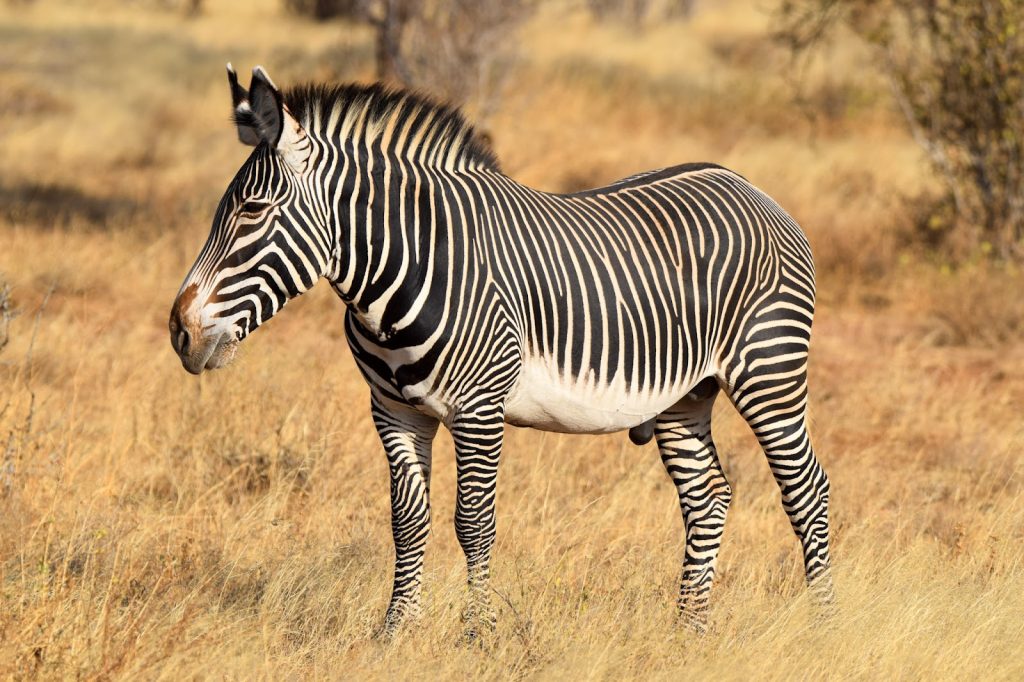
Grevy’s zebra, reticulated giraffe, Beisa oryx, gerenuk and Somali ostrich all occur in Shaba, the same signature dry-country species found across the wider ecosystem.
3. Rare Striped Hyena and Aardwolf Sightings
Unlike the more commonly seen spotted hyena elsewhere in Kenya, Shaba is one of the few places where the striped hyena and aardwolf can occasionally be spotted.
4. A Starker, More Volcanic Landscape
Doum palm forests and volcanic rock formations give Shaba a more dramatic, rugged look than the neighbouring Samburu and Buffalo Springs reserves.
5. The Least Visited of the Three Sister Reserves
Compared to Samburu and Buffalo Springs, Shaba sees noticeably fewer visitors, making sightings feel more private even during busier seasons.
6. The Ewaso Nyiro Draws Wildlife in the Dry Season
The same river system feeding Samburu and Buffalo Springs flows through Shaba too, concentrating wildlife along its banks when the surrounding land dries out.
Discover the Full Samburu Ecosystem
Our Northern Kenya Cultural Safari can include Shaba alongside Samburu and Laikipia.
Shaba National Reserve: Quick Reference
- Size: 239 square kilometres.
- Location: Isiolo County, approximately 320km northeast of Nairobi.
- Historical significance: Joy Adamson’s leopard rehabilitation work and 1980 death.
- Signature wildlife: the full Samburu Special Five, plus rare striped hyena and aardwolf.
- Landscape: doum palm forests, volcanic rock formations, the Ewaso Nyiro River.
- Visitor levels: the quietest of the three linked Samburu-area reserves.
Exploring the Samburu Region Fully
Shaba rounds out a region best explored across all three reserves. Our Samburu National Reserve Safari Guide and Samburu Special Five guide cover the wider ecosystem Shaba is part of.
History and Wildlife, One Reserve
Message us today and we will include Shaba in your northern Kenya safari.
Frequently Asked Questions
What is Shaba National Reserve known for?
Shaba National Reserve is known for its connection to Born Free author Joy Adamson, who rehabilitated lions and leopards here and was killed at the reserve in 1980, alongside its volcanic landscape and Samburu Special Five wildlife.
Is Shaba part of the Samburu ecosystem?
Yes, Shaba is one of three linked reserves, alongside Samburu and Buffalo Springs, that make up northern Kenya’s classic dry-country safari circuit, sharing the Ewaso Nyiro River and much of the same wildlife.
What wildlife can I see in Shaba?
Shaba is home to the full Samburu Special Five, Grevy’s zebra, reticulated giraffe, Beisa oryx, gerenuk and Somali ostrich, alongside elephants, lions, leopards, cheetahs and the rare striped hyena.
How far is Shaba National Reserve from Nairobi?
Shaba National Reserve is located in Isiolo County, approximately 320 kilometres northeast of Nairobi, typically visited as part of a wider northern Kenya safari itinerary.
Is Shaba less crowded than Samburu?
Yes, Shaba sees noticeably fewer visitors than neighbouring Samburu and Buffalo Springs, making wildlife sightings feel more private even during busier travel seasons.