
Why do wildebeest migrate gets answered constantly with logistics: when the herds cross the Mara River, which month to book, where to stand for photos. The actual biological reason gets skipped almost every time. Wildebeest move roughly 800 kilometres in a continuous loop for one overwhelming reason: grass. They are short-grass grazers with no ability to survive on the same depleted pasture for long, so they follow rainfall itself, sometimes smelling a distant thunderstorm and turning toward it before a single drop has fallen anywhere near them. It is not tradition or memory driving 1.3 million animals in a circle. It is hunger, timed by weather. Sense of Adventure times every migration itinerary around understanding that difference.
Watch the Reason Behind the Migration Unfold
Message us to time your Masai Mara visit around where the rains have actually fallen.
The Science Behind Why Wildebeest Migrate
Wildebeest are grazers dependent on short, nutrient-rich grass that only exists briefly after rain, so a herd stripping one area bare has no choice but to keep moving toward wherever the next rainfall has fallen. East Africa’s two rainy seasons do not distribute water evenly, meaning fresh grass appears in different locations at different times of year, and the herd effectively tracks that shifting pattern in a predictable clockwise loop between Tanzania’s Serengeti and Kenya’s Masai Mara. Add a near-daily need to drink and a birthing season timed to land when grass is at its richest, and migration stops looking like a mysterious ritual and starts looking like simple survival math.
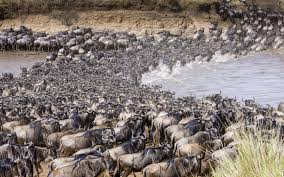
I had always assumed the migration was some kind of ancient instinct nobody could really explain, and it genuinely surprised me when our guide broke it down to essentially grass and rain. Watching a distant storm on the horizon and then seeing the herd actually shift direction toward it that same afternoon made the whole thing click in a way no photo ever had.
— Sense of Adventure guest, Great Migration photographic safari
5 Reasons Wildebeest Actually Migrate
1. Fresh Grass, Not Habit
Wildebeest are grazers that need short, nutrient-dense grass, and once a herd exhausts one area it has no option but to move toward wherever new growth has appeared.
2. Rainfall Patterns Set the Route
East Africa two rainy seasons do not fall evenly, so the herds effectively track where the rain has just landed, giving the migration its distinctive, roughly predictable clockwise loop.
3. Water Access, Almost Daily
Wildebeest need to drink at least once or twice a day, so a drying river or waterhole forces the herd onward even before the grass itself runs out.
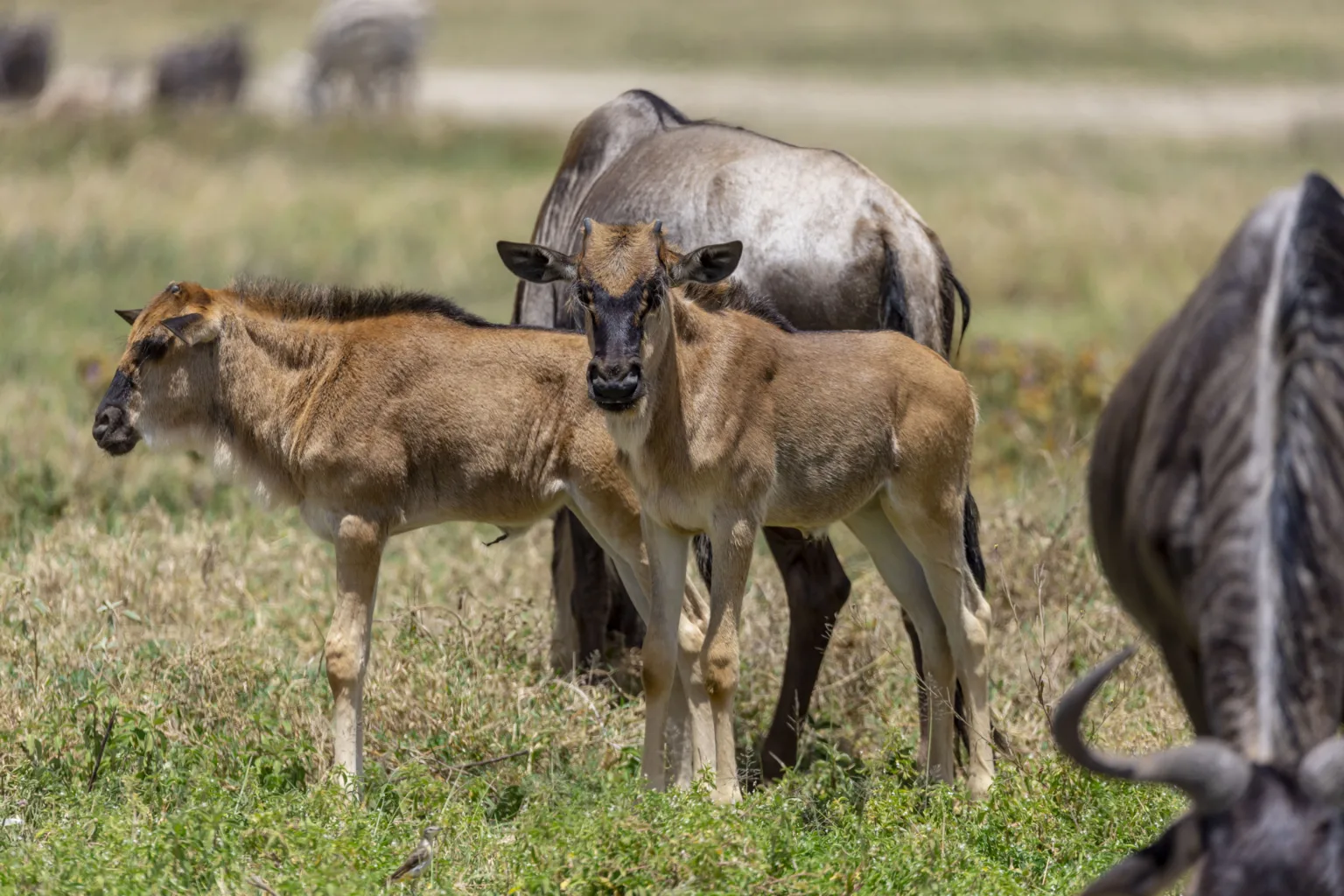
4. Calving Timed to the Richest Grass
Most calves are born within a tight window in the southern Serengeti when grass is at its most nutritious, giving newborns, able to stand and move within minutes, the best possible start.
5. Safety in Enormous Numbers
Moving as a herd of over a million dilutes individual predation risk, which is exactly why lions, crocodiles and hyenas concentrate at river crossings, the one moment the group is forced to break formation.
Book Your Great Migration Safari
Our Great Migration Photographic Safari is timed and positioned for the river crossings themselves.
Why Wildebeest Migrate: Quick Reference
- Primary driver: the search for fresh, short grass, not instinct or memory alone.
- Route shaper: uneven rainfall across East Africa’s two rainy seasons.
- Water need: once or twice daily, forcing movement when sources dry up.
- Calving timing: synced to the richest grass in the southern Serengeti.
- Total loop distance: roughly 800km across the Serengeti-Mara ecosystem.
- Predator response: river crossings concentrate danger precisely when the herd formation breaks.
Planning Around the Migration Route
Understanding why the herds move is what makes timing a Mara visit make sense. Our Masai Mara Wildebeest Migration guide and Great Migration Kenya Guide cover exactly when and where the herds are likely to be month by month.
See Nature Actual Survival Logic in Motion
Message us today and we will time your safari to the migration current position.
Frequently Asked Questions
Why do wildebeest migrate every year?
Wildebeest migrate because they are grazers dependent on fresh, short grass and regular water, and no single location provides both year-round. They follow shifting rainfall patterns across East Africa in a continuous search for grazing.
How do wildebeest know where to find rain?
Wildebeest are believed to sense distant rainfall through smell and possibly the sound of thunder, allowing herds to turn toward a storm system before rain has actually reached their current location.
How far do wildebeest migrate each year?
Wildebeest cover approximately 800 kilometres in their annual migration loop across the Serengeti-Mara ecosystem, moving clockwise between Tanzania and Kenya as rainfall and grass availability shift throughout the year.
Why do so many wildebeest die crossing rivers?
River crossings force the herd formation to break, the one moment predators like crocodiles and lions can isolate individuals from the safety of the larger group, which is why casualties concentrate specifically at crossing points.
Do all wildebeest migrate together?
Most of the roughly 1.3 million migratory wildebeest move together, but the Masai Mara ecosystem also holds a smaller resident population, estimated at around 37,000, that does not join the larger migratory herd.