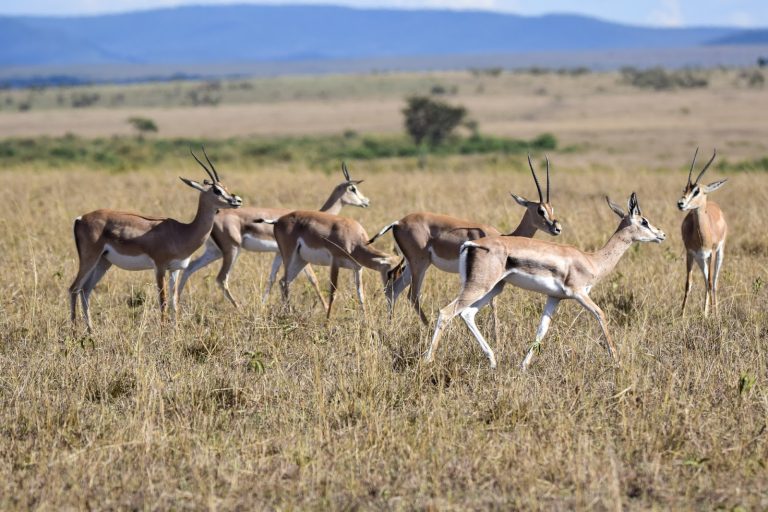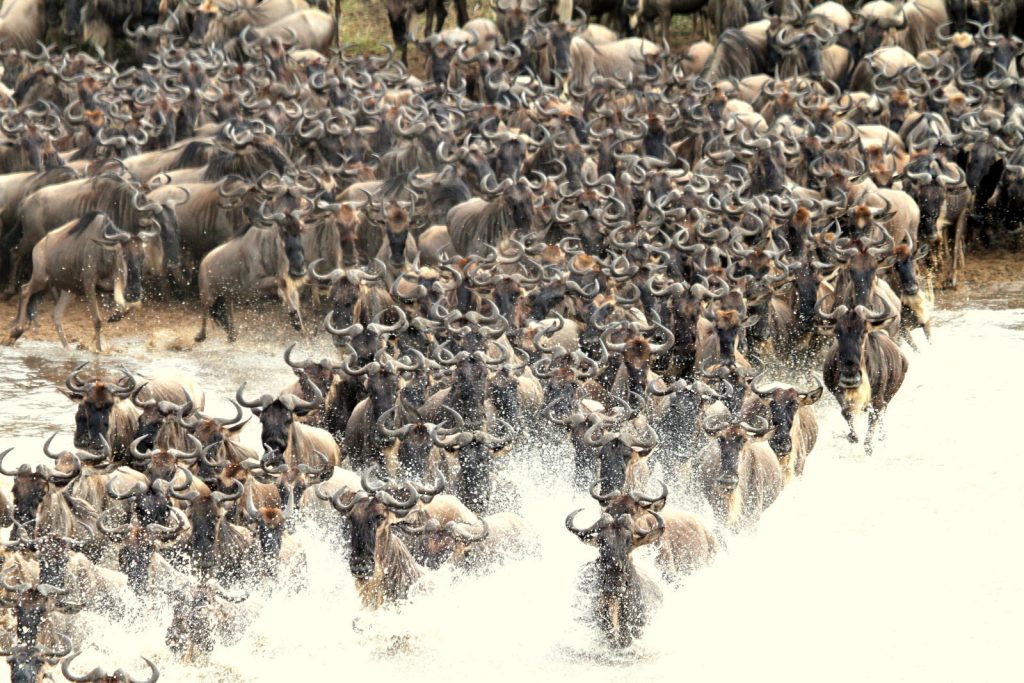
This Great Migration Kenya guide starts with the scale of it: the Great Migration is the largest overland animal movement on earth — 1.5 million wildebeest, 200,000 zebras, and 500,000 Thomson’s gazelles circling the Serengeti-Mara ecosystem in an annual pattern driven entirely by grass and rainfall. When these animals are in Kenya’s Masai Mara — from approximately July to October — they pile up at the Mara and Talek rivers in herds of tens of thousands, then explode across the water in river crossings that are simultaneously the most chaotic, the most violent, and the most extraordinarily alive spectacle in the natural world.
Nile crocodiles, who have waited months for this exact moment, erupt from the water beneath the crossing animals. Lions wait on the far bank. The noise is physical. Sense of Adventure has been positioning guests at the river crossings for years — this guide tells you exactly what you need to know to be there at the right moment.
Be at the River When the Crossing Happens
Sense of Adventure’s guides monitor crossing activity daily and position guests at the right point on the right day. Contact us to plan your Great Migration safari.
The Great Migration Calendar — Kenya’s Window
| Month | Location | Key Event | Sense of Adventure Verdict |
|---|---|---|---|
| Jan – Mar | Southern Serengeti | Calving season — 500,000 calves born | Extraordinary but in Tanzania |
| Apr – May | Central Serengeti | Moving north through Seronera | In transit — Tanzania |
| Jun | Western Serengeti | Grumeti River crossings begin | Advance guard entering Mara |
| Jul – Aug | Masai Mara | Peak river crossings — the main event | ⭐⭐⭐⭐⭐ Best time to be in the Mara |
| Sep – Oct | Masai Mara | Maximum herds — multiple daily crossings | ⭐⭐⭐⭐⭐ Peak density in Kenya |
| Nov | Moving south | Return migration begins | Tail end — good but tapering |
Every year is a little different. Early or late rains in the Serengeti can shift the herds’ arrival in Kenya by several weeks, so the dates in this Great Migration Kenya guide are a reliable pattern rather than a fixed timetable. For month-by-month planning for next season, see our Great Migration 2027 guide.
How River Crossings Actually Work
The Mara River crossings are not scheduled — no crossing happens at the same place or time twice. Understanding what triggers a crossing is the key to being there when one happens. Wildebeest are simultaneously driven by the urge to cross and paralysed by fear of the crocodiles and the river itself. A herd will gather at a crossing point — sometimes 10,000–30,000 animals — and spend two to six hours building and releasing the psychological pressure required to begin.
The crossing, when it comes, is instantaneous: a single animal launches in and within seconds the entire mass follows. It lasts 20–40 minutes at full intensity, then the river is empty again. The whole event unfolds without warning and ends without announcement.

🔍 How Sense of Adventure Positions You at the Right Crossing
Daily intelligence: Our guides communicate with a network of ranger scouts, balloon pilots, and fellow guides across the Mara ecosystem every morning. By 06:00 we know which crossing points have herd buildups and which have cleared.
Vehicle positioning: We position our vehicles at the crossing point before the herd arrives — not after. Arriving at an active crossing means driving through the herd and disturbing it. Arriving early means a front-row position with time to set up cameras.
Multi-day commitment: A single day in the Mara during crossing season does not guarantee a crossing — it gives you a chance. Three nights gives you three morning drives and three afternoon drives, and a much better chance of seeing at least one crossing. Sense of Adventure recommends a minimum of 3 nights during peak season (Aug–Sep).
Great Migration Kenya Guide: Where to Watch the Crossings
The Mara River winds through the western half of the Masai Mara National Reserve before crossing into Tanzania. Most crossings take place along this stretch, at well-known points where the banks allow animals to enter and leave the water. The Talek River, a tributary in the east of the reserve, also sees smaller crossings.
The Mara Triangle, west of the river, is quieter and well managed, with fewer vehicles at many crossings. The main reserve to the east has the largest choice of camps and easy access to the central crossing points. When the herds spread north, private conservancies bordering the reserve can also host huge numbers of wildebeest, though the river crossings themselves happen inside the reserve.
Rangers enforce rules on where vehicles can park at crossing points, so animals have a clear path to the water. Following these rules, staying quiet and never blocking the herd keeps crossings natural and safe for the animals.
Great Migration Kenya Guide to Big Cat Action
The migration brings a feast for predators. Lions, leopards and cheetahs are easier to see hunting when prey is plentiful, and spotted hyenas follow the herds closely. Along the river, Nile crocodiles take advantage of every crossing. Patient guests often see dramatic hunts on the plains even on days without a crossing.
Great Migration Beyond the Crossing
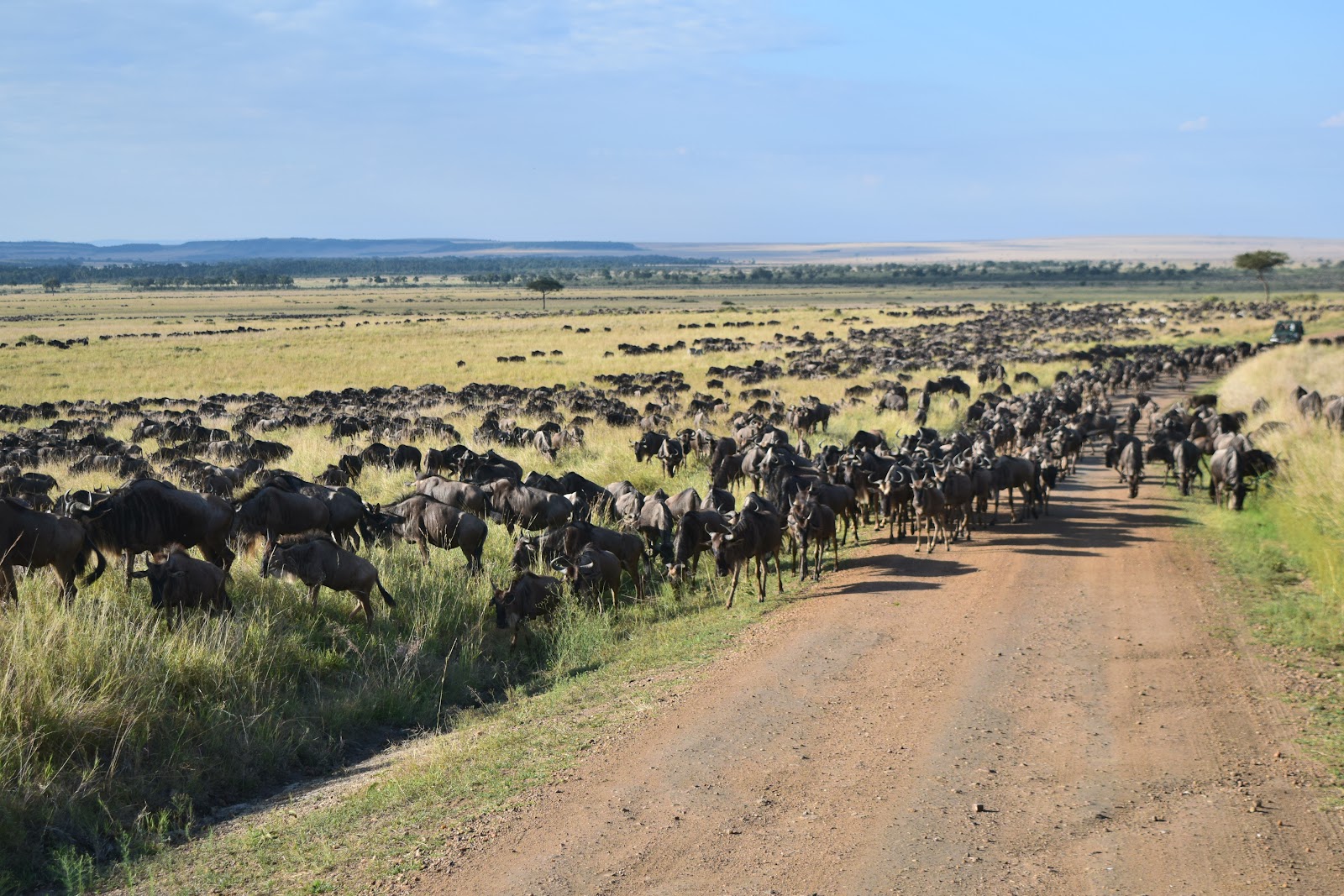
The river crossings are the peak event, but the migration transforms the entire Masai Mara during July–October. The plains are covered with wildebeest for as far as you can see in every direction. The predator density surges — lions, cheetahs, and leopards all benefit from the abundance and their hunting behaviour becomes more frequent and more visible. Hyena clan activity increases dramatically. The rivers are full of crocodiles in permanent ambush.
Every game drive during migration season delivers wildlife encounters that would be extraordinary at any other time of year but are simply normal during the crossing season. See our Masai Mara guide and our game drive guide for the full picture. Book through our Kenya safari planning guide for migration-season itineraries.
Getting to the Masai Mara and Park Fees
The Masai Mara lies roughly 5 to 6 hours’ drive west of Nairobi, passing the Great Rift Valley viewpoint and the town of Narok. The final section can be rough, so a 4×4 safari vehicle is essential. Scheduled light aircraft fly from Wilson Airport in Nairobi to airstrips across the Mara in about 45 minutes to an hour, which is popular in migration season because it saves a full day of driving.
The Masai Mara National Reserve is managed locally rather than by KWS, and its daily entry fees are higher in the July–December peak season. Fees change from time to time, so check current rates with us; they are included in the price of our Mara packages. Most visitors also need a Kenya eTA, applied for on the official eTA Kenya website before travel.
Where to Stay for the Migration
Camps along or near the Mara River put you closest to the crossings, which means more time at the river and less time driving. Camps in the eastern and central reserve suit guests who also want to explore the Talek area and the open plains. Conservancy camps offer exclusivity, guided walks and night drives, but are usually further from the main crossing points.
Migration-season demand is high, so the best camps book up 9 to 12 months ahead. For a selection of high-end options, see our luxury Kenya safari page, or tell us your budget and we will suggest camps that match.
Great Migration Safari Packages and Prices
These Sense of Adventure itineraries put the advice in this Great Migration Kenya guide into practice:
- Great Migration Safari – Masai Mara, from USD 1,450.
- Great Migration Photographic Safari – Masai Mara (5 Days), from USD 2,400, with extra time at the river.
- Great Migration Safari Kenya & Tanzania – Masai Mara & Serengeti (12 Days), from USD 4,600.
- 3 Day Masai Mara Safari Package, a short option for guests with limited time.
You can browse more options on our Masai Mara safari packages page. Prices are per person and vary with season, camp and group size, so message us for a quote for your dates.
Photography and Packing Tips
- A zoom lens of 100–400 mm or similar covers both close action and distant crossings
- A bean bag steadies your camera on the vehicle window or roof
- Spare batteries and memory cards, as crossings can produce hundreds of frames in minutes
- A dust cover or plastic bag for your camera on dry, dusty drives
- Binoculars for scanning the riverbanks while you wait
- Layers for cold early mornings, plus a hat and sunscreen for long hours at the river
- Snacks and water; your guide packs lunch on full-day drives
Patience is the most valuable item on any list. Crossings often follow hours of waiting, and the guests who stay put are usually rewarded.
A Sample Four-Night Migration Itinerary
Day 1: fly from Wilson Airport to the Mara in the morning, settle into camp for lunch and head out for an afternoon game drive across the plains.
Days 2 and 3: full days by the river with a packed breakfast and lunch. Your guide reads the herds, moves between crossing points as the wildebeest gather, and waits with you for the moment they commit to the water. Evenings are for sundowners and stories around the fire.
Day 4: an optional sunrise balloon flight, then a slower drive looking for big cats and a visit to a Maasai community. Day 5: a final morning drive before your flight back to Nairobi. Every itinerary in this Great Migration Kenya guide can be extended or combined with Amboseli, Lake Naivasha or the coast.
Migration Season: Pros, Cons and Alternatives
The honest view in any Great Migration Kenya guide is that peak season brings both the best wildlife and the most visitors. Popular crossing points can draw many vehicles, prices are at their highest, and the best camps fill early. Booking well ahead, staying in the Mara Triangle or near quieter stretches of the river, and spending full days out with a packed lunch all help you avoid the busiest moments.
If your dates are flexible, early July and late October often bring good herds with fewer vehicles. Outside migration season, from about November to June, the Mara still has excellent resident wildlife, especially big cats, along with greener scenery and lower rates at many camps.
Health and Safety in the Masai Mara
The Mara is a malaria area, so speak to a travel clinic about prevention and pack insect repellent and long sleeves for evenings. The equatorial sun is strong even on cool mornings, so wear a hat and sunscreen and drink plenty of water during long days at the river. Always stay inside the vehicle unless your guide says it is safe, and never stand up through the roof hatch near the riverbank without checking first.
Comprehensive travel insurance that includes medical evacuation is essential for any safari. Before you travel, check the latest UK Foreign Office travel advice for Kenya or your own government’s equivalent.
Kenya or Tanzania for the Migration?
Both countries share the same ecosystem. Kenya’s Masai Mara is compact, easy to reach from Nairobi and hosts the herds from around July to October. Tanzania’s Serengeti hosts them for the rest of the year, including the calving season in the south from about January to March. Many guests combine the two; the official Tanzania National Parks site has details on the Serengeti, and Magical Kenya covers Kenya’s side.
1.5 Million Animals. One River. One Right Moment.
Sense of Adventure has the experience and the connections to put you at the right crossing at the right time. Contact us now to plan your Great Migration safari.
Frequently Asked Questions — Great Migration Kenya
Is the Great Migration guaranteed every year?
The wildebeest enter the Masai Mara every year — the migration is as reliable as any natural event can be. What is not guaranteed is a river crossing on any specific day. River crossings happen multiple times per week during peak season (August–September) but their timing within the day is unpredictable. Sense of Adventure’s multi-day itineraries give you the best possible odds — with 3 nights in the Mara during August or September, most of our guests see at least one crossing, although nature never offers a guarantee.
When is the absolute best time for the Great Migration in Kenya?
August and September are the peak months for both maximum wildebeest density in the Mara and the most frequent river crossings. July sees the advance herds arrive with increasing crossing activity from mid-month. October sees the herds at full density but beginning the southward return, with crossings in the opposite direction. Sense of Adventure recommends August–September as the peak window, with July and early October as excellent alternatives if August–September dates are not available.
Can I see the Great Migration without going to the Masai Mara?
The Kenya section of the Great Migration is centred entirely in the Masai Mara. The Serengeti portion of the circuit is in Tanzania. There is no equivalent migration event in Kenya’s other parks — the Masai Mara is the only destination for the crossing experience. Sense of Adventure can arrange combined Kenya-Tanzania migration itineraries for guests who want to experience both the Grumeti and Mara crossings.
How much does a Great Migration safari cost?
Migration season (July–October) commands premium pricing at Mara camps — demand is at its annual peak. Mid-range camps run USD 300–500 per person per night fully inclusive during migration. Luxury conservancy camps run USD 600–1,500+. Sense of Adventure provides specific pricing for all camp categories and can design a migration safari at any budget tier — contact us with your group size and preferred dates for an accurate quote.
How many days do I need for the Great Migration?
Plan at least three nights in the Masai Mara, and four if seeing a river crossing is your main goal. Crossings are unpredictable, so extra days mean more time waiting at the river and more chances to see one. Flying in from Nairobi saves a day of travel, giving you more time on game drives.
Is a hot-air balloon safari worth it during the migration?
For many guests, yes. A sunrise balloon flight shows the scale of the herds in a way no vehicle can, and it usually ends with a bush breakfast. Flights depend on the weather and book up quickly in peak season, so reserve early. Ask us for current prices when you plan your itinerary.