
Why do zebras have stripes sounds like a settled question until you realise Charles Darwin and Alfred Russel Wallace argued about it 150 years ago and scientists still have not landed on a single agreed answer. At least 18 separate theories have been proposed over the decades, from camouflage to individual identification to pure chance. What research has actually managed to rule out is almost as interesting as what it has confirmed: the old idea that stripes cool a zebra down has been directly disproven by recent studies, while the case for stripes deterring biting flies has only gotten stronger. Sense of Adventure guides walk guests through the real, still-unresolved science on every Mara game drive that finds a herd.
See the Stripes Up Close
Message us to plan a Masai Mara safari with real zebra herds to study firsthand.
Why This Question Is Genuinely Still Open
Unlike most animal mysteries that get resolved with a single decisive study, zebra stripes have resisted a clean answer because multiple explanations each hold up under some conditions and fail under others. The predator-confusion theory, the idea that stripes create a dazzling visual effect that makes it hard for a lion to single out one zebra from a moving herd, is intuitive and popular, but lions do most of their hunting at night, when the striping effect is far less visible to begin with. That single fact alone means predator confusion cannot be the whole story, which is exactly why so many competing theories have survived this long.
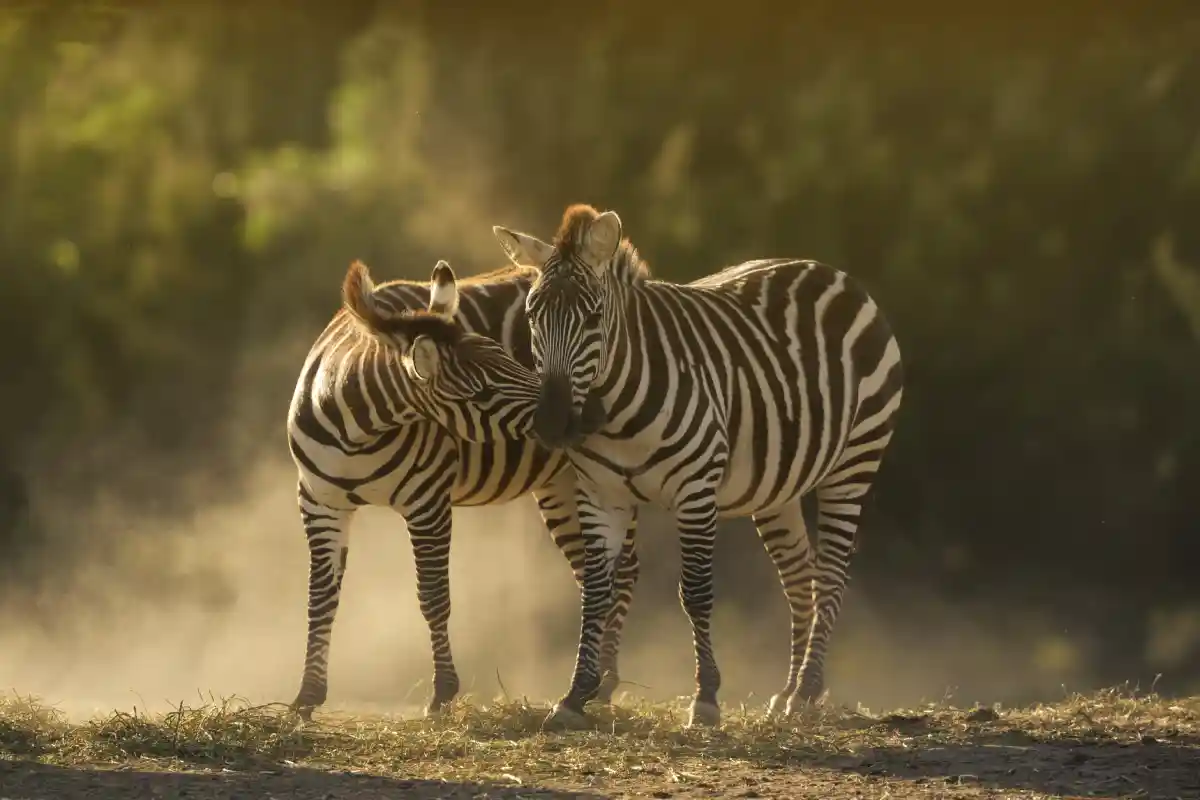
I had always assumed stripes were simply camouflage and never questioned it, so it genuinely surprised me when our guide explained scientists still cannot fully agree on the real reason after 150 years of study. Standing there watching a whole herd shimmer together in the heat, the fly-deterrent theory suddenly made a lot more visual sense than I expected.
— Sense of Adventure guest, Masai Mara safari
6 Leading Theories, Ranked by Evidence
1. Biting Fly Deterrence — the strongest current evidence
Studies show the striped pattern disrupts the polarised light that attracts horse flies and tsetse flies, and zebras are measurably bitten less often than solid-coloured animals nearby.
2. Predator Confusion — popular but incomplete
A moving herd of stripes can genuinely blur into a single confusing mass to a predator eye, though this alone cannot explain everything since most lion hunting happens at night.
3. Individual Identification — a fingerprint theory
No two zebras share exactly the same stripe pattern, leading some researchers to propose the markings help foals and herd members recognise specific individuals.
4. Temperature Regulation — the disproven theory
Once a leading idea, the theory that black and white stripes create tiny convection currents to cool the zebra has been directly challenged and largely disproven by more recent research.
5. Social Bonding — a less-tested idea
Some researchers suggest stripe patterns play a role in social recognition and bonding within a herd, though this remains one of the least rigorously tested explanations.
6. Likely a Combination, Not One Single Answer
Most current researchers now believe fly deterrence, predator confusion and social factors all contribute simultaneously, rather than any one theory fully explaining the stripes alone.
Compare Both Zebra Species in Person
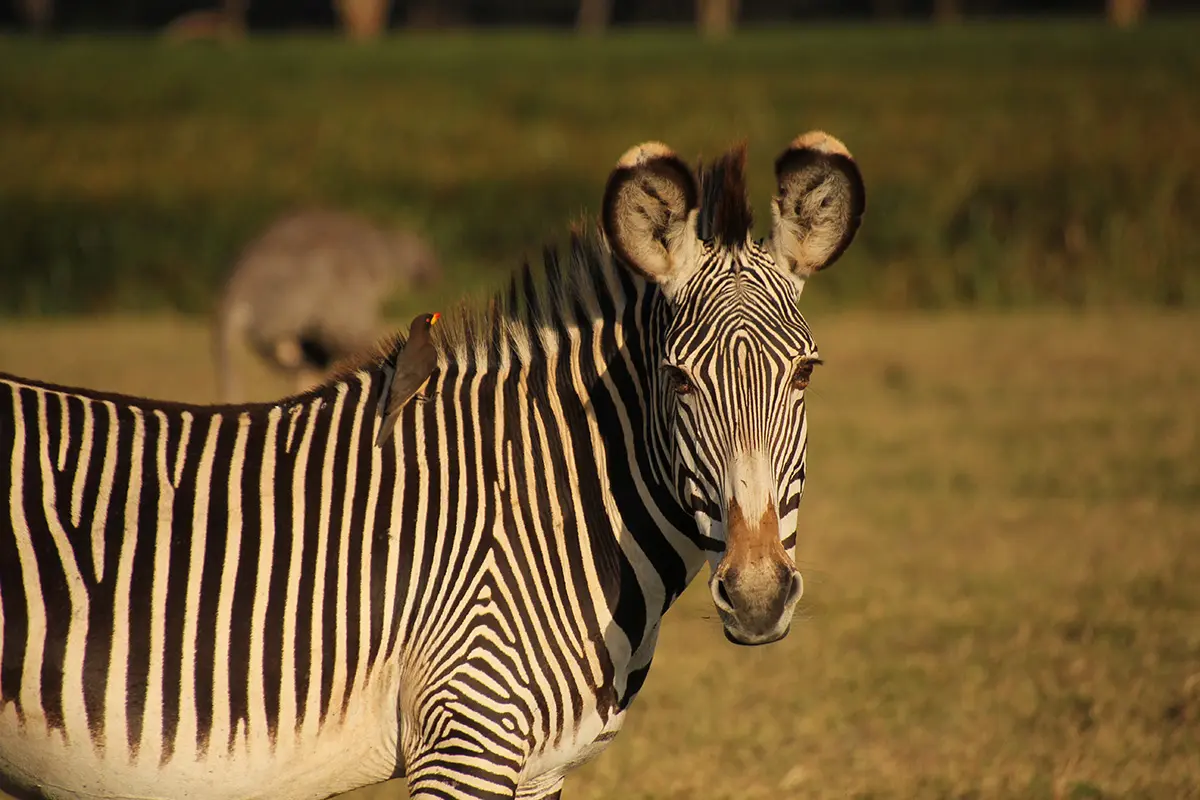
Our safaris cover both Plains and Grevy zebra territory, so you can compare stripe patterns firsthand.
Why the Uncertainty Itself Is Worth Knowing
Most safari guests assume every animal fact has a tidy, settled explanation, and the zebra stripe debate is a genuinely useful reminder that is not always true. Darwin himself weighed in on this exact question in the 1800s without resolving it, and the same open debate continues in peer-reviewed journals today. That unresolved status is not a failure of science; it reflects how many overlapping pressures, flies, predators, heat, social recognition, act on a single trait at once, and untangling which pressure matters most has proven genuinely difficult even with modern research tools. Seeing a real herd shimmer across the plains while knowing scientists are still actively arguing about why makes the sighting land differently than a simple fact would.
Zebra Stripes: Quick Reference
- Strongest current theory: stripes deter biting flies by disrupting polarised light.
- Disproven theory: stripes regulate body temperature.
- Unresolved debate age: over 150 years, since Darwin’s era.
- Individual pattern: no two zebras share an identical stripe layout.
- Current scientific view: likely a combination of multiple factors, not one answer.
- Where to compare species: Masai Mara for Plains zebra, Laikipia and Samburu for Grevy’s.
Learning More About Kenya Zebras
The stripe debate is only one part of the zebra story. Our Zebra Species in Kenya guide compares Grevy’s and Plains zebra in detail, and our Zebras of the Masai Mara guide covers their role in the Great Migration itself.
An Unsolved Mystery, Right in Front of You
Message us today and we will plan a Kenya safari through real zebra herds and the debate they represent.
Frequently Asked Questions
Why do zebras really have stripes?
Scientists have not reached a full consensus, but the strongest current evidence points to biting fly deterrence, since striped patterns disrupt the polarised light that attracts horse flies and tsetse flies, reducing bites measurably compared to solid-coloured animals.
Do stripes actually confuse predators like lions?
Partially, but not completely. A moving herd of stripes can visually blur together, making it harder to single out one zebra, though this cannot be the whole explanation since lions do most of their hunting at night when stripes are far less visible.
Is it true that zebra stripes help regulate body temperature?
No, this once-popular theory has been directly challenged and largely disproven by more recent research, which found no meaningful cooling effect from the black and white pattern.
Are zebra stripes unique to each individual?
Yes, no two zebras share an identical stripe pattern, similar to a human fingerprint, which has led some researchers to propose the markings may also assist with individual recognition within a herd.
Which zebra species can I see in Kenya?
Kenya is home to both the Plains zebra, common in the Masai Mara, and the endangered Grevy’s zebra, found mainly in Laikipia and Samburu, distinguished by its narrower stripes and larger, rounder ears.