

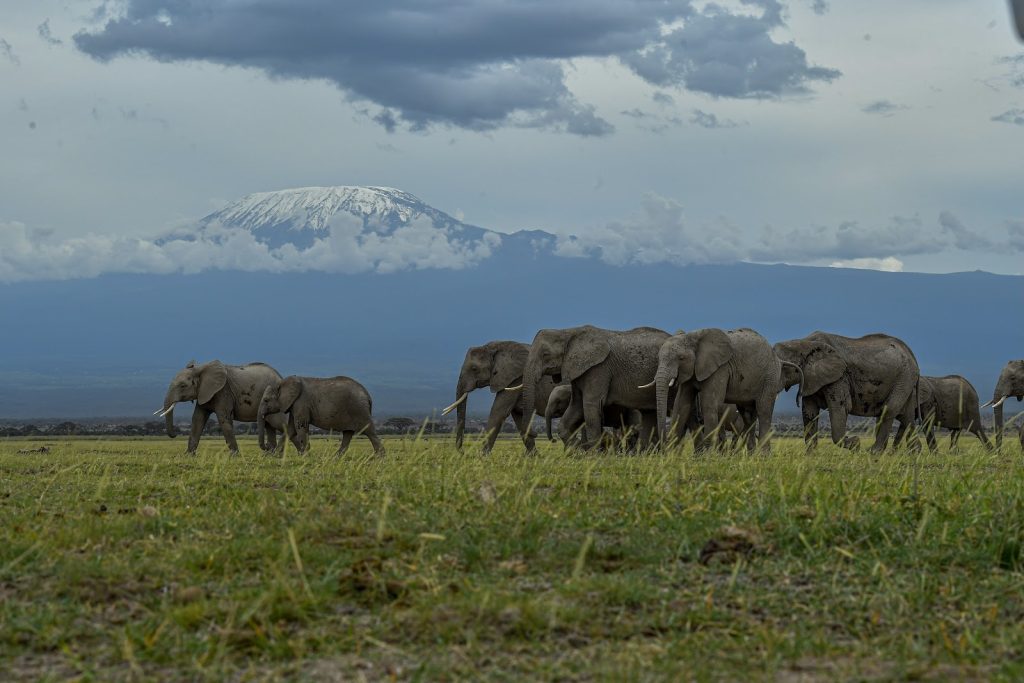
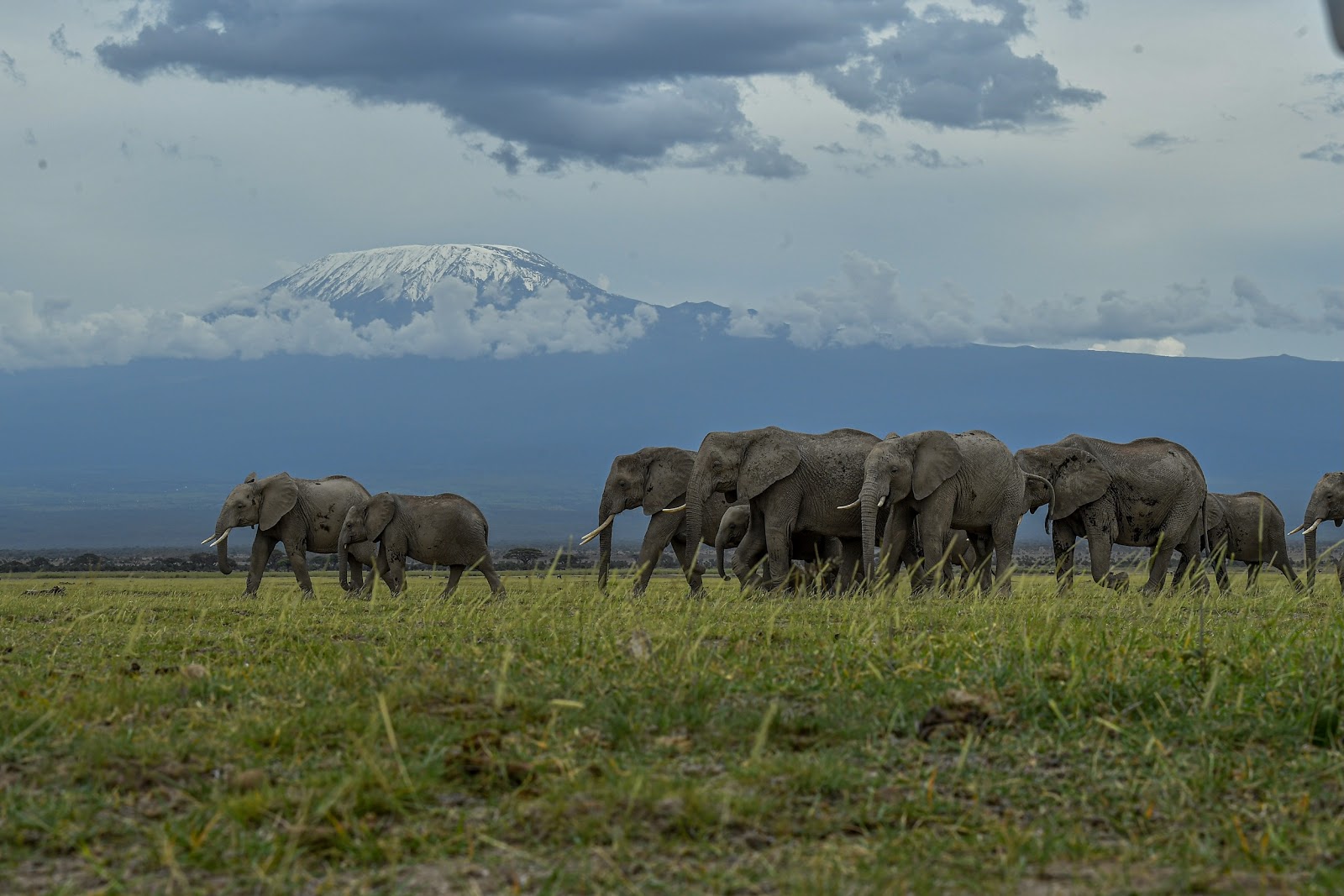
The engine is off and the only sound is chewing. A family of elephants has walked out of the swamp and is crossing the track in front of you, so close you can hear the grass tear. A calf trots to keep up, trunk waving. Behind them, above a band of cloud, the white top of Kilimanjaro has appeared, pink in the first light. Your guide says nothing. He has seen this a thousand times and still lets it speak for itself.
Amboseli National Park is a 392 km² park in Kajiado County, southern Kenya, at the foot of Mount Kilimanjaro. It is famous for large, relaxed elephant herds, swamps fed by Kilimanjaro’s snowmelt and classic mountain views. It is about 4 to 5 hours from Nairobi by road, and non-resident adults pay USD 90 per day.
Sense of Adventure is a Nairobi-based safari company, licensed by Kenya’s Tourism Regulatory Authority (TRA1/47/C01/77087), and Amboseli National Park is one of the parks our guides know best. This guide covers the landscape, the Maasai communities and elephant researchers who protect it, the 2026 fees, gates and roads, the best months, honest wildlife odds, rules, how long to stay and a sample itinerary.
✅ Amboseli National Park: The Quick Answer
- Where: Kajiado County, southern Kenya, on the Tanzania border beneath Mount Kilimanjaro.
- Best for: Elephants at close range, Kilimanjaro views, photography and birdlife in the swamps.
- Best time: June to October and January to February, the dry months with the clearest mountain views.
- Entry fee: Non-resident adults USD 90, children USD 45; East African citizens KES 1,500 per day.
- How long to stay: Two nights is ideal; one night works as a short trip from Nairobi.
- Getting there: About 4–5 hours by road via Emali or Namanga, or a short light-aircraft flight from Wilson Airport.
🌍 Planning a Safari to Amboseli National Park?
Tell us your dates and we will plan the timing around the best light and the clearest mountain mornings. 💬 WhatsApp Us Now or call +254 799 160 081
What Is Amboseli National Park?
Amboseli National Park is a compact, flat savanna park built around permanent swamps, with Kilimanjaro, Africa’s highest mountain, rising across the border in Tanzania.
Most of the park is open grassland and an old lake bed. Lake Amboseli itself is usually a dry, white pan that shimmers with mirages, and fills only after good rains. The life of Amboseli National Park comes from underground: snowmelt and rain from Kilimanjaro seep through volcanic rock and surface in springs, feeding the green swamps of Enkongo Narok and Longinye. In the dry season, these swamps pull in elephants, buffalo, hippos and hundreds of birds.
Amboseli National Park was gazetted on 1 November 1974. It is a UNESCO Man and Biosphere reserve and one of Kenya’s Important Bird Areas, according to the Kenya Wildlife Service park page. The best viewpoint is Observation Hill, known locally as Nomatior, where you can stand and look across the swamps to the mountain.
A note on who manages Amboseli National Park
In 2025 the national government moved to hand management of Amboseli to Kajiado County. In December 2025 the High Court suspended the transfer while a constitutional petition is heard. At the time of writing, KWS still lists Amboseli National Park and its fees, but arrangements could change. We track this closely and confirm fees for every booking.
The People of Amboseli: Maasai Landowners, Rangers and Researchers
Amboseli National Park only works because the Maasai communities around it share their land with wildlife.
The park is small, and most of the Amboseli ecosystem lies outside it on Maasai group ranches. Elephants, lions and zebras walk out of the park every night to feed and in the wet season spread far across community land. KWS notes that only about 40% of the elephants around Amboseli use the park in the dry season. The rest of the time, they depend on land owned by Maasai families who also graze cattle, sheep and goats there.
That shared space brings real costs: crops raided by elephants and livestock lost to lions. Conservation groups such as the Big Life Foundation employ local rangers to stop poaching, remove snares and respond to conflict, and run programmes for education and healthcare. Community sanctuaries and conservancies, including the Kimana Sanctuary, pay landowners to keep corridors open. Your park and conservancy fees are part of what makes that possible.
Amboseli elephants and the world’s longest elephant study
Amboseli elephants are some of the most studied wild animals on Earth. Research on the families here began in 1972 and is described by KWS as the longest-running study of wild elephants anywhere. Researchers know many individuals by name and family history, and the elephants are famously calm around vehicles. That trust is why your guide may switch off the engine and let a herd walk past within a few metres. Read more about how they move in our story on the Amboseli-Kilimanjaro elephant corridor.
Expert tip from our Nairobi team: If you visit a Maasai village near the park, go with a guide who knows the family and agree the fee before you arrive. Ask questions about cattle, water and school. A real conversation is worth far more than a dance performed for visitors.
Amboseli Entry Fee and Park Charges for 2026
The 2026 Amboseli entry fee for a non-resident adult is USD 90 per day, because KWS classes Amboseli National Park as a Premium Park alongside Lake Nakuru.
These are the conservation fees in force since October 2025, as published by KWS. All payments are cashless through eCitizen. Children aged 5 and under enter free, and the child rate applies from 5 to under 18.
| Visitor category | Adult (per day) | Child (per day) |
|---|---|---|
| Non-resident | USD 90 | USD 45 |
| African citizen (non-EAC) | USD 50 | USD 25 |
| Kenya resident | KES 2,025 | KES 1,050 |
| East African citizen | KES 1,500 | KES 750 |
| Safari vehicle under 6 seats | KES 600 | per vehicle |
| Safari vehicle 6–12 seats | KES 1,500 | per vehicle |
If you are combining parks, Tsavo East and Tsavo West are cheaper at USD 80 per non-resident adult; see our Tsavo entrance fees guide and our overview of Kenya national park entrance fees for 2026. When you book with us, every fee is included in one written price.
How to Get to Amboseli National Park
Amboseli National Park is about 4 to 5 hours from Nairobi by road, or around an hour by scheduled light aircraft from Wilson Airport.
By road
There are two main routes. The most common runs south-east on the Nairobi–Mombasa road to Emali, then on tarmac to Iremito gate, about 204 km from Nairobi according to KWS. The other runs south via Kajiado to Namanga and then on murram (gravel) to Meshanani gate, about 220 km. Kimana gate in the east links Amboseli to Tsavo West, roughly 240 km away by road. Our guides choose the route by season and road conditions.
By air
Light aircraft fly from Wilson Airport to the airstrips in and around Amboseli National Park, with Kimana airstrip close to the eastern side. Flights are short, but you must travel light: read our guide to safari luggage weight limits on small aircraft before you pack.
Opening hours
Gates open at 6.00 am and close at 6.00 pm. Guests staying at lodges inside the park can move between their lodge and the gates outside these hours only as permitted.
Best Time to Visit Amboseli: Month by Month
The best time to visit Amboseli is the dry season from June to October and again in January and February, when wildlife gathers at the swamps and Kilimanjaro is most often clear.
Kilimanjaro is shy. Clouds often hide the summit by mid-morning and lift again in the late afternoon, so the best views come at dawn and dusk in every month.
| Month | Weather | Wildlife | Kilimanjaro views |
|---|---|---|---|
| January–February | Hot, mostly dry | Herds at the swamps, calves | Often clear at dawn |
| March–May | Long rains | Green, dispersed wildlife, fewer visitors | Frequently cloudy |
| June–August | Cool, dry | Big gatherings at the swamps | Good, some haze |
| September–October | Hot, dry, dusty | Peak concentrations of elephants | Good at dawn and dusk |
| November–December | Short rains | Elephants gather in the marshes | Clear spells after rain |
The green months can still be rewarding, with dramatic skies and fewer vehicles. For weather across your whole route, plan with your guide, and if you are choosing between parks, read our Masai Mara vs Amboseli comparison.
📅 Get a Free, No-Obligation Safari Quote
Tell us your month and travel style, and we will send a written Amboseli plan with fees, vehicle and lodge included. ✉ Send Us Your Dates on WhatsApp
Wildlife in Amboseli National Park: Honest Sighting Odds
Elephants are almost guaranteed in Amboseli National Park, while lions and cheetahs are seen on many trips and rhinos are not present at all.
- Elephant: almost certain, often in large family groups and big bulls near the swamps.
- Buffalo, zebra, wildebeest and giraffe: very likely.
- Hippo: very likely in the swamps, often half-submerged in the papyrus.
- Lion: fair to good; prides move in and out of the park.
- Cheetah and spotted hyena: fair; best on the open plains.
- Leopard: rare in Amboseli National Park.
- Rhino: none. Add Lake Nakuru or Ol Pejeta to your trip if rhino matters.
KWS records over 400 bird species in Amboseli National Park, including about 40 birds of prey. Pelicans, herons, African jacanas, crowned cranes and, when the lake holds water, flamingos are regular sights. Dry-country specialists such as the gerenuk browse in the bush on the park’s edges. If the Big Five are on your list, our guide will you see the Big Five in Kenya explains the best combination of parks.
Things to Do in Amboseli National Park
The main things to do in Amboseli National Park are game drives, the climb up Observation Hill, photography and cultural visits to Maasai communities nearby.
Game drives and photography
Morning drives begin around 6.30 to catch the mountain before the clouds. Midday is hot and bright, so most guests rest, then drive again from about 4 pm. Amboseli is one of Africa’s great photography parks; our guide to the best parks for photography in Kenya explains why, and our Amboseli Elephant Photographic Safari is built around the light.
Observation Hill
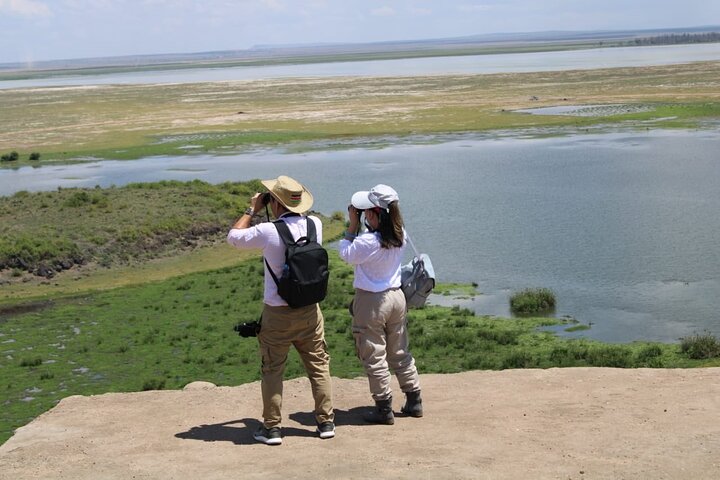
This small hill is one of the few places where you may leave the vehicle. A short walk up gives you a 360-degree view across the swamps, the dry lake and, on a clear day, Kilimanjaro. Go early or late for the best light.
Walks, night drives and the conservancies
Walking is not allowed on the open plains of the park itself, but some community conservancies and sanctuaries around Amboseli National Park offer guided walks and other activities through their camps. KWS also promotes astro-tourism and night wildlife experiences in Amboseli, where wide skies and low light pollution make for remarkable stargazing. Ask us what is available for your dates.
Amboseli National Park Rules and Safety
The rules in Amboseli National Park are designed to protect the swamps and the wildlife: stay on the roads, keep your distance and keep the noise down.
- No off-road driving: stay on established roads and tracks.
- Speed limit: 40 km/h.
- Distance: keep at least 20 metres from wildlife and never block an animal’s path.
- Stay in the vehicle except at designated places such as Observation Hill.
- No single-use plastic, no feeding animals and no hooting.
- Observe gate times: 6.00 am to 6.00 pm.
Amboseli is a safe park when you follow your guide. Before you travel, read the UK government’s Kenya travel advice and make sure your insurance covers medical evacuation; our Kenya travel insurance guide explains what to look for.
How Many Days in Amboseli National Park?
Two nights in Amboseli National Park is the best balance for most travellers, giving you a full day plus two sunrise chances to see Kilimanjaro.
One night works on a short break from Nairobi, as on our 2-Day Amboseli Safari, and a long Amboseli day safari is possible but tiring. Photographers should plan three nights or more, because a cloudy morning can hide the mountain and you will want a second chance.
Where to Stay and What to Pack
You can sleep inside Amboseli National Park for the shortest drives to the swamps, or in a camp on the community land around it for a quieter, more private stay.
Inside the park, lodges such as Ol Tukai Lodge and Amboseli Serena Safari Lodge sit close to the wildlife. Outside, tented camps on the surrounding conservancies combine views of Kilimanjaro with walks and fewer vehicles. Not sure which style suits you? Read our guide to the tented camp vs lodge choice. Our dedicated guide to the best Amboseli lodges is coming soon in our luxury lodges series.
What to pack for Amboseli
- Sunglasses, a hat and strong sunscreen: the light off the dry lake is intense
- A light scarf or buff for dust in the dry season
- A warm layer for early mornings
- A camera with a zoom lens and a spare battery; elephants come close, but birds and cats do not
- Binoculars for the swamps and Observation Hill
- Khaki or neutral clothing (see why safari clothes are khaki)
Combining Amboseli with other parks
Amboseli National Park pairs naturally with Tsavo West to the east, the Masai Mara to the west and the Kenyan coast for a beach finish.
Our 7-day Amboseli, Naivasha and Masai Mara safari is Kenya’s classic route, and you can read our new Masai Mara National Reserve guide for the second half. Heading to the coast? Our Tsavo and Amboseli safari from Mombasa links both parks. Comparing options? See Tsavo vs Amboseli, Meru vs Amboseli and Amboseli vs Ol Pejeta.
Sample 2-Day Amboseli National Park Itinerary
This is the short Amboseli National Park safari we recommend most often from Nairobi.
- Day 1, Nairobi to Amboseli: leave Nairobi at about 7 am, drive via Emali to Iremito gate, check in for lunch, then take an afternoon game drive to the swamps and Observation Hill at sunset.
- Day 2, Kilimanjaro sunrise and return: an early drive for the clearest mountain views and elephants coming to drink, breakfast at the lodge, a final drive on the way out and arrival in Nairobi in the late afternoon.
Book it as our 2-Day Amboseli Safari from Nairobi, or browse our Amboseli safari packages and private Amboseli safari options. Prices depend on season, lodge and group size, so message us for a quote.
Amboseli National Park FAQs
How much is the Amboseli National Park entry fee?
Since October 2025, KWS charges non-resident adults USD 90 and children USD 45 per day. East African citizens pay KES 1,500 per adult and Kenya residents KES 2,025. Children aged 5 and under enter free. Fees are paid online through eCitizen, as gates do not take cash.
What is the best time to visit Amboseli?
The best months are June to October and January to February, when the park is dry, wildlife gathers at the swamps and Kilimanjaro is most often visible. The mountain is clearest at sunrise and late afternoon. The rainy months are quieter and greener but cloudier, with fewer mountain views.
How far is Amboseli from Nairobi?
Iremito gate is about 204 km from Nairobi via Emali, and Meshanani gate about 220 km via Namanga, according to KWS. Allow 4 to 5 hours by road, depending on traffic and stops. Light aircraft from Wilson Airport reach the area in roughly an hour.
Can you see Mount Kilimanjaro from Amboseli?
Yes. Kilimanjaro rises just across the border in Tanzania and dominates the view from Amboseli. Clouds often cover the summit during the day, so your best chances are at dawn and in the late afternoon, especially in the dry months. Staying two nights gives you two sunrise chances.
Are there lions and rhinos in Amboseli?
Lions live in Amboseli and are seen on many safaris, though sightings are less reliable than in the Masai Mara. Cheetahs and hyenas are also present. There are no rhinos in Amboseli, so travellers who want to see rhino usually add Lake Nakuru or Ol Pejeta Conservancy to their trip.
Is Amboseli worth visiting?
Yes, especially for elephant lovers and photographers. Amboseli has some of the most relaxed elephants in Africa, studied since 1972, with Kilimanjaro behind them. It is compact, so game viewing is easy even in a short stay. It pairs well with the Masai Mara or Tsavo West for a fuller Big Five trip.
How many days do you need in Amboseli?
Two nights is ideal, giving a full day of game drives and two chances at a clear Kilimanjaro sunrise. One night works for a short trip from Nairobi. Photographers should plan three nights so that one cloudy morning does not cost them the classic elephant and mountain photograph.
🏕 Plan Your Amboseli Safari With Sense of Adventure
Kenya-based experts. Real local knowledge. Transparent pricing. Tell us your dates and we will plan your Amboseli National Park days around the best light, lodges and mountain mornings. 💬 WhatsApp Us — Start Planning Today
Call or WhatsApp: +254 799 160 081 · Email: info@senseofadventure.co.ke
Related Safari Guides
- › Masai Mara National Reserve: The Complete Guide
- › Masai Mara vs Amboseli: Which Should You Choose?
- › Nairobi National Park Guide
- › Taita Hills and Salt Lick: Tsavo Gateway
- › Complete List of Kenya National Parks and Reserves
Official travel & park resource: Kenya Wildlife Service ↗ · Destination guide: Magical Kenya ↗