
Lake Manyara National Park punches wildly above its compact size, stacking habitats like a highlight reel: groundwater forest thick with blue monkeys and hornbills, open grassland where buffalo herds graze in their hundreds, an alkaline lake often lined pink with flamingos, and — most famously — lions that sometimes climb into the acacia canopy to escape the heat below.
Ernest Hemingway called the setting, hemmed by the sheer 600-metre Rift Valley escarpment, one of the loveliest he had seen in Africa, and the compliment holds up. Most visitors treat Manyara as a warm-up en route to the Serengeti; Sense of Adventure treats it as a genuine highlight in its own right, worth a full, unhurried day. This guide covers wildlife, the best time to visit, how to get there from Kenya and Arusha, activities, costs and how to fit Manyara into a wider route.
✅ Lake Manyara National Park Quick Answer
- Where: northern Tanzania, at the foot of the Rift Valley escarpment, about 2 hours’ drive west of Arusha.
- Known for: groundwater forest, elephants and buffalo, flamingos, tree-climbing lions and 400+ bird species.
- Best time: June to October for big game; November to May for birds and green scenery.
- How long: a half-day covers the highlights; a full day is better.
- Combine with: Tarangire, Ngorongoro and the Serengeti; our 10-day Kenya & Tanzania Classic Safari starts at USD 3,500.
A Full Day in Tanzania’s Most Compact Gem
Forest, lake and tree-climbing lions in one drivable loop — ask us to build Manyara into your northern circuit.
Why Lake Manyara National Park Packs So Much Into So Little Space
The park occupies a narrow shelf between the soda lake and the towering Rift wall, and that geography compresses an entire ecosystem gradient into a single game-drive loop. You enter through dense groundwater forest fed by springs seeping from the escarpment, open into acacia woodland and grassy floodplain, and finally reach the lake’s alkaline shallows.
There, water levels permitting, thousands of lesser flamingos gather alongside pelicans and storks. Manyara’s tree-climbing lions favour the sausage trees and acacias of the woodland zone; the habit is thought to help them escape biting flies and ground heat. Often quoted at 330 km², the park was later enlarged to roughly 650 km², and in wet years the lake can cover up to two-thirds of it.
The 5 Essential Lake Manyara Experiences
Tree-Climbing Lions — the park’s signature oddity
Manyara’s lions are famous for lounging along horizontal branches — a behaviour rare enough worldwide to draw researchers, most convincingly explained as escape from ground heat and biting insects. Scan the woodland’s big sausage trees and acacias; a paw dangling from the canopy is the sighting everyone hopes for, though it is never guaranteed.
The Groundwater Forest — a jungle fed from underground
Springs seeping from the Rift wall feed a lush, almost jungle-like forest at the park entrance — blue and vervet monkeys crashing through the canopy, silvery-cheeked hornbills calling, olive baboons troop-sized in the shade. It is a cool, green contrast to every dusty savannah image of Africa, and it announces itself the moment you enter.
Flamingos on the Alkaline Shore — the Rift lake spectacle
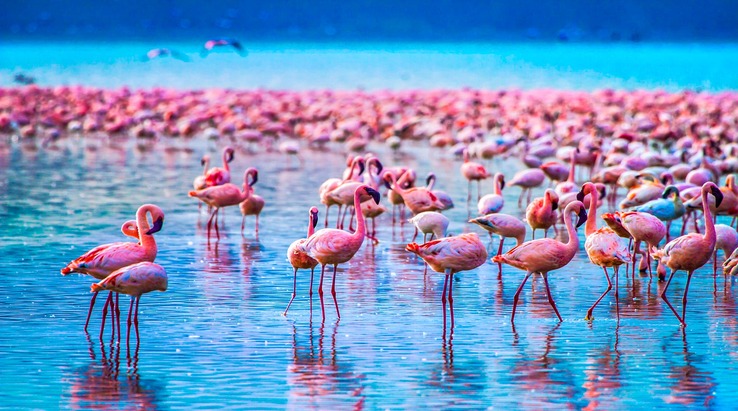
When conditions align, Lake Manyara’s shallow soda shoreline hosts thousands of lesser flamingos feeding on algae, joined by pelicans, storks and herons — a scene rivalling Kenya’s famous Rift lakes. Numbers swing with water level and algae bloom, so ask your guide for the current picture before setting expectations.
Buffalo and Elephant Herds — big numbers on the floodplain
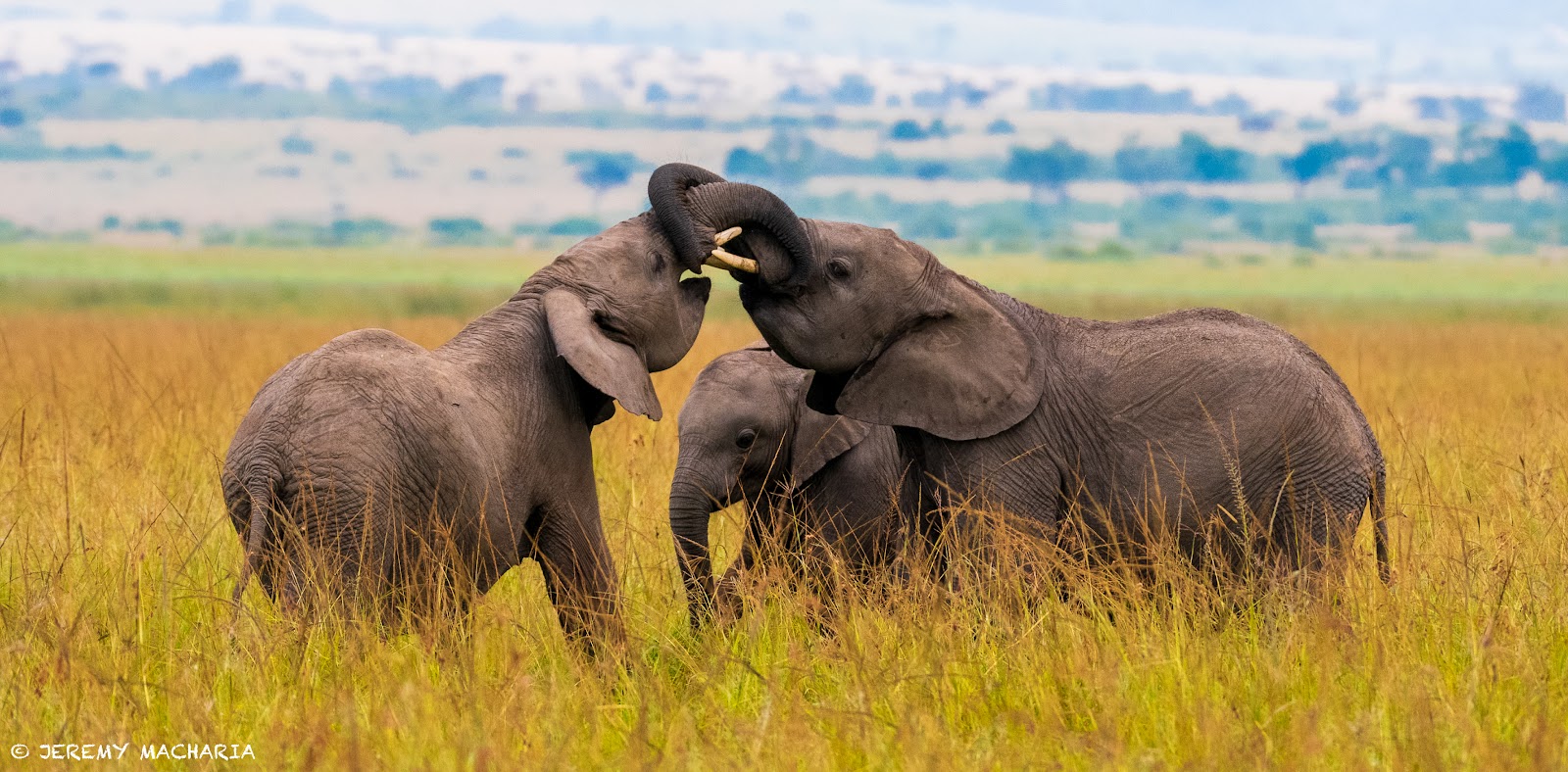
Manyara’s open grassland supports large buffalo herds — often hundreds strong — alongside elephant families that move confidently between forest and floodplain. The compact park concentrates these big-number sightings efficiently, often within the first hour of a drive.
The Hemingway Escarpment View — the backdrop that impressed a legend
The sheer 600-metre Rift wall framing the park’s western edge is the view Ernest Hemingway praised in Green Hills of Africa. A stop along the escarpment-facing tracks, especially in late afternoon light, delivers the postcard shot — lake, cliff and open plain in one frame.
Serengeti Warm-Up or Standalone Highlight
Manyara rewards a full day, not a drive-through. Ask us to build it properly into your Tanzania route.
Wildlife in Lake Manyara National Park
Big game and the lions
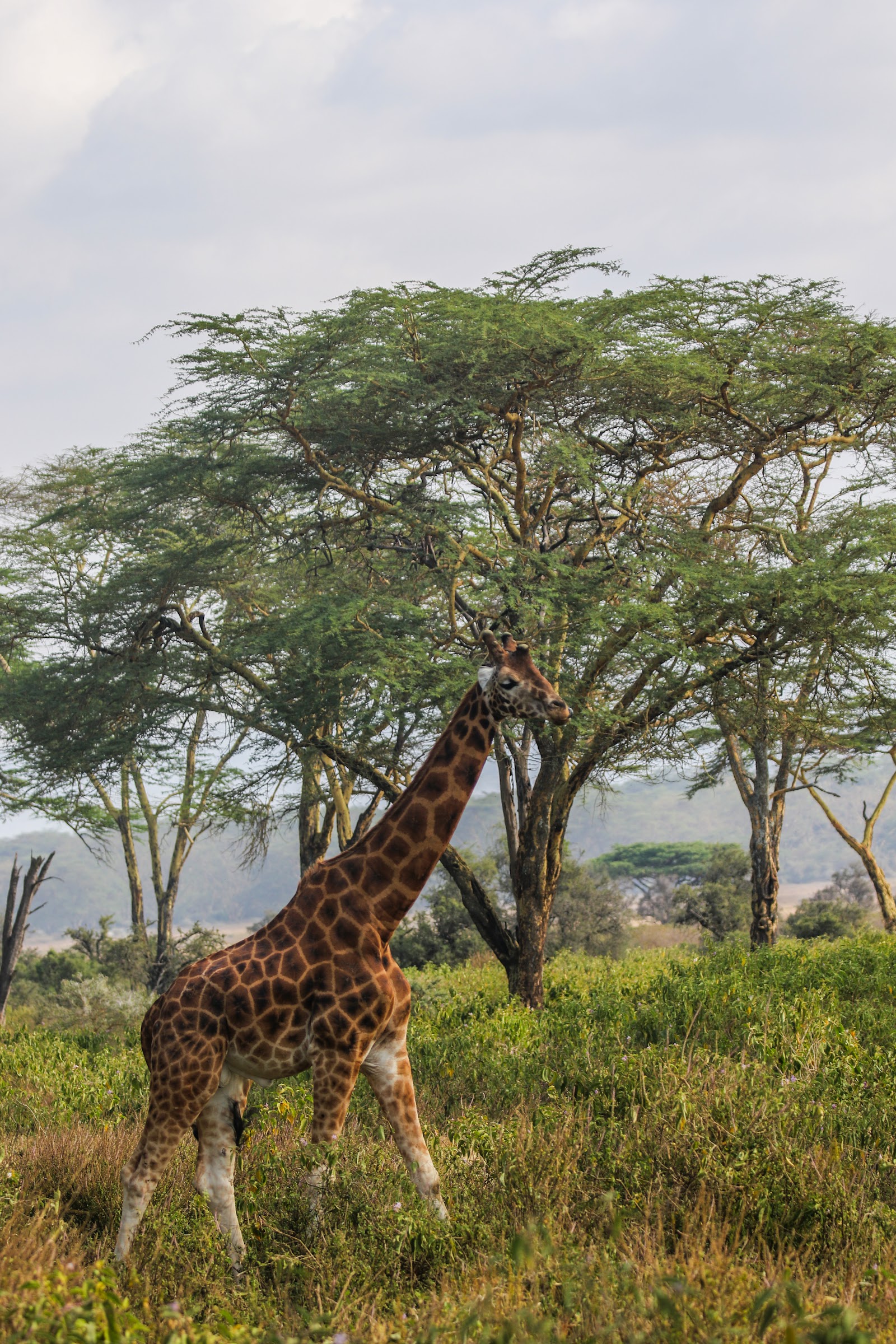
Elephants, buffalo, giraffes, zebras, wildebeest, impala, warthogs and hippos are the everyday cast. Lions live here too, but in modest numbers, so tree-climbing sightings are a lucky bonus rather than a routine event. Leopards are present in the forest and woodland but shy. There are no rhinos in Lake Manyara National Park today, so plan Ngorongoro Crater if the Big Five matters to you.
Primates of the forest
Lake Manyara National Park has some of the largest olive baboon troops in East Africa, and you will often see them grooming and playing on the forest road. Blue monkeys and vervets are common, and guides know the fig trees where they gather in the morning.
Birds of Lake Manyara National Park
With more than 400 species recorded, Manyara is one of Tanzania’s best birding parks for its size. Look for flamingos, great white pelicans, yellow-billed storks and grey-crowned cranes on the shore; silvery-cheeked hornbills and crowned eagles in the forest; and many migrants from Europe and Asia between November and April.
Best Time to Visit Lake Manyara National Park
Manyara is open all year, and each season has its strengths. The dry months from June to October bring the easiest game viewing, as animals gather near water and the bush thins out. The wet season, roughly November to May with the heaviest rain in March and April, turns the park lush, fills the waterfalls on the escarpment and brings migrant birds.
| Months | Conditions | Best for |
|---|---|---|
| June–October | Dry, clear, cooler mornings | Elephants, buffalo and general game viewing |
| November–December | Short rains, greening | Migrant birds, fewer vehicles |
| January–February | Warm, drier spell | Birds and a good mix of wildlife |
| March–May | Long rains, lush | Scenery, waterfalls and low-season rates |
Flamingo numbers depend on water levels and algae rather than the calendar, so they can be high or low in any season.
How to Get to Lake Manyara National Park
From Arusha: the gate lies beside the busy village of Mto wa Mbu, about 125 km west of Arusha, roughly 2 hours on a good tarmac road. Kilimanjaro International Airport is about an hour further east.
From Kenya: most of our guests fly from Nairobi to Kilimanjaro or Arusha, or cross by road at the Namanga border, then drive on to Manyara. Light aircraft also land at the Lake Manyara airstrip on scheduled safari circuits. Our Tanzania Northern Circuit guide explains the full route.
Things to Do in Lake Manyara National Park
Game drives and the treetop walkway
A game drive is the main event, usually entering at dawn and following the forest road south along the lake. Many trips also include the suspended treetop walkway near the entrance, which lifts you into the forest canopy among monkeys and birds.

Canoeing, night drives and village visits
When water levels allow, guided canoe trips run on the lake, and some operators hold permits for night game drives, a rare chance to see genets, bushbabies and hunting predators. Outside the park, Mto wa Mbu offers cycling and walking tours through banana farms and markets, and the hot springs at the park’s southern end are a quiet stop for those with a full day.
A simple one-day plan
Leave your lodge at first light and enter the gate as it opens, when the forest is cool and the baboons and blue monkeys are most active. Walk the treetop walkway mid-morning, then drive south through the woodland, scanning the big trees for lions and the floodplain for elephants and buffalo. A picnic lunch at one of the designated sites by the lake breaks up the day.
In the afternoon, head for the shoreline to look for flamingos, pelicans and hippos, and finish with the escarpment in warm evening light. Leave the park before the gate closes at sunset, unless you have booked a permitted night drive. With a second day, add a cultural walk in Mto wa Mbu or move on to Tarangire or Ngorongoro.
Responsible visiting
Stay in the vehicle except at marked sites, keep voices low near animals and never feed the baboons, which quickly learn to raid cars and picnic tables. Take all litter with you, and ask your guide to keep a respectful distance from lions in trees so they are not pushed to climb down.
Lake Manyara National Park Costs and Packages
Park entry is paid to Tanzania National Parks (TANAPA) per person per 24 hours, plus a vehicle fee. Fees change, so check current rates on the Tanzania National Parks website before you travel. Prices on our site include:
- Kenya & Tanzania Classic Safari – Masai Mara & Serengeti (10 Days) — from USD 3,500; Manyara can be added on the way to the crater.
- Great Migration Safari Kenya & Tanzania (12 Days) — from USD 4,600, with the Mara, Serengeti and Ngorongoro.
Final prices depend on season, lodge and group size. Ask for a private Kenya safari that continues into Tanzania, or see our luxury Kenya safari options for the Kenyan leg. Before you go, read the latest GOV.UK travel advice for Tanzania and our guide to whether Tanzania is safe for tourists.
Where to Stay Near Lake Manyara National Park
Most lodges sit on the escarpment rim above the park, with sweeping views over the lake, or in and around Mto wa Mbu and Karatu, which also puts you close to Ngorongoro Crater. Staying on the rim means a short, scenic drive down to the gate for an early start. There are also tented camps inside the park for travellers who want to hear the forest at night.
What to Pack for Lake Manyara National Park
- Clothing: neutral layers, a warm top for dawn drives and the rim, and a light rain jacket in the wet months.
- Sun and insects: a hat, sunscreen and repellent, as tsetse flies can be found in the woodland.
- Optics: binoculars and a zoom lens for birds and lions in trees.
- Documents: a passport with the correct Tanzanian visa and any health certificates your route needs.
Our Verdict on Lake Manyara National Park
Lake Manyara National Park will not give you the endless plains of the Serengeti, but it gives you variety in a single morning: forest, floodplain, lake and cliff, with elephants, baboons and birds almost guaranteed. Go in with flexible expectations about lions in trees and flamingo numbers, and you will rarely be disappointed.
It works best as the first or last stop of a Tanzania circuit, ideally with a night on the escarpment rim. Tell us your dates and we will show you how Manyara fits with Tarangire, Ngorongoro, the Serengeti and a Kenya safari.
Lake Manyara Facts
- Compact scale: often quoted at 330 km², now about 650 km² after extension, with the lake covering up to two-thirds.
- Bird list: over 400 species recorded — flamingos, pelicans and forest species combined.
- Tree lions: one of very few known tree-climbing lion populations in Africa, alongside Uganda’s Ishasha sector.
- The wall: the Rift Valley escarpment rises about 600 metres along the park’s western boundary.
- Literary fame: Ernest Hemingway praised the setting in his 1935 book Green Hills of Africa.
- Timing: a half-day covers the highlights; a full day allows the forest, floodplain and lakeshore all unhurried time.
Fitting Manyara Into a Tanzania Circuit
Manyara sits on the classic route to the Serengeti and Ngorongoro Crater — see our Tanzania Northern Circuit guide for the full loop. Compare parks in our Serengeti vs Masai Mara article, or combine it with Kenya on the 10-day Kenya-Tanzania Classic.
Four Habitats, One Unforgettable Day
Forest monkeys, tree lions, flamingos and a Rift wall view — message us to add Manyara properly to your trip.
Frequently Asked Questions
What is Lake Manyara National Park known for?
Lake Manyara National Park is known for its tree-climbing lions, lush groundwater forest, large buffalo and elephant herds, big baboon troops and, water levels permitting, flamingo flocks along its alkaline shore, all set beneath a dramatic 600-metre Rift Valley escarpment in northern Tanzania.
Why do Lake Manyara’s lions climb trees?
Manyara’s lions climb into sausage trees and acacias mainly to escape ground-level heat and biting flies, a behaviour shared with only a few populations, such as Uganda’s Ishasha lions. Lion numbers here are modest, so sightings are a lucky highlight of a game drive rather than a certainty.
Is Lake Manyara worth visiting or just a stopover?
Lake Manyara deserves at least half a day and ideally a full one, not just a drive-through en route to the Serengeti. Its groundwater forest, buffalo-rich floodplain, flamingo shoreline, treetop walkway and tree-climbing lions offer a range of habitats few parks match in such a small area.
Are there flamingos at Lake Manyara?
Lesser flamingos gather on Lake Manyara’s alkaline shallows when algae conditions favour them, sometimes in flocks of thousands, alongside pelicans and storks. Numbers vary with water level and season, so ask your guide for the current situation when planning your visit.
How does Lake Manyara compare to the Serengeti?
Lake Manyara is far smaller than the Serengeti, trading vast plains and the migration for concentrated habitat variety — forest, floodplain and lake — in a single easy loop. Most itineraries visit both, with Manyara as a different-flavoured complement rather than a substitute.
How far is Lake Manyara National Park from Arusha?
Lake Manyara National Park is about 125 km west of Arusha, roughly a 2-hour drive on tarmac to the gate at Mto wa Mbu. That makes it an easy first or last stop on a northern Tanzania safari, or a full day trip from Arusha with an early start.
Can you see the Big Five in Lake Manyara National Park?
Not all of them. Lake Manyara National Park has elephants, buffalo, lions and shy leopards, but no rhinos today. To complete the Big Five on the same trip, add Ngorongoro Crater, which is about an hour’s drive further west and has a small, protected black rhino population.