
Masai Mara vs Serengeti is the question almost every East Africa traveller asks, and the honest answer is that you are choosing between two halves of the same wild place. The Masai Mara in Kenya and the Serengeti in Tanzania share one ecosystem, one Great Migration and one unbroken sweep of grassland, split only by an international border the wildebeest never notice.
What does differ is everything that shapes your trip: the month the herds arrive, how far you travel, what you pay, how many vehicles share a sighting and what you can do beyond a game drive. As a licensed Nairobi-based operator planning private safaris on both sides of the border, we have written this guide to help you match the right park to your dates, your budget and the kind of safari you dream about.
Masai Mara vs Serengeti: the quick answer
- July to October, a week or less: choose the Masai Mara for the river crossings, short transfers from Nairobi and private conservancies.
- December to March: choose the Serengeti, where the herds gather on the southern plains for the calving season.
- Want Ngorongoro, Kilimanjaro or Zanzibar: the Serengeti fits naturally into a northern Tanzania route.
- Want night drives, walks and fewer vehicles: a Masai Mara conservancy delivers all three.
- Ten days or more: do both and see two phases of the migration.
Masai Mara vs Serengeti at a Glance
If you are short on time, this table shows the main differences. Each one is explained in detail below.
| Factor | Masai Mara (Kenya) | Serengeti (Tanzania) |
|---|---|---|
| Size | About 1,510 sq km reserve, plus private conservancies around it | About 14,763 sq km, nearly ten times larger |
| Migration months | Roughly July to October | Most of the year, moving between regions |
| Signature event | Mara River crossings | Calving season in the south, December to March |
| Main gateway | Nairobi, about an hour by air or 5.5 to 6 hours by road | Arusha or Kilimanjaro, about 1 to 2 hours by air |
| Night drives and walks | Yes, in private conservancies | Limited to some private concessions |
| Park fees (2026, non-resident adult) | USD 100 a day January to June, USD 200 July to December | About USD 83 a day, plus about USD 71 a night if you sleep inside the park |
| Pairs well with | Amboseli, Samburu, Lake Nakuru, Diani | Ngorongoro, Tarangire, Kilimanjaro, Zanzibar |
| Best for | First safaris, shorter trips, conservancy privacy | Longer trips, calving season, vast open scale |
Masai Mara vs Serengeti: 9 Differences That Actually Matter
The wildlife is shared, so the real Masai Mara vs Serengeti decision comes down to these nine practical differences.
1. Size and Landscape
The Serengeti National Park covers about 14,763 square kilometres, while the Masai Mara National Reserve covers about 1,510. That gap shapes the whole experience. In the Mara, wildlife is packed into a compact area of rolling grassland, riverine forest and acacia, and a good guide often knows where a pride or a leopard spent the night. In the Serengeti, the same density is spread across a far bigger stage, from the treeless short-grass plains of the south to granite kopjes, river woodland and the hills of the north.
Many first-time visitors find the Mara gives more sightings per hour. Many returning travellers love the Serengeti for its sense of endless space. The Serengeti is also a UNESCO World Heritage Site, and the UNESCO listing for Serengeti National Park explains why it matters so much to migrating wildlife.
2. Where the Great Migration Is, Month by Month
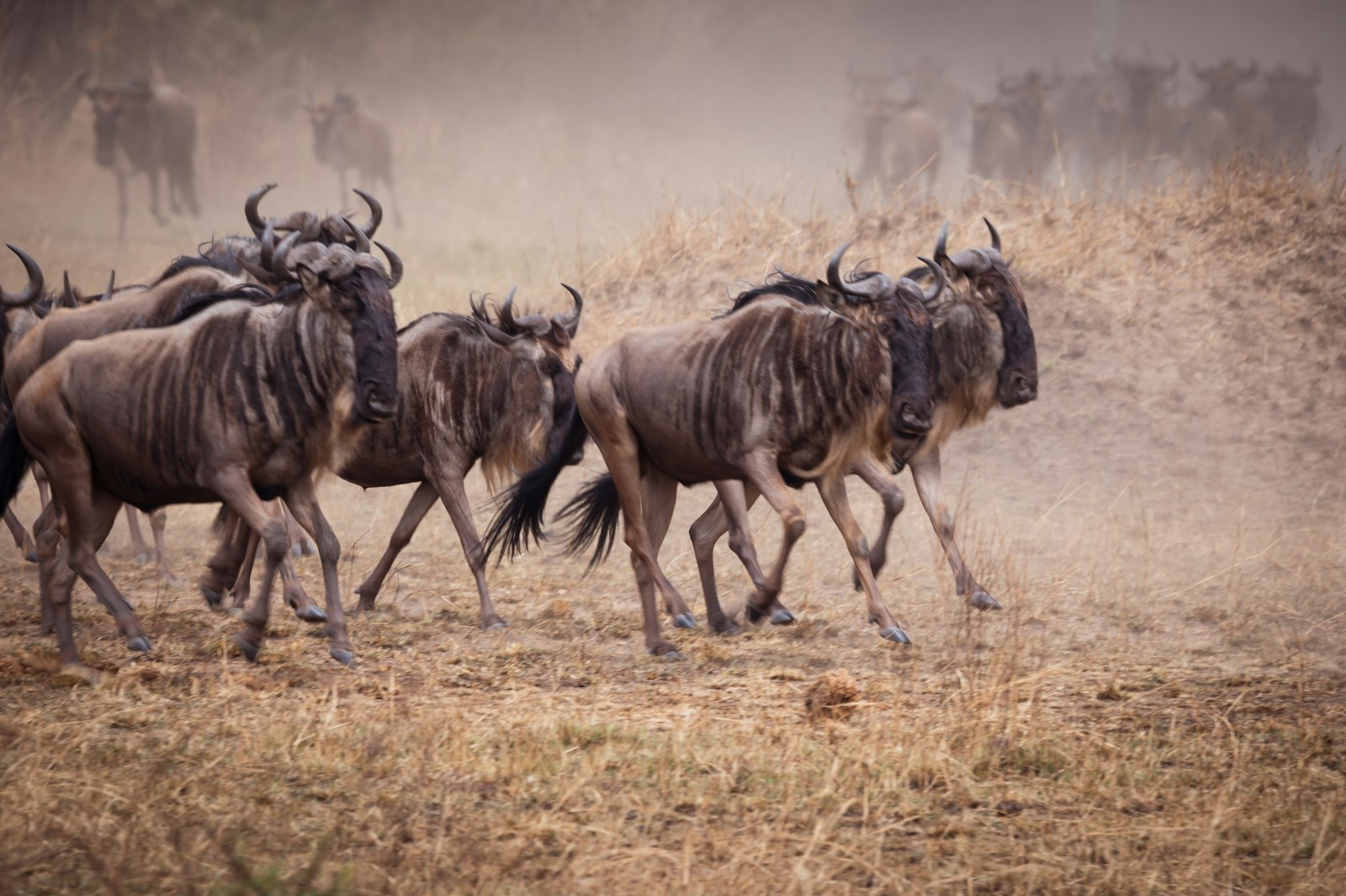
The single biggest factor in any Masai Mara vs Serengeti comparison is timing. More than a million wildebeest, with hundreds of thousands of zebra and gazelle, follow the rains around the ecosystem in a loose clockwise loop. The pattern below is reliable, but the herds follow rain, not the calendar, so dates can shift by a few weeks.
- December to March: the southern Serengeti and the Ndutu area, which straddles the Serengeti and the Ngorongoro Conservation Area. Calving usually peaks around February.
- April and May: the long rains. The herds move north through the central Serengeti, and some camps close or offer lower rates.
- June: the Western Corridor, where herds gather near the Grumeti River.
- July to October: the northern Serengeti and the Masai Mara, with crossings of the Mara River on both sides of the border.
- November: the herds drift south again through the eastern Serengeti, while the Mara turns green and quiet.
For a deeper look at each month, including weather and crowds, see our Masai Mara or Serengeti month-by-month guide and our full Great Migration 2027 guide.

3. River Crossings in the Mara, Calving in the Serengeti
Each park owns one unforgettable chapter of the migration. In the Masai Mara, the drama is the river: columns of wildebeest gathering on the bank, hesitating, then pouring down into water where Nile crocodiles wait. Many crossing points lie within a short drive of camps, which suits travellers who want to spend full days at the river without long transfers.
In the Serengeti, the drama is birth. On the short-grass plains of the south, hundreds of thousands of calves are born within a few weeks, and lions, cheetahs and hyenas gather to hunt them. None of this happens in Kenya. If your trip falls between December and March and the migration is your priority, the Serengeti is the clear choice. Our Serengeti calving season guide explains how to plan it.
Crossings are never guaranteed on a given day on either side of the border. Booking at least three nights near the river gives you the best chance; our honest guide to whether the Great Migration is guaranteed explains the real odds.
Travelling in migration season?
Tell us your dates and we will tell you honestly whether the Mara, the northern Serengeti or both give you the best chance of a river crossing, with camps placed close to the action.
Check My Migration Dates4. Game Viewing Beyond the Migration
The migration grabs the headlines, but most of the wildlife in both parks stays all year. Lion, leopard, cheetah, elephant, buffalo, giraffe, hippo, topi and gazelle live in both, so a Masai Mara vs Serengeti choice outside migration months is far less about what you will see and more about how you will see it.
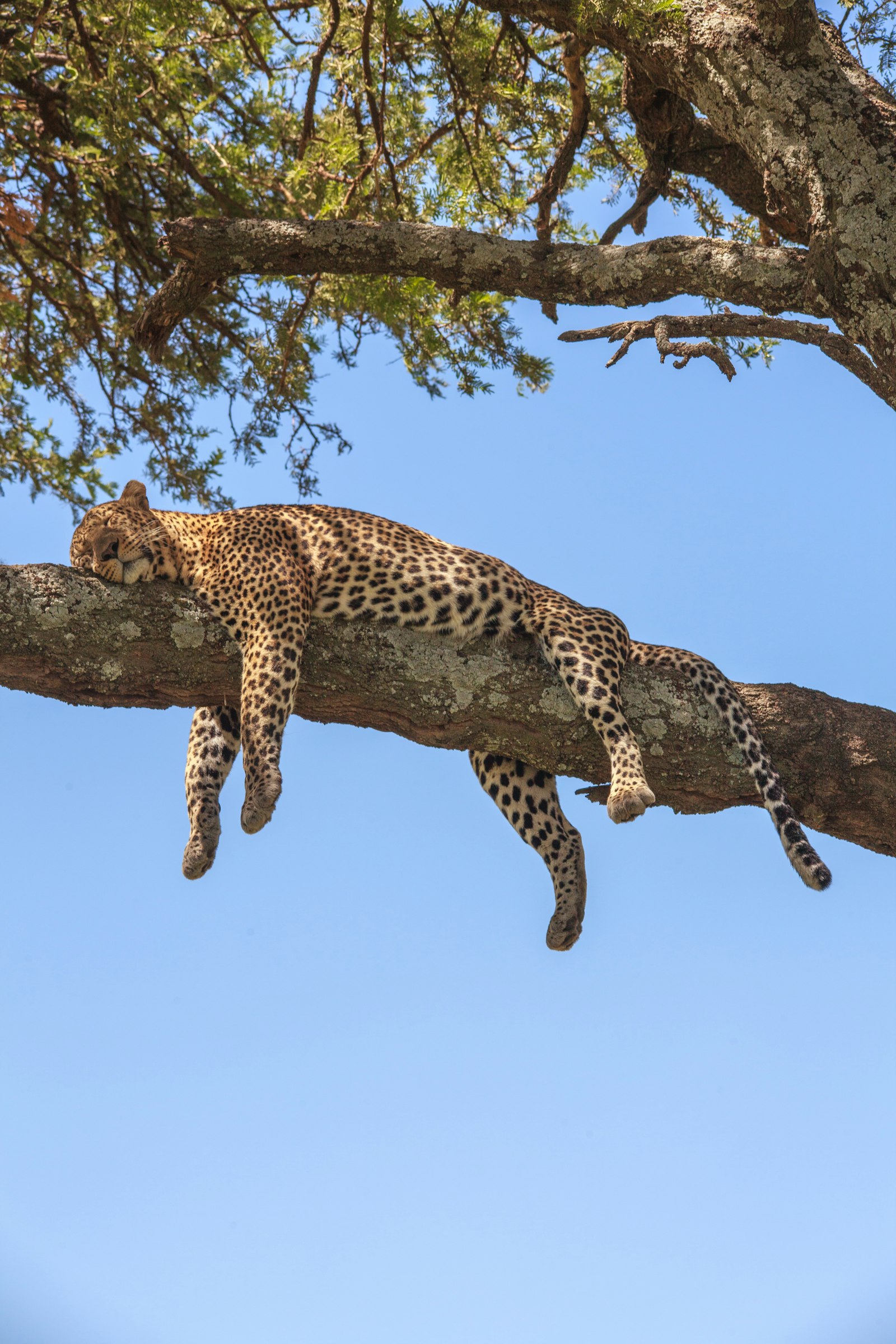
The Mara is famous for big cats, and its compact size means sightings often come quickly, which suits short safaris. The Serengeti’s central Seronera area is known for leopards resting in the trees along the river, and its granite kopjes give lions and cheetahs natural lookouts that make classic photographs. For rhino, neither park is reliable: Kenya’s Mara Triangle holds a small population, while Tanzania’s Ngorongoro Crater, a few hours from the Serengeti, gives a much better chance.
5. Crowds and How to Avoid Them
Crowds are a fair concern on both sides of the border. Because the Mara reserve is compact and close to Nairobi, popular crossing points and big cat sightings can draw many vehicles in August and September. The Serengeti spreads visitors across a much larger area, although the central Seronera area and the northern crossing points around Kogatende can also be busy in peak months.
The Mara has a strong answer: its private conservancies. Areas such as Naboisho and Olare Motorogi are leased from Maasai landowners and limit the number of vehicles at a sighting, so you share a lion pride with one or two other vehicles rather than a crowd, while still being able to visit the reserve for the crossings. In Tanzania, the remote Lamai area of the far northern Serengeti often sees fewer vehicles at the river.
6. Activities Beyond the Game Drive
This is one of the most underrated parts of the Masai Mara vs Serengeti comparison. Inside both national reserves and parks, game drives must stay on tracks and finish by dusk. In the Mara conservancies, however, guided bush walks with Maasai rangers, night drives in search of leopards, aardvarks and genets, and off-road driving to position you for the best light are part of everyday camp life.
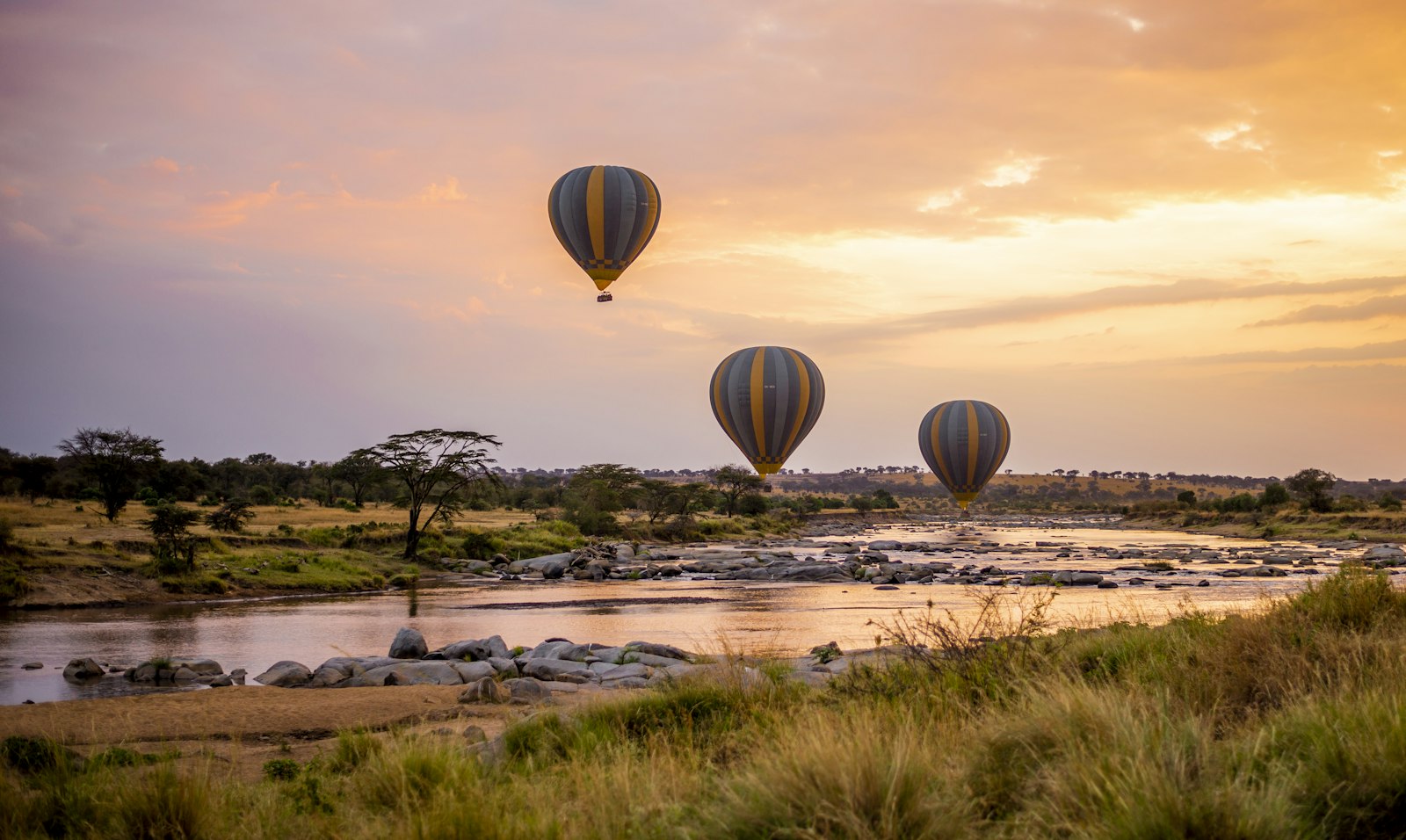
In the Serengeti, these activities are possible only in some private concessions on the park’s edges. Both parks offer sunrise hot-air balloon safaris, followed by a champagne breakfast on the plains, and both offer visits to Maasai communities.
7. Getting There
The Masai Mara is easy to reach. Scheduled light aircraft fly from Nairobi’s Wilson Airport to Mara airstrips in about 45 minutes to an hour, several times a day. By road, the drive takes about 5.5 to 6 hours in a private 4×4 Land Cruiser, with views over the Great Rift Valley on the way, and it combines easily with Lake Naivasha or Lake Nakuru.
The Serengeti usually starts in Arusha or at Kilimanjaro International Airport. Light aircraft reach Serengeti airstrips in roughly one to two hours, depending on the region. By road, reaching the central Serengeti takes most of a day, usually broken with Tarangire, Lake Manyara or the Ngorongoro Crater. For travellers flying into Nairobi with a week or less, the Mara’s shorter transfers mean more time with wildlife.
8. Park Fees and Overall Cost
Cost is where the Masai Mara vs Serengeti comparison often surprises people, because the answer changes with the season. In 2026 the Masai Mara National Reserve charges non-resident adults USD 100 a day from January to June and USD 200 a day from July to December. The Serengeti charges about USD 83 a day, plus a concession fee of about USD 71 for each night you sleep inside the park.
In practice, Kenya is usually a little cheaper for a comparable mid-range trip from January to June, helped by road transfers from Nairobi. From July to December, a Mara-heavy trip can cost as much in fees as a Serengeti one, and Tanzania itineraries often add internal flights. At the luxury level, the best Mara conservancy camps and the best Serengeti camps are priced at a similar level. Our line-by-line Kenya vs Tanzania safari cost guide shows a worked example, and official Tanzanian rates are published by Tanzania National Parks.
Expert tip from our Nairobi team: when comparing two quotes, check that park fees, concession fees, flights and transfers are listed on both. A Serengeti quote that looks cheaper sometimes leaves out the concession fee or the Ngorongoro crater fee.
9. Entry Paperwork
Kenya and Tanzania run separate entry systems. Most visitors to Kenya apply online for an Electronic Travel Authorisation, which costs about USD 30, and buy Kenya’s USD 44 travel health insurance during the same process; our Kenya mandatory travel insurance guide explains it step by step. A Tanzania tourist visa costs USD 50 for most nationalities and USD 100 for US citizens, and from 1 October 2026 most visitors to mainland Tanzania also buy a USD 44 government travel insurance policy.
If you combine both countries, Tanzania may ask for a yellow fever certificate when you arrive from Kenya; our yellow fever guide for East Africa explains who needs one. We confirm the current rules for your nationality when we send your quote.
Comparing a Mara quote with a Serengeti quote?
Send us your question and one of our safari experts will explain the difference line by line, with every park fee, flight and transfer shown clearly.
Ask a Safari ExpertThe Areas to Know in Each Park
Where you stay inside each park matters as much as which park you choose, because both are large enough to feel very different from one area to the next.
Masai Mara: Reserve, Triangle and Conservancies
- The eastern reserve: the larger sector around Talek, Musiara and Sekenani, with classic open plains and many crossing points on the Mara and Talek rivers. Our Masai Mara National Reserve guide covers gates, rules and fees.
- The Mara Triangle: the quieter western side of the river, with well-kept roads and fewer vehicles. See our Mara Triangle guide.
- The private conservancies: Mara North, Olare Motorogi, Naboisho, Ol Kinyei and others, with limited guest numbers, walks and night drives, and income that goes directly to Maasai landowners.
Serengeti: Four Distinct Regions
- South and Ndutu: short-grass plains and the calving season from December to March.
- Central Seronera: year-round resident wildlife, river woodland, kopjes and the widest choice of lodges.
- The Western Corridor: the Grumeti River and migration herds around June.
- The north: Kogatende and Lamai, bordering the Masai Mara, with Mara River crossings from about July to October.
Most Serengeti itineraries focus on one or two regions rather than all four. Our Serengeti National Park safari guide explains which region suits which month.
Masai Mara vs Serengeti: Which Suits Which Traveller?
First-Time Safari Travellers
For most first safaris of a week or less, we suggest the Masai Mara. You can be on a game drive within hours of landing in Nairobi, sightings come thick and fast, and three or four nights usually feel complete. Our private Masai Mara safaris run from three to seven days.
Families
Shorter transfers make the Mara easier with young children, and many conservancy camps welcome families with dedicated activities. In Tanzania, long road days between parks can be tiring for small children, so flying between the Serengeti and Ngorongoro is worth the extra cost. Our family safari guide covers ages, pace and camps.
Photographers
Off-road driving in the Mara conservancies lets your guide position the vehicle for the best light and angle. The Serengeti offers more varied backdrops, from kopjes to endless plains, and the calving season produces intense predator action. Many serious photographers end up visiting both.
Honeymooners and Luxury Travellers
Both parks have intimate tented camps where your only neighbours are elephants. A Mara conservancy camp offers privacy, sundowners and bush dinners, then an easy flight to Diani or Zanzibar; see our Masai Mara honeymoon guide and luxury lodges in the Masai Mara. In the Serengeti, camps such as Sayari Camp in the far north place you close to the river crossings.
How Many Days Do You Need?
- Masai Mara: three nights gives two full days of game drives; four nights is ideal in migration season to improve your odds at the river.
- Serengeti: three to five nights, ideally split between two regions, because the park is so large.
- Both parks: at least ten days, including the border transfer and a night at Ngorongoro.
The Best Answer for Many Travellers: Do Both
The most rewarding Masai Mara vs Serengeti decision is often not to choose at all. A Kenya and Tanzania route lets you see two chapters of the migration, the Mara’s conservancy intimacy and the Serengeti’s vast scale, then add the Ngorongoro Crater for rhino and Zanzibar to relax.
Although the two parks share a border, there is no open tourist crossing directly between them. You either fly between Kenya and Tanzania, or drive through an official border post such as Isebania near the Mara or Namanga between Nairobi and Arusha, which takes most of a day. Our guide to the Masai Mara to Serengeti border crossing explains each route.
Sample Trips Across Both Parks
- Kenya and Tanzania Classic Safari (10 days): the Masai Mara, the Serengeti, the Ngorongoro Crater and Tarangire, from USD 3,500 per adult.
- Great Migration Safari across Kenya and Tanzania (12 days): four nights in the Mara, three near the river in the northern Serengeti, then Ngorongoro, from USD 4,600 per adult sharing.
- More combinations on our Kenya and Tanzania safari packages page, and Tanzania-only routes on our Tanzania safari holidays page.
Prices depend on dates, camps and group size, and every trip is private, in your own pop-up-roof Land Cruiser with your own guide.
Masai Mara vs Serengeti FAQs
Is the Masai Mara or the Serengeti better for the Great Migration?
It depends on the month. From about July to October, the Masai Mara and the northern Serengeti both see Mara River crossings, and the Mara is easier to reach from Nairobi. From about December to March, the southern Serengeti hosts the calving season, which does not happen in Kenya. Choose the park that matches your dates.
Is the Masai Mara part of the Serengeti?
They are part of the same Mara-Serengeti ecosystem but are separate protected areas in two countries. The Masai Mara National Reserve is in Kenya and the Serengeti National Park is in Tanzania. The wildebeest and zebra move freely between them, but visitors must cross at official border points.
Which is cheaper, the Masai Mara or the Serengeti?
From January to June, a Masai Mara trip is usually a little cheaper, helped by the lower USD 100 daily fee in 2026 and road transfers from Nairobi. From July to December the Mara fee rises to USD 200 a day, so costs become similar. Serengeti trips add a nightly concession fee and often internal flights.
Is the Masai Mara more crowded than the Serengeti?
Popular crossing points in the Mara reserve can be busy in August and September, because the reserve is compact and close to Nairobi. Staying in a private Mara conservancy limits the number of vehicles at each sighting. In the Serengeti, the remote Lamai area often has fewer vehicles at the river.
Can you drive from the Masai Mara to the Serengeti?
Not directly. There is no open tourist crossing between the two parks, even though they share a boundary. You either fly between Kenya and Tanzania or drive through an official border post such as Isebania or Namanga, which takes most of a day.
Which is better for a first safari?
For most first-time visitors with a week or less, the Masai Mara is easier. It is about an hour by air from Nairobi, sightings come quickly in a compact area and three or four nights feel complete. The Serengeti rewards longer stays and suits travellers adding Ngorongoro, Kilimanjaro or Zanzibar.
How many days do I need for the Masai Mara and the Serengeti together?
Allow at least ten days to see both parks well, including the border transfer. A typical route spends three or four nights in the Mara, three nights in the Serengeti and one night at the Ngorongoro Crater.
Plan Your Masai Mara or Serengeti Safari
Whether you choose the Masai Mara, the Serengeti or both, Sense of Adventure plans private safaris across Kenya and Tanzania, with honest advice on which park fits your dates, your priorities and your budget. Share your travel window and we will send a tailor-made, itemised proposal.
Escape. Explore. Discover.
Let us design your Masai Mara and Serengeti safari, with the right camps in the right place for your month, private Land Cruisers and expert guides on both sides of the border.
Design My Mara and Serengeti Safari WhatsApp +254 799 160 081