

A Kibale Forest National Park safari takes you into one of the best primate forests in Africa. Kibale lies in western Uganda near Fort Portal, and its tall, moist forest is home to a large population of chimpanzees as well as a dozen or more other primate species. Guided walks put you among the trees with a ranger, and the forest is alive with calls, birds and butterflies.
This guide covers what you will see on a Kibale Forest National Park safari, where to stay, the best time to visit and how to reach the park. Sense of Adventure is a licensed Nairobi-based operator, and we arrange Kibale alone or combined with Queen Elizabeth, Murchison Falls and Bwindi.
Kibale Forest National Park at a Glance
Kibale Forest National Park protects a block of tropical rainforest in the foothills of the Rwenzori Mountains. The forest stands on rolling hills with swamps, grassy patches and, nearby, a scatter of volcanic crater lakes that are a pleasure to explore. The park is managed by the Uganda Wildlife Authority, and most visits are based around the Kanyanchu area, where tracking begins.
Kibale is best known as the chimpanzee tracking capital of East Africa, but it is also one of the best places in the region to see a wide range of monkeys, and the surrounding countryside of tea estates and crater lakes makes a stay here very pleasant.
Why Choose a Kibale Forest National Park Safari
- Chimpanzee tracking: a good chance of spending an hour with a habituated chimpanzee community.
- Many primates: red colobus, black-and-white colobus, L’Hoest’s monkey, grey-cheeked mangabey and others share the forest.
- Habituation experience: a longer day with researchers and a community that is being accustomed to visitors.
- Bigodi Wetland: a community-run swamp walk for birds and monkeys.
- Beautiful scenery: crater lakes, tea estates and views of the Rwenzori Mountains.
- Easy to combine: a Kibale Forest National Park safari sits between Murchison Falls and Queen Elizabeth on the western circuit.
Wildlife on a Kibale Forest National Park Safari
Chimpanzees are the main attraction, and the forest also holds red colobus, black-and-white colobus, blue monkeys, red-tailed monkeys, L’Hoest’s monkey and baboons. Forest elephants live in the park but are rarely seen, and bush pigs, duikers and other shy animals live in the undergrowth. Birdlife is rich, with hornbills, turacos, the green-breasted pitta in the right season and many forest species that birders love.
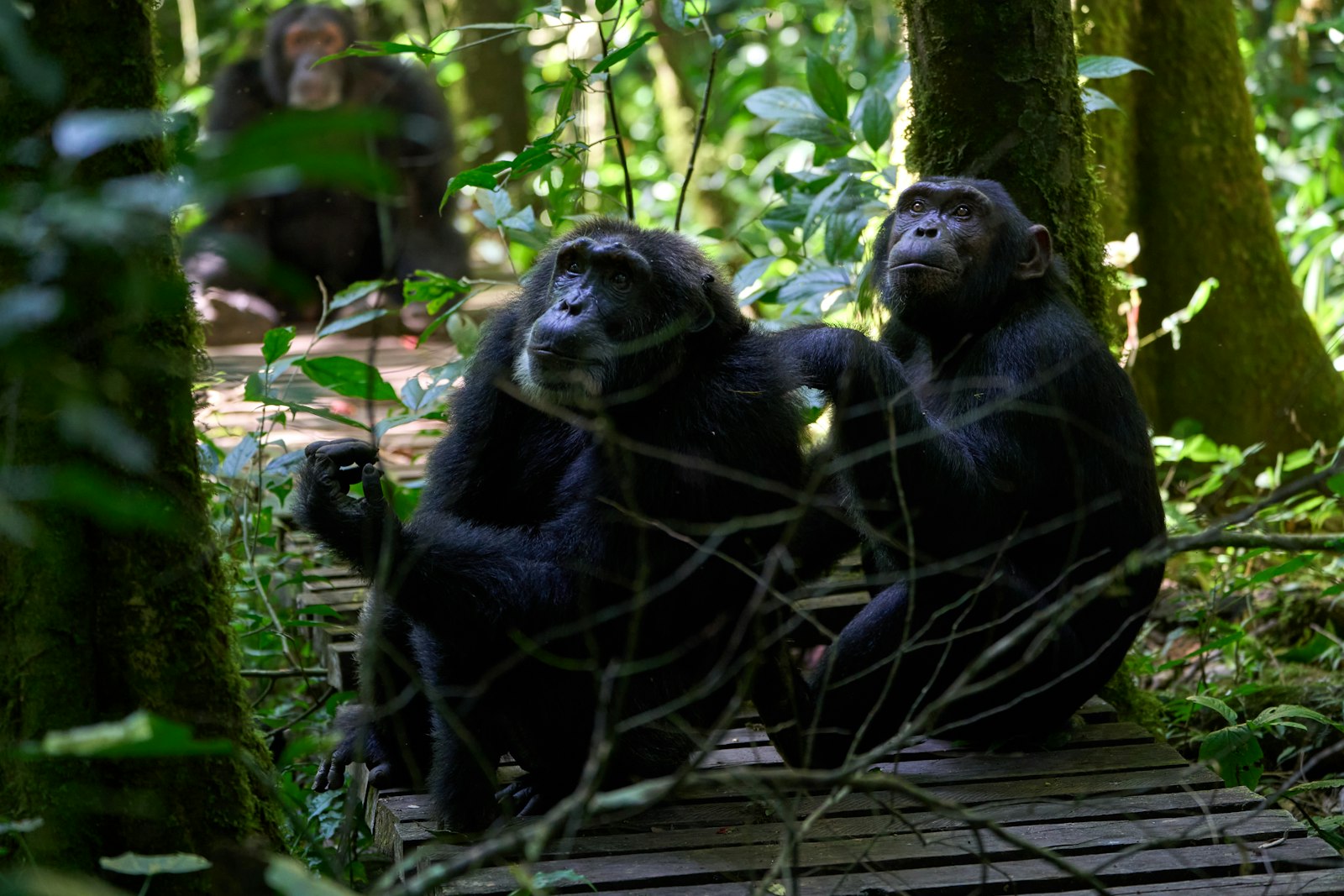
A Kibale Forest National Park safari is a slow, attentive experience. Tracking begins in the early morning or the afternoon, and your ranger and trackers follow the sounds and signs of the chimpanzees. Once found, you spend an hour with the community, watching feeding, grooming and play.
Where to Stay in Kibale
- Primate Lodge Kibale is the closest lodge to the tracking start point, right at the forest edge.
- Ndali Lodge offers cottages on a crater ridge on a family-run vanilla and coffee estate.
- Kyaninga Lodge has handcrafted log cabins on the rim of a deep crater lake, with Rwenzori views.
See all of our Uganda lodges for photos and full descriptions.
Best Time for a Kibale Forest National Park Safari
June to September and December to February are the driest months, with easier trails and clearer views of the Rwenzori Mountains. Chimpanzee tracking runs all year, and the wetter months of March to May and October to November bring green forest, fewer visitors and some of the best birding. Tracks can be slippery after rain, so good boots and a waterproof layer are important in any season.
How to Get to Kibale
By road, your private Land Cruiser and driver-guide travel from Entebbe or Kampala to Fort Portal and on to Kibale, a drive of about five to six hours with stops. The route passes tea estates and rolling hills and is one of the more scenic in Uganda. Flights to nearby airstrips are possible in some seasons, but most guests drive, since the roads between Kibale, Queen Elizabeth and Murchison are good for much of the way.
A Kibale Forest National Park safari combines naturally with Queen Elizabeth National Park to the south and Murchison Falls to the north.
Things to Do on a Kibale Forest National Park Safari
- Chimpanzee tracking: a guided forest walk with a ranger and trackers, finishing with about an hour with a chimpanzee community.
- Chimpanzee habituation experience: a full-day option where you join researchers following a community that is being accustomed to people.
- Bigodi Wetland Sanctuary: a community-run boardwalk walk for monkeys, butterflies and birds, with proceeds supporting local projects.
- Crater lake walks: scenic hikes and canoe trips on the volcanic lakes near Fort Portal.
- Birdwatching: forest and swamp species, with a ranger-led programme.
- Community and tea estate visits: a look at local farming life and the landscapes around the park.
Sample Kibale Forest National Park Safari Itineraries
3 days / 2 nights: Kibale express
Drive from Entebbe to Kibale on day one, track chimpanzees on the second morning, walk the Bigodi Wetland in the afternoon and return on day three.
5 days / 4 nights: Kibale and Queen Elizabeth
Spend two nights at Kibale with tracking and a crater-lake walk, then two nights at Queen Elizabeth with a cruise and game drives, before returning to Entebbe.
7 days / 6 nights: the western circuit
Combine a Kibale Forest National Park safari with Murchison Falls and Queen Elizabeth in one loop, with the same driver-guide.
9 days / 8 nights: primates of Uganda
Track chimpanzees at Kibale, visit Queen Elizabeth and trek gorillas at Bwindi for a full primate holiday, ending with a night at Lake Bunyonyi.
Comparing the Kibale Lodges
| Lodge | Style | Best for |
|---|---|---|
| Primate Lodge Kibale | Lodge at the forest edge | Early tracking starts and nature lovers |
| Ndali Lodge | Cottages on a crater ridge and working estate | Couples and a relaxed farm-stay feel |
| Kyaninga Lodge | Log cabins above a crater lake | Honeymoons and scenic stays |
Conservation and Research at Kibale
Kibale has long been a centre for primate research, and the chimpanzee communities here have been studied and habituated over many years. That work, together with ranger protection and community involvement, has helped keep the forest and its animals secure. Fees from tracking support the Uganda Wildlife Authority and nearby communities, and tourism provides local jobs. When you choose a Kibale Forest National Park safari, you contribute to the protection of the forest and the people who live beside it.
Photography Tips for Kibale
Forest light is low and patchy, so bring a camera that copes with high ISO and a lens in the 70-200mm range or a flexible zoom. Flash is not allowed near the chimpanzees, so learn to shoot without it. Bring spare batteries and a lens cloth, since humidity can fog glass. A small waterproof bag protects your kit in the rain. The best images come from patience: chimpanzees move constantly, so keep your camera ready and watch the faces and hands.
Kibale Compared With Other Uganda Parks
Compared with Bwindi, Kibale offers chimpanzees rather than gorillas, usually with an easier walk and a higher chance of a sighting. Compared with Kyambura Gorge in Queen Elizabeth, Kibale has a larger forest and more tracking options. Compared with Budongo near Murchison Falls, it has more varied primates and a base in good lodges. Many guests choose a Kibale Forest National Park safari as the first stop of a western Uganda circuit. See our Uganda national parks guide for the full comparison.
What a Kibale Forest National Park Safari Costs
The main costs are the lodge, the chimpanzee tracking permit, the vehicle and driver-guide, and any extras such as the habituation experience. Permits and fees are set by the Uganda Wildlife Authority and confirmed in the quote, so you see the current rates before you book. Lodges range from value to luxury. We quote the whole trip as a single price per person so you can compare options easily.
Packing List for a Kibale Forest National Park Safari
Wear long trousers, a long-sleeved shirt and sturdy waterproof boots, since trails can be wet and nettles are common. Bring a light waterproof jacket, a hat, insect repellent, binoculars and a small daypack with water. Gloves can help on steep sections. Choose neutral colours and avoid strong perfume. A walking stick is usually available at the start, and a dry bag keeps your camera safe.
Who a Kibale Forest National Park Safari Suits
A Kibale Forest National Park safari suits primate lovers, photographers, birdwatchers, couples and families with older children, since the Uganda Wildlife Authority sets a minimum age for chimpanzee tracking. The walking is moderate and the pace is set by the trackers. It is a good first primate experience before gorilla trekking, and it suits guests who prefer a gentler trail. It is less suited to travellers who cannot walk on uneven ground for a couple of hours.
How Many Nights Do You Need?
One night is enough for a tracking session, but two nights let you add a habituation experience or the Bigodi Wetland and a crater-lake walk. Guests combining Kibale with Queen Elizabeth and Murchison Falls usually spend one or two nights here.
Tips for Your Kibale Forest National Park Safari
- Book your tracking permit early, especially in the dry months.
- Do not track if you have a cold or other infection, because chimpanzees can catch human illnesses.
- Keep your distance and your voice low when you find the chimpanzees.
- Wear boots with good grip, as trails can be slippery.
- Permits and fees are set by the Uganda Wildlife Authority and can change, and we confirm the current rates in your quote.
How We Plan Your Kibale Forest National Park Safari
We book your lodge, permits, vehicle, driver-guide and any extras together, so you deal with one team from enquiry to departure. Our safaris run in private 4×4 Land Cruisers with a pop-up roof, reclining seats and charging ports. We tailor each itinerary to your dates, budget and interests.
Kibale Forest National Park Safari FAQs
Will I see chimpanzees?
The chance is high, but chimpanzees are wild, so sightings are never guaranteed.
How long is the walk?
From under an hour to several hours, depending on where the chimpanzees are that day.
How many nights do I need?
One to two nights, with two allowing extra activities such as Bigodi Wetland.
Can children go chimpanzee tracking?
The Uganda Wildlife Authority sets a minimum age, and we confirm it when we quote.
Can I combine it with gorilla trekking?
Yes. Many guests track chimpanzees at Kibale and trek gorillas at Bwindi in the same trip.
A Day on a Kibale Forest National Park Safari
Most chimpanzee tracking sessions begin with an early breakfast and a short drive to the park headquarters, where rangers brief the group on rules and the day’s plan. Small groups then head into the forest with a ranger and trackers who have already located the chimpanzees. The walk can be easy or demanding, depending on where the animals are, and the hour with them is the highlight. In the afternoon, many guests walk the Bigodi Wetland, relax at their lodge or visit a crater lake. Evening meals are often served on a terrace with views of the forest or the Rwenzori Mountains.
What to Expect From Chimpanzee Tracking
Chimpanzees live in communities that spread out to feed, so the group you visit can be spread over a wide area. Rangers keep a safe distance, and visitors are asked to avoid eye contact with the dominant males, speak quietly and never touch the animals. Sightings of feeding, grooming, play and sometimes loud calling are common. A Kibale Forest National Park safari rewards a quiet approach and a readiness to move quickly when the chimpanzees do.
Practical Notes for Your Kibale Forest National Park Safari
Tracking groups are small, and the Uganda Wildlife Authority assigns guests to groups on the day. Trails can be muddy, and you may walk off the path, so waterproof boots and long sleeves are important. Entry rules and health requirements for Uganda can change, so we explain what applies to your nationality when you book. Most lodges near Kibale offer packed lunches, laundry service and hot water, and we plan transport so you reach the start point on time.
Responsible Travel at Kibale
Keep a distance from the chimpanzees, avoid leaving litter, and never feed wildlife. Visitors with colds or other infections should tell their guide, because chimpanzees can catch human illnesses. Buying from community crafts groups, joining the Bigodi walk and choosing lodges that employ local staff all spread the benefits of tourism around the park.
Seasons in Kibale
In the drier months, trails are firmer and easier, and fruiting trees can draw the chimpanzees into predictable areas. In the wetter months, the forest is lush, orchids and butterflies are plentiful and the crater lakes are at their most vivid, though paths can be slippery. Chimpanzee tracking works in all seasons, and a Kibale Forest National Park safari can be planned to match your preferences for comfort, scenery and crowds.
Kibale and the Wider Fort Portal Area
Fort Portal is a pleasant, green town surrounded by tea estates and crater lakes, and it makes a good base for a rest day. Visitors can walk around the crater lakes, canoe on a quiet lake, visit a tea estate or take a short drive to hot springs and viewpoints. The Rwenzori Mountains lie to the west, and on clear mornings they dominate the horizon. Adding a day in this area to a Kibale Forest National Park safari makes the trip more relaxed.
Start Planning Your Kibale Forest National Park Safari
A Kibale Forest National Park safari gives you chimpanzees, a rich forest and the scenery of western Uganda. Send us your dates, group size and budget, and we will design the route. Explore all our Uganda national parks or see our Uganda safari holidays for ideas.