
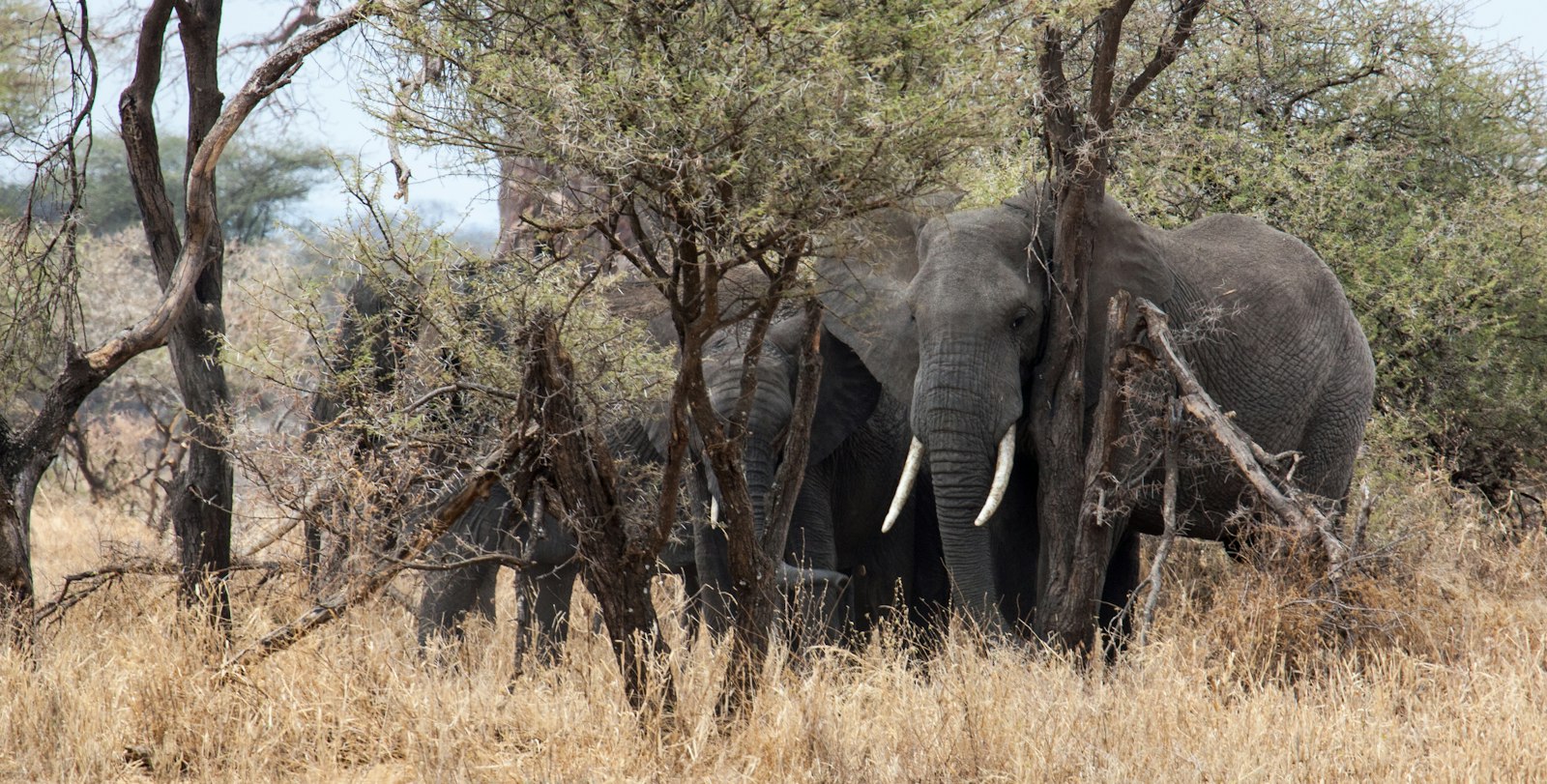
A Tarangire National Park safari is for travellers who want elephants, ancient baobab trees and a river that draws the animals of a whole region. Tarangire lies south-west of Arusha in northern Tanzania, a landscape of rolling bush, acacia woodland, open grassland and seasonal swamps, all centred on the Tarangire River. In the dry months the river becomes the main source of water for miles around, and wildlife gathers along its banks in numbers that few other parks can match.
This guide covers what you will see on a Tarangire National Park safari, where to stay, the best time to visit and how to reach the park. Sense of Adventure is a licensed Nairobi-based operator, and we can arrange Tarangire as a first stop on the northern circuit, as a short trip from Arusha, or as part of a longer route that continues to Lake Manyara, the Ngorongoro Crater and the Serengeti.
Tarangire National Park at a Glance
Tarangire is one of the larger national parks in northern Tanzania and one of the easiest to reach, because it lies on the main road that leads from Arusha towards Lake Manyara and the Ngorongoro highlands. The park is run by Tanzania National Parks, known as TANAPA. Its scenery is different from the open plains of the Serengeti. Here the horizon is broken up by baobabs, acacia trees, termite mounds and the winding line of the river, so the park feels more intimate and more varied.
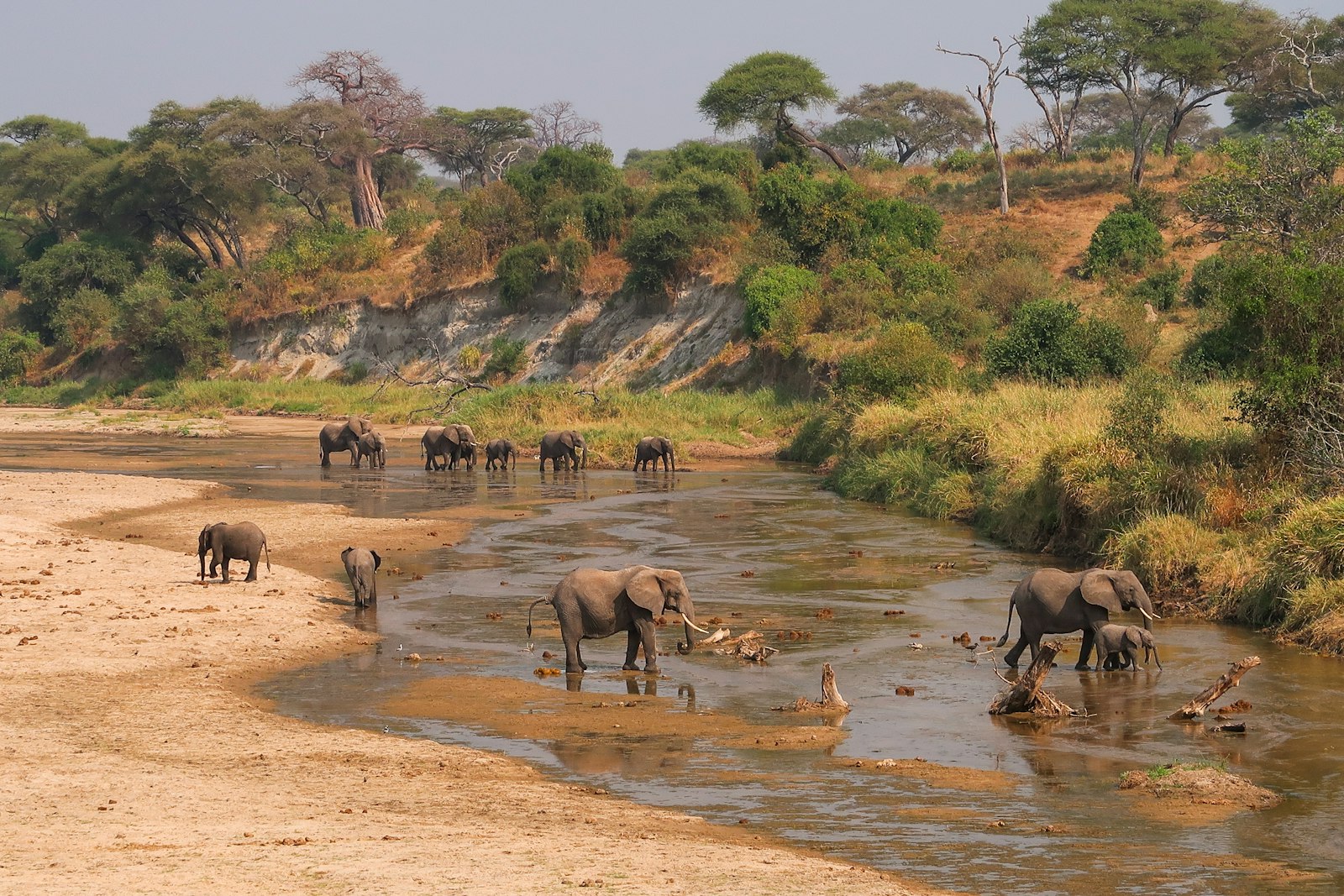
The Tarangire River flows through the park for most of its length and keeps running when other rivers in the region have dried up. That is why the park is so important for wildlife. Animals from the wider Tarangire ecosystem move in and out of the park with the seasons, spreading across the surrounding plains in the green months and returning to the river when the land dries out.
Why Choose a Tarangire National Park Safari
- Elephants in large numbers: Tarangire is known for its elephant herds, and a Tarangire National Park safari is one of the best ways in Tanzania to watch families of all ages together along the river.
- Baobab country: the huge, ancient baobabs give the park its character and make unusual foregrounds for photographs.
- Dry-season concentrations: as the land dries out, animals move towards the river, so sightings become easier and more rewarding.
- Excellent birdlife: the mix of woodland, grassland, river and swamp supports a great variety of birds, from tiny bee-eaters to ostrich and large raptors.
- Easy to reach: the park is a half-day drive from Arusha, which makes it a natural first or second stop on a Tanzania itinerary.
- Quieter than the headline parks: although it is popular, many guests find Tarangire calmer than the busiest sections of the Serengeti, and the scenery is a pleasant change.
Wildlife on a Tarangire National Park Safari
Elephant is the signature species, but the list is long. You can expect buffalo, giraffe, zebra, wildebeest, eland, impala, waterbuck, warthog and many smaller mammals. Lion are present and are often seen resting in the shade or following herds of grazers, and leopard are sometimes found in the trees along the river. Cheetah can be seen on the open ground, and hyena are common. Dry-country antelope such as fringe-eared oryx and the slender gerenuk are among the species that make Tarangire different from the parks to its west.
The river and the swamps in the south of the park bring in another set of species, including hippo and large numbers of water birds. On a Tarangire National Park safari your driver-guide will often spend long periods at a single bend in the river, because that is where the most interesting behaviour happens: herds coming down to drink, calves playing in the shallows, and predators watching from the bank. It is a park that rewards patience more than speed.
Where to Stay in Tarangire
- Tarangire Treetops offers treehouse-style rooms raised into ancient baobab and marula trees, for a stay that feels very different from a standard lodge.
- Sanctuary Swala Camp is an intimate tented camp under acacias in a quiet, game-rich corner of the park.
- Tarangire Sopa Lodge is a spacious lodge inside the park, well placed for river-valley game drives.
See all of our Tanzania lodges for photos and full descriptions.
Best Time for a Tarangire National Park Safari
The dry season, from about June to October, is the classic time for a Tarangire National Park safari. Water elsewhere becomes scarce, so the animals gather along the river and the viewing is at its best. The grass is shorter, the tracks are firm and the days are mostly sunny, although early mornings can be cool. This is also the busiest period, so the best camps fill early and we recommend booking well ahead.
The wetter months bring a different park. From about November to May the landscape turns green, migratory birds arrive and many animals spread out across the wider ecosystem, so sightings are less concentrated. The park is quieter, the light is dramatic and the photography can be beautiful, but some tracks become slower after heavy rain. January and February are often drier and bright between the two rainy periods. We help you choose dates to match what you most want to see.
How to Get There
Most guests reach Tarangire by road from Arusha, which takes roughly two to three hours in a private 4×4 Land Cruiser with a driver-guide. The route passes farmland and Maasai country, and it is straightforward enough that many travellers start their game drives on the afternoon they arrive. Flights land at Kilimanjaro International Airport, and we meet you there and drive you to your first night, either in Arusha or directly towards the park. Light aircraft can also serve airstrips near the park for guests who are combining it with other regions.
A Tarangire National Park safari combines easily with other Tanzania destinations on the northern circuit. The road continues to Lake Manyara and the Ngorongoro highlands, and from there to the Serengeti. It also works well for guests arriving from Kenya on a Kenya and Tanzania safari, as the first or last wildlife stop of the trip.
Things to Do on a Tarangire National Park Safari
- Game drives: morning and afternoon drives along the river, through the baobab woodland and across the open grassland. Your driver-guide can stay with a good sighting for as long as you like.
- Full-day drives with a picnic lunch: a full day in the park lets you reach the quieter southern areas and spend the hot middle of the day by the river, rather than hurrying back to camp.
- Birdwatching: the park is a fine place for birds, and keen birders can spend hours on the river and in the swamps. Bring a field guide and let your driver-guide know of any species you hope to find.
- Walking safaris: some camps on land bordering the park offer guided bush walks with an armed ranger, which is a good way to learn about tracks, plants and smaller creatures.
- Night drives: a few camps outside the park boundary arrange night drives, where you may see nocturnal animals such as genet, bushbaby and aardvark with luck.
- Cultural visits: from the nearby villages, a respectful visit to a Maasai community is possible, and we arrange it with community members so that the money reaches them directly.
- Sundowners: a drink at a baobab viewpoint, where the lodge permits, is a fine way to end a day.
Sample Tarangire National Park Safari Itineraries
2 days / 1 night: short Tarangire break
Drive from Arusha in the morning, have lunch at your camp and spend the afternoon on a game drive along the river. After a night in the park, take an early morning drive and return to Arusha for your onward flight. It is the shortest trip that still shows you the park’s character.
3 days / 2 nights: Tarangire and Lake Manyara
Spend a full day on a Tarangire National Park safari, then continue the next morning to Lake Manyara for a game drive in the groundwater forest and along the lake shore. You see two very different habitats within a short distance, and the trip suits guests with limited time.
5 days / 4 nights: the northern highlights
Begin in Tarangire for elephants and baobabs, then travel via Lake Manyara or Karatu to the Ngorongoro Crater for a descent day, and finish with a night or two on the edge of the Serengeti. It is a compact introduction to northern Tanzania in one private vehicle.
7 days / 6 nights: the classic northern circuit
Tarangire for two nights, the Ngorongoro Crater for one, and three nights in the Serengeti. This is the route most first-time guests choose, because it shows river country, a volcanic caldera and open plains in a single week, and the order builds from the gentle scenery of Tarangire to the scale of the Serengeti.
10 days / 9 nights: safari and Zanzibar
Follow the northern circuit with a flight from the Serengeti or Arusha to Zanzibar for the last three or four nights on the beach. It is a popular way to end a safari with a rest, and we can arrange every flight and transfer for you.
Comparing the Tarangire Lodges
| Lodge | Style | Best for |
|---|---|---|
| Tarangire Treetops | Treehouse-style rooms raised into baobab and marula trees | Couples, families with older children and a memorable stay |
| Sanctuary Swala Camp | Intimate tented camp under acacias inside the park | Honeymoons, wildlife lovers and a quiet bush feel |
| Tarangire Sopa Lodge | Spacious lodge inside the park with river-valley views | Families, groups and comfortable value |
Conservation and the Tarangire Ecosystem
Tarangire is only one part of a much larger ecosystem. Many of the animals that gather on the river in the dry season spend the wet season out on the surrounding plains, on community land and in wildlife management areas, and they need that open space to survive. Protecting the park therefore means protecting the corridors and grazing lands around it, and that depends on the cooperation of the people who live there. Park fees pay for ranger patrols and management, and a Tarangire National Park safari helps keep that work going.
We choose camps that employ local staff, support nearby communities and manage water and waste carefully. We also ask our guests to follow park rules: stay on the tracks, keep a respectful distance from elephants, keep noise low and never feed wildlife. These simple habits protect the animals and make for better sightings.
Photography Tips for Tarangire
The baobabs, the river and the elephant herds make Tarangire a rewarding park for photographers. A mid-range zoom covers most sightings, and a longer lens helps for birds and for animals across the river. Early morning gives soft, warm light and cooler air, and the late afternoon light turns the grass gold and picks out the shapes of the trees. Look for low angles when elephants cross the river and for compositions that include a baobab silhouette. In the dry season dust hangs in the air, so keep a cloth for your lens and change lenses sparingly. Your driver-guide can position the vehicle for the light if you tell them what you want.
Tarangire Compared With Other Tanzania Parks
Compared with the Serengeti, Tarangire is smaller and more wooded, with fewer big cat sightings but better elephant viewing and a more varied landscape. Compared with Lake Manyara, it is larger and its wildlife is more concentrated along the river in the dry months, while Manyara is shorter and greener with its lake and forest. Compared with the Ngorongoro Crater, which is a single dramatic basin, Tarangire offers a gentler day with more freedom to explore. A Tarangire National Park safari is also a natural contrast with the southern parks of Ruaha and Nyerere, which are more remote and suit second or third trips.
What a Tarangire National Park Safari Costs
The main costs are the camp or lodge, the park fee, the vehicle and driver-guide, fuel and any flights. Lodges range from comfortable mid-range properties to luxury tented camps, and the park fee is set by Tanzania National Parks per person per day. Fees can change, so we do not quote fixed figures in a guide like this one. Instead, we confirm the current fees in your quote and include them in a single price per person, with park fees, meals, transfers and the vehicle, so you can compare options easily. Because the vehicle and driver-guide are shared by your group, the cost per person falls as the group gets larger.
Packing List for a Tarangire National Park Safari
A Tarangire National Park safari calls for light, neutral-coloured clothing in layers, because mornings can be cool on an open game drive and afternoons are warm. Bring a wide-brimmed hat, sunglasses and sun protection, a light jacket or fleece, comfortable closed shoes and a scarf or buff for the dust on dry-season tracks. Add binoculars, a camera with a zoom lens, a power bank, insect repellent for the evenings and a refillable water bottle. If you are flying on a light aircraft later in your trip, pack in a soft bag, as weight limits apply. Leave bright colours and camouflage at home.
Who a Tarangire National Park Safari Suits
A Tarangire National Park safari suits first-time visitors who want a gentle start, elephant lovers, birdwatchers, photographers and anyone who enjoys varied scenery. Families do well here because the distances from Arusha are short, the sightings are frequent and children are often delighted by the elephants and the huge trees. Couples will enjoy the treehouse and tented camps. It is also a good choice for guests with a limited number of days, since the park can be seen well in one or two nights. It is less suited to guests who only want to see big cats in large numbers, for whom the Serengeti is the better choice.
How Many Nights Do You Need?
Two nights give you time for several game drives and one full day in the park, and that is what we suggest for most guests. A single night is enough for a taste, though you will feel the journey. Keen photographers and birders often add a third night to enjoy different light and quieter areas. If you are combining Tarangire with other parks, two nights here followed by Ngorongoro and the Serengeti makes a balanced week.
Tips for Your Tarangire National Park Safari
- Book early for the dry season, because the best camps fill up quickly.
- Start game drives early, because animals are most active in the cool hours.
- Bring binoculars for birds and for animals across the river.
- Carry sun protection and plenty of drinking water.
- Park fees are set by Tanzania National Parks and can change, and we confirm the current fees in your quote.
How We Plan Your Tarangire National Park Safari
We book your lodge, vehicle, driver-guide, park fees and any flights together, so you deal with one team from enquiry to departure. Our safaris run in private 4×4 Land Cruisers with a pop-up roof, reclining seats and charging ports. We tailor each itinerary to your dates, budget and interests.
Tarangire National Park Safari FAQs
Is a Tarangire National Park safari worth it?
Yes, especially in the dry season, when elephants and other animals gather along the river. It is also a relaxed first stop on a northern Tanzania itinerary.
How many nights do I need?
Two nights give you time for several game drives and a full day in the park.
Can I see elephants in Tarangire?
Yes. Elephants are the signature species, and herds are seen in the park through the year, with the best concentrations along the river in the dry months.
When is the best time to go?
June to October is the classic dry season, while the green months from November to May are quieter and good for birds and photography.
Is Tarangire suitable for families?
Yes. The short drive from Arusha and the frequent sightings suit families, and we can recommend camps that welcome children.
Start Planning Your Tarangire National Park Safari
A Tarangire National Park safari gives you elephants, baobabs, birds and a river full of life. Send us your dates, group size and budget, and we will design the route. Explore all our Tanzania national parks, read our Tanzania safari guide, or browse our Kenya and Tanzania safari packages and safari combinations for ideas.