
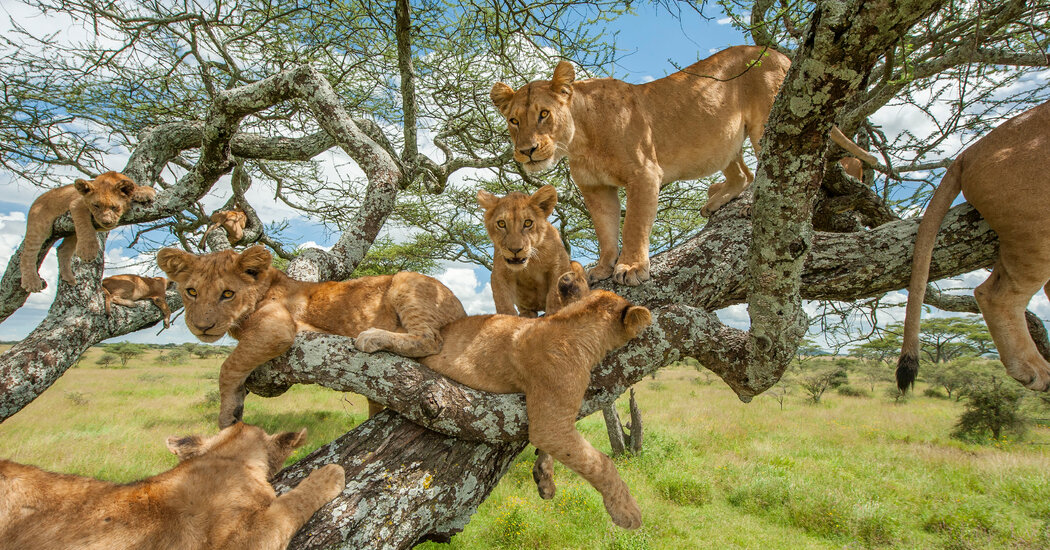
A Queen Elizabeth National Park safari is the most varied wildlife trip in Uganda. In one park you can cruise a channel packed with hippos and elephants, drive savannah plains for lions and Uganda kob, look for tree-climbing lions in the south, track chimpanzees in a forested gorge and gaze at the Rwenzori Mountains on the horizon. It is also the natural halfway point between Kampala and the gorilla forests of Bwindi.
This guide covers what you will see on a Queen Elizabeth National Park safari, where to stay, the best time to visit and how to reach the park. Sense of Adventure is a licensed Nairobi-based operator, and we can arrange this park alone or as part of a longer Uganda or East Africa trip.
Queen Elizabeth National Park at a Glance
Queen Elizabeth National Park lies in western Uganda, between Lake George and Lake Edward and in the shadow of the Rwenzori range. The Kazinga Channel joins the two lakes and forms the heart of the park, with the Mweya peninsula jutting into it. North of the channel are open plains and crater lakes, while the Ishasha sector in the far south is a quieter area of fig trees and grassland along the Ishasha River.
The park is managed by the Uganda Wildlife Authority and borders Kyambura Gorge, a deep forested valley known for chimpanzees. The mix of habitats means you can fill several days without repeating yourself, which is why many guests rate it as one of the best-value parks in Uganda.
Why Choose a Queen Elizabeth National Park Safari
- Tree-climbing lions: the Ishasha sector is one of the few places where lions are regularly seen resting in trees.
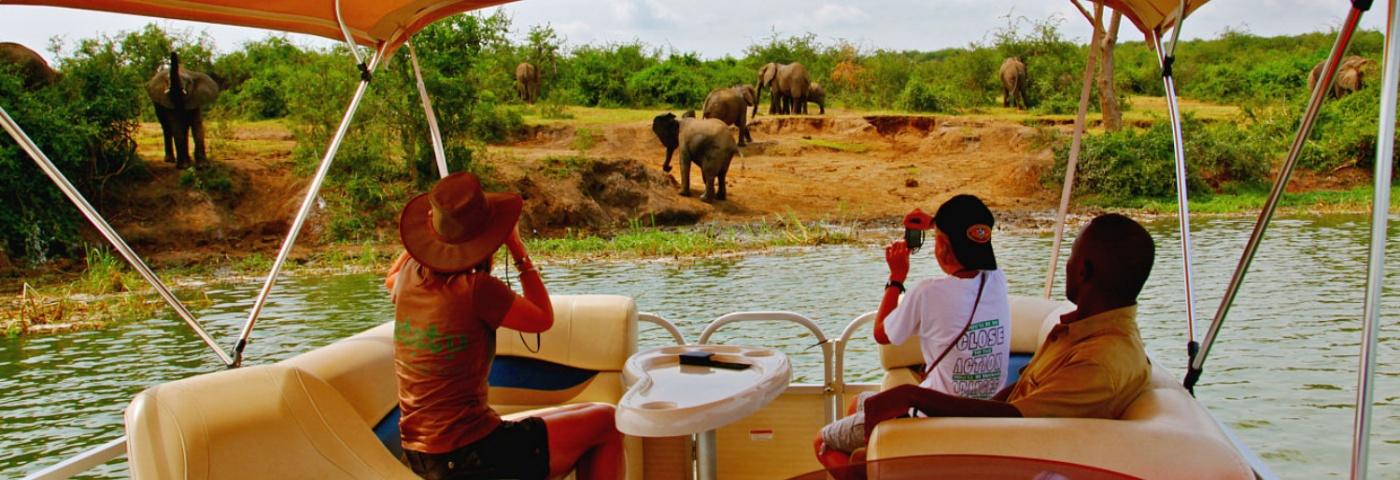
- The Kazinga Channel: boat cruises put you beside hippos, buffalo, elephants and a huge variety of water birds.
- Varied habitats: savannah, wetland, crater lakes, forest and gorge in one park.
- Chimpanzee tracking: Kyambura Gorge offers a chance to find chimpanzees within the park area.
- Mountain views: on clear days the Rwenzori Mountains rise behind the plains.
- Easy to combine: a Queen Elizabeth National Park safari links naturally with Bwindi, Kibale and Lake Mburo.
Wildlife on a Queen Elizabeth National Park Safari
The park holds elephant, buffalo, lion, leopard, hyena, hippo, Uganda kob, topi, waterbuck and warthog, as well as forest hog and many primates. The Kasenyi plains are a good area for lions hunting kob, while the channel banks bring buffalo, elephant and hippo down to the water, often in large numbers. Birdlife is exceptional, with hundreds of species including the African skimmer, pelicans, kingfishers and, with luck, the shoebill in wetter areas.
A Queen Elizabeth National Park safari works best when you combine land and water: a morning game drive, an afternoon cruise on the channel and, on another day, a visit to Ishasha for the lions. Few other parks give such different experiences within a short distance.
Where to Stay in Queen Elizabeth
- Mweya Safari Lodge is a landmark lodge above the Kazinga Channel with the park’s best water views.
- Katara Lodge offers swinging-bed bandas on a ridge with sweeping views over the savannah.
- Ishasha Wilderness Camp is a riverside tented camp in the remote south, famous for tree-climbing lions.
- Kyambura Gorge Lodge overlooks the gorge known as the valley of apes, close to chimpanzee tracking.
See all of our Uganda lodges for photos and full descriptions.
Best Time for a Queen Elizabeth National Park Safari
June to September and December to February are the driest months, with the clearest tracks and the easiest wildlife viewing. The park is open all year, and March to May and October to November bring rain, green landscapes and fewer visitors. Boat cruises and chimpanzee tracking work in every season, while the Ishasha tracks can be muddier in the wettest weeks. Pack a light waterproof layer whenever you travel.
How to Get to Queen Elizabeth National Park
By road, your private Land Cruiser and driver-guide travel from Entebbe or Kampala through Mbarara or Fort Portal, which takes a long day with stops. The drive passes tea estates, banana plantations and small towns, and crosses the equator, a favourite photo stop. Flights from Entebbe serve airstrips in the park area, which saves several hours each way, and we can arrange a road-and-air combination.
The park lies between Kibale and Bwindi, so a Queen Elizabeth National Park safari fits easily into a western Uganda circuit. It also links with Bwindi gorilla trekking through the Ishasha sector.
Things to Do on a Queen Elizabeth National Park Safari
- Game drives: morning and afternoon drives across the Kasenyi plains and the Mweya peninsula for lions, elephants, buffalo and kob.
- Kazinga Channel cruise: a boat trip of a couple of hours with close views of hippos, crocodiles, elephants and waterbirds.
- Ishasha tree-climbing lions: a day or night in the southern sector to look for lions resting in fig trees.
- Chimpanzee tracking at Kyambura Gorge: a guided walk into the forested gorge, led by rangers, with chimpanzees possible but never guaranteed.
- Crater lakes and Katwe: a scenic drive past volcanic craters and the salt lake at Katwe, where salt is still harvested by hand.
- Birdwatching: guided walks and boat trips for papyrus and forest specialists.
Sample Queen Elizabeth National Park Safari Itineraries
3 days / 2 nights: fly-in Queen Elizabeth
Fly from Entebbe to the park, start with an afternoon game drive, take the channel cruise and a morning drive on day two, and fly back in the afternoon. It is a compact introduction.
5 days / 4 nights: Queen Elizabeth and Kibale by road
Drive to Kibale for chimpanzee tracking, continue to Queen Elizabeth for two nights with a cruise and game drives, and return to Entebbe. It covers primates and savannah in one loop.
7 days / 6 nights: the western circuit
Combine Kibale chimpanzees, a Queen Elizabeth National Park safari with Ishasha, and Bwindi gorilla trekking in one private Land Cruiser journey with the same driver-guide.
9 days / 8 nights: Uganda and Kenya
Start in Uganda with a Queen Elizabeth National Park safari and gorillas, then fly to Nairobi for the Masai Mara. It is a full picture of two classic safari countries.
Comparing the Queen Elizabeth Lodges
| Lodge | Style | Best for |
|---|---|---|
| Mweya Safari Lodge | Classic lodge above the channel | First-time visitors and water views |
| Katara Lodge | Ridge-top bandas with swinging beds | Couples and sweeping views |
| Ishasha Wilderness Camp | Riverside tented camp in the south | Tree-climbing lions and a remote feel |
| Kyambura Gorge Lodge | Lodge on the rim of the gorge | Chimpanzee tracking and quiet stays |
Conservation and Communities
Queen Elizabeth National Park is a working example of people and wildlife sharing a landscape. Fishing villages sit inside the park boundary, and the Uganda Wildlife Authority works with communities on revenue sharing, conflict management and conservation education. Lions, elephants and other predators have faced pressure from snares and from living beside farmland, so ranger patrols and research are important. When you choose a Queen Elizabeth National Park safari, your fees help sustain that work, and the lodges we use employ local staff and support community projects.
Photography Tips for Queen Elizabeth
The channel is a gift for photographers: boats get low and close to the water, and the light is soft in the early morning and late afternoon. Bring a telephoto lens of at least 200mm for birds and distant lions, plus a wide lens for the plains and the Rwenzori backdrop. On the boat, use a fast shutter speed to freeze movement, and keep a cloth for spray. At Ishasha, patience is rewarded when lions shift in the branches, and a bean bag steadies the camera on the vehicle window.
Queen Elizabeth Compared With Other Uganda Parks
Compared with Murchison Falls, Queen Elizabeth is more compact and easier to cover in a shorter stay, with more varied habitats and the chance of tree-climbing lions. Compared with Lake Mburo, it holds elephants, lions and a far greater diversity of wildlife. Compared with Bwindi and Kibale, it is a savannah park where wildlife is seen from a vehicle or boat rather than on foot. Many guests choose a Queen Elizabeth National Park safari as the savannah highlight of a Uganda primate trip. See the full comparison in our Uganda national parks guide.
What a Queen Elizabeth National Park Safari Costs
The main costs are the lodge, park fees, the boat cruise, any chimpanzee permit, the vehicle and driver-guide, and flights if you choose them. Permits and fees are set by the Uganda Wildlife Authority and confirmed in the quote, so you see the current rates before you book. Lodges range from value camps to luxury properties. We quote the whole trip as a single price per person so you can compare options easily.
Packing List for a Queen Elizabeth National Park Safari
Pack light, neutral-coloured clothing, a wide-brimmed hat, sunglasses and good sun protection, plus a light jacket for early mornings and evenings. Bring insect repellent for the water, binoculars, a camera with a zoom lens and a power bank. If you plan to track chimpanzees at Kyambura Gorge, add sturdy closed shoes, long trousers and a light waterproof layer. A soft bag is best if you are flying, because light aircraft have weight limits.
Who a Queen Elizabeth National Park Safari Suits
A Queen Elizabeth National Park safari suits first-time visitors to Uganda, families, birdwatchers, photographers and anyone who enjoys variety. Boat cruises make it easy for travellers of all ages, and game drives are comfortable in a private vehicle. It is also a good choice for guests who want a savannah experience between primate treks. It is less suited to travellers looking only for a pure wilderness feel, for whom Murchison Falls or Kidepo may feel quieter.
How Many Nights Do You Need?
Two nights give you a game drive and a cruise. Three nights allow Ishasha or Kyambura Gorge as well, and we recommend them for most guests. Guests who want to track chimpanzees, visit the crater lakes and spend time at both Mweya and Ishasha often stay four nights.
Tips for Your Queen Elizabeth National Park Safari
- Combine the northern and southern sectors, because they offer different animals and scenery.
- Take the afternoon cruise for the best light and busy water’s edge.
- Ask for a driver-guide who knows the Ishasha fig trees, as lions move between them.
- Carry binoculars and a bird book if you enjoy birdwatching.
- Permits and fees are set by the Uganda Wildlife Authority and can change, and we confirm the current rates in your quote.
How We Plan Your Queen Elizabeth National Park Safari
We book your lodge, vehicle, driver-guide, park fees, boat cruise and any flights together, so you deal with one team from enquiry to departure. Our safaris run in private 4×4 Land Cruisers with a pop-up roof, reclining seats and charging ports. We tailor each itinerary to your dates, budget and interests.
Plan my Queen Elizabeth safari
Queen Elizabeth National Park Safari FAQs
Is a Queen Elizabeth National Park safari worth it?
Yes. It combines game drives, a boat cruise, tree-climbing lions and chimpanzee tracking in one park.
Will I see tree-climbing lions?
The Ishasha sector gives a good chance, but lions are wild animals, so sightings are never guaranteed.
How many nights do I need?
Two to three nights for the highlights, four if you want to include Ishasha and Kyambura Gorge.
Can I combine it with gorilla trekking?
Yes. The Ishasha sector is on the road to Bwindi, so the two fit together neatly.
Is it suitable for families?
Yes. Boat cruises and short game drives suit children, and we recommend lodges that welcome families.
A Day on a Queen Elizabeth National Park Safari
A typical day begins before sunrise with tea or coffee and a game drive across the Kasenyi plains, when lions and kob are most active. You return to the lodge for breakfast and a rest through the heat of the day, then board a boat on the Kazinga Channel in the afternoon, when hippos, buffalo and elephants come to the water. Evenings bring a sundowner on the Mweya peninsula or at your camp, and dinner under a wide sky. On Ishasha days, the rhythm is slower, with long, patient scans of the fig trees.
Practical Notes for Your Queen Elizabeth National Park Safari
Roads inside the park are good in the dry months and slower after heavy rain, so your driver-guide adjusts the plan to the conditions. Most lodges provide drinking water, laundry and charging, and a few offer spa treatments. Entry rules and health requirements for Uganda can change, so we explain what applies to your nationality when you book. A Queen Elizabeth National Park safari also works well for travellers who want flexibility: we can add or remove an activity as the trip goes on.
Seasons in Queen Elizabeth
In the dry months, animals gather at the channel and the lakeshore, which makes boat cruises especially rewarding and gives clear views of the Rwenzori range in the early mornings. In the green season, the plains turn lush, calves and fawns appear, and migrant birds arrive, which suits birdwatchers. Each season has its own character, and a Queen Elizabeth National Park safari can be planned around whichever matters most to you, from wildlife concentrations to quiet lodges and lower rates.
Staying Flexible
Wildlife is never scheduled, so we build a little slack into every itinerary. If lions are seen near the road in the morning, your driver-guide can stay longer, and if rain closes a track, the plan shifts to a cruise or a lodge day. Guests who treat a Queen Elizabeth National Park safari as a flexible, curious trip, rather than a checklist, usually come home with the best stories and photographs.
Start Planning Your Queen Elizabeth National Park Safari
A Queen Elizabeth National Park safari gives you lions, hippos, elephants, birds and mountain views in one varied park. Send us your dates, group size and budget, and we will design the route. Explore all our Uganda national parks or see our Uganda safari holidays for ideas.